Key takeaways
- The best cameras for black and white photography in 2026, chosen for tonal range, contrast control, monochrome modes, and clean low-light files.
Black and white photography strips a scene down to light, shape, and texture. With color gone, nothing hides a weak composition, and the camera you hold decides how much tonal information survives. The best cameras for black and white photography give you clean shadows, smooth highlight rolloff, and enough dynamic range to hold detail in both ends of the frame at the same time.

This guide looks at five cameras that handle monochrome work well for different reasons: a retro full-frame body with a dedicated black and white mode, a compact full-frame body built for low light, a JPEG-only cinema camera, a light full-frame kit with a small zoom, and a Micro Four Thirds flagship with the widest dynamic range in this group.
As an Amazon Associate, we earn from qualifying purchases.
What to Look for in a Black and White Camera
Dynamic range matters more in monochrome than in almost any other kind of still photography. A color image can lean on hue to separate a red jacket from a green hedge. In black and white, that separation has to come from tone alone. A sensor that holds detail well above and below middle grey gives you room to shape the image after the fact.
Low-light performance is the second pillar. Much of the best black and white work happens in dim places: a foggy street at dawn, a jazz club, a museum interior, a rain-soaked alley. A sensor with clean high-ISO files lets you keep shooting after the light fades. Full-frame sensors have a natural edge here.
In-camera monochrome modes are a real advantage, not a gimmick. A good black and white picture profile lets you judge a scene in monochrome through the viewfinder or on the rear screen, which changes how you compose. The best profiles also let you adjust contrast and apply a digital color filter effect.
Shooting in RAW is the safest workflow for serious monochrome work. A RAW file keeps every tone the sensor captured, so you can convert with full control over contrast, local brightness, and grain. A camera that records only JPEG stills limits how far you can push a file.
1. Nikon Zf
The Nikon Zf is the most romantic camera in this guide, and also one of the most capable. Its dials, leatherette, and brass-topped body echo the Nikon FM2, but inside it is a modern full-frame mirrorless camera with the EXPEED 7 processor. Its monochrome picture controls offer flat, deep tone, and soft tone modes.
Specs
- 24.5MP full-frame BSI CMOS sensor; EXPEED 7 processor; ISO 100-64000; 8-stop in-body stabilization; 11 fps continuous shooting; 4K60 video; monochrome picture controls with flat, deep tone, and soft tone options; 3.2-inch vari-angle touchscreen; about 710 g with battery and card.
The Zf’s 24.5-megapixel sensor delivers clean files with smooth tonal gradation, with reliable autofocus even in dim light. The 8-stop stabilization helps handheld shooting at slow shutter speeds. One honest caveat: we could not confirm a direct Amazon.com snippet for this listing at the time of writing, so check the live listing and stock before you order. Also note that the Zf is a body-only camera, so you will need a Z-mount lens to go with it.
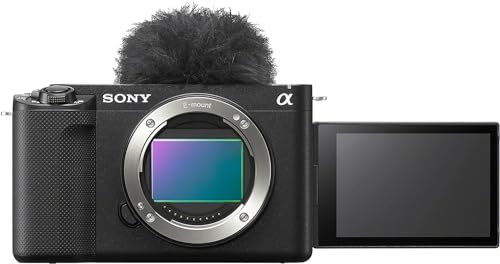
2. Sony ZV-E1
The Sony ZV-E1 is the smallest full-frame camera in this guide, and it is also one of the strongest in low light. Its 12.1-megapixel sensor is tuned for sensitivity rather than resolution, so its files stay clean at high ISO settings where other cameras begin to fall apart. Grain at high ISO looks organic and film-like.
Specs
- 12.1MP full-frame Exmor R CMOS sensor; BIONZ XR processor with dedicated AI processing unit; ISO 80-102400; 759-point Fast Hybrid autofocus; 10 fps continuous shooting; 4K60 video with 10-bit 4:2:2 recording; S-Cinetone and Creative Look profiles including monochrome; about 483 g with battery and card.
The ZV-E1 has no viewfinder, which is its biggest weakness for still photography. You compose on the rear screen. Its Creative Look profiles include a black and white option. The 12.1-megapixel resolution is the lowest in this guide, so heavy cropping is limited. But for web work, books, and prints up to a moderate size, the files are more than good enough.
3. Sony FX30

The Sony FX30 is a cinema camera first and a stills camera second, and it earns its place here on the strength of its sensor and color science rather than its stills workflow. Its 26-megapixel Super 35 sensor delivers clean, detailed files with excellent dynamic range, and its S-Cinetone profile produces gentle contrast that suits monochrome conversion. But there is a hard limit: the FX30 shoots JPEG stills only, with no RAW stills option.
Specs
- 26MP APS-C Super 35 BSI CMOS sensor; BIONZ XR processor; ISO 100-32000; 6K oversampling for 4K video; S-Cinetone color science; no viewfinder; no mechanical shutter; JPEG stills only, no RAW stills; about 646 g with battery and card.
The FX30 has no viewfinder and no mechanical shutter, so you compose on the rear screen and rely on the electronic shutter for stills. For slow tripod work, that is fine; for fast street shooting, it is a handicap. Its files have a clean, cinematic character that converts to black and white with very little work. If you shoot JPEG, expose carefully and keep your contrast decisions in the camera.
4. Canon EOS R8 Kit

The Canon EOS R8 kit is the lightest full-frame option here, pairing a modern 24.2-megapixel sensor with a compact 24-50mm zoom lens. Its Dual Pixel CMOS AF II system is fast and accurate. For black and white work, the R8’s strength is balance: it weighs almost nothing, and its files have the clean, neutral character Canon sensors are known for.
Specs
- 24.2MP full-frame CMOS sensor; DIGIC X processor; Dual Pixel CMOS AF II with up to 1,053 AF zones; ISO 100-102400; 40 fps electronic shutter burst; 6K oversampled 4K60 video; RF 24-50mm f/4.5-6.3 IS STM kit lens included; about 461 g body only.
This listing is the kit with the RF 24-50mm f/4.5-6.3 IS STM lens. The kit lens is small and light, and its 24-50mm range covers the wide-to-standard focal lengths that suit street and documentary monochrome work. It is not a fast lens, so low-light shooting will lean on the sensor’s high-ISO performance. The R8 has no in-body stabilization, though the kit lens has optical stabilization, and battery life is modest, so carry a spare.
5. Panasonic GH7
The Panasonic GH7 is the only Micro Four Thirds camera in this guide, and it makes its case with dynamic range and speed. Its 25.2-megapixel BSI sensor offers a 13-plus stop dynamic range boost, the widest in this group. It shoots at up to 75 frames per second with the electronic shutter.
Specs
- 25.2MP Micro Four Thirds BSI CMOS sensor; phase detection autofocus with real-time recognition; 13-plus stop dynamic range boost; 5.7K60 and 4K120 video; 75 fps burst with electronic shutter; dual card slots, CFexpress Type B and SD UHS-II; Real-Time LUT support; about 805 g with battery and card.
The GH7’s smaller sensor means less low-light headroom than the full-frame bodies here, and its files show more noise at high ISO settings. But its dynamic range advantage is real, and its Real-Time LUT support lets you load a custom monochrome look and see it live while you shoot. It is also the most video-capable body here, with internal ProRes RAW recording, and dual card slots give you backup.
How the Five Cameras Compare
The Zf and the R8 are the most traditional stills cameras here, and they suit different temperaments. The Zf is tactile and deliberate, with dedicated monochrome modes and the best handling for slow shooting. The R8 is light and simple, with a kit lens included. Both have 24-megapixel-class sensors, but the Zf’s stabilization and monochrome controls give it an edge for handheld low-light work.
The ZV-E1 and the FX30 are both Sony bodies built around video-first design, and both trade stills convenience for image quality. The ZV-E1 is the low-light specialist, with the cleanest high-ISO files here. The FX30 has more resolution, but its JPEG-only stills and lack of a viewfinder make it the most specialized pick. Neither has a viewfinder, so both demand that you are comfortable composing on a rear screen.
The GH7 stands apart on sensor size and dynamic range. Its smaller Micro Four Thirds sensor costs it low-light performance, but its 13-plus stop dynamic range boost and Real-Time LUT support give it tools no other camera in this guide offers, and its 75 fps burst is the fastest here by a wide margin.
Black and White Shooting Tips
Expose for the highlights when you shoot monochrome. A blown highlight in a black and white image is a patch of pure white with no texture, and it draws the eye away from your subject. It is easier to lift a shadow in post than to recover a highlight that has clipped.
Look for light before you look for subjects. Black and white photography lives on the quality of light: a shaft of sun through a window, a long shadow across a wall, the soft glow of an overcast morning. Side light carves out texture and shape; front light flattens a scene.
Use contrast deliberately. A black and white image needs a full range of tones, from deep black to clean white, with smooth steps between them. If your image has only mid-tones, it will look grey and lifeless. Push the blacks down and let the whites breathe, but keep detail in both.
Shoot in RAW whenever your camera allows it, and convert with care. A good conversion begins with the color file, because the color channels hold the information that shapes the monochrome result. Darken a blue sky through the blue channel; brighten skin through the red and orange channels. This is the digital equivalent of using color filters on film. If your camera shoots JPEG only, do this work in the camera with its picture profiles instead.
Simplify your compositions. Color can carry a busy frame, but black and white cannot. Remove anything that does not serve the subject.
Which One to Choose
Pick the Nikon Zf if you want the most enjoyable monochrome camera to shoot with. Its dedicated black and white modes, tactile dials, and stabilization make it the best all-round choice. Check the live listing and stock before you order, since we could not confirm a direct Amazon.com snippet at the time of writing.
Pick the Sony ZV-E1 if low light and portability matter most. It has the cleanest high-ISO files here and the smallest body. Accept the rear-screen composing and the 12.1-megapixel limit on heavy cropping.
Pick the Sony FX30 if you want a cinema camera that can also make strong monochrome stills, and you are comfortable with JPEG stills only and no viewfinder. Its sensor and color science are superb.
Pick the Canon EOS R8 kit if you want the lightest full-frame kit with a lens included. It is simple and easy to carry all day. Accept the lack of in-body stabilization and modest battery life, and carry a spare battery.
Pick the Panasonic GH7 if you value dynamic range, speed, and video capability above all else. Its dynamic range boost, Real-Time LUT support, and 75 fps burst are unmatched here. Accept the smaller sensor and its weaker low-light performance.
Frequently Asked Questions
Is a dedicated monochrome camera better than converting color files?
A dedicated monochrome sensor captures more light per pixel because it has no color filter array, so its files are cleaner and more detailed. But it costs far more and cannot shoot color at all. For most photographers, converting color RAW files gives you more flexibility, because you control the conversion with color channel adjustments.
Should I shoot in RAW or JPEG for black and white photography?
Shoot in RAW whenever your camera offers it. A RAW file keeps every tone the sensor captured, so you can shape contrast and adjust the conversion with full control. JPEG files bake in the camera’s processing, which leaves less room to correct mistakes. The one exception in this guide is the FX30, which shoots JPEG stills only, so careful exposure matters even more with that camera.
Do I need a full-frame camera for black and white photography?
No. Full-frame sensors have an edge in low light and dynamic range, but the GH7 in this guide shows that a smaller sensor can still deliver excellent monochrome work with strong dynamic range. What matters more is how you expose, how you compose, and how you convert.
Can I use my existing lenses for black and white photography?
Yes. Any lens works for monochrome, but fast primes are especially useful because they gather more light and isolate a subject with shallow depth of field. A 35mm or 50mm prime is a classic choice for street and documentary black and white work. Longer lenses suit portraits and detail shots.
More from Amazon
Programs that pair well with the guide above. Offers and eligibility are set by Amazon and may change.
Free shipping on eligible items, Prime Video and more. Eligible new members can start with a free trial.
Start a Prime free trialAudiobooks and podcasts to listen to on the go. Eligible new members can start with a free trial.
Try Audible freeAd-free music streaming. Eligible new subscribers can start with a free trial.
Try Music Unlimited freeA free business account with business pricing and bulk-buying tools for work, shop or home office.
Create a business accountAs an Amazon Associate we earn from qualifying purchases.