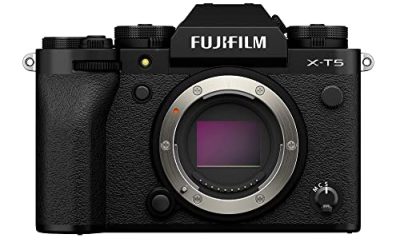
Our Top Picks
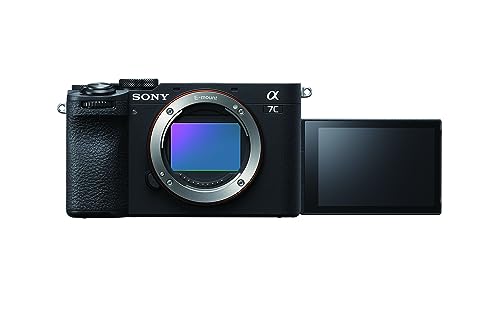 Sony Alpha 7C II Full-Frame Interchangeable Lens Camera4.902.5 x 4.9 x 2.8 inches0.95 PoundsCheck on Amazon
 Sony Alpha 7 IV Full-frame Mirrorless Interchangeable Lens5.45 x 3.80 x 2.83 inches9.6 x 6.5 x 6.7 inches2.2 PoundsCheck on Amazon

Judo looks simple from the stands. Two athletes grip, circle, and then one of them flies. The whole throw takes less than a second, and the moment that matters most is the split second when both feet leave the mat.
This guide covers five cameras that handle quick autofocus, a fast burst, clean files in dim light, and easy carry around a dojo all day.
As an Amazon Associate, we earn from qualifying purchases.
Why Judo Is Hard to Photograph
A judo hall is not a studio. Light comes from ceiling panels and high windows, and it is often weaker than it looks. A camera needs clean high ISO files because flash is banned during bouts in almost every competition.
Distance is the second problem. You shoot from the edge of the mat, and the action moves from one side to the other in seconds. You need a lens with reach and autofocus that follows athletes who twist and spin without warning.
The third problem is timing. Judo has long periods of gripping and circling, then a sudden explosion of movement. You cannot hold the shutter down for the whole bout, or you will fill your card with near-identical frames.
Finally, there is etiquette. Dojos are quiet places.
What to Look for in a Judo Camera
Autofocus comes first. Look for a dense phase-detection system and subject detection that can hold onto a person who turns sideways, bends low, or spins.
Burst speed comes second. Ten frames per second is a good floor for judo. Faster is better for the peak of a throw, where the difference between a great frame and a missed one can be a single frame.
Low-light performance comes third. A full-frame sensor has a real edge here, because its larger pixels gather more light at the same ISO. Look for a camera that stays clean at ISO 6400 and usable at ISO 12800.
Portability comes fourth. You will carry the camera around a hall for hours, often with a long lens attached. A lighter body leaves more room in your bag for a second lens and spare batteries.
1. Sony A7C II
The A7C II is the smallest full-frame camera in this guide, and that is its main charm. It packs a 33MP sensor and Sony’s AI processing unit into a body that weighs about 514 grams with battery and card.
Specs
- Sensor: 33MP full-frame Exmor R CMOS
- Processor: BIONZ XR with AI processing unit
- Autofocus: 759-point Fast Hybrid AF with human subject detection
- Burst: 10 fps with full autofocus tracking
- Stabilization: 5-axis in-body stabilization, up to 7 stops
- Video: 4K60 with full pixel readout
- Weight: about 514 g with battery and memory card
- Card slots: one SD UHS-II and one CFexpress Type A
Autofocus is the A7C II’s strongest suit for judo. The AI processing unit recognizes human bodies and holds focus on an athlete even when the face turns away or another athlete crosses in front. In a clinch, where two white uniforms tangle together, that body tracking keeps the focus point on the right person instead of drifting to the background.
The 33MP sensor gives you room to crop. When a throw happens at the far side of the mat, you can crop in and still have plenty of detail for a web gallery or a modest print. The trade-offs are modest: a smaller viewfinder and a compact grip that can feel cramped with a heavy telephoto lens.
2. Sony A7 IV
The A7 IV is the all-rounder of the group. It shares the A7C II’s 33MP sensor and 759-point autofocus system, but it puts them in a larger body with a better viewfinder, two control dials, and a deeper grip that balances well with a long telephoto lens.
Specs
- Sensor: 33MP full-frame Exmor R CMOS
- Processor: BIONZ XR
- Autofocus: 759-point Fast Hybrid AF with Real-time Tracking
- Burst: 10 fps with full autofocus tracking
- Stabilization: 5-axis in-body stabilization, up to 5.5 stops
- Video: 4K60 in Super 35 mode
- Viewfinder: 3.68M-dot electronic viewfinder
- Weight: about 658 g with battery and memory card
- Card slots: one CFexpress Type A and one SD UHS-II
The 3.68M-dot viewfinder is bright and detailed, which helps when you track athletes in a dim hall. The two dials let you adjust shutter speed and aperture without taking your eye from the finder, so you can react when the light changes as athletes move across the mat. Real-time Tracking locks onto an athlete and follows through spins, drops, and throws. If you want one camera that does everything well and never gets in the way, this is the safe choice.
3. Nikon Z5 II
The Z5 II is Nikon’s most affordable full-frame body, and it is far more capable than its position in the lineup suggests. It pairs a 24.5MP back-illuminated sensor with the EXPEED 7 processor from Nikon’s flagship bodies, and it focuses in light as dim as -10 EV. In a dark dojo, that low-light focus limit is worth more than extra megapixels.
Specs
- Sensor: 24.5MP full-frame BSI CMOS
- Processor: EXPEED 7
- Autofocus: 273-point hybrid AF with subject detection, works down to -10 EV
- Burst: up to 30 fps in JPEG, 14 fps in RAW
- Stabilization: 5-axis in-body stabilization, up to 7.5 stops
- Video: 4K60 with 12-bit N-RAW recording
- Card slots: dual SD UHS-II
- Weight: about 700 g with battery and memory card
The headline feature for judo is the burst. Thirty frames per second in JPEG is the fastest in this guide, and it turns the peak of a throw into a sequence you can pick from frame by frame. You can catch the exact instant a foot leaves the mat, the arc of the body, and the landing, all in one burst.
Low-light autofocus is the second strength. The -10 EV limit means the Z5 II keeps locking on in halls where other cameras hunt and give up. The 24.5MP sensor gives less cropping room than the 33MP Sony bodies, so you need to frame tighter or use a longer lens. That is a fair trade for the burst speed and the low-light focus.
4. Nikon Z6 III
The Z6 III is the speed machine of the group. Its partially stacked 24.5MP sensor reads out far faster than a conventional sensor, which cuts rolling shutter distortion and lets the camera fire at remarkable speeds.
Specs
- Sensor: 24.5MP partially stacked full-frame CMOS
- Processor: EXPEED 7
- Autofocus: 273-point hybrid AF with subject detection, works down to -10 EV
- Burst: 20 fps full-frame RAW, 60 fps full-frame JPEG, 120 fps in DX crop
- Stabilization: 5-axis in-body stabilization, up to 8 stops
- Video: 6K60 N-RAW internal recording
- Viewfinder: 5.76M-dot electronic viewfinder, up to 4,000 nits
- Card slots: one CFexpress Type B and one SD UHS-II
- Weight: about 670 g with battery and memory card
Twenty frames per second in full-frame RAW is fast enough for any throw. Sixty frames per second in JPEG turns a single exchange into a full sequence, and the 120 fps DX crop mode is there for moments when you want to slow the action down and study the technique frame by frame.
The viewfinder is the best in this guide. At 5.76M dots and up to 4,000 nits, it stays bright and clear even when the hall lights glare off the mat. The Z6 III is the most capable camera in this guide for pure action work, and it also shoots the best video, with 6K60 N-RAW recording for coaches who want to study technique in detail.
5. Fujifilm X100VI

The X100VI is the odd one out, and that is exactly why it belongs here. It has a fixed 23mm f/2 lens, which is a 35mm equivalent on its APS-C sensor. You cannot zoom, and you cannot swap lenses. What you get in return is a camera that is silent, small, and invisible in a dojo, with gorgeous color straight out of the camera.
Specs
- Sensor: 40.2MP APS-C X-Trans CMOS 5 HR
- Processor: X-Processor 5
- Lens: fixed 23mm f/2, 35mm equivalent
- Autofocus: hybrid AF with subject detection
- Burst: up to 11 fps with the mechanical shutter
- Stabilization: in-body image stabilization
- Video: 6.2K30
- Extras: built-in 4-stop ND filter, 20 film simulations, digital teleconverter 1.4x and 2x
- Weight: about 521 g with battery and memory card
The fixed 23mm lens is a real trade-off for reach. From the edge of a full-size mat, a 35mm equivalent lens will not fill the frame with a single athlete. You need to shoot close to the action, which means matside access during training or small local events, not a distant seat at a big tournament.
What the X100VI does brilliantly is atmosphere. Its leaf shutter is nearly silent, so you can shoot during a bow or a quiet moment without disturbing anyone. The 40.2MP sensor captures fine detail, and Fujifilm’s film simulations give you warm, film-like color without hours of editing. Use it as your second camera, not your only one: it will not replace a long lens at a tournament, but it will catch the quiet side of judo that no telephoto can reach.
How the Five Cameras Compare
Autofocus is close across the four interchangeable-lens bodies. Sony’s AI subject detection has a slight edge when athletes tangle together, because it tracks the whole body rather than just the face. Nikon’s -10 EV low-light limit has the edge in the darkest halls.
Burst speed separates them more clearly. The Z5 II leads at 30 fps in JPEG, followed by the Z6 III at 20 fps in full-frame RAW. The two Sony bodies fire at 10 fps, which is enough for the peak of a throw but gives you fewer frames to choose from.
Judo Shooting Tips
Set your exposure before the bout begins. Meter the mat, pick a shutter speed of at least 1/500s for throws, and let the ISO float. A shutter speed of 1/500s freezes most throws, while 1/1000s freezes even the fastest foot sweeps. If the light is weak, accept a higher ISO rather than a slower shutter. A noisy sharp frame beats a clean blurry one every time.
Shoot in short bursts, not long sprays. Watch the grip and the footwork. When one athlete breaks the other’s balance and begins to turn in, that is your cue. Fire a burst of five to ten frames through the throw, then stop and reset.
Position matters more than gear. Sit low, near the corner of the mat, where you can see both athletes’ faces and feet. A low angle makes throws look dramatic, because the athlete rises against the background of the hall.
Which One to Choose
If you want the lightest full-frame camera with the smartest autofocus, choose the Sony A7C II. It tracks athletes through tangled grips and leaves room in your bag for a second lens.
If you want the most comfortable all-rounder for long tournament days, choose the Sony A7 IV. The larger viewfinder, deeper grip, and dual dials make it the easiest camera here for hours with a telephoto lens.
If you want the fastest burst and the best low-light focus at a sensible outlay, choose the Nikon Z5 II. Its 30 fps burst and -10 EV focus make it superb for dim halls and fast throws.
If you want the ultimate action camera with the least distortion and the best viewfinder, choose the Nikon Z6 III. Its stacked sensor, 20 fps RAW burst, and 8-stop stabilization handle the fastest moments with ease.
If you want a silent second camera for training sessions, portraits, and atmosphere, choose the Fujifilm X100VI. It will not replace a long lens, but it captures the quiet side of judo no telephoto can reach.
Frequently Asked Questions
What shutter speed freezes a judo throw?
A shutter speed of 1/500s freezes most throws, and 1/1000s freezes even the fastest foot sweeps. In dim halls, use a higher ISO rather than a slower shutter.
Can I use flash at a judo competition?
No, flash is banned during bouts in almost every competition, and it can distract athletes at a dangerous moment. Rely on a camera with clean high ISO files and a fast lens instead.
Do I need a long telephoto lens for judo?
Yes, for tournaments you need reach, because you shoot from the edge of the mat. A 70-200mm lens is a good place to begin. The fixed-lens X100VI works only when you can shoot close to the action.
Is a full-frame camera necessary for judo photography?
No, but it helps in dim dojos, because a full-frame sensor gathers more light and produces cleaner high ISO files. The APS-C X100VI still produces excellent images up close.
More from Amazon
Programs that pair well with the guide above. Offers and eligibility are set by Amazon and may change.
Free shipping on eligible items, Prime Video and more. Eligible new members can start with a free trial.
Start a Prime free trialAudiobooks and podcasts to listen to on the go. Eligible new members can start with a free trial.
Try Audible freeAd-free music streaming. Eligible new subscribers can start with a free trial.
Try Music Unlimited freeA free business account with business pricing and bulk-buying tools for work, shop or home office.
Create a business accountAs an Amazon Associate we earn from qualifying purchases.