Key takeaways
- Quiet halls, dim light and long games make chess photography a real test. These five cameras handle low light, silent shooting and sharp focus with ease.
Chess photography is one of the quietest genres in the whole of photography. The room is hushed, the light is often dim, the players sit almost still for hours, and then a hand moves and the whole game changes in a single second. A camera for chess needs to disappear into that silence, gather enough light to keep faces and boards sharp, and be ready for the one moment that matters.

As an Amazon Associate, we earn from qualifying purchases.
Why Chess Photography Is Harder Than It Looks
A chess hall looks easy to photograph until you try it. The light in most tournament rooms is a mix of ceiling panels and window light, and it is rarely bright enough for a fast shutter at a low sensitivity setting. You cannot fix dim light with a burst of light from the camera, because a flash would disturb the players and is banned at almost every serious event. Your camera has to work with the light that is already in the room.
Silence matters just as much. A loud shutter click echoes through a quiet hall, and tournament arbiters have every right to ask a noisy photographer to leave. The best chess cameras use a fully electronic shutter, or at least a very quiet mechanical one, so the sound of the camera never reaches the boards.
The game itself moves in two speeds. Long stretches pass with almost no movement at all, and then a player reaches out, takes a piece, and presses the clock. That hand movement is quick, and a slow shutter turns it into a blur. Reach is the last piece of the puzzle: photographers usually work from behind a rope or from the back of the hall, so a short lens leaves the board tiny in the frame. The cameras below all take interchangeable lenses, so you can mount a fast telephoto or a bright prime and fill the frame from a respectful distance.
What to Look for in a Chess Camera
Low-light performance comes first: a large sensor gathers more light and keeps dim hall images clean. Silent shooting comes second: a fully electronic shutter lets you work in total silence. Autofocus comes third: eye detection locks onto a face even when the light is poor. Burst speed matters less in chess than in most genres, yet ten frames a second is plenty to catch a hand mid-move. Portability is the final factor: a chess event can last six hours or more.
1. Nikon Zf
The Nikon Zf is the most charming camera in this guide, and also one of the most capable. Its retro body hides a modern full-frame sensor and the EXPEED 7 processor from the flagship Z8 and Z9, so it focuses fast and holds an eye even in poor light.
Specs
- Sensor: 24.5MP full-frame BSI CMOS
- Processor: EXPEED 7 with deep learning subject detection
- Autofocus: Eye and animal detection, 9-subject detection
- Stabilisation: 8-stop in-body stabilisation
- Burst: 14 fps with the mechanical shutter
- Video: 4K60
- Mount: Nikon Z
The Zf suits chess because its full-frame sensor keeps dim hall images clean, and its quiet shutter modes let you work without drawing a glance from the boards. One honest note: our checks found the Zf through an Amazon dp link and retailer records, with no direct Amazon.com product page snippet surfacing, so confirm the live listing and stock before you buy.
2. Sony ZV-E1
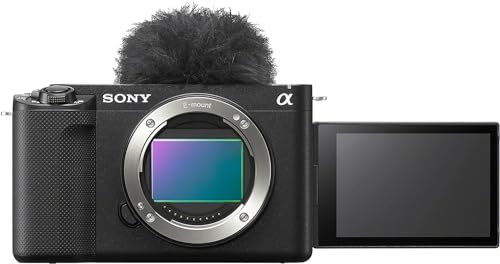
The Sony ZV-E1 is a full-frame camera built around a 12.1MP sensor tuned for low light, and that tuning is exactly what a dim chess hall needs. Big pixels gather light well, so images stay clean at high sensitivity settings, and the dedicated AI chip drives autofocus that finds and tracks eyes.
Specs
- Sensor: 12.1MP full-frame Exmor R CMOS
- Processor: BIONZ XR with dedicated AI processing unit
- Autofocus: Real-time eye AF for humans and animals
- Stabilisation: 5-axis in-body stabilisation
- Burst: 10 fps
- Video: 4K60 10-bit, 4K120 with firmware
- Weight: 399 g body only
- Mount: Sony E
The ZV-E1 is the lightest full-frame body in this guide, and that matters over a six-hour tournament. It has no viewfinder, which is a real trade-off: you compose on the rear screen. But for chess the screen is often an advantage, because you can hold the camera low beside a table and frame the board without raising the body to your eye. The AI autofocus locks onto a player’s eye and holds it through a long think.
3. Sony FX30

The Sony FX30 is a cinema camera first, yet its stills ability makes it a serious chess tool. Its 26MP Super 35 sensor delivers sharp, detailed files with good low-light behaviour, and the dual base ISO of 800 and 2500 keeps noise low when the light drops.
Specs
- Sensor: 26MP Super 35 BSI CMOS
- Processor: BIONZ XR
- Autofocus: Fast Hybrid AF with 759 points
- Stabilisation: 5-axis in-body stabilisation
- Burst: 30 fps with the electronic shutter
- Video: 4K120, 6K oversampling to 4K
- Weight: 646 g body only
- Mount: Sony E
Two honest limits shape how you use the FX30 for chess. It has no viewfinder, so you compose on the rear screen, and it has no mechanical shutter, so every still is taken with the electronic shutter. The electronic shutter is silent, which is ideal in a quiet hall, though fast hand movements can show a slight rolling shutter bend. The FX30 also records stills as JPEG files only, with no RAW option, so set white balance and exposure carefully in the hall.
4. Canon EOS R8

The Canon EOS R8 is the lightest full-frame camera in this guide that still gives you a proper viewfinder, and that combination makes it a natural fit for chess. Its 24.2MP sensor and Dual Pixel CMOS AF II focus system track eyes with confidence, and the body weighs just 461 g.
Specs
- Sensor: 24.2MP full-frame CMOS
- Processor: DIGIC X
- Autofocus: Dual Pixel CMOS AF II with eye detection
- Stabilisation: 5-axis in-body stabilisation, up to 7.5 stops with a stabilised lens
- Burst: 40 fps electronic, 6 fps mechanical
- Video: 4K60p 10-bit, C-Log 3
- Weight: 461 g body only
- Kit lens: RF 24-50mm f/4.5-6.3 IS STM
- Mount: Canon RF
The R8 kit ships with the RF 24-50mm f/4.5-6.3 IS STM zoom, and you should be honest with yourself about that lens: 50mm is too short for a board shot from behind the rope, and the slow aperture struggles in dim light. The kit lens is fine for wide shots of the hall, but for real chess work you will want a fast RF prime, such as the 50mm f/1.8 or an 85mm f/2. With a fast prime mounted, the R8 becomes one of the best chess cameras at any size.
5. Panasonic LUMIX GH7
The Panasonic LUMIX GH7 is the only Micro Four Thirds camera in this guide, and its smaller sensor brings a real advantage for chess: a 2x crop factor that doubles the reach of every lens. A 100mm lens behaves like a 200mm lens on full frame, so you can fill the frame with a board from the back of the hall.
Specs
- Sensor: 25.2MP Micro Four Thirds BSI CMOS
- Processor: Venus Engine
- Autofocus: Phase Detection AF with Real-time Recognition for humans and animals
- Stabilisation: 7.5-stop in-body stabilisation
- Burst: 14 fps mechanical, 75 fps electronic
- Video: 5.7K60, 4K120, ProRes RAW internal
- Weight: 805 g body with battery and card
- Mount: Micro Four Thirds
The GH7 is the heaviest body here, and its smaller sensor is noisier in dim light than the full-frame bodies above, so you should expect more grain at high sensitivity settings and plan for a fast lens to compensate. What it gives back is reach, speed, and the best stabilisation in the group at 7.5 stops, which keeps a long lens steady at slow shutter speeds. Its phase-detection autofocus brings reliable eye tracking to the GH line, and it holds focus on a player’s face even as they lean over the board.
How the Five Cameras Compare
The Zf and the R8 are the most balanced picks for stills. Both are full-frame, both have proper viewfinders, and both focus on eyes with confidence. The Zf wins on character and stabilisation, the R8 wins on weight and burst speed.
The ZV-E1 is the low-light specialist. Its 12.1MP sensor is the cleanest in dim halls, and its AI autofocus is the most tenacious in the group. The lack of a viewfinder is its one real weakness, and if you compose mainly through a viewfinder, the Zf or the R8 will suit you better.
The FX30 is the quietest camera here, with no mechanical shutter at all, and its dual base ISO makes it a strong low-light performer. Its JPEG-only stills and lack of a viewfinder narrow its appeal, so it suits a photographer who already shoots Sony and wants silence above all else.
The GH7 is the reach specialist. Its 2x crop factor turns a modest lens into a long one, and its stabilisation is the strongest in the guide. It asks you to accept more grain in dim light and a heavier body, and in return it lets you work from further back than any other camera here.
Chess Shooting Tips
Arrive early and walk the hall before the round begins. Find the boards with the best light, note where the ropes sit, and pick a spot that gives you a clean angle on the players. A low angle beside a table flatters the board and keeps the players’ faces in the frame.
Set your camera to silent or electronic shutter before the first move is played, and leave it there all day. Test the setting at home first, because some cameras hide the silent mode deep in a menu, and you do not want to hunt for it while the players are thinking.
Use a fast prime if you can. A 50mm f/1.8 or an 85mm f/2 gathers far more light than a kit zoom, and the shallow depth of field isolates a player’s face from a busy background. Keep your shutter at 1/250s or faster when a hand is moving.
Shoot RAW where your camera allows it, because hall lighting mixes warm ceiling panels with cool window light, and RAW gives you room to fix the colour balance later. The FX30 records JPEG stills only, so with that body set white balance by hand in the hall.
Respect the players above all else. Never use a flash, never lean over a board, never talk during a game, and never block an arbiter’s view of a table.
Which One to Choose
If you want one camera for chess and nothing else, buy the Canon EOS R8 with a fast prime. It is light, quiet, and its eye autofocus is superb, and the viewfinder makes framing easy in any light.
If you love the feel of a classic camera and want the strongest stabilisation in the group, buy the Nikon Zf. Its full-frame sensor is clean in dim halls and its quiet modes keep you invisible at the boards. Just confirm the live listing and stock first, since our checks found it through a dp link and retailer records rather than a direct product page snippet.
If low light is your main worry and you are happy composing on a screen, the Sony ZV-E1 is the cleanest low-light body here. If silence is your main worry, the FX30 has no mechanical shutter at all. And if you work from the back of a large hall and need reach, the Panasonic GH7 turns a modest lens into a long one.
Do I need a flash for chess photography?
No. Flash is banned at almost every serious chess event, and a burst of light would disturb the players and could earn you an ejection from the hall. Choose a camera with a large sensor and a fast lens instead.
What shutter speed should I use for chess?
Use 1/250s or faster when a hand is moving over the board, because a slower shutter turns a moving hand into a blur. When both players are sitting still, 1/125s is enough, and with good stabilisation you can go slower still.
Is a full-frame camera necessary for chess?
No, but it helps. A full-frame sensor gathers more light and keeps dim hall images cleaner, yet the GH7 in this guide shows that a Micro Four Thirds body with a fast lens and strong stabilisation can do the job well.
Can I use a zoom lens for chess photography?
Yes, but a fast prime is usually better. A kit zoom is often too slow for dim halls and too short for a board shot from behind the rope. A 50mm f/1.8 or an 85mm f/2 gathers far more light and isolates your subject from a busy background.
More from Amazon
Programs that pair well with the guide above. Offers and eligibility are set by Amazon and may change.
Free shipping on eligible items, Prime Video and more. Eligible new members can start with a free trial.
Start a Prime free trialAudiobooks and podcasts to listen to on the go. Eligible new members can start with a free trial.
Try Audible freeAd-free music streaming. Eligible new subscribers can start with a free trial.
Try Music Unlimited freeA free business account with business pricing and bulk-buying tools for work, shop or home office.
Create a business accountAs an Amazon Associate we earn from qualifying purchases.