
Our Top Picks
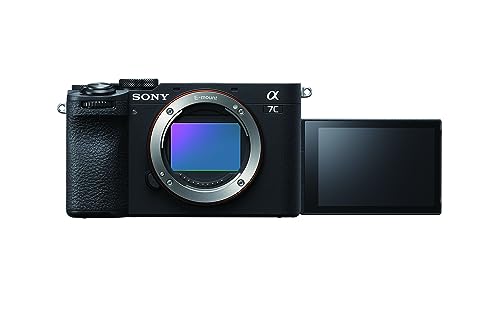 Sony Alpha 7C II Full-Frame Interchangeable Lens Camera4.902.5 x 4.9 x 2.8 inches0.95 PoundsCheck on Amazon
 Sony Alpha 7 IV Full-frame Mirrorless Interchangeable Lens5.45 x 3.80 x 2.83 inches9.6 x 6.5 x 6.7 inches2.2 PoundsCheck on Amazon
Sony sells two 33-megapixel full-frame cameras that look like twins on a spec sheet and feel like different tools in the hand. The A7C II packs the same sensor and processor into the smallest full-frame body Sony makes, while the A7 IV keeps the classic mid-size mirrorless shape with a deeper grip, a bigger viewfinder, and two card slots. The right one depends on how you carry a camera.
As an Amazon Associate, we earn from qualifying purchases.
This guide compares the two bodies head to head, then adds three accessories that suit either camera: a fast V90 memory card, a compact shoulder bag, and a light wrist strap.
At a Glance
The A7C II and the A7 IV share the same 33-megapixel full-frame Exmor R sensor and the same BIONZ XR processor, so their image files are close enough that most viewers will never tell them apart. Both offer 10 frames per second with continuous autofocus, 4K video at 60 frames per second from a Super 35 crop, and in-body stabilization. The differences sit in the body, not the sensor.
The A7C II is built for travel and all-day carry. It weighs about 514 grams with battery and card, slips into a small bag, and pairs well with compact lenses. Its AI processing unit adds subject recognition for people, animals, birds, insects, cars, trains, and airplanes. Its one clear compromise is a single SD card slot, which matters most to anyone who shoots events where a card failure would be a disaster.
The A7 IV is the workhorse. It weighs about 658 grams, fills the hand with a deeper grip, and carries a sharper 3.68-million-dot viewfinder. Its dual card slots let you record backups in the camera.
Sony A7C II
The A7C II is the camera to buy when size is the deciding factor. It is the smallest full-frame camera Sony builds, yet it loses almost nothing in image quality. The 33-megapixel sensor delivers clean files at high ISO settings, rich color, and enough resolution for large crops and detailed prints. The AI processing unit holds focus on eyes even when a subject turns away, which suits family trips, street photography, and travel portraits.
Handling is the trade. The grip is shallow, so a large lens can feel front-heavy, and the viewfinder is smaller than the one on the A7 IV.
The single SD card slot is the one feature that keeps the A7C II from being the obvious choice for everyone. A fast UHS-II card keeps the buffer clear, but there is no in-camera backup. For travel, portraits, and personal work, that is a fair trade for the smaller body. For paid events, it is a real risk to weigh.
Specs
- 33MP full-frame Exmor R sensor; BIONZ XR processor with AI processing unit; 759-point Fast Hybrid AF with Real-time Recognition AF; 10 fps continuous shooting; 4K60 video from Super 35 crop; 7-stop in-body stabilization; single SD UHS-II slot; NP-FZ100 battery; about 514 g with battery and card; model ILCE7CM2/B.
Sony A7 IV
The A7 IV is the all-rounder that most photographers will find easier to live with. Its deeper grip balances full-frame lenses better, its buttons fall under the fingers without hunting, and its larger viewfinder makes manual focus and long sessions more comfortable. The same 33-megapixel sensor sits inside, so image quality matches the A7C II frame for frame.
Autofocus on the A7 IV covers people, animals, and birds with Real-time Eye AF, and the 759-point system tracks subjects across nearly the whole frame. The 10 fps burst rate suits sports and wildlife, while the dual card slots let you write a backup copy of every file or split raw files and JPEGs across two cards. For anyone who shoots for clients, that second slot is worth more than any single spec on the sheet.
Video is strong as well. 4K at 60 frames per second from a Super 35 crop, 10-bit 4:2:2 recording, and S-Log3 give plenty of room for color work.
Specs
- 33MP full-frame Exmor R sensor; BIONZ XR processor; 759-point Fast Hybrid AF with Real-time Eye AF; 10 fps continuous shooting; 4K60 video from Super 35 crop; 10-bit 4:2:2 recording with S-Log3; dual slots for CFexpress Type A and SD UHS-II; NP-FZ100 battery; about 658 g with battery and card; model ILCE7M4/B.
Sensor and Image Quality
Both cameras use the same 33-megapixel full-frame sensor, so dynamic range, color, and high-ISO performance are effectively identical. The 33-megapixel count is a sweet spot: enough for heavy cropping in wildlife and sports work, yet file sizes stay manageable for travel and everyday shooting.
Where the two differ is in how you get the shot, not in the file itself. The A7C II adds an AI processing unit that improves subject recognition, especially for animals, insects, and vehicles. The A7 IV relies on the proven Real-time Eye AF system, which is fast and dependable for people, animals, and birds. In practice, both lock onto eyes and hold focus through motion.
Autofocus and Burst Shooting
Autofocus is a strength for both cameras. The 759-point Fast Hybrid AF system covers most of the frame, locks on quickly in low light, and tracks subjects that move toward or away from the lens. Both bodies shoot at 10 frames per second with continuous autofocus and auto exposure.
The A7C II has a small edge in subject recognition thanks to its AI processing unit. It can tell a bird from a branch and a person from a crowd, and it keeps focus on eyes when a subject turns its head. The A7 IV counters with a more comfortable viewfinder and a deeper grip, which make it easier to track a moving subject for a long burst without fatigue.
Video
Video shooters get nearly the same feature set from both cameras. Each records 4K at 60 frames per second from a Super 35 crop, 4K at 30 frames per second from the full sensor width, and 10-bit 4:2:2 footage with S-Log3 for flexible color grading. Both have a vari-angle rear screen that flips to the front for vlogging, plus a microphone input and a headphone jack.
The A7 IV has a full-size HDMI port, which is sturdier on a rig and simpler to connect to an external monitor or recorder. The A7C II uses a smaller HDMI connector, which is fine for casual use but less forgiving when a cable gets tugged. For video-first work on a rig, the A7 IV is the more practical choice.
Body, Handling, and Card Slots
Handling is where the two cameras split most clearly. The A7C II is small enough to carry all day in a jacket pocket or a small shoulder bag, and it draws less attention on the street. The trade is a shallow grip and a smaller viewfinder, which can feel cramped with heavy lenses.
The A7 IV feels like a camera built for long days. The grip fills the hand, the buttons are larger and better spaced, and the 3.68-million-dot viewfinder is bright and detailed. It suits full-frame zoom lenses and long events.
Card slots are the other big split. The A7 IV takes one CFexpress Type A card and one SD UHS-II card, so you can back up every file in the camera or send video to one card and stills to the other. The A7C II has a single SD UHS-II slot, which is fine for travel and personal work but offers no safety net.
Battery and Everyday Use
Both cameras use the NP-FZ100 battery, which is a welcome bit of shared design. A spare battery bought for one body works in the other, and the same charger serves both. A single charge covers a full day of casual shooting on either body.
Both bodies are weather sealed, with gaskets around buttons and dials, though neither is a substitute for a rain cover in a downpour. Both accept the same E-mount lenses, from compact primes to large telephoto zooms, so your lens collection carries over whichever body you pick.
Delkin Devices POWER 128GB SDXC UHS-II Card
A fast card matters on both cameras, and it matters most on the A7C II, where a single slot has to do all the work. The Delkin Devices POWER 128GB SDXC UHS-II card is built for burst shooting and high-bitrate video, with read speeds up to 300 MB/s and write speeds up to 250 MB/s. Its V90 speed class guarantees a minimum sustained write speed of 90 MB/s, which keeps 4K video steady and clears the buffer quickly.
The card is built to survive rough handling, with protection against water, shock, and X-rays, and it ships with a protective storage case. One note: we confirmed this card through a roundup linking to its Amazon listing, because the Amazon page itself would not load during checking, so confirm the US listing and stock before you order.
Specs
- 128GB SDXC UHS-II card; V90 speed class; up to 300 MB/s read and 250 MB/s write; 90 MB/s minimum sustained write; water, shock, and X-ray proof; protective storage case included; lifetime warranty; model DDSDG2000128.
PGYTECH OneGo Rope Strap Bag
A small camera deserves a small bag, and the PGYTECH OneGo Rope Strap Bag is built for exactly that job. It holds one mirrorless camera plus two lenses in a padded interior, and it expands to fit a longer zoom when you need it. The rope strap is wide and comfortable across the shoulder, and the zipper closure keeps gear secure
The bag suits urban photographers and travelers who want quick access without carrying a full backpack. Its compact shape pairs naturally with the A7C II, yet it holds the A7 IV with a standard zoom as well. Interior pockets keep a spare battery and a memory card case within reach.
Specs
- Compact camera shoulder bag; fits one mirrorless camera plus two lenses; expands to fit a longer zoom; padded interior with accessory pockets; wide rope shoulder strap; zipper closure; urban and travel carry.
SmallRig Camera Wrist Strap
A wrist strap is the lightest way to keep a camera safe in the hand, and the SmallRig Camera Wrist Strap adds that security without the bulk of a neck strap. It is made from genuine leather with a microfiber lining, weighs only about 30 grams, and measures about 255 mm in total length. A sliding stopper cinches the loop to fit your wrist, and it attaches by cord or metal loop, so it works with most strap holes on DSLR, mirrorless, and compact cameras.
The brown leather finish gives either camera a classic look. One note for readers: we confirmed this strap through Amazon listings in the UK and Ireland for the same model, so confirm the US listing and stock before you order.
Specs
- Vintage leather wrist strap; genuine leather with microfiber lining; about 30 g; about 255 mm total length; sliding microfiber stopper; cord or metal loop attachment; fits DSLR, mirrorless, and compact cameras; model 3926.
Which One to Choose
Choose the A7C II if size and discretion matter most. It is the camera for travel, street photography, family trips, and anyone who wants full-frame quality in the smallest possible body. Its AI autofocus is a genuine advantage for animals and fast-moving subjects, and its files match the A7 IV shot for shot. Accept the single card slot, carry a fast V90 card, and back up your files each evening.
Choose the A7 IV if you shoot for clients, work long events, or want the most comfortable body. Its deeper grip, larger viewfinder, full-size HDMI port, and dual card slots make it the safer and more pleasant tool for weddings, portraits, sports, and video rigs.
The sensor is the same, the lenses are the same, and the images are the same. Pick the body that fits your hands and your habits, then spend the difference on glass and a fast card.
FAQ
Is the A7C II image quality the same as the A7 IV?
Yes. Both use the same 33-megapixel full-frame Exmor R sensor and BIONZ XR processor, so their stills are effectively identical.
Does the A7C II have two card slots?
No. The A7C II has a single SD UHS-II slot. The A7 IV has two slots, one for CFexpress Type A and one for SD UHS-II, so it can record a backup copy of every file in the camera.
Which camera is better for video work?
Both record 4K at 60 frames per second with 10-bit 4:2:2 color, but the A7 IV is the more practical video body thanks to its full-size HDMI port, deeper grip, and dual card slots.
Which camera should a traveler pick?
The A7C II is the better travel camera for most people. It is smaller and lighter, draws less attention, and pairs well with compact lenses, while delivering the same image quality as the A7 IV.
More from Amazon
Programs that pair well with the guide above. Offers and eligibility are set by Amazon and may change.
Free shipping on eligible items, Prime Video and more. Eligible new members can start with a free trial.
Start a Prime free trialAudiobooks and podcasts to listen to on the go. Eligible new members can start with a free trial.
Try Audible freeAd-free music streaming. Eligible new subscribers can start with a free trial.
Try Music Unlimited freeA free business account with business pricing and bulk-buying tools for work, shop or home office.
Create a business accountAs an Amazon Associate we earn from qualifying purchases.









