
Key takeaways
- Water polo is fast, wet and dimly lit. Compare five cameras with quick autofocus, fast bursts, solid sealing and strong video for poolside shooting.
Water polo is one of the hardest sports to photograph well. The action never pauses, the players move through water that splashes in every direction, and most matches happen indoors under uneven lighting. A body that works beautifully for a sunny landscape can struggle badly at the side of a pool.


This guide looks at five cameras that handle the job, from a compact full-frame vlog body to a dedicated cinema camera. Each brings a different mix of autofocus speed, burst depth, sealing and video ability.
As an Amazon Associate, we earn from qualifying purchases.
Why Water Polo Is Hard to Photograph
A water polo match compresses almost every photographic challenge into one small pool. Players sprint, wrestle for position, rise out of the water to shoot, and vanish behind spray in the space of a second. The best moments often last only a fraction of a second, so if your camera hesitates, the moment is gone.
Light is the second problem. Indoor pools mix overhead fluorescents with daylight from high windows, and the mix can shift from one end of the pool to the other. Bright reflections bounce off the water while the players sit in shadow, so exposure swings wildly from frame to frame. A camera with clean high ISO output gives you far more keepers than one that falls apart above ISO 3200.
Then there is the water itself. Splashes reach the deck, the air stays humid for hours, and a camera at the edge of the pool will get damp whether you plan for it or not. Weather sealing does not make a camera waterproof, but it decides whether a light splash is a shrug or a repair bill. A sealed body, a lens hood, and a microfiber cloth in your pocket are the basics of survival at the pool.
Finally, water polo rewards video as much as stills. Coaches want clips for analysis and parents want highlights, so a camera that records clean 4K with reliable tracking can cover a whole match.
What to Look for in a Water Polo Camera
Autofocus That Locks On and Stays Locked
Subject detection is the single most useful feature for this sport. Modern systems can find a face, an eye, or a whole body and hold it through splashes and sudden direction changes. Look for tracking that survives when a player ducks under the water and pops up again, because that happens on almost every possession.
Burst Speed and Buffer Depth
Water polo goals happen in bursts of motion, and the difference between a good frame and a great one is often a few hundredths of a second. A mechanical burst of 10 to 15 frames per second is plenty for most shooters, and electronic shutters reaching 20 frames per second or more give extra insurance. Just as important is the buffer: a camera that locks up after two seconds of shooting will miss the rebound.
Weather Sealing and Handling
No camera in this guide is meant to go in the water, but every one should survive a damp poolside. Look for gaskets around the battery door, the card slot and the lens mount, and pair the body with a sealed lens. Big dials and buttons you can work with wet hands beat a touch-only interface, and a deep grip keeps the camera secure.
Low Light Performance
Indoor pools are rarely bright. A larger sensor gathers more light and keeps noise down at the ISO values you will actually use, which is why full-frame bodies shine here. Smaller sensors still work, but they demand faster lenses. A lens with a wide maximum aperture buys an extra stop of light and helps autofocus see its subject.
Video Capability
If you plan to shoot video at all, look for 4K at 60 frames per second, 10-bit color, and a log profile for grading. Slow motion at 120 frames per second turns a fast break into a highlight clip, and good in-body stabilization keeps handheld footage smooth while you follow the play.
1. Sony FX30
The FX30 is a cinema camera in a compact mirrorless body, and it is the strongest video tool in this guide. Its 26.1MP Super 35 sensor oversamples 6K footage into detailed 4K, it records 10-bit 4:2:2 internally, and it shoots 4K at up to 120 frames per second for slow motion highlights. No other camera here matches its video depth.
For stills, the FX30 is honest about its limits. It has no viewfinder and no mechanical shutter, so you compose on the rear screen and shoot with the electronic shutter. The 495-point autofocus system with real-time tracking is excellent at holding a player through splashes, and the 5-axis stabilization steadies handheld video. Dual card slots take CFexpress Type A and SD cards.
Specs
- 26.1MP APS-C Exmor R CMOS sensor; 4K/120p and 6K oversampled 4K; 10-bit 4:2:2 internal recording; 495-point Fast Hybrid AF with real-time tracking; 5-axis in-body stabilization; dual slots (CFexpress Type A and SD); NP-FZ100 battery; 646 g body only; no viewfinder and no mechanical shutter.
2. Canon EOS R8 Kit
The R8 kit is the lightest full-frame option here, pairing a 24.2MP sensor with Canon Dual Pixel CMOS AF II, one of the most reliable subject tracking systems you can buy. The kit includes the compact RF 24-50mm f/4.5-6.3 IS STM lens, which covers the wide end of the pool. At 461 g for the body, it is easy to hold at arm’s length for an entire match.
Burst speed is a highlight: 40 frames per second with the electronic shutter and 6 frames per second with the mechanical shutter. The electronic burst is ideal for freezing the release of a shot, though you should watch for banding under flickering indoor lights. Video reaches 4K60 in 10-bit with C-Log 3. The single SD card slot is the main compromise, so carry a spare card.
Specs
- 24.2MP full-frame CMOS sensor; DIGIC X processor; Dual Pixel CMOS AF II with subject detection; 40 fps electronic shutter and 6 fps mechanical shutter; 4K60 10-bit video with C-Log 3; 5-axis in-body stabilization; single SD UHS-II slot; kit lens RF 24-50mm f/4.5-6.3 IS STM; 461 g body only.
3. Fujifilm X-T5

The X-T5 is the resolution pick of the group. Its 40.2MP X-Trans CMOS 5 HR sensor captures far more detail than any other camera here, which matters when you need to crop tightly into a distant goal. The classic dial layout gives direct control over shutter speed, ISO and exposure compensation, so you can adjust without digging through menus.
Autofocus uses subject detection for people, animals and vehicles, and it holds a player well through the chaos of a match. The mechanical shutter reaches 15 frames per second and the electronic shutter reaches 20, and the 7-stop stabilization helps with a long lens at slower shutter speeds. Video reaches 6.2K at 30 frames per second in 10-bit 4:2:2, and the dual SD UHS-II slots give you backup for important matches.
Specs
- 40.2MP APS-C X-Trans CMOS 5 HR sensor; X-Processor 5; 15 fps mechanical shutter and 20 fps electronic shutter; 6.2K/30p 10-bit 4:2:2 video; 7-stop in-body stabilization; dual SD UHS-II slots; weather resistant body; NP-W235 battery; 557 g body only.
4. Panasonic LUMIX GH7
The GH7 is a Micro Four Thirds body built for people who shoot as much video as stills. Its 25.2MP BSI sensor is the highest resolution in the GH line, and Phase Detection autofocus with real-time recognition gives the GH series the subject tracking it used to lack. For water polo, that means it can hold a player through splashes and quick changes of direction instead of hunting at the worst moment.
Video is where the GH7 earns its place. It records 5.7K at 60 frames per second, 4K at 120 frames per second, and ProRes RAW internally, with 32-bit float audio that forgives a bad level setting. Recording time is unlimited, so a full match is no problem. For stills, the mechanical shutter reaches 14 frames per second and the electronic shutter reaches 75, and the 7.5-stop Dual I.S. system is the strongest stabilization here. The card slots take CFexpress Type B and SD UHS-II.
Specs
- 25.2MP BSI Micro Four Thirds CMOS sensor; Phase Detection AF with real-time recognition; 5.7K60 and 4K120 video; internal ProRes RAW and 32-bit float audio; unlimited recording time; 14 fps mechanical shutter and 75 fps electronic shutter; 7.5-stop Dual I.S.; CFexpress Type B and SD UHS-II slots; DMW-BLK22 battery; 805 g body only.
5. Sony ZV-E1
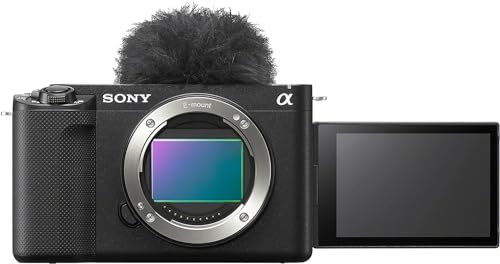
The ZV-E1 is the smallest and simplest camera in this guide, and it is a genuine full-frame body. Its 12.1MP sensor is built for 4K video, with clean high ISO output that suits dim indoor pools, and the AI processing unit drives subject recognition that locks onto a player and stays with them. At 483 g, it is the easiest camera here to hold overhead for a whole match.
For stills, the ZV-E1 is a capable second body rather than a primary one. It has no viewfinder, so you compose on the flip-out screen, and its 12.1MP resolution leaves less room to crop than the 40MP X-T5. But the autofocus is superb, the 5-axis stabilization with Dynamic Active Mode keeps handheld video smooth, and 4K at 60 frames per second in 10-bit gives clean highlight clips. It suits a coach or parent who wants great video and solid stills without a heavy kit.
Specs
- 12.1MP full-frame Exmor R CMOS sensor; AI processing unit with real-time recognition AF; 4K60 10-bit 4:2:2 video; 5-axis in-body stabilization with Dynamic Active Mode; 15-plus stops of dynamic range; single SD UHS-II slot; NP-FZ100 battery; 483 g body only; no viewfinder.
Poolside Tips for Water Polo Photography
Position matters more than gear. Shoot from the side of the pool at water level if you can, because that angle shows the players rising out of the water and keeps the ball visible. The ends of the pool give the best view of shots on goal, while the middle gives the best view of passing.
Protect your gear before the first whistle. A rain cover or a clear plastic bag with a hole for the lens keeps splashes off the body, and a lens hood stops droplets from landing on the front element. Wipe the lens between quarters. Humidity fogs lenses when you move from a cool corridor into a warm pool hall, so let the camera acclimatize for ten minutes before you shoot.
For settings, use a shutter speed of at least 1/1000 of a second to freeze the ball and the splash, and open the aperture as wide as your lens allows to keep ISO down. Use continuous autofocus with subject tracking. Shoot in RAW when you can, because mixed lighting at indoor pools often needs white balance correction that JPEG cannot fix cleanly.
Which One to Choose
Choose the Fujifilm X-T5 if stills come first and you want the most detail to crop into. Choose the Canon R8 kit if you want the lightest full-frame body with the most reliable autofocus. Choose the Sony FX30 or the Panasonic GH7 if video is half the job or more, with the FX30 winning on cinematic color and the GH7 on recording formats and stabilization. Choose the Sony ZV-E1 if you want the smallest full-frame kit with clean low light video and great tracking.
Whatever you pick, pair it with the fastest lens you can afford and a fast memory card.
What shutter speed should I use for water polo?
Use at least 1/1000 of a second to freeze the ball, the splash, and the players’ arms. If the light allows it, 1/1600 of a second gives even sharper results on fast shots, and 1/640 of a second adds a slight sense of motion in the water.
Do I need a weather sealed camera for water polo?
You need a sealed body and a sealed lens for regular poolside work, because splashes and humidity reach the deck on every match. Sealing does not make a camera waterproof, so never put it in the pool, and wipe it down after the match.
Is a full-frame camera better than a crop sensor for indoor pools?
A full-frame sensor gathers more light and keeps noise lower at the high ISO values indoor pools demand, so it has a real advantage in dim halls. A crop sensor body like the X-T5 or GH7 still works well with a fast lens, and it gives extra reach at the far end.
What lens should I pair with a water polo camera?
A 70-200mm f/2.8 zoom is the classic choice, because it covers the whole pool from the side and its wide aperture keeps ISO down. A 24-70mm f/2.8 works well from close range at the ends of the pool, and a 100-400mm zoom helps from the stands.
More from Amazon
Programs that pair well with the guide above. Offers and eligibility are set by Amazon and may change.
Free shipping on eligible items, Prime Video and more. Eligible new members can start with a free trial.
Start a Prime free trialAudiobooks and podcasts to listen to on the go. Eligible new members can start with a free trial.
Try Audible freeAd-free music streaming. Eligible new subscribers can start with a free trial.
Try Music Unlimited freeA free business account with business pricing and bulk-buying tools for work, shop or home office.
Create a business accountAs an Amazon Associate we earn from qualifying purchases.









