Our Short List of 3

- 40.2 megapixel APS-C X-Trans CMOS 5 HR sensor; 7-stop in-body stabilisation; 3-way tilting LCD; body only, X mount.

- 40.2 megapixel APS-C X-Trans CMOS 5 HR sensor; 7-stop in-body stabilisation; fully articulating LCD; model 16757045; body only, X mount.

- 20.9 megapixel APS-C DX sensor; fully articulating touchscreen; 4K video; no viewfinder; no in-body stabilisation; body only, Z mount.
All 4 Picks at a Glance
| Product | Specs | Action |
|---|---|---|
| 1. Fujifilm X-T5 |
| Check price on Amazon |
| 2. Fujifilm X-H2 |
| Check price on Amazon |
| 4. Nikon Z30 |
| Check price on Amazon |
 5. Sony ZV-1 |
| Check price on Amazon |
Key takeaways
- Five cameras for field woundwort photography, from high-resolution Fujifilm bodies to pocket Sony compacts, with field tips and honest trade-offs.
Field woundwort is a small, easily missed plant of arable field edges, and it rewards a slow, patient approach far more than long lenses or heavy kit. The five cameras below suit that kind of photography.
As an Amazon Associate, we earn from qualifying purchases.
How to Find Field Woundwort
Field woundwort, Stachys arvensis, belongs to the mint family, Lamiaceae. It is a small annual plant of cultivated ground, field margins, and the edges of arable tracks. Its pale pink blooms sit in loose whorls up the stem.
The plant is low growing, often no more than a hand span tall, with soft, slightly hairy leaves that are oval with a rounded base and a bluntly toothed edge.
Stay on paths and field tracks while you look. Do not step into a growing crop, do not pick the plant, and do not pull at stems to pose a flower. Early morning and late afternoon give low, warm light, while a light overcast day gives even, soft light.
Field Woundwort or Hedge Woundwort
Field woundwort is not hedge woundwort, and telling the two apart is the single most useful piece of field knowledge for this subject. Both belong to the same genus, Stachys, and both are members of the mint family, but they are different species with different habits and different homes. Field woundwort is Stachys arvensis. Hedge woundwort is Stachys sylvatica. Hedge woundwort was covered in batch209, a different batch.
Field woundwort is a small annual plant of open, cultivated ground. It is low and sprawling, with pale pink flowers, and it grows at field edges and on arable land. Hedge woundwort is a taller perennial plant of woodland edges, shady hedgerows, and damp ditches. It stands much taller, often knee high or more, with dark red flowers. Field woundwort creeps along the ground; hedge woundwort stands upright in shade.
Habitat is often the quickest clue: open arable ground points to field woundwort, while a shady hedge base points to hedge woundwort. Flower colour is the second clue, and height is the third: a plant that barely reaches your ankle is field woundwort, while a plant that reaches your knee is hedge woundwort. There is no delivered generic woundwort article in this series. Marsh woundwort is a third, different species, Stachys palustris, covered on its own in an earlier article.
What to Look for in a Camera for Field Woundwort
The first thing to understand is that every interchangeable-lens camera in this guide needs a close-focusing lens for tight field woundwort work. None of these bodies comes with a lens that focuses close enough, on its own, to fill the frame with a flower only a few millimetres across.
Resolution helps, because field woundwort is small and you will often crop. A 40 megapixel sensor gives you room to crop a flower out of a wider frame and still keep a clean file. A 20 megapixel sensor is enough when you can get close with the right lens, but it leaves less room to crop, so your framing needs to be closer to final in the field. A tilting or fully articulating screen is a real help, because this plant grows low and you will often be shooting from ground level.
1. Fujifilm X-T5
- 40.2 megapixel APS-C X-Trans CMOS 5 HR sensor; 7-stop in-body stabilisation; 3-way tilting LCD; body only, X mount.
The Fujifilm X-T5 is the highest resolution camera in this guide, and that resolution is its main strength for field woundwort. Its 40.2 megapixel APS-C sensor gives generous room to crop, so a flower photographed from a comfortable working distance can be enlarged in editing without falling apart. The sensor is paired with in-body stabilisation rated to seven stops, which helps a great deal when you are handholding at close range in soft morning light.
The X-T5 is a body-only camera, so you will need to add a lens, and a close-focusing macro lens in the Fujifilm X mount is the natural partner. The honest trade-offs are weight and bulk next to the smaller cameras here, and the need to buy a lens on top of the body. And like every interchangeable-lens body in this guide, the X-T5 needs a close-focusing lens for tight field woundwort work.
2. Fujifilm X-H2
- 40.2 megapixel APS-C X-Trans CMOS 5 HR sensor; 7-stop in-body stabilisation; fully articulating LCD; model 16757045; body only, X mount.
The Fujifilm X-H2 shares the same 40.2 megapixel sensor as the X-T5, so it offers the same generous cropping room for small flowers, and it adds a fully articulating screen that flips out to the side. That screen is a genuine advantage for field woundwort, because it makes vertical compositions at ground level much easier, and it lets you hold the camera low while still seeing the frame clearly.
The trade-offs are similar to the X-T5, with two additions. First, the X-H2 is the larger and heavier of the two Fujifilm bodies here. Second, this listing, model number 16757045, is often sold through third-party sellers, so check the seller and the stock status carefully before ordering, and confirm that the listing is for the body only. As with every interchangeable-lens body in this guide, the X-H2 needs a close-focusing lens for tight field woundwort work.
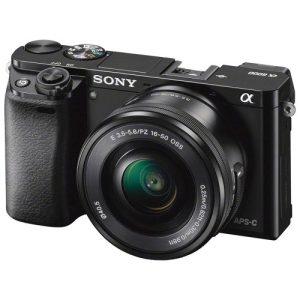
3. Sony ZV-E10 II Kit
The Sony ZV-E10 II kit is the lightest interchangeable-lens camera in this guide, and its appeal for field woundwort is simple: it is small, it is light, and the kit lens gets you photographing on the day it arrives. Its 26 megapixel APS-C sensor gives clean files with good dynamic range, and the fully articulating screen flips out for low-angle work. The camera is built around a simple control layout, with a large record button and a mode dial that keeps the essentials close at hand.
For field woundwort, the kit lens, the E PZ 16-50mm F3.5-5.6 OSS II, is a useful general lens, but it is not a macro lens, and it will not fill the frame with a single small flower. That is the honest limit of the kit: to photograph field woundwort tightly, you will need to add a close-focusing lens, just as with the other interchangeable-lens bodies here.
The camera has no viewfinder and no in-body stabilisation, and both absences matter in the field. Without a viewfinder, you compose on the rear screen, which can be hard to see in bright sunlight at an open field edge. Without in-body stabilisation, you rely on lens stabilisation and on a steady hand, or on a small support.
Specs
- 26 megapixel APS-C Exmor R CMOS sensor; kit with E PZ 16-50mm F3.5-5.6 OSS II lens; fully articulating touchscreen; no viewfinder; no in-body stabilisation.
4. Nikon Z30
- 20.9 megapixel APS-C DX sensor; fully articulating touchscreen; 4K video; no viewfinder; no in-body stabilisation; body only, Z mount.
The Nikon Z30 is a compact, friendly camera that suits a photographer who wants good image quality without a complicated camera. Its 20.9 megapixel APS-C sensor produces clean, natural-looking files, and its fully articulating screen is ideal for low-angle work at the edge of a field. The camera is small and light, it handles simply, and its autofocus is quick to lock onto a flower when you place a small focus area over it.
The Z30 is sold as a body in this listing, so you will need a Z mount lens, and for field woundwort that lens should be a close-focusing one. The trade-offs are clear and should be weighed before buying. The Z30 has no viewfinder, so you compose on the rear screen, which can wash out in bright sun on an open field. It has no in-body stabilisation, so you will need a steady hand, a faster shutter speed, or a small support when working close in soft light. And like every interchangeable-lens body in this guide, it needs a close-focusing lens for tight field woundwort work.
5. Sony ZV-1
- 20.1 megapixel 1-inch Exmor RS CMOS sensor; 24-70mm equivalent F1.8-2.8 Zeiss lens; fully articulating touchscreen; 4K video; fixed lens, no viewfinder.
The Sony ZV-1 is the only fixed-lens camera in this guide, and it is also the most pocketable. It fits in a jacket pocket, weighs under 300 grams, and its 24-70mm equivalent zoom lens focuses close enough for a satisfying flower portrait without any extra lens at all. That is its great strength for field woundwort: there is nothing to buy, nothing to change, and nothing to carry beyond the camera itself.
The 20.1 megapixel 1-inch sensor is smaller than the APS-C sensors in the other cameras here, so it gathers less light and gives less room to crop, and its depth of field is deeper at the same framing, which makes it harder to blur a busy background behind a flower. But the lens is bright, opening to F1.8 at the wide end, and the camera’s autofocus is quick and reliable on small subjects.
The trade-offs are the fixed lens, the smaller sensor, and the lack of a viewfinder. You cannot change lenses, so if you later want true macro magnification, this camera cannot grow with you in the way an interchangeable-lens body can. For a photographer who wants the simplest possible kit for field woundwort, and who is happy to work within the limits of a fixed lens, the ZV-1 is a genuinely practical choice.
How the Five Compare
The two Fujifilm bodies lead on resolution and stabilisation, and they are the best choice if you plan to crop tightly or print large. Between them, the choice is handling: the X-T5 is smaller with a tilting screen and classic dials, while the X-H2 is larger with a fully articulating screen and dual card slots.
The Sony ZV-E10 II kit and the Nikon Z30 lead on lightness and simplicity among the interchangeable-lens cameras. The Sony gives more resolution and a kit lens in the box, while the Nikon is simpler to handle and often the easier camera for a beginner.
A Morning at the Field Edge
Choose a field edge you can reach on a public path or track, and check the light before you leave. Early morning is often best, when the light is low and the air is still, and flowers that tremble in a midday breeze will hold still. Pack light: one body, one close-focusing lens, a spare battery, a memory card, and a small cloth for the lens.
Walk the edge slowly, scanning the ground rather than the horizon. When you find a plant, kneel on the path and study it before you lift the camera. Note which flowers are open, which way the light falls, and what sits behind the flower. Set the camera to aperture priority, choose a middle aperture such as F5.6 or F8 for a flower portrait, and use a small, single focus area placed on the nearest open flower. When you have the shot, move on and leave the plant exactly as you found it.
Frequently Asked Questions
How do I tell field woundwort from hedge woundwort?
Check three things: habitat, height, and flower colour. Field woundwort, Stachys arvensis, is a small annual of open arable ground with pale pink flowers, growing low at field edges. Hedge woundwort, Stachys sylvatica, is a taller perennial of shady hedgerows and woodland edges with dark red flowers. Both are in the same genus, Stachys, but they are different species.
Do I need a macro lens for field woundwort photography?
For tight photographs of a single flower, yes. Field woundwort flowers are only a few millimetres across, and none of the interchangeable-lens cameras in this guide will fill the frame with one using a standard zoom alone. The Sony ZV-1 is the exception: its fixed lens focuses close enough for a satisfying flower portrait without any extra lens, though it will not give true macro magnification.
Which camera in this guide is best for a beginner?
The Nikon Z30 is the simplest camera here, with friendly handling and a fully articulating screen, and it is a good first camera for plant photography if you accept its limits: no viewfinder, no in-body stabilisation, and the least room to crop. The Sony ZV-E10 II kit is also beginner friendly and gives more resolution plus a kit lens in the box. Either one will serve well with a close-focusing lens.
Can I photograph field woundwort in the middle of the day?
You can, but soft light is kinder to pale pink flowers. Midday sun can wash out the flowers and throw hard shadows across a low plant. If you must shoot at noon, look for a plant in light shade at a hedge edge, or shade the flower gently with your body while keeping your own shadow out of the frame. A lightly overcast day is often ideal.
More from Amazon
Programs that pair well with the guide above. Offers and eligibility are set by Amazon and may change.
Free shipping on eligible items, Prime Video and more. Eligible new members can start with a free trial.
Start a Prime free trialAudiobooks and podcasts to listen to on the go. Eligible new members can start with a free trial.
Try Audible freeAd-free music streaming. Eligible new subscribers can start with a free trial.
Try Music Unlimited freeA free business account with business pricing and bulk-buying tools for work, shop or home office.
Create a business accountAs an Amazon Associate we earn from qualifying purchases.