Our Short List of 3
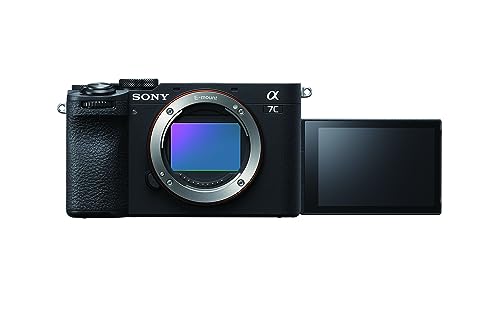
- 33MP full-frame Exmor R CMOS sensor, BIONZ XR processor, 5-axis stabilisation, 759-point autofocus, 10 fps burst, 4K 60p video, around 514 g, body only, model ILCE7CM2/B.

- 33MP full-frame Exmor R BSI CMOS sensor, BIONZ XR processor, 759-point autofocus, 10 fps burst, 4K 60p 10-bit video, dual card slots, around 658 g, body only, model ILCE7M4/BQ.

- 24.5MP partially stacked full-frame CMOS sensor, EXPEED 7 processor, 6K 60p internal RAW video, up to 120 fps JPEG burst, 5,760k-dot electronic viewfinder, body only, model 1890.
All 4 Picks at a Glance
| Product | Specs | Action |
|---|---|---|
| 1. Sony A7C II |
| Check price on Amazon |
| 2. Sony A7 IV |
| Check price on Amazon |
| 4. Nikon Z6 III |
| Check price on Amazon |
 5. Fujifilm X100VI |
| Check price on Amazon |
Our Top Picks
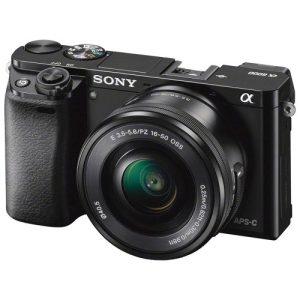
- Sony Alpha 7C II Full-Frame Interchangeable Lens Camera4.902.5 x 4.9 x 2.8 inches0.95 PoundsCheck on Amazon
- Sony Alpha 7 IV Full-frame Mirrorless Interchangeable Lens5.45 x 3.80 x 2.83 inches9.6 x 6.5 x 6.7 inches2.2 PoundsCheck on Amazon
Bitter-vetch is a small plant that rewards a slow walk and a patient eye. It grows low along woodland edges and across open heath, its pink-purple pea flowers held just above the leaf litter in late spring and early summer. The flowers are small, the stems are thin, and the plant often hides among grasses and bracken, so a camera that focuses close and handles gentle, dappled light matters far more than raw reach or burst speed. This guide looks at five cameras that suit that kind of work, and sets out the lens each one needs.
As an Amazon Associate, we earn from qualifying purchases.
Bitter-Vetch in the Field
Bitter-vetch, Lathyrus linifolius, belongs to the pea family, Fabaceae. It is a low, slender plant of woodland edges, hedge banks, and open heath, where the soil is thin and the ground is not too rich. Its leaves are narrow and grass-like, and its flowers are the familiar pea shape, a small banner petal above a keel, coloured pink-purple and fading towards blue as they age. The flowers appear in loose clusters of two to six, each one only a couple of centimetres across, so a photograph that shows the flower clearly needs a lens that can focus close and a camera that can hold fine detail in soft light.
The best time to look for bitter-vetch is from late spring into early summer, when the flowers are open and the woodland canopy is still letting light through. Morning light is kindest, soft and low, and it brings out the pink-purple of the petals without washing them out. A still day helps too, because the stems are thin and move in the slightest breeze. Work from the path, kneel low, and take time over each plant rather than trampling a patch to reach one flower. Bitter-vetch is not rare everywhere, but it is a plant of undisturbed ground, and the ground around it deserves the same care as the plant itself. Never pick it, and never dig it up.
Telling Bitter-Vetch From Meadow Vetchling
Bitter-vetch is not meadow vetchling. The two plants share the genus Lathyrus, so they are close cousins, but they are different species, and telling them apart in the field is part of the pleasure of looking for them. Bitter-vetch, Lathyrus linifolius, is a low woodland plant with pink-purple pea flowers and narrow, grass-like leaves. Meadow vetchling, Lathyrus pratensis, is a scrambling plant of meadows and grassy banks, with yellow pea flowers and broader leaves that end in tendrils. Meadow vetchling was covered in an earlier guide in this series, in a different batch, and it climbs through tall grass where bitter-vetch stays low and neat at the woodland edge.
Colour is the quickest field mark. Bitter-vetch flowers are pink-purple; meadow vetchling flowers are yellow. Habitat is the next clue. Bitter-vetch likes the shade and shelter of woodland edges and heath, while meadow vetchling prefers open meadow grass. If you find a low pink-purple pea flower at the edge of a wood, with narrow leaves and no tendrils, you are most likely looking at bitter-vetch. If the flower is yellow and the plant is scrambling through grass with tendrils reaching for support, it is meadow vetchling. There is no delivered generic vetch guide in this series, so neither plant is a form of a broader vetch article; each one stands on its own, and each one deserves its own walk.
What a Bitter-Vetch Camera Needs
Bitter-vetch photography is close work in gentle light. The flowers are small, so the camera and lens must focus close enough to fill the frame without cropping away half the detail. Every interchangeable-lens body in this guide needs a close-focusing lens for tight bitter-vetch work, and each product section below says so plainly. A short macro lens, or a standard zoom with a decent close-focus distance, is the usual answer, and it is worth choosing the lens before choosing the body.
Image stabilisation helps a great deal, because much of this work happens at low angles with the camera held away from the body, and a tripod is often impractical on a narrow woodland path. A tilting screen helps too, letting you frame a low flower without lying flat on the ground. Good autofocus matters, but it does not need to be the fastest on the market; bitter-vetch does not run away, and a camera that locks onto a small flower in dappled shade is more useful than one built for fast-moving sport. High resolution is welcome, since it gives room to crop a little, but it is no substitute for getting close in the first place.
1. Sony A7C II
- 33MP full-frame Exmor R CMOS sensor, BIONZ XR processor, 5-axis stabilisation, 759-point autofocus, 10 fps burst, 4K 60p video, around 514 g, body only, model ILCE7CM2/B.
The Sony A7C II is the most portable full-frame camera in this guide, and that matters on a long woodland walk. It packs a 33MP full-frame sensor into a body that weighs around 514 g, so it hangs lightly from a shoulder strap and slips easily into a small bag with a compact macro lens. The 5-axis stabilisation steadies handheld shots at low shutter speeds, which is exactly the situation bitter-vetch work creates under a woodland canopy. Autofocus is confident on small subjects, and the 10 fps burst is more than enough for a plant that moves only in the breeze.
The trade-offs are honest ones. The viewfinder is small, and the single card slot will bother anyone who shoots with a backup in mind. The body is compact enough that a large lens can feel unbalanced, so it pairs best with a light close-focusing lens rather than a heavy macro. For bitter-vetch, that is a fair exchange: a light body, a light lens, and a long walk without a sore shoulder. The A7C II is a body-only camera, so a close-focusing lens must be bought alongside it for tight bitter-vetch work.
2. Sony A7 IV
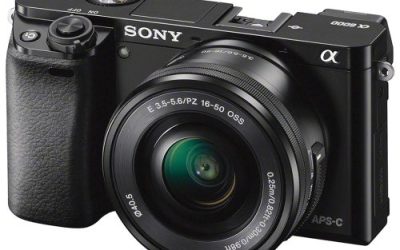
- 33MP full-frame Exmor R BSI CMOS sensor, BIONZ XR processor, 759-point autofocus, 10 fps burst, 4K 60p 10-bit video, dual card slots, around 658 g, body only, model ILCE7M4/BQ.
The Sony A7 IV is the all-rounder of this guide, a 33MP full-frame hybrid that handles stills and video with equal ease. Its autofocus is among the most reliable here, with 759 points that hold onto a small flower even when the light shifts under the canopy, and its 10 fps burst is ample for any plant subject. Dual card slots give a backup for every shot, which is a real comfort on a walk where the best flower of the day may appear only once. The 4K 60p video is a bonus for anyone who also wants to film the woodland edge as well as photograph it.
The A7 IV is heavier than the A7C II, at around 658 g, and it is a larger body in the hand, but that size brings a better grip and a more comfortable hold with a macro lens attached. It is a body-only camera, so a close-focusing lens must be bought alongside it for tight bitter-vetch work. For a photographer who wants one full-frame body that does everything well, and who is happy to carry a little more weight for the sake of dual slots and a stronger grip, the A7 IV is the steady choice.
3. Nikon Z5 II
The Nikon Z5 II is the low-light specialist of this guide, and woodland edges are often dim places. Its 24.5MP full-frame BSI sensor is paired with autofocus that works down to -10 EV, so it keeps locking onto small pink-purple flowers in shade that would leave other cameras hunting. The 7.5-stop in-body stabilisation is the strongest here, and it makes handheld close work at slow shutter speeds far more forgiving. Dual SD slots give a backup for every frame, and the bright viewfinder makes manual focus a pleasure when autofocus needs a helping hand.
The Z5 II is not the fastest camera in this guide, and its 24.5MP sensor gives less room to crop than the 33MP and 40MP bodies here, but neither of those limits matters much for bitter-vetch. The plant is still, the light is soft, and the camera rewards a slow, deliberate approach. It is a body-only camera, so a close-focusing lens must be bought alongside it for tight bitter-vetch work. For a photographer who works mainly in shade and wants the most forgiving low-light body in this guide, the Z5 II is the natural pick.
Specs
- 24.5MP full-frame BSI CMOS sensor, EXPEED 7 processor, 7.5-stop in-body stabilisation, autofocus to -10 EV, dual SD card slots, 4K 60p video, body only, model 1680.
4. Nikon Z6 III
- 24.5MP partially stacked full-frame CMOS sensor, EXPEED 7 processor, 6K 60p internal RAW video, up to 120 fps JPEG burst, 5,760k-dot electronic viewfinder, body only, model 1890.
The Nikon Z6 III brings a partially stacked sensor to this guide, and with it a burst rate and a viewfinder that the other bodies here cannot match. It shoots at up to 120 fps in JPEG, and its 5,760k-dot viewfinder is the brightest and most detailed here, which helps when judging fine focus on a small flower in dappled light. The 24.5MP full-frame sensor is the same resolution as the Z5 II, and the 6K 60p internal RAW video is a serious tool for anyone who films as well as photographs. Image stabilisation is strong, and the body feels solid and well balanced with a macro lens attached.
The honest trade-off is that much of this speed is wasted on a still plant. Bitter-vetch does not need 120 fps, and the Z6 III costs more than the Z5 II while giving the same resolution for stills. What it does give is the best viewfinder here and the most capable video, so it suits a photographer who wants a hybrid body and values the viewfinder above all. It is a body-only camera, so a close-focusing lens must be bought alongside it for tight bitter-vetch work.
5. Fujifilm X100VI
- 40.2MP APS-C X-Trans CMOS 5 HR sensor, X-Processor 5, fixed 23mm f/2 lens, 6-stop in-body stabilisation, 20 film simulation modes, 6.2K 30p video, around 521 g.
The Fujifilm X100VI is the odd one out in this guide, and it knows it. It is a fixed-lens camera, with a 23mm f/2 lens that cannot be swapped, and that fixed lens is both its charm and its limit. The 40.2MP APS-C sensor gives the most resolution here, the 6-stop stabilisation steadies handheld shots, and the 20 film simulations give a direct, film-like colour that suits the pink-purple of bitter-vetch without heavy editing. It is light, at around 521 g, quiet, and discreet, and it encourages a slow, thoughtful way of working that suits a small plant at the woodland edge.
The reach trade-off must be stated plainly. A 23mm lens is wide, and it cannot fill the frame with a small flower from a distance. For tight bitter-vetch work, the X100VI needs to be brought very close to the plant, and its minimum focus distance limits how close it can get, even with its close-focus mode. It is the weakest of the five for tight close-ups, and anyone who wants frame-filling flower portraits should choose one of the interchangeable-lens bodies above. But for wider woodland-edge scenes, with bitter-vetch in its habitat, the X100VI is a lovely camera, and its fixed lens is a creative constraint rather than a flaw.
How do I tell bitter-vetch from meadow vetchling?
Look at the flower colour and the habitat. Bitter-vetch has pink-purple pea flowers and grows low at woodland edges and on heath, with narrow, grass-like leaves and no tendrils. Meadow vetchling has yellow pea flowers and scrambles through meadow grass with tendrils. Colour alone will settle most cases in the field.
Which lens do I need for bitter-vetch photography?
Every interchangeable-lens body in this guide needs a close-focusing lens for tight bitter-vetch work. A short macro lens is the usual answer, or a standard zoom with a decent close-focus distance. The Fujifilm X100VI has a fixed 23mm lens and cannot take another lens, so it is best for wider habitat shots rather than frame-filling close-ups.
Is the Fujifilm X100VI good enough for bitter-vetch?
It is good enough for bitter-vetch in its habitat, where the 40.2MP sensor and the film-like colour shine. It is the weakest of the five for tight close-ups, because its fixed 23mm lens cannot fill the frame with a small flower from a distance. For frame-filling flower portraits, choose one of the interchangeable-lens bodies with a close-focusing lens.
Where is the best place to look for bitter-vetch?
Look along woodland edges, hedge banks, and open heath, where the soil is thin and the ground is not too rich. Late spring into early summer is the best time, when the flowers are open and the canopy still lets light through. Work from the path, kneel low, and never pick the plant.
More from Amazon
Programs that pair well with the guide above. Offers and eligibility are set by Amazon and may change.
Free shipping on eligible items, Prime Video and more. Eligible new members can start with a free trial.
Start a Prime free trialAudiobooks and podcasts to listen to on the go. Eligible new members can start with a free trial.
Try Audible freeAd-free music streaming. Eligible new subscribers can start with a free trial.
Try Music Unlimited freeA free business account with business pricing and bulk-buying tools for work, shop or home office.
Create a business accountAs an Amazon Associate we earn from qualifying purchases.