Our Short List of 3

- 24.5MP full-frame BSI sensor, EXPEED 7 processor, 8-stop in-body stabilisation, 96MP pixel-shift mode, fully articulating screen, weather sealed, around 710 g with battery and card, body only.
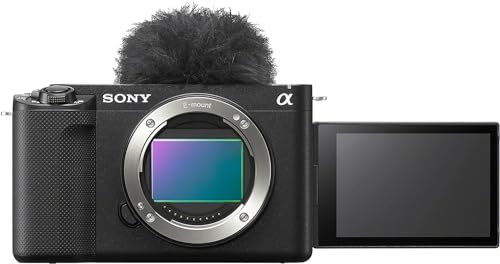
- 12.1MP full-frame Exmor R sensor, AI processing unit, 5-axis in-body stabilisation, fully articulating screen, 4K 60p video, around 483 g, body only, no viewfinder, no hot shoe.

- 26MP APS-C Super 35 sensor, BIONZ XR processor, 4K 120p video, S-Cinetone colour, real-time tracking autofocus, fully articulating screen, body only, JPEG stills only, no RAW stills, no viewfinder, no mechanical shutter.
All 4 Picks at a Glance
| Product | Specs | Action |
|---|---|---|
| 1. Nikon Zf |
| Check price on Amazon |
| 2. Sony ZV-E1 |
| Check price on Amazon |
| 3. Sony FX30 |
| Check price on Amazon |
 4. Canon EOS R8 Kit |
| Check price on Amazon |
Key takeaways
- Five cameras for rough-chervil on roadsides and meadows: close focus, fast autofocus, light bodies, field tips and how it differs from garden chervil.
Rough-chervil is a quiet plant. It grows along roadside verges, hedge bottoms and meadow edges, and most walkers pass it without a second glance. Its white flower heads are small, its stems are thin, and its leaves are finely cut. Yet for a photographer who slows down, it offers one of the most rewarding subjects of the summer: a delicate umbel of tiny white flowers, held above feathery foliage, with a purple-spotted stem that tells you exactly what you are looking at.
This guide covers five cameras that suit rough-chervil photography. Each one is chosen for close focus, reliable autofocus on small subjects, and a body light enough to carry along a country lane.
As an Amazon Associate, we earn from qualifying purchases.
What Rough-Chervil Looks Like
Rough-chervil, Chaerophyllum temulum, belongs to the carrot family, Apiaceae. It is a biennial, which means it spends its first year as a low rosette of leaves and flowers in its second year, usually between late spring and midsummer. The plant grows to about knee height, with a slender, slightly hairy stem marked by purple spots and blotches. Those spots are the single best field mark. The leaves are divided into fine, fern-like leaflets, and the flowers sit in flat-topped clusters called umbels, each one made of many tiny white blooms.
You will find rough-chervil where the ground is a little rough and a little neglected: the foot of a hedge, the edge of a wood, a grassy bank beside a lane. It likes partial shade and damp soil, and it often grows in the company of nettles, cow parsley and hogweed. The plant is mildly poisonous, so do not pick it, do not taste it, and wash your hands after a long session near it. Photograph it from the path, leave the plant exactly as you found it, and never step into a hedge bottom to get closer.
Rough-Chervil Is Not Chervil
Rough-chervil is not chervil. The two plants share a family, Apiaceae, and a similar look, but they belong to different genera: rough-chervil is Chaerophyllum, while garden chervil is Anthriscus cerefolium. The difference matters, because chervil is a familiar kitchen herb and rough-chervil is a wild plant that should never be eaten.
Garden chervil is grown in herb beds and pots. It has soft, bright green, finely divided leaves, a mild anise scent, and smooth green stems with no spots at all. Cooks use its leaves fresh in salads and sauces. Rough-chervil is a wild roadside plant. Its stem is spotted and blotched with purple, its leaves are coarser and rougher to the touch, and it has no place in the kitchen. The purple spots are the clearest way to tell them apart in the field: chervil never has them, rough-chervil almost always does.
The two plants also grow in different places. Chervil lives in tended soil, in a garden bed or a pot on a windowsill. Rough-chervil lives where nobody tends it, along lanes and hedges and at the edge of a meadow. If you are standing on a roadside verge looking at a white-flowered umbel with a purple-spotted stem, you are looking at rough-chervil. If you are standing in a herb garden looking at a soft green plant with no spots, you are looking at chervil. Keep the two apart in your notes and in your captions, and never gather a wild umbel for the kitchen.
1. Nikon Zf
- 24.5MP full-frame BSI sensor, EXPEED 7 processor, 8-stop in-body stabilisation, 96MP pixel-shift mode, fully articulating screen, weather sealed, around 710 g with battery and card, body only.
The Nikon Zf is a full-frame mirrorless camera with a retro body and modern internals. It uses a 24.5MP BSI sensor and the EXPEED 7 processor, the same engine found in Nikon’s flagship bodies. Its in-body stabilisation is rated to 8 stops, which helps when you are shooting a small flower handheld at a slow shutter speed. It also offers a 96MP pixel-shift mode for a still subject on a tripod, which suits a calm morning with no wind.
The honest trade-offs are weight and stock. At around 710 g with battery and card, the Zf is heavier than the lightest cameras in this guide, and the retro dials take a day or two to learn if you are used to a mode dial. Availability on Amazon can vary, so check the listing before you buy. It is a body-only camera, so budget for a close-focusing Z-mount lens as well.
2. Sony ZV-E1
- 12.1MP full-frame Exmor R sensor, AI processing unit, 5-axis in-body stabilisation, fully articulating screen, 4K 60p video, around 483 g, body only, no viewfinder, no hot shoe.
The Sony ZV-E1 is the smallest full-frame camera in this guide, and it is built for creators who want a light body that still delivers full-frame image quality. It uses a 12.1MP full-frame sensor tuned for low light, with an AI processing unit that drives fast, confident autofocus. The 5-axis stabilisation keeps handheld shots steady, and the fully articulating screen flips around for low-angle framing.
The honest trade-offs are the missing viewfinder and the missing hot shoe. There is no electronic viewfinder, so on a bright day you will be composing on the rear screen, which can wash out in strong sun. There is no hot shoe either, so a flash or a microphone mount needs another solution. It is a body-only camera, so a close-focusing E-mount lens is an extra purchase. The 12.1MP count is also lower than the other bodies here, which limits how far you can crop into a single tiny bloom.
3. Sony FX30
- 26MP APS-C Super 35 sensor, BIONZ XR processor, 4K 120p video, S-Cinetone colour, real-time tracking autofocus, fully articulating screen, body only, JPEG stills only, no RAW stills, no viewfinder, no mechanical shutter.
The Sony FX30 is a cinema camera, and it is the most unusual pick in this guide. It uses a 26MP APS-C Super 35 sensor and the BIONZ XR processor, with 4K recording up to 120p and the S-Cinetone colour profile. It is built for video first, but it takes stills too, and its strengths suit a roadside flower session in ways that may surprise you.
The honest trade-offs are real, and they matter. The FX30 shoots JPEG stills only, with no RAW stills, no viewfinder, and no mechanical shutter. That means less room to adjust exposure and colour after the shot, and no viewfinder to shield your eye from bright sun. It is a video-first tool, so if stills are your main goal, one of the other cameras here will serve you better. It is also a body-only camera, so a close-focusing E-mount lens is an extra purchase.
4. Canon EOS R8 Kit
- 24.2MP full-frame CMOS sensor, Dual Pixel CMOS AF II, RF 24-50mm f/4.5-6.3 IS STM kit lens included, 6K oversampled 4K 60p video, fully articulating screen, around 461 g body, no in-body stabilisation, model 5803C012.
The Canon EOS R8 kit is the most complete package in this guide, because it arrives with a lens in the box. It pairs a 24.2MP full-frame sensor with the RF 24-50mm f/4.5-6.3 IS STM kit lens, and the whole kit weighs little more than a single body from some rivals. The Dual Pixel CMOS AF II system is fast and sure, with subject detection that covers people, animals and vehicles, and it locks onto small subjects without hunting.
The honest trade-offs are stabilisation and reach. The R8 has no in-body stabilisation, so steady shots depend on the lens stabilisation and your own hands. The kit lens is slow at the long end and its close focus is modest, so for a single tiny bloom you will still want a dedicated macro lens sooner or later. The body is not weather sealed to the level of the Zf, so keep it dry on a wet morning. This is the kit listing, with the RF 24-50mm lens included, not the body-only listing.
5. Panasonic GH7
The Panasonic GH7 is a Micro Four Thirds camera built for hybrid shooters, and it is the most video-capable body in this guide. It uses a 25.2MP BSI sensor with phase detection autofocus, and it records 5.7K video at up to 60p with internal ProRes RAW and 32-bit float audio. For stills, the smaller sensor gives more depth of field than a full-frame body, which is a genuine help when you want a whole flower head sharp.
The honest trade-offs are sensor size and weight. The Micro Four Thirds sensor is smaller than the full-frame sensors in this guide, so it shows more noise in very dim light under a hedge, and the background blur is less pronounced at the same aperture. At around 805 g with battery and card, the GH7 is also the heaviest body here. It is a body-only camera, so a close-focusing Micro Four Thirds lens is an extra purchase.
Specs
- 25.2MP Micro Four Thirds BSI sensor, phase detection autofocus, 5.7K 60p video, internal ProRes RAW, 32-bit float audio, in-body stabilisation, weather sealed, around 805 g with battery and card, body only.
Which One to Choose
If you want the best all-round stills camera for rough-chervil, take the Nikon Zf. Its full-frame sensor, strong stabilisation and pixel-shift mode suit a careful flower session, and its retro dials make manual control a pleasure. If you want the lightest full-frame body, take the Sony ZV-E1, and accept the missing viewfinder. If you want to walk out of the door with a working kit and no extra purchase, take the Canon EOS R8 kit, and add a macro lens later. If video matters as much as stills, take the Panasonic GH7. The Sony FX30 is the specialist pick: choose it only if you already know you want a cinema camera and you accept its stills limits.
Whichever body you choose, the lens matters more than the body for this subject. A macro or close-focusing lens, a small aperture for depth of field, and a steady hand will do more for your rough-chervil pictures than any sensor upgrade. Buy the lens first, and let the body follow.
Field Tips for Rough-Chervil
Work in the morning, when the light is soft and the wind is usually calm. The white flowers blow out easily in harsh midday sun, so expose for the blooms and let the green background fall darker. A small aperture, around f/8 to f/11, keeps a whole umbel sharp, while a wider aperture isolates a single flower head against a soft background. Use a fast shutter speed on a breezy day, and take several frames in a burst so you can keep the sharpest one.
Stay on the path. Rough-chervil grows at the edge of the verge, and the best pictures come from kneeling at the edge rather than stepping into the hedge bottom. Never pull a stem toward you, never pick a flower, and never trample the plants beside it. The purple-spotted stem is the plant’s signature, so include it in at least one frame: a low shot that shows the spots, the feathery leaves and the white umbel together tells the whole story of the plant.
FAQ
Is rough-chervil the same plant as chervil?
No. Rough-chervil is Chaerophyllum temulum, a wild roadside plant, while garden chervil is Anthriscus cerefolium, a kitchen herb. They share the carrot family, Apiaceae, but belong to different genera. Rough-chervil has a purple-spotted stem and coarse leaves, while chervil has smooth green stems and soft leaves. Rough-chervil is mildly poisonous and should never be eaten.
How can I tell rough-chervil apart from cow parsley?
Look at the stem. Rough-chervil has purple spots and blotches along a slightly hairy stem, and its leaves are rougher and more finely divided. Cow parsley has a smooth green stem with no purple spots, grows taller, and flowers earlier in the year. Both have white umbels, so the stem is the reliable field mark.
Do I need a macro lens for rough-chervil?
Yes, for tight pictures of a single flower head. A macro lens or a close-focusing lens lets you fill the frame with the umbel and keep the tiny blooms sharp. A kit zoom can frame a whole plant from a step back, but it cannot focus close enough for a single bloom. Extension tubes are a cheaper way to get closer with a lens you already own.
When is the best time to photograph rough-chervil?
Late spring to midsummer, in the early morning. The flowers open from late spring onwards, and the light is softest in the first two hours after sunrise. Mornings are usually calmer, so the thin stems sway less, and the white flowers are easier to expose before the midday sun turns them into bright blobs.
More from Amazon
Programs that pair well with the guide above. Offers and eligibility are set by Amazon and may change.
Free shipping on eligible items, Prime Video and more. Eligible new members can start with a free trial.
Start a Prime free trialAudiobooks and podcasts to listen to on the go. Eligible new members can start with a free trial.
Try Audible freeAd-free music streaming. Eligible new subscribers can start with a free trial.
Try Music Unlimited freeA free business account with business pricing and bulk-buying tools for work, shop or home office.
Create a business accountAs an Amazon Associate we earn from qualifying purchases.