Our Short List of 3

- 40.2MP APS-C X-Trans CMOS 5 HR sensor, X-Processor 5, 7-stop IBIS, 15 fps mechanical / 20 fps electronic, 6.2K/30p video, 557 g, NP-W235 battery, body only

- 40.2MP APS-C X-Trans CMOS 5 HR sensor, X-Processor 5, 8K/30p video, CFexpress Type B + SD UHS-II slots, 160MP pixel shift, 660 g, NP-W235 battery, body only

- 20.9MP DX sensor, EXPEED 6 processor, 350 g, 11 fps, uncropped 4K/30p video, vari-angle touch screen, no viewfinder, no in-body stabilisation, body only
All 4 Picks at a Glance
| Product | Specs | Action |
|---|---|---|
| Fujifilm X-T5 |
| Check price on Amazon |
| Fujifilm X-H2 |
| Check price on Amazon |
| Nikon Z30 |
| Check price on Amazon |
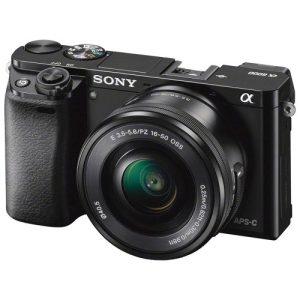
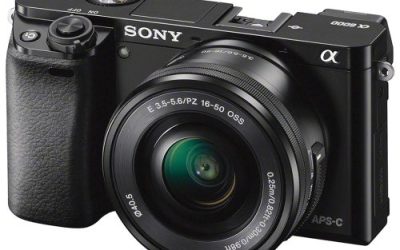
 Sony ZV-1 |
| Check price on Amazon |
Key takeaways
- Find the best cameras for rhubarb photography, from crisp stalk detail to soft morning light. Five tested picks for garden beds, with honest trade-offs.
Rhubarb is a plant that photographs far better than most people expect. The stalks rise from the soil in shades of ruby, pink, and pale green, catching low light along their length, while the huge leaves spread above them like umbrellas. A camera that can hold the colour of the stalks without blowing out the pale ones is worth its weight. This guide picks five cameras for the job, and explains how to work a rhubarb bed without damaging the plants.
As an Amazon Associate, we earn from qualifying purchases.
Rhubarb in the Garden
Rhubarb, Rheum rhabarbarum, belongs to the family Polygonaceae, the knotweed family. It is the only member of that family in this batch, and it shares the family with sorrel, which appeared in an earlier batch. The plant is a perennial, so it comes back year after year from the same crown, and a well-kept clump can live for a decade or more. The edible part is the stalk, called the petiole, which connects the leaf blade to the crown.
A rhubarb bed is a good place to practise garden photography because the subject stays still and the light changes slowly. Morning light is the best time to work. The sun sits low, the stalks glow from the side, and the dew on the leaves has not yet dried. Midday light is harder: the sun falls straight down and the leaves cast deep shade across the stalks.
The plant grows in a rosette, with stalks fanning out from a central crown. Shoot low for a fan of stalks, or shoot from above for a pattern of spokes.
Rhubarb is a spring and early summer plant. The stalks are at their best from late spring into early summer, when they are thick, firm, and brightly coloured. A camera with good colour handling will reward you here, because the difference between a ruby stalk and a pink one is subtle, and a sensor that flattens reds will lose it.
Rhubarb Is Not Celery
This is the point most people get wrong, so let it be plain: rhubarb is not celery. The two plants look alike at a glance because both are grown for thick, crisp stalks. But they are different plants from different families, and they behave differently in the garden.
Rhubarb is Rheum rhabarbarum, in the family Polygonaceae. Celery is Apium graveolens, in the family Apiaceae, the carrot family. The stalks of rhubarb are often red or pink and grow from a perennial crown that stays in the ground for years, while celery is grown as an annual or biennial that is pulled and replanted. Rhubarb leaves are huge, broad, and toxic, while celery leaves are small, feathery, and edible.
Why does this matter for a photographer? Because the two plants need different handling. Rhubarb is a long-lived plant, so you must not pull stalks out of the ground or damage the crown. Rhubarb stalks are thick and rigid, so they hold a pose in the wind, while celery stalks are thinner and more flexible. And rhubarb leaves are poisonous, so you must never handle them carelessly or let a child chew on them, while celery leaves are safe to taste.
The Leaf Warning
Rhubarb leaves are poisonous. The leaves contain oxalic acid, a compound that is harmful when eaten. Eating rhubarb leaves can cause nausea, vomiting, and in large amounts much worse. Never eat the leaves, never let children eat the leaves, and never let a pet chew on them.
Photograph only the stalks. That is the safe rule, and it is also the better photographic rule, because the stalks are the beautiful part. But do not pick a leaf, do not tear a leaf, and do not move a leaf out of the way with your hands if you can avoid it. If a leaf blocks your shot, move your feet instead.
Wash your hands after working in a rhubarb bed, especially if you have touched a broken stalk or a damaged leaf. Keep your camera bag on the path, not in the bed, and do not set a tripod leg inside the bed where it can crush a young stalk. The plant will be there next year, and the year after, if you treat it well.
What to Look for in a Rhubarb Camera
A rhubarb camera needs three things. First, it needs good colour handling, especially in the reds. Rhubarb stalks range from deep ruby to pale pink, and a camera that oversaturates reds will flatten them all into one tone. A camera with a large sensor and a good colour profile will hold the gradations.
Second, it needs close focusing. The best rhubarb pictures are often close ones: a single stalk filling the frame. A camera that cannot focus close will force you to crop, and cropping throws away resolution. If the body you choose has an interchangeable lens, plan on a macro lens or a close-focusing zoom.
Third, it needs to be comfortable to use low to the ground. Rhubarb is photographed from knee height or lower, and a camera with a tilting screen saves your neck. A light body helps too, because you will be kneeling, leaning, and holding the camera at odd angles. A heavy body with a heavy lens will tire your arms, and tired arms make blurry pictures.
Fujifilm X-T5
- 40.2MP APS-C X-Trans CMOS 5 HR sensor, X-Processor 5, 7-stop IBIS, 15 fps mechanical / 20 fps electronic, 6.2K/30p video, 557 g, NP-W235 battery, body only
The Fujifilm X-T5 is the most capable stills camera in this set, and it earns the top spot for rhubarb work. Its 40.2 megapixel APS-C sensor holds fine detail in the stalks. The film simulations are a real advantage here: the standard colour profile renders reds with restraint, so a ruby stalk stays ruby instead of sliding into orange.
The X-T5 is a body-only camera, so you will need a lens. A macro lens is the natural partner, and the 40 megapixels give you room to crop when a stalk is just out of reach. The body weighs 557 g, which is light enough for a long morning in the garden.
The trade-off is the cost of the system. The body alone is a serious purchase, and a good macro lens adds to it. Its best results come when you slow down and compose carefully.
Fujifilm X-H2
- 40.2MP APS-C X-Trans CMOS 5 HR sensor, X-Processor 5, 8K/30p video, CFexpress Type B + SD UHS-II slots, 160MP pixel shift, 660 g, NP-W235 battery, body only
The Fujifilm X-H2 shares the X-T5 sensor, so it delivers the same resolution and colour, but it is built for a different kind of work. It is a larger body with a deeper grip, a bigger viewfinder, and dual card slots, one for CFexpress Type B and one for SD UHS-II.
The X-H2 is the better choice if you shoot in poor light or if you want the security of two card slots. The body weighs 660 g, which is heavier than the X-T5, and the grip is deeper, which helps when you are holding the camera low with one hand.
Check the seller before you buy. The listing for model 16757045 is sometimes offered by third-party sellers, so confirm who is selling the camera and whether the warranty applies.
Sony ZV-E10 II
The Sony ZV-E10 II is the most approachable camera in this set, and it is the only one that arrives with a lens in the box. The kit includes the E PZ 16-50mm f/3.5-5.6 OSS II zoom, wide enough for a whole clump and long enough for a single stalk. The 26 megapixel APS-C sensor is smaller in resolution than the Fujifilm bodies, but it is more than enough for rhubarb pictures.
The ZV-E10 II has no viewfinder, which is its main weakness for garden work. In bright sunlight, composing on the rear screen can be hard, It also has no in-body stabilisation, so you will lean on the lens stabilisation and on steady hands. But the body weighs only 292 g, it focuses quickly, and its autofocus tracks a stalk in the wind without fuss.
The kit lens is not a macro lens, so very tight close-ups will be softer than the Fujifilm bodies can manage, but for whole-plant shots and stalk portraits it is more than capable.
Specs
- 26MP APS-C Exmor R CMOS sensor, BIONZ XR processor, E PZ 16-50mm f/3.5-5.6 OSS II kit lens, 292 g, NP-FZ100 battery, no viewfinder, no in-body stabilisation
Nikon Z30
- 20.9MP DX sensor, EXPEED 6 processor, 350 g, 11 fps, uncropped 4K/30p video, vari-angle touch screen, no viewfinder, no in-body stabilisation, body only
The Nikon Z30 is the lightest interchangeable-lens camera in this set, Its 20.9 megapixel DX sensor is the smallest in resolution here, but its colour is natural and easy to work with. The body weighs 350 g, and the vari-angle screen flips out to the side, which makes low-angle shots easy to compose.
The Z30 has no viewfinder, like the Sony, so bright sunlight can make the rear screen hard to read. It also has no in-body stabilisation, so you will want a lens with stabilisation, or a steady hand, or a small tripod. But the camera is simple to use, and its autofocus is reliable.
The Z30 is a body-only camera, so you will need a lens. A close-focusing zoom is the natural partner. The Z30 is the camera to choose if you want a light, simple body and you are willing to spend the savings on a good lens.
Sony ZV-1
- 20.1MP 1-inch Exmor RS CMOS sensor, fixed 24-70mm f/1.8-2.8 ZEISS lens, BIONZ X processor, 4K video, 294 g, flip screen, built-in microphone
The Sony ZV-1 is the pocket companion of this set, and it earns its place honestly. It is not the main rhubarb camera, and it does not pretend to be. It is a compact camera with a fixed 24-70mm f/1.8-2.8 ZEISS lens, a 20.1 megapixel 1-inch sensor, and a body that weighs 294 g. It fits in a jacket pocket, it focuses fast, and its bright lens is genuinely useful in the soft light of a rhubarb bed.
The fixed lens is both the strength and the limit of the ZV-1. At 24mm it takes in a whole clump, and at 70mm it frames a single stalk, but it cannot go wider or longer, and it cannot take a macro lens. The 1-inch sensor is smaller than the APS-C sensors in the other cameras, so the images have less room to crop and less depth in the shadows.
Think of the ZV-1 as the second camera, not the first. Bring it when you want to travel light or test an angle before committing to a tripod. For the serious rhubarb work, the interchangeable-lens bodies in this set will do more.
Working the Bed
A rhubarb bed is a working bed, and the rules are simple. Stay on the paths. Kneel at the edge of the bed, and do not step into it. The crown is shallow, the young stalks are fragile, and a foot in the wrong place can break a stalk that was meant to grow all season.
Light is the other rule. Morning light is best, as noted above, but overcast light is a close second. A cloudy sky acts like a giant softbox, and it evens out the reds so the stalks hold their colour without harsh highlights.
Finally, take the wide shot first. Photograph the whole clump, then the rosette, then a single stalk, then a detail of the skin.
Is rhubarb the same plant as celery?
No. Rhubarb is Rheum rhabarbarum in the family Polygonaceae, while celery is Apium graveolens in the family Apiaceae. The stalks look similar at a glance, but rhubarb stalks are often red or pink and grow from a perennial crown, while celery stalks are usually pale green. Rhubarb leaves are huge and poisonous, while celery leaves are small and edible.
Can I eat rhubarb leaves?
No, never eat rhubarb leaves. The leaves contain oxalic acid that is harmful when eaten, causing nausea, vomiting, and in large amounts much worse. Photograph only the stalks, and wash your hands after working in the bed. Keep children and pets away from the leaves.
Do I need a macro lens for rhubarb photography?
A macro lens helps, but it is not required. A close-focusing zoom will cover most rhubarb work. The Fujifilm X-T5 and X-H2 benefit most from a macro lens, because their 40 megapixel sensors reward fine detail.
When is the best time to photograph rhubarb?
Late spring into early summer, when the stalks are thick, firm, and brightly coloured. Morning light is best, with the sun low and the dew still on the leaves. Later in the season the stalks grow woody and the leaves grow coarse, and the plant is less photogenic.
More from Amazon
Programs that pair well with the guide above. Offers and eligibility are set by Amazon and may change.
Free shipping on eligible items, Prime Video and more. Eligible new members can start with a free trial.
Start a Prime free trialAudiobooks and podcasts to listen to on the go. Eligible new members can start with a free trial.
Try Audible freeAd-free music streaming. Eligible new subscribers can start with a free trial.
Try Music Unlimited freeA free business account with business pricing and bulk-buying tools for work, shop or home office.
Create a business accountAs an Amazon Associate we earn from qualifying purchases.