Our Short List of 3
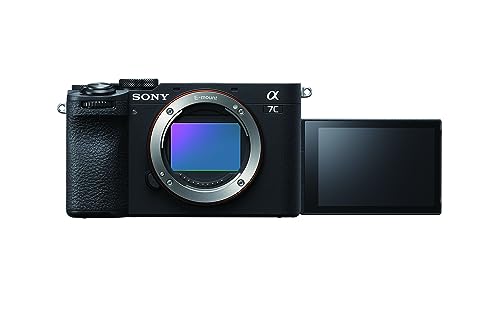
- 33MP full-frame sensor, AI processing unit, 5-axis stabilisation, 10 fps, 4K 60p, around 514 g, body only, single card slot

- 33MP full-frame sensor, 759-point Fast Hybrid AF, Real-time Eye AF, 5-axis SteadyShot, 10 fps, 4K 60p, dual slots, around 658 g, body only

- 24.5MP partially stacked sensor, 20 fps RAW / 120 fps JPEG, 8-stop IBIS, 6K/60p N-RAW, 4,000-nit viewfinder, body only
All 4 Picks at a Glance
| Product | Specs | Action |
|---|---|---|
| Sony A7C II |
| Check price on Amazon |
| Sony A7 IV |
| Check price on Amazon |
| Nikon Z6 III |
| Check price on Amazon |
 Fujifilm X100VI |
| Check price on Amazon |
Our Top Picks
- Sony Alpha 7C II Full-Frame Interchangeable Lens Camera4.902.5 x 4.9 x 2.8 inches0.95 PoundsCheck on Amazon
- Sony Alpha 7 IV Full-frame Mirrorless Interchangeable Lens5.45 x 3.80 x 2.83 inches9.6 x 6.5 x 6.7 inches2.2 PoundsCheck on Amazon
A lime tree is a generous subject. It holds glossy green fruit against dark leaves all year, it carries small white flowers in warm months, and it gives a photographer clean shapes, strong colour contrast, and a canopy that rewards a slow walk rather than a hurried snap. This guide looks at five cameras that handle lime trees well, from compact full-frame bodies to a fixed-lens favourite, and it is honest about what each one asks you to give up.
As an Amazon Associate, we earn from qualifying purchases.
The Lime Tree and Its Rutaceae Family
The lime most gardeners grow is the Key lime, Citrus aurantiifolia, a member of the Rutaceae family. Rutaceae is the citrus family, and it holds oranges, lemons, grapefruit, and the rue plant that gave the family its name. A lime tree is a small evergreen, usually three to five metres tall, with dense branches, small oval leaves, and sharp thorns tucked among the twigs. The fruit is small and round, green when ripe, with thin skin and a sharp, aromatic juice. The flowers are white, five-petalled, and strongly scented, and they draw bees through the warm months.
Photographing a lime tree means working with deep green on green. The fruit and the leaves share a colour family, so the camera has to separate tones that sit close together. Early morning and late afternoon give the canopy a gentle glow, while hard midday sun turns the leaves into flat dark shapes and blows out the pale flowers. A camera with a bright viewfinder and a screen you can read in sunlight will save you from guessing at exposure.
The best lime photographs come from the edge of the canopy, not from inside it. Walk the paths between the trees, look for fruit hanging at the outer edge, and let the background fall away into soft green. A close-focusing lens matters more than a long one, because the fruit is small and the interesting detail sits within arm’s reach. Every camera in this guide needs a macro or close-focusing lens before it is ready for tight fruit work, except the fixed-lens camera at the end, which carries its own lens.
Lime Is Not Lemon
A lime is not a lemon. Both belong to the genus Citrus, and both belong to the Rutaceae family, but they are different species, and the difference shows in the photograph. The lime, Citrus aurantiifolia, is smaller than the lemon, Citrus limon. A ripe lime is about the size of a golf ball, with smooth green skin and a sharp, almost bitter scent. A lemon is larger, oval, yellow when ripe, with thicker skin and a milder, rounder scent. Lime leaves are smaller and glossier than lemon leaves, and lime trees carry thorns that are sharper and more frequent along the branches.
The confusion is understandable. Both fruits are sour, both grow on evergreen trees, and both appear in kitchens around the world. In the garden, though, the two trees tell themselves apart. A lemon tree grows taller and more open, with longer branches and fewer thorns. A lime tree stays compact and dense, with twiggy growth and fruit that hides deep inside the canopy. The flowers differ too: lime flowers are small and white with a strong perfume, while lemon flowers carry a purple tint on the outside of the petals.
For the photographer, the distinction matters because the two fruits ask for different treatment. A lemon’s yellow skin pops against green leaves with little effort. A lime’s green skin needs careful light to stand out from the foliage around it. Shoot a lime in flat light and the fruit disappears into the leaves. Shoot it in soft side light and the round shape reads clearly. Knowing which tree you are standing under changes how you work, so check the fruit before you lift the camera.
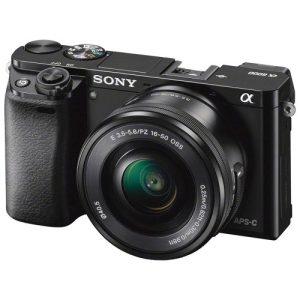
Sony A7C II
- 33MP full-frame sensor, AI processing unit, 5-axis stabilisation, 10 fps, 4K 60p, around 514 g, body only, single card slot
The Sony A7C II is the smallest full-frame camera in this guide, and it suits a lime orchard walk better than any other body here. It packs a 33-megapixel full-frame sensor into a body that weighs around 514 grams, which means it hangs lightly from a shoulder all morning and never drags at your neck. The sensor records rich colour, and the green tones of a lime canopy come through with depth rather than flatness. Autofocus is fast and confident, locking onto a single fruit even when leaves cross in front of it.
The trade-off is the single card slot and the compact viewfinder. One card slot means no automatic backup while you shoot, so carry a spare card and swap it during a break. The viewfinder is smaller than the ones on the larger bodies here, which makes careful manual focus a little harder.
Sony A7 IV
- 33MP full-frame sensor, 759-point Fast Hybrid AF, Real-time Eye AF, 5-axis SteadyShot, 10 fps, 4K 60p, dual slots, around 658 g, body only
The Sony A7 IV is the steady all-rounder of this set. It shares the 33-megapixel full-frame sensor with the A7C II, but it puts it in a larger body with a bigger viewfinder, dual card slots, and a deeper grip. The grip matters on a long orchard walk, because it lets you hold the camera securely with one hand while you part a branch with the other. The autofocus is among the best in this guide, with 759 focus points and eye detection that stays locked on a subject even in dappled light.
The A7 IV is heavier than the A7C II, at around 658 grams, and it is bulkier in the hand. That is the honest cost of the bigger viewfinder and the second card slot. For lime work, the dual slots are a real comfort, because they write a backup copy of every frame as you shoot.
Nikon Z5 II
The Nikon Z5 II is the value pick of this guide, and it is stronger than its position suggests. It carries a 24.5-megapixel full-frame BSI sensor with the EXPEED 7 processor, and its autofocus works down to minus 10 EV, which means it keeps finding focus in the dim light under a dense lime canopy. The viewfinder is bright at 3,000 nits, which is a genuine help when you are framing against a sunlit garden. Stabilisation is rated at 7.5 stops, so handheld shots at slow shutter speeds stay sharp.
The Z5 II shoots 4K 60p video and records 12-bit N-RAW in camera, which gives it more video depth than most cameras at its level. It takes two SD cards, so backup is covered. The honest weakness is resolution: 24.5 megapixels gives you less room to crop than the 33-megapixel Sonys or the 40-megapixel Fujifilm.
Specs
- 24.5MP BSI full-frame sensor, EXPEED 7, AF down to -10 EV, 7.5-stop IBIS, 3,000-nit viewfinder, 4K 60p, 12-bit N-RAW, dual SD, body only
Nikon Z6 III
- 24.5MP partially stacked sensor, 20 fps RAW / 120 fps JPEG, 8-stop IBIS, 6K/60p N-RAW, 4,000-nit viewfinder, body only
The Nikon Z6 III is the fastest camera in this guide, and the best choice if your lime work includes wind, bees, or moving branches. Its partially stacked 24.5-megapixel sensor reads out quickly, which keeps the rolling shutter effect low when a branch sways in a breeze. It shoots 20 frames per second in RAW and 120 frames per second in JPEG, so a gust that moves the fruit at the wrong moment is easy to catch on the next frame. The viewfinder is the brightest here at 4,000 nits, which makes framing in strong sun genuinely comfortable.
Video is where the Z6 III pulls away from the rest. It records 6K 60p N-RAW internally, which is more than any other camera in this set offers. For stills, the honest trade is the same as the Z5 II: 24.5 megapixels, so less cropping room than the higher-resolution bodies. It is also the heaviest Nikon here, though still easy to carry for a morning.
Fujifilm X100VI
- 40.2MP APS-C sensor, fixed 23mm f/2 lens, 6-stop IBIS, 20 film simulations incl. REALA ACE, 6.2K/30p, built-in 4-stop ND filter
The Fujifilm X100VI is the odd one out, and the most charming camera in this guide. It is a fixed-lens camera with a 40.2-megapixel APS-C sensor and a fixed 23mm f/2 lens, which gives a 35mm-equivalent field of view. That wide angle suits a lime tree well, because it lets you show the whole canopy, the path, and the fruit in one frame. The film simulations, including REALA ACE, give lime greens a warm, film-like tone straight from the camera, and the built-in 4-stop ND filter helps in bright sun.
The honest trade-off is the fixed lens. A 23mm lens cannot reach a single fruit hanging deep in the canopy, and it cannot give you the tight close-up that a macro lens offers. The X100VI works best as a companion camera for wide orchard scenes, garden paths, and the tree in its setting, while another body handles the close fruit work.
How the Five Compare
For pure lime fruit work, the A7 IV is the safest single pick, because it combines resolution, autofocus, and dual card slots in one body. For a long walk, the A7C II is the kindest to carry. For low light under a dense canopy, the Z5 II focuses where the others hesitate. For wind and motion, the Z6 III keeps up best.
Working in the Orchard
A lime orchard is private land more often than not, so ask permission before you walk in. Stay on the paths between the rows, and do not step into the planted beds. Lime trees have sharp thorns, so wear gloves when you part a branch, and watch where you put your hands. Do not pick fruit for a photograph, and do not bend a branch to bring fruit closer to the lens. The tree will still be there tomorrow, and the fruit you leave behind will feed someone.
Light is the other discipline. Lime trees look best in soft light, so plan your walk for the morning or the late afternoon. Midday sun flattens the canopy and turns the leaves into dark shapes with bright edges. A polarising filter helps cut the glare off glossy leaves, and it is worth carrying one if your lens takes filters.
Carry water, wear a hat, and give yourself time. A lime orchard rewards a slow walk and a patient eye. The best fruit often hangs at the far edge of the canopy, half hidden by leaves, and it takes a few minutes of looking to find it. When you do, frame it against a soft background and focus on the fruit itself.
Is a lime the same fruit as a lemon?
No. A lime is Citrus aurantiifolia and a lemon is Citrus limon. They share the genus Citrus and the family Rutaceae, but they are different species. A lime is smaller, round, green-skinned, and sharper in flavour. A lemon is larger, oval, yellow when ripe, with thicker skin. Lime trees stay compact and thorny, while lemon trees grow taller and more open. In the photograph, a lemon’s yellow skin stands out from green leaves easily, while a lime’s green skin needs soft side light to separate from the foliage.
Do I need a macro lens for lime photography?
A macro or close-focusing lens helps a great deal, because lime fruit is small and the strongest images fill the frame with a single fruit and its leaves. Every interchangeable-lens camera in this guide needs such a lens before it is ready for tight fruit work. The Fujifilm X100VI is the exception, because its fixed 23mm lens cannot focus as closely, so it suits wide orchard scenes rather than tight close-ups. If you already own a close-focusing zoom, it will serve well for lime trees.
Which camera is best for a lime orchard walk?
The Sony A7C II is the easiest to carry all morning, at around 514 grams, and its 33-megapixel sensor records rich green tones. The Sony A7 IV is the safer single pick, with a bigger viewfinder, a deeper grip, and dual card slots. The Nikon Z5 II focuses best in dim light under a dense canopy, and the Nikon Z6 III handles wind and moving branches best. The Fujifilm X100VI is the warmest choice for wide scenes of the orchard itself.
Can I photograph lime trees in a home garden?
Yes, and a home garden is often the best place to begin. Ask the owner first, stay on the paths, and do not step into the planted beds or pick fruit for a photograph. Lime trees have sharp thorns, so wear gloves when you part a branch. Morning and late afternoon give the softest light, and a close-focusing lens will let you fill the frame with a single fruit. Leave the tree as you found it, and the garden will welcome you back.
More from Amazon
Programs that pair well with the guide above. Offers and eligibility are set by Amazon and may change.
Free shipping on eligible items, Prime Video and more. Eligible new members can start with a free trial.
Start a Prime free trialAudiobooks and podcasts to listen to on the go. Eligible new members can start with a free trial.
Try Audible freeAd-free music streaming. Eligible new subscribers can start with a free trial.
Try Music Unlimited freeA free business account with business pricing and bulk-buying tools for work, shop or home office.
Create a business accountAs an Amazon Associate we earn from qualifying purchases.