
Our Top Picks
A long trail asks a lot from a camera. It has to ride in a pack for hours, survive dust on a dry ridge, shrug off a sudden mountain shower, and still be ready the moment the light breaks over a summit. The best cameras for hiking photography balance three things that rarely sit together: low weight, real weather sealing, and image quality strong enough for large prints.


This guide looks at five bodies built for that job. Each one earns its place for a different kind of hiker, from the ultralight walker to the wildlife watcher. All five are mirrorless bodies with strong autofocus, good battery life, and sealing that holds up when the weather turns.
As an Amazon Associate, we earn from qualifying purchases.
What to Look For in a Hiking Camera
Weight comes first, because every gram multiplies over ten miles. A body under 700 grams feels very different at the end of a climb than one over 900 grams, and the lens you pair with it matters just as much. APS-C bodies have a natural edge here: smaller sensors allow smaller lenses, and a compact zoom can cover a wide range without dragging your pack down. Full-frame bodies cost more in weight, but they pay you back with cleaner files at dawn and dusk.
Weather sealing is the second priority. Trail weather changes fast, and a camera that cannot handle rain, dust, and cold will spend half the hike zipped inside your pack. Look for bodies with sealing around the buttons, dials, and battery door, and pair them with a sealed lens so the system is protected as a whole. A body that is only splash resistant can still serve well with a simple rain cover, but full sealing lets you keep shooting through a passing shower.
Battery life matters more on a trail than it does anywhere else. There is no wall socket at a mountain hut, and cold air drains batteries faster than a warm studio ever will. Bodies with capacity for 400 or more shots per charge give you a comfortable margin, and carrying one spare battery in an inside pocket, close to your body heat, is a habit worth building. USB charging is a useful bonus: a small power bank can top up a camera at camp without a separate charger.
Autofocus speed decides whether you catch the marmot on the rock or only the empty rock. Animal and bird detection, now common on modern mirrorless bodies, locks onto wildlife quickly and holds focus while the animal moves. For landscapes, autofocus matters less, but a fast, sure system still helps when a cloud gap opens for ten seconds and you need the shot now.
1. Canon EOS R7
The Canon EOS R7 is the lightest serious option in this guide, and that alone makes it a natural hiking companion. Its APS-C sensor keeps lenses small, its body weighs just over 600 grams, and its autofocus borrows heavily from Canon’s flagship bodies. On a trail, that combination means you can carry a capable zoom all day without feeling it, and still lock onto a bird in flight across a valley.
The R7 pairs especially well with Canon’s compact RF-S lenses, and the 1.6x crop factor turns a modest telephoto into a long wildlife lens. A 100-400mm zoom becomes effectively 160-640mm, which is real reach for animals you cannot approach. The in-body stabilization is rated for up to 7 stops with a compatible lens, which helps when you are shooting handheld at dusk after a long climb, when your arms are tired and your hands are less steady than they were at the trailhead.
Specs
- Sensor: 32.5MP APS-C CMOS
- Mount: Canon RF
- Weight: 612 g (body only)
- Stabilization: In-body, up to 7 stops
- ASIN: B0B27KKNZV
2. Nikon Z6 II
The Nikon Z6 II is the full-frame all-rounder of this group, and it suits hikers who want one body for everything: landscapes at dawn, portraits at a mountain lodge, and wildlife along the trail. Its 24.5MP sensor is a sweet spot for hiking, because the files are large enough for big prints yet small enough that a memory card holds a whole weekend of shooting.
Nikon’s Z mount gives you access to compact f/4 zooms that are well matched to trail use, including a 24-120mm f/4 that covers wide landscapes and moderate telephoto in a single lens. That one-lens approach is worth a lot on a hike: fewer lens changes mean less dust on the sensor and less weight in the pack. The Z6 II has two card slots, which is a quiet reassurance on a trip you cannot repeat, since a backup copy of every frame is written as you shoot.
Battery life is strong, with capacity above 400 shots per charge, and the camera can charge over USB-C from a power bank at camp. The grip is deep and comfortable, which matters when you are carrying the camera in hand for hours, and the controls fall easily under gloved fingers in cold weather.
Specs
- Sensor: 24.5MP full-frame CMOS
- Mount: Nikon Z
- Weight: 705 g (body only)
- Stabilization: In-body, 5-axis
- ASIN: B08L5Z4355
3. Sony a7 III
The Sony a7 III remains one of the best value full-frame bodies for hiking, years after its release. Its battery life is the strongest in this guide, with capacity near 700 shots per charge, which means a single battery can often cover a full day on the trail. For a hiker counting grams, leaving a spare battery at home is a real saving, and the a7 III makes that possible.
The sensor delivers clean files at high ISO, which matters when you are shooting in a dark forest or at blue hour on a ridge. The autofocus system, with eye detection for people and animals, is fast and dependable, and the large Sony E-mount lens lineup includes many compact options, from the small 28-60mm kit zoom to the light 35mm f/1.8 prime that fits easily in a jacket pocket.
One honest note: the a7 III has only partial weather sealing compared with newer bodies, so it deserves a rain cover in a real downpour. In light rain and dust it holds up fine, and a simple plastic cover costs almost nothing and weighs less than a spare lens cap. The body is also one of the lightest full-frame options here, which keeps the total pack weight down when paired with a compact zoom.
Specs
- Sensor: 24.2MP full-frame CMOS
- Mount: Sony E
- Weight: 650 g (body only)
- Stabilization: In-body, 5-axis
- ASIN: B07B43WPVK
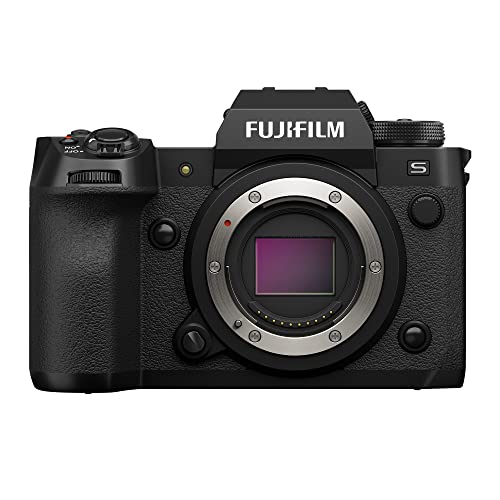
4. Fujifilm X-H2S
The Fujifilm X-H2S is the speed pick of this guide, and it suits hikers who care as much about wildlife as landscapes. Its stacked APS-C sensor reads out extremely fast, which means almost no distortion when you pan after a moving animal, and its autofocus tracks birds and animals with a confidence that few bodies in this class can match. If your hikes often end with a long wait at a viewpoint for a golden eagle or a mountain goat, this is the body to carry.
The X-H2S is also the toughest APS-C body here, with full weather sealing and a deep grip that works well with gloves. Its battery is larger than the one in most Fujifilm bodies, and the camera can shoot long bursts without slowing, which helps when a bird takes off and you want the whole sequence. Video shooters get a bonus: the camera records excellent 4K footage, so a hiking film and a set of stills can come from the same body.
Specs
- Sensor: 26.1MP APS-C stacked CMOS
- Mount: Fujifilm X
- Weight: 660 g (body only)
- Stabilization: In-body, up to 7 stops
- ASIN: B0B2F5VHLM
5. OM System OM-1 with 12-40mm f/2.8 PRO II Lens

The OM System OM-1, sold here with the 12-40mm f/2.8 PRO II lens, is the most trail-proof kit in this guide. Its Micro Four Thirds sensor is smaller than the others, which keeps both the body and the lenses remarkably compact, and the whole system carries an IP53 seal for dust and splash protection. In practical terms, that means you can keep shooting in rain that would send other cameras back into the pack.
The 12-40mm lens covers a 24-80mm equivalent range, which handles wide valley views and moderate portraits in one lens, and the constant f/2.8 aperture stays bright at every focal length. The OM-1 also has computational features that are genuinely useful on a hike: a live composite mode for night-sky trails, a high-resolution mode that builds a 50MP file from a tripod, and a deep buffer for wildlife bursts. The autofocus includes bird detection that works well on small, fast subjects.
Battery life is respectable, and the camera charges over USB-C, so a power bank at camp covers multi-day trips. The main compromise is the smaller sensor, which shows more noise at high ISO than the full-frame bodies here. For daylight hiking, which is when most trail photography happens, that gap is small, and the weight saving is large.
Specs
- Sensor: 20.4MP Micro Four Thirds stacked CMOS
- Mount: Micro Four Thirds
- Weight: 599 g (body only, kit lens adds 382 g)
- Stabilization: In-body, up to 8 stops
- ASIN: B09S5G7JSL
Hiking Photography Tips
Pack your camera for access, not just protection. A camera buried at the bottom of a pack will not get used, and the best shot of the day often appears with no warning. A chest harness or a clip on your sternum strap keeps the body within two seconds’ reach. If you prefer the pack, keep the camera in a top pocket or a padded insert near the lid.
Protect the lens from trail dust. A simple UV filter or a lens hood keeps wind-blown grit off the front element, and a microfiber cloth in a zip pocket lets you wipe the glass without digging through your pack. Change lenses only when sheltered from wind, with the mount pointed down so dust falls away from the sensor.
Mind the light on the trail. Midday sun in the mountains is harsh, with deep shadows in the trees and bright snow or rock above. Early morning and late afternoon give you warm, low light and long shadows that show the shape of the land. If you must shoot at noon, look for shade, shoot into the forest canopy, or use the harsh light for bold graphic compositions rather than fighting it.
Carry water for yourself before you carry extra gear. A dehydrated photographer makes poor decisions and misses shots. Keep your water easy to reach, drink on a schedule, and remember that a camera is only as good as the person carrying it.
Frequently Asked Questions
How much should a hiking camera weigh?
Aim for a body under 750 grams and a total kit under 1.5 kilograms if you walk long distances. APS-C and Micro Four Thirds systems make that target easy to hit, while full-frame kits need careful lens choices to stay light. Weigh your full kit before the trip so there are no surprises on the trail.
Do I need weather sealing for hiking photography?
Yes, if you hike in mountains or in any place where weather changes fast. Sealing protects against rain and dust and lets you keep shooting when conditions turn. A body without full sealing can still work well with a cheap rain cover, but sealing removes one worry from a long day outdoors.
Is one zoom lens enough for a hiking trip?
For most hikers, yes. A 24-105mm or 24-120mm equivalent zoom covers wide landscapes, trail portraits, and moderate wildlife in a single lens, and it keeps your pack light and your sensor clean. A second lens is worth carrying only if wildlife is a main goal of the trip.
Should I bring a tripod on a hike?
A full tripod is rarely worth the weight on a long trail, but a small travel tripod or a lightweight monopod can be useful for dawn and dusk shots, night-sky trails, and high-resolution modes. Many hikers use a bean bag or a rolled jacket on a rock instead, which costs no extra weight and works well for low-angle landscape shots.
Conclusion
The best hiking camera is the one that is light enough to carry all day, tough enough to survive the weather, and quick enough to catch the moment when the trail gives it to you. The Canon R7 is the lightest serious choice, the Nikon Z6 II is the most versatile full-frame option, the Sony a7 III offers the longest battery life, the Fujifilm X-H2S brings flagship speed for wildlife, and the OM System OM-1 kit is the most weatherproof system in this guide.
Unlike adventure shooting in rough terrain and river crossings, where maximum toughness matters most, hiking rewards lightness and all-day comfort on long trails. Choose the body that matches the trails you actually walk, pair it with one good zoom, and keep it within reach.
More from Amazon
Programs that pair well with the guide above. Offers and eligibility are set by Amazon and may change.
Free shipping on eligible items, Prime Video and more. Eligible new members can start with a free trial.
Start a Prime free trialAudiobooks and podcasts to listen to on the go. Eligible new members can start with a free trial.
Try Audible freeAd-free music streaming. Eligible new subscribers can start with a free trial.
Try Music Unlimited freeA free business account with business pricing and bulk-buying tools for work, shop or home office.
Create a business accountAs an Amazon Associate we earn from qualifying purchases.









