Key takeaways
- Pro: 1-inch 50 MP camera is exceptional for the weight.
- Pro: up to 36 minutes of flight on the standard battery.
- Pro: EU C0 class allows the easiest operation in Europe.
- Pro: folds small enough for a daypack.
- Con: premium price tier and the extended battery pushes weight over 250 g.
- Con: US availability is limited to third-party sellers with no manufacturer care plan.
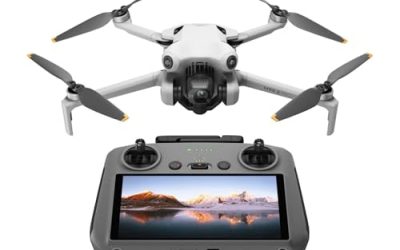
The best travel drone for most people in 2026 is the DJI Mini 5 Pro: it weighs about 249.9 g, carries a 1-inch 50 MP camera and flies for up to about 36 minutes on the standard battery. The DJI Mini 4 Pro and DJI Flip are cheaper compact alternatives, the DJI Air 3S is the pick if image quality matters more than weight, and the DJI Mini 4K is the budget entry point. One buying fact now matters as much as any spec: in the United States, new foreign-made drone models can no longer receive FCC authorization, so availability depends on what is already in the retail channel. The nine picks below include non-DJI options for that reason.
Quick Comparison of the 9 Best Travel Drones
| Pick | Weight | Camera | Flight time (stated) | Price tier | Best for |
|---|---|---|---|---|---|
| DJI Mini 5 Pro | About 249.9 g | 1-inch, 50 MP | Up to 36 min | Premium | Best overall travel drone |
| DJI Mini 4 Pro | 249 g | 1/1.3-inch, 4K HDR | About 34 min | Mid to premium | Proven all-rounder, obstacle sensing |
| DJI Flip | Under 249 g | 1/1.3-inch, 4K/60 | About 31 min | Mid | Beginners, propeller guards |
| DJI Mini 4K | About 246 g | 4K/30 | About 31 min | Budget | Cheapest real camera drone |
| DJI Air 3S | About 724 g | 1-inch main plus 70 mm tele | Up to 45 min | Premium | Image quality, 4K/120 |
| DJI Neo 2 | About 151 g class | 4K | About 19 min class | Budget to mid | Pocket selfie and follow shots |
| Autel EVO Nano+ | 249 g class | 1/1.28-inch, 50 MP | About 28 min | Mid to premium | Non-DJI alternative |
| Potensic Atom 2 | 249 g class | 1/2-inch class, 4K | About 30 min class | Budget to mid | Value, no DJI app |
| HoverAir X1 Pro class | About 200 g class | 4K | About 15 min class | Mid | Hands-free self-tracking |
Specs come from manufacturer pages and published reviews and are “up to” figures measured under ideal conditions; real flight time is typically 10 to 20 percent lower in wind and cold. Entries marked “class” are described by typical specification because exact numbers differ by kit and revision.
Read This First: Buying a Drone in the US in Late 2026
On 22 December 2025 the FCC added foreign-made drones and key components to its Covered List, which means no new model from DJI, Autel, Potensic, HoverAir or other overseas makers can receive FCC equipment authorization. Aircraft that were authorized before the cutoff are still legal to own, sell and fly, and reports indicate the Mini 5 Pro and Neo 2 were both authorized in 2025. In practice, DJI no longer sells drones through its own US store, so they reach buyers through third-party retailers, with warranty and service handled by the seller rather than the manufacturer. New 2026 DJI models, such as a Mini 6 Pro or Air 4, cannot be legally sold in the US while the listing stands.
This guide is written for a global audience. If you are in the US, check that the model you want is in stock at a reputable retailer, understand that support runs through the seller, and expect the situation to change. If you are in the EU, UK or elsewhere, the usual DJI lineup remains available, and the class markings (C0, C1) described below apply.
1. DJI Mini 5 Pro: Best Overall Travel Drone
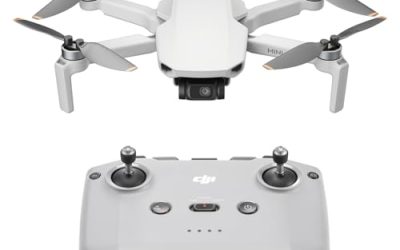
Spec line: about 249.9 g (stated, with a margin of roughly 4 g), 1-inch 50 MP sensor, up to about 36 minutes on the standard battery (up to about 52 minutes with the larger battery that adds weight), EU C0 class.
The Mini 5 Pro takes the sub-250 g formula and pairs it with a 1-inch sensor, a leap in low-light and dynamic range compared with the smaller sensors in earlier Minis. It is the closest thing to a full-size camera drone that still slips into a jacket pocket or the corner of a camera bag.
The weight needs a note. DJI states 249.9 g with a tolerance, and independent reviewers have reported production units a few grams over 250 g on a scale. Where the 250 g line triggers registration, that margin matters, so check your local rules and register if in doubt. Availability also differs by country, and the drone was not officially launched through DJI’s own US channel.
Best for: Travelers who want the best image quality in the lightest class.
Skip if: You are on a tight budget or your country’s rules do not allow it.
- Pro: 1-inch 50 MP camera is exceptional for the weight.
- Pro: up to 36 minutes of flight on the standard battery.
- Pro: EU C0 class allows the easiest operation in Europe.
- Pro: folds small enough for a daypack.
- Con: premium price tier and the extended battery pushes weight over 250 g.
- Con: US availability is limited to third-party sellers with no manufacturer care plan.
2. DJI Mini 4 Pro: Best Proven All-Rounder
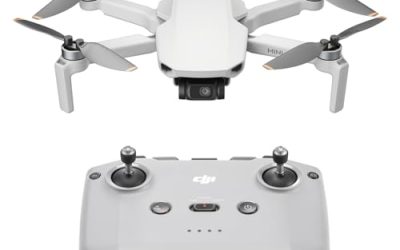
Spec line: 249 g, 1/1.3-inch sensor, 4K HDR video, omnidirectional obstacle sensing, about 34 minutes on the standard battery (longer with the heavier Plus battery).
The Mini 4 Pro is the model many pilots still recommend because it is mature, well supported and now more affordable than the Mini 5 Pro. Its omnidirectional obstacle sensing is the feature that matters on trips: it makes flying near trees, rocks and buildings less risky, which helps on unfamiliar terrain. Image quality from the 1/1.3-inch sensor is excellent in good light.
It weighs 249 g, so it stays under the common 250 g threshold, and it has been widely available at reduced prices as newer models launched.
Best for: Travelers who want obstacle sensing and top-tier reliability at a lower price than the newest model.
Skip if: You want the larger 1-inch sensor.
- Pro: omnidirectional obstacle sensing for safer flying.
- Pro: 249 g and 34 minutes of flight on the standard battery.
- Pro: mature product with plenty of accessories.
- Con: smaller sensor than the Mini 5 Pro and Air 3S.
- Con: no longer the newest model.
3. DJI Flip: Best for Beginners and Flying Near People
Spec line: under 249 g, 1/1.3-inch sensor, 4K/60 HDR video, built-in carbon-fiber propeller guards, about 31 minutes of flight.
The Flip is DJI’s answer for people who want a simple, safe drone. The integrated propeller guards protect both the blades and anything the drone touches, which gives new pilots more confidence around trees, friends and family. It folds into a small, compact shape that fits a travel bag.
The guards add a little drag and the design prioritises ease over absolute performance, but the camera is good and the price tier sits below the Mini 4 Pro and Mini 5 Pro. For a first drone intended for holiday video and social clips, it is a strong choice.
Best for: First-time pilots, families and casual travel video.
Skip if: You want omnidirectional obstacle sensing or maximum image quality.
- Pro: propeller guards make it forgiving for beginners.
- Pro: 1/1.3-inch sensor with 4K/60 video.
- Pro: under 249 g and about 31 minutes of flight.
- Con: fewer advanced obstacle-sensing features than the Mini 4 Pro.
- Con: guards add bulk compared with bare-prop designs.
4. DJI Mini 4K: Best Budget Travel Drone
Spec line: about 246 g, 4K/30 camera, about 31 minutes of flight, 3-axis gimbal, entry-level price tier.
The Mini 4K is the cheapest way to get a stabilised 4K camera in the air from DJI. It is stripped of the features of the Pro models, with no obstacle sensing and a smaller sensor, but it keeps the sub-250 g weight and the long flight time. For learning to fly and capturing sunny-day landscapes it is more than adequate.
The trade-off is dynamic range and low-light capability, which fall behind the Pro models. Fly it in good light, keep it in sight, and it delivers great value.
Best for: Budget buyers and learners.
Skip if: You shoot in low light or need obstacle avoidance.
- Pro: lowest price tier of the DJI travel options.
- Pro: 4K video and a 3-axis gimbal.
- Pro: about 246 g and roughly 31 minutes of flight.
- Con: no obstacle sensing.
- Con: smaller sensor and limited low-light performance.
5. DJI Air 3S: Best Image Quality in a Travel-Friendly Body
Spec line: about 724 g, 1-inch main camera plus a 70 mm telephoto, 4K/120 video, up to about 45 minutes of flight, EU C1 class.
The Air 3S is not a sub-250 g drone, and it is not trying to be. It weighs about 724 g, which means registration and, in many countries, additional rules. In exchange you get a 1-inch main sensor, a 70 mm medium-telephoto camera for compressed landscapes and tight framing, 4K slow-motion at up to 120 frames per second, and up to 45 minutes of flight.
It still folds into a bag the size of a small camera case, and for photographers and videographers who value the telephoto lens, it is the better travel tool. In the EU it is C1 class, which needs an A1/A3 competency certificate.
Best for: Photographers and content creators who will accept a heavier kit for more quality and range.
Skip if: You want to avoid registration and extra rules, or you pack extremely light.
- Pro: dual camera with 1-inch main sensor and 70 mm telephoto.
- Pro: up to 45 minutes of flight time.
- Pro: 4K/120 for slow motion and strong low-light performance.
- Con: about 724 g puts it in a stricter regulatory class.
- Con: premium price tier and bulkier than the Mini series.
6. DJI Neo 2: Best Pocket-Sized Selfie and Follow Drone
Spec line: about 151 g class, 4K video, short flight time of roughly 19 minutes in manufacturer figures, palm takeoff and subject tracking.
The Neo 2 is a different idea from the Mini line. It is a tiny, ultralight drone designed to follow you, take off from your palm and capture social-style clips with almost no flying skill. The weight is far below the 250 g line, which simplifies carrying and rules in many regions.
It is not for cinematic work: the sensor is smaller and flight time is shorter. But for hiking, beach and city clips, where you want to film yourself, it is fun, easy and affordable. The FCC authorization it received in 2025 means it can still be sold in the United States, as noted above.
Best for: Solo travelers and content creators filming themselves.
Skip if: You want the best image quality or long flights.
- Pro: extremely light and pocketable.
- Pro: easy follow modes and palm takeoff.
- Pro: low price tier compared with the Mini line.
- Con: short flight time and smaller sensor.
- Con: less stable in strong wind because of its low weight.
7. Autel EVO Nano+: Best Non-DJI Alternative
Spec line: 249 g class, 1/1.28-inch 50 MP sensor, about 28 minutes of flight, obstacle sensing, 4K video.
Autel’s Nano+ is the most direct competitor to the Mini series from a different manufacturer. It sits in the sub-250 g class, uses a large 50 MP sensor with a wide aperture for low-light work and provides obstacle sensing, which makes it a capable travel drone.
The caveat is the same regulatory one: Autel is also on the list of covered manufacturers, so check availability and support carefully if you are buying in the US. Outside that market it is a good alternative if you prefer not to use DJI’s app and ecosystem.
Best for: Pilots who want a competitor to DJI in the same weight class.
Skip if: You need the biggest accessory ecosystem or are buying in a restricted market.
- Pro: large sensor and 50 MP stills in a 249 g class body.
- Pro: obstacle sensing and a capable gimbal.
- Pro: independent of DJI’s app ecosystem.
- Con: shorter flight time than the latest Minis.
- Con: smaller accessory market and support network.
8. Potensic Atom 2: Best Value Alternative
Spec line: 249 g class, 4K video with a small sensor, roughly 30 minutes of flight in manufacturer figures, foldable body.
Potensic’s Atom line is the budget challenger in the sub-250 g class. It offers 4K video, a three-axis gimbal and a foldable design at a lower price tier than DJI’s Minis, and it is popular with people who want a straightforward camera drone without paying for the latest sensor.
Expect weaker low-light performance, less sophisticated obstacle avoidance and a smaller support ecosystem. Used in daylight on open terrain, it produces good results for the cost, and it is a sensible choice for those who want to try drone photography without a large commitment. Like other foreign-made brands, availability in the United States depends on existing retail stock.
Best for: Value-focused buyers and beginners.
Skip if: You shoot at dusk or need advanced obstacle sensing.
- Pro: budget price tier with a 249 g class folding body.
- Pro: 4K video and a stabilised gimbal.
- Pro: roughly 30 minutes of flight in manufacturer figures.
- Con: smaller sensor and lower low-light quality.
- Con: limited support and accessory ecosystem.
9. HoverAir X1 Pro Class: Best Hands-Free Self-Tracking Drone
Spec line: about 200 g class, folding body with propeller guards, 4K video, preset flight modes, roughly 15 minutes of flight.
The HoverAir X1 line from Zero Zero Robotics makes a different bargain: no controller, no learning curve. You place the drone on your hand, choose a preset mode such as follow, orbit or zoom-out, and it flies itself and returns. It folds flat to about the size of a thick phone.
That makes it exceptionally easy to pack and use, especially for solo travelers filming themselves. The short flight time and reliance on presets mean it will not replace a conventional drone for cinematic work, but as a second, effortless camera it is highly effective. New models in this category are subject to the same US availability limits discussed above.
Best for: Solo travelers and vloggers who want a hands-free camera.
Skip if: You want manual control and long flights.
- Pro: extremely portable and simple to use.
- Pro: preset flight modes require no piloting skill.
- Pro: propeller guards for safer launches.
- Con: short flight time of around 15 minutes.
- Con: limited manual control and creative flexibility.
Common Travel Drone Mistakes to Avoid
- Checking the battery in your suitcase. Airlines require lithium batteries in carry-on baggage and normally limit them by watt-hours, typically to 100 Wh without approval. Drone batteries are generally under that limit, but check your airline’s rules.
- Skipping destination research. Rules differ widely. Some countries require permits or ban drones in cities, parks or near airports. Look up the local authority before you travel.
- Flying with one battery. A single 30-minute battery gives about 20 minutes of useful shooting after takeoff, landing and wind losses. Buy a Fly More kit or two spare batteries.
- Ignoring wind. Sub-250 g drones are sensitive to gusts. If the app warns of high wind, land. A drone that cannot return against the breeze is a lost drone.
- Not updating firmware and maps before the trip. Fresh firmware and geofencing data avoid problems at the airport or launch point.
- Poor storage. Pack props and gimbal guards, and use a padded case to protect the gimbal, which is the most delicate component.
- Shooting only in auto. Spend time learning exposure and color profiles, because good light, not the model, determines most of the picture quality.
How to Travel Safely with a Drone
- Carry it on. Keep the drone and batteries in your cabin bag, with batteries in a fireproof pouch and terminals covered.
- Know the battery limit. Most intelligent flight batteries are under 100 Wh, which airlines usually accept; check the label and the airline’s policy.
- Carry documentation. Registration papers, operator ID and any permits should be in your bag, along with proof of insurance if your country requires it.
- Charge before security. If asked to power on devices, a charged drone, controller and phone make the process quick.
- Plan your flights. Check airspace maps, no-fly zones and local events on the day you fly, and keep the drone within visual line of sight.
- Respect people and wildlife. Keep distance from crowds and wildlife, and never fly over people who have not agreed.
Comparing the DJI Air 3S and the Mini Series for Travel
The most common decision in this category is whether to pay in weight for image quality. The table below shows the trade-offs.
| Factor | DJI Mini 5 Pro | DJI Mini 4 Pro | DJI Air 3S |
|---|---|---|---|
| Weight | About 249.9 g | 249 g | About 724 g |
| Main sensor | 1-inch | 1/1.3-inch | 1-inch |
| Telephoto camera | No | No | Yes, 70 mm |
| Max flight time | Up to about 36 min | About 34 min | Up to about 45 min |
| Slow-motion | Up to 4K/120 class | Up to 4K/100 | 4K/120 |
| EU class | C0 | C0 | C1 |
| Registration burden | Light, near 250 g threshold | Light | Heavier, more rules |
For most travelers the Mini 5 Pro captures almost the Air’s image quality at a third of the weight, and the Air makes sense mainly if you shoot with the telephoto lens or need the longest flight and strongest wind resistance.
Buying Guide: What to Consider Before Buying a Travel Drone
Weight class
Weight determines the rules. Under 250 g generally avoids registration for recreational flying in many countries, though not all, and often relaxes where you can fly. Between 250 g and 900 g you normally need to register, and in the EU the C1 class requires a competency certificate. Always check your own country’s regulator.
Sensor size and image quality
| Sensor | Typical drone | Result |
|---|---|---|
| 1/2-inch class | Mini 4K, Atom 2 | Good in daylight, noisy at dusk |
| 1/1.3-inch | Mini 4 Pro, Flip | Strong in most light |
| 1-inch | Mini 5 Pro, Air 3S | Best low-light and dynamic range |
Flight time and batteries
Stated flight time is measured in calm conditions at a steady speed. Expect about 70 to 85 percent in real use, which turns a 34-minute rating into roughly 24 to 29 minutes. A kit with three batteries gives about an hour of real flying, which is a typical day’s shooting.
Obstacle sensing
Omnidirectional sensing, as on the Mini 4 Pro, reduces crashes in forests and cities. Without it, as on the Mini 4K, you must keep a safe distance from objects.
Transmission range and signal
Specs often quote ranges of 10 km or more, which are line-of-sight values in open areas with no interference. In cities, expect much less, and you must keep the drone within sight in most jurisdictions.
Folded size and packing
The Mini series folds to about the size of a thick paperback. The Air 3S is about the size of a small camera lens bag. Choose a case that holds the drone, the controller and at least two spare batteries.
How We Chose These Travel Drones
This guide is built from manufacturer specification pages and a comparison of independent published reviews, not from a single source. We weighted weight class, sensor size, flight time, safety features, portability and price tier, and we chose models that are widely discussed and in the market in late 2026. Because regulations and availability differ by country and shift quickly, especially in the United States, we added the regulatory context so you can judge what is realistic where you live. Where sources disagreed or exact figures were uncertain, we used conservative numbers and labelled entries as a class.
Which Travel Drone Should You Buy? Decision Matrix
| Your situation | Choose |
|---|---|
| Best quality in the lightest body | DJI Mini 5 Pro |
| Obstacle sensing at a lower cost | DJI Mini 4 Pro |
| First drone, safety around people | DJI Flip |
| Lowest cost with 4K | DJI Mini 4K or Potensic Atom 2 |
| Photography with telephoto, long flights | DJI Air 3S |
| Filming yourself, no controller | DJI Neo 2 or HoverAir X1 |
| Want a non-DJI option | Autel EVO Nano+ |
Worked Example: Planning a Day of Flying
Suppose you plan a full day of sightseeing with a Mini 4 Pro. Its stated flight time is about 34 minutes; at an 80 percent real-world factor that is roughly 27 minutes of flight per battery. Allow 3 minutes for takeoff and landing and a safety margin of 25 percent battery, and you have about 18 to 20 minutes of useful filming per battery. If you want about 60 minutes of footage over the day, you need at least three batteries, which is why the Fly More kit with three batteries is the usual recommendation. A 100 Wh airline limit is not an issue, because each battery is around 30 to 40 Wh, but carry them in your cabin bag.
Frequently Asked Questions
What is the best drone for travel in 2026?
The DJI Mini 5 Pro is the best all-round travel drone because of its 1-inch sensor, sub-250 g class weight and flight time of up to about 36 minutes. The Mini 4 Pro and Flip are cheaper alternatives, and the Air 3S is better for image quality if weight is not a concern.
Do I need to register a drone under 250 g?
In many countries, including the United States for purely recreational flying, drones under 250 g do not need registration, but rules vary and some countries require it regardless. Since the Mini 5 Pro is stated at 249.9 g with a tolerance, register if you are close to the limit or unsure.
Can I take a drone on a plane?
Yes. Carry the drone and batteries in your cabin bag, not checked luggage. Most drone batteries are under the 100 Wh limit that airlines usually allow without approval, but check the label and your airline’s policy.
Can I still buy DJI drones in the United States?
Existing models that were authorized before the December 2025 FCC action can still be sold and flown, and many remain available through third-party retailers. New models cannot receive authorization, and DJI does not sell drones through its own US store, so warranty and support depend on the seller.
How long do travel drone batteries last?
Expect about 70 to 85 percent of the stated flight time in normal conditions, so a 34-minute battery gives roughly 24 to 29 minutes of flying. Carry at least two or three spares for a day of shooting.
Is a sub-250 g drone good enough for professional work?
The Mini 5 Pro and Mini 4 Pro produce video and stills good enough for many online and commercial uses, particularly in daylight. For broadcast work or demanding low-light jobs, a larger drone such as the Air 3S or a bigger professional model is the better choice.
Are propeller guards worth it?
They are useful for beginners and for flying near people, as on the DJI Flip, because they protect the blades and reduce the risk of injury or damage. They add weight and drag, so experienced pilots often prefer bare props.
What accessories should I carry?
Take two to three spare batteries, a multi-battery charging hub or a power bank, a set of spare propellers, a microSD card with a spare, ND filters for bright light and a padded case.
Wrap-Up
Travel drones are now so capable that the choice comes down to weight class, sensor and rules in your destination. The Mini 5 Pro is the best all-rounder, the Mini 4 Pro and Flip deliver most of the experience for less, the Air 3S rewards photographers who can carry more, and the Neo 2, Atom 2, Autel Nano+ and HoverAir X1 fill budget and niche needs. Check the regulations for where you will fly, confirm current availability if you are in the United States, pack extra batteries in your cabin bag and plan your flights around good light.
More from Amazon
Programs that pair well with the guide above. Offers and eligibility are set by Amazon and may change.
Free shipping on eligible items, Prime Video and more. Eligible new members can start with a free trial.
Start a Prime free trialAudiobooks and podcasts to listen to on the go. Eligible new members can start with a free trial.
Try Audible freeAd-free music streaming. Eligible new subscribers can start with a free trial.
Try Music Unlimited freeA free business account with business pricing and bulk-buying tools for work, shop or home office.
Create a business accountAs an Amazon Associate we earn from qualifying purchases.