Our Short List of 3

- 45.7MP stacked full-frame sensor, EXPEED 7 processor, 20 fps RAW, 8K 30p video, blackout-free electronic viewfinder, 4-axis tilting touchscreen, around 1,340 g with battery and card, body only, model 1669

- 61.0MP full-frame back-illuminated Exmor R CMOS sensor, BIONZ XR processor with AI unit, 10 fps continuous shooting, 8K 24p video, 8-stop in-body stabilisation, dual CFexpress Type A and SD slots, body only, model ILCE7RM5/B

- 32.5MP APS-C CMOS sensor, DIGIC X processor, 15 fps mechanical and 30 fps electronic shooting, 4K 60p video oversampled from 7K, 7-stop in-body stabilisation, around 611 g, body only, model 5137C002
All 5 Picks at a Glance
| Product | Specs | Action |
|---|---|---|
| 1. Nikon Z9 |
| Check price on Amazon |
| 2. Sony A7R V |
| Check price on Amazon |
| 3. Canon EOS R7 |
| Check price on Amazon |
 4. Canon EOS R6 Mark II |
| Check price on Amazon |
 5. Fujifilm X-S20 |
| Check price on Amazon |
Our Top Picks
Mossy saxifrage is a plant you can walk past a dozen times before you notice it. Saxifraga hypnoides grows in low, moss-like mats on mountain rocks and scree, and its small white five-petalled flowers sit close to the stone. It asks for patience from a photographer: a low angle, a lens that focuses close, and a camera that holds detail in dim, changeable mountain light. The five cameras below each handle that job in a different way, and every one of them is a real body you can buy today.
As an Amazon Associate, we earn from qualifying purchases.
Mossy Saxifrage on the Rocks
Mossy saxifrage, Saxifraga hypnoides, belongs to the family Saxifragaceae. It grows on mountain rocks, in scree, and in thin soil between boulders, where few other flowering plants settle. The plant forms soft, moss-like cushions, and its stems carry small white five-petalled flowers that open in late spring and early summer. The flowers are small, the mats are low, and the setting is often steep, so the best photographs come from kneeling or lying flat, with the camera close to the rock and the flower filling a good part of the frame.
Stay on paths where they exist, and step with care on scree. Do not pick the plant, and do not lift stones to get a better angle. Mossy saxifrage grows slowly in a harsh place, and a single pulled cushion can take years to grow back. The best shots come from working with the plant as it is, low against the rock, with the mountain behind it.
What a Camera Needs for Mossy Saxifrage
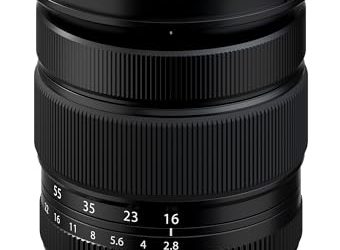
The first need is close focus. Mossy saxifrage flowers are tiny, and a camera body alone cannot solve that. Every interchangeable-lens body in this guide needs a close-focusing lens for tight work on the mats, and the notes below say so plainly for each body. A macro lens or a zoom with a short minimum focus distance is the honest partner for this plant.
The second need is detail. A high-resolution sensor helps when the flower is small in the frame and you want to crop in later. It is not the only way to get a good shot, but it gives you room to work when the wind keeps you from moving closer.
The third need is a screen and viewfinder you can use at ground level. A tilting screen helps a lot when the camera is flat on the rock. A bright viewfinder helps when the sun is strong and the screen washes out.
The fourth need is handling in wind and cold. Mountain weather changes fast, and a body that is easy to hold with cold hands, with controls you can find without looking, will serve you better than a body with more features you cannot reach.
1. Nikon Z9
- 45.7MP stacked full-frame sensor, EXPEED 7 processor, 20 fps RAW, 8K 30p video, blackout-free electronic viewfinder, 4-axis tilting touchscreen, around 1,340 g with battery and card, body only, model 1669
The Nikon Z9 is the most capable camera in this guide, and the heaviest. Its 45.7-megapixel stacked sensor records fine detail in the moss-like leaves and the tiny white petals, and its autofocus locks onto small subjects with confidence. For mossy saxifrage, the resolution matters most: you can frame a little loose to keep the rock in the shot, then crop in later without losing the detail that makes the flower readable.
The Z9 is a body built for long days in rough weather, and it feels solid in the hand. That solidity comes with weight, around 1,340 g with battery and card, so it is not the body to carry up a long scree slope if you count every gram.
The Z9 needs a close-focusing lens for tight mossy saxifrage work, like every interchangeable-lens body here. Pair it with a macro lens and it will record more detail in a single flower than any other camera in this guide. Its tilting screen helps when the camera sits low on the rock, and its deep grip holds steady in wind.
2. Sony A7R V
- 61.0MP full-frame back-illuminated Exmor R CMOS sensor, BIONZ XR processor with AI unit, 10 fps continuous shooting, 8K 24p video, 8-stop in-body stabilisation, dual CFexpress Type A and SD slots, body only, model ILCE7RM5/B
The Sony A7R V is the resolution champion of this guide, with a 61.0-megapixel full-frame sensor and an AI processing unit that drives its autofocus. For mossy saxifrage, that resolution is a genuine advantage: the tiny white five-petalled flowers hold their shape even when you crop hard, and the fine texture of the moss-like mat stays visible in the final image.
The A7R V is lighter than the Z9, and its 8-stop stabilisation helps when you are shooting handheld at a low angle with the wind pushing at your arms.
The A7R V needs a close-focusing lens for tight mossy saxifrage work, like every interchangeable-lens body here. Its high resolution also punishes any softness, so take care with focus: use magnification on the screen, or a short burst, and check the result before you move on. When the focus is right, no other camera here records the plant in such fine detail.
3. Canon EOS R7
- 32.5MP APS-C CMOS sensor, DIGIC X processor, 15 fps mechanical and 30 fps electronic shooting, 4K 60p video oversampled from 7K, 7-stop in-body stabilisation, around 611 g, body only, model 5137C002
The Canon EOS R7 is the most practical pick in this guide for a long walk on mountain rock. Its APS-C sensor gives a 1.6x crop, which turns a modest telephoto or macro lens into a longer effective reach, and its 32.5-megapixel sensor still holds plenty of detail for a small flower. At around 611 g, it is far lighter than the full-frame bodies here, and that matters when the path to the saxifrage climbs for an hour.
The R7 shoots at 15 fps with its mechanical shutter and 30 fps with its electronic shutter, so a gust of wind that shakes the flower does not have to ruin the shot: a short burst usually catches a still moment.
The R7 needs a close-focusing lens for tight mossy saxifrage work, like every interchangeable-lens body here. Its crop sensor is a real help for this plant: the flower fills more of the frame at the same working distance, so you can keep a little further back and still get a tight shot. The trade-off is less low-light headroom than the full-frame bodies, so watch your shutter speed when the cloud closes in.
4. Canon EOS R6 Mark II
- 24.2MP full-frame CMOS sensor, DIGIC X processor, 12 fps mechanical and 40 fps electronic shooting, 4K 60p video oversampled from 6K, 8-stop in-body stabilisation, body only, model 5666C002
The Canon EOS R6 Mark II is the balanced pick in this guide. Its 24.2-megapixel full-frame sensor will not out-resolve the A7R V or the Z9, but it is a strong all-rounder with fast autofocus, good low-light behaviour, and a body that is easy to carry on a mountain path. For mossy saxifrage, its strength is reliability: it focuses quickly, it handles dim light well, and its 8-stop stabilisation keeps the frame steady when you are shooting handheld at a low angle.
The R6 Mark II shoots at 12 fps with its mechanical shutter and 40 fps with its electronic shutter, so it can catch a still moment between gusts.
The R6 Mark II needs a close-focusing lens for tight mossy saxifrage work, like every interchangeable-lens body here. Its lower resolution means you should frame tighter in the field rather than relying on a heavy crop later, which is good discipline for this plant anyway. Get low, fill the frame, and the files will hold up well.
5. Fujifilm X-S20
- 26.1MP APS-C X-Trans CMOS 4 sensor, X-Processor 5, 20 fps electronic shooting, 6.2K 30p video, 7-stop in-body stabilisation, 491 g, NP-W235 battery, body only, model 16781852
The Fujifilm X-S20 is the lightest and most compact camera in this guide, at 491 g, and the easiest to carry up a mountain path. Its 26.1-megapixel APS-C sensor and X-Processor 5 deliver clean files and confident autofocus, and its 7-stop stabilisation steadies handheld shots at low angles. For mossy saxifrage, the X-S20 is the body you will actually have with you at the top of the climb, because it is the one that never feels like a burden.
The X-S20 records 6.2K 30p video and has a vari-angle screen that flips out to the side, which is handy when the camera is flat on the rock and you are lying beside it.
The X-S20 needs a close-focusing lens for tight mossy saxifrage work, like every interchangeable-lens body here. Its small size is a real advantage on rough ground, and its film simulations give pleasant colour straight from the camera. The trade-off is a smaller sensor than the full-frame bodies, so keep the ISO low when the light allows and use a tripod or a steady rest when it does not.
Telling Mossy Saxifrage From Golden-Saxifrage
Mossy saxifrage is not golden-saxifrage. The two plants share a family, Saxifragaceae, and both grow low in damp mountain places, but they belong to different genera: mossy saxifrage is Saxifraga hypnoides, and golden-saxifrage is Chrysosplenium oppositifolium. Golden-saxifrage was covered in an earlier guide, and it grows in damp shade by streams, where its yellow-green flowers sit close to the ground. Mossy saxifrage grows on mountain rocks and scree, where its small white five-petalled flowers open above moss-like mats.
The difference is easy to see once you know it. Golden-saxifrage has yellow-green flowers with no petals, and its leaves are round and toothed. Mossy saxifrage has white flowers with five clear petals, and its leaves form soft, moss-like cushions. If the plant is on a rock face with white flowers, it is mossy saxifrage. If it is by a shaded stream with yellow-green flowers and no petals, it is golden-saxifrage.
Burnet-saxifrage is not the right comparison here. It shares only the name, and it belongs to a different family, Apiaceae, so it does not help anyone tell these two plants apart. Keep the comparison to mossy saxifrage and golden-saxifrage, and the identification stays clear.
How the Five Compare
The Z9 gives the most capable files and the toughest body, at the cost of weight. The A7R V gives the highest resolution and the finest detail, at the cost of a careful focus routine. The R7 gives the best balance of reach, weight, and speed for a mountain walk. The R6 Mark II gives the most reliable all-round behaviour in dim light and wind. The X-S20 gives the lightest bag and the easiest climb, at the cost of a smaller sensor.
No single body wins on every count, and that is the honest truth. Pick the one that fits how you walk and how you shoot. If you climb far and carry light, the X-S20 or the R7 will serve you best. If you want the finest files and do not mind the weight, the A7R V or the Z9 will reward you. If you want one body that does everything well without fuss, the R6 Mark II is the safe middle ground.
Is mossy saxifrage the same plant as golden-saxifrage?
No. Mossy saxifrage is Saxifraga hypnoides, and golden-saxifrage is Chrysosplenium oppositifolium. They share the family Saxifragaceae but belong to different genera. Mossy saxifrage grows on mountain rocks with small white five-petalled flowers, while golden-saxifrage grows in damp shade by streams with yellow-green flowers and no petals.
What lens do I need for mossy saxifrage?
A close-focusing lens. Every interchangeable-lens body in this guide needs one for tight work on the mats, because the flowers are tiny and sit close to the rock. A macro lens is the best partner, and a zoom with a short minimum focus distance is a good second choice. The body alone cannot focus close enough, whatever its resolution.
Can I photograph mossy saxifrage in wind?
Yes, with care. Use a fast shutter speed, a short burst, and a steady rest such as a bean bag or the rock itself. A burst usually catches a still moment between gusts. If the wind will not settle, photograph the whole mat rather than a single flower, and let the cushion pattern carry the shot.
Where should I look for mossy saxifrage?
On mountain rocks, in scree, and in thin soil between boulders, where the plant forms low, moss-like mats. Stay on paths where they exist, step with care on loose rock, and do not pick the plant or lift stones to get a better angle. The plant grows slowly in a harsh place, and a pulled cushion can take years to grow back.
More from Amazon
Programs that pair well with the guide above. Offers and eligibility are set by Amazon and may change.
Free shipping on eligible items, Prime Video and more. Eligible new members can start with a free trial.
Start a Prime free trialAudiobooks and podcasts to listen to on the go. Eligible new members can start with a free trial.
Try Audible freeAd-free music streaming. Eligible new subscribers can start with a free trial.
Try Music Unlimited freeA free business account with business pricing and bulk-buying tools for work, shop or home office.
Create a business accountAs an Amazon Associate we earn from qualifying purchases.