Key takeaways
- Family video and travel: Panasonic HC-VX1, for a built-in 24× optical zoom, 4K recording, and a compact body.
- Long events and distant subjects: Canon VIXIA HF G70, for a 20× optical zoom, UHD 4K recording, and a useful mix of manual controls and automatic operation.
- Professional shoulder-style work: Sony PXW-Z200, for 4K recording options, professional audio connections, and a long integrated zoom.
- Low-light and lens flexibility: Sony PXW-FX9, for a full-frame sensor and interchangeable E-mount lenses—provided you can accommodate its larger system cost and setup.
Best Camcorders for Family Video, Events, and Professional Work
The best camcorders are the ones that match your shooting situation: choose a light, long-zoom model for family trips, a camcorder with dependable stabilization and audio connections for events, or an interchangeable-lens professional camera when image control and recording options matter more than convenience.
Quick picks by situation
- Family video and travel: Panasonic HC-VX1, for a built-in 24× optical zoom, 4K recording, and a compact body.
- Long events and distant subjects: Canon VIXIA HF G70, for a 20× optical zoom, UHD 4K recording, and a useful mix of manual controls and automatic operation.
- Professional shoulder-style work: Sony PXW-Z200, for 4K recording options, professional audio connections, and a long integrated zoom.
- Low-light and lens flexibility: Sony PXW-FX9, for a full-frame sensor and interchangeable E-mount lenses—provided you can accommodate its larger system cost and setup.
Camcorder comparison: the numbers that affect a shoot
Optical zoom is more useful than digital zoom for bringing a distant subject closer without cropping away image detail. Battery runtime figures vary with zooming, screen brightness, recording format, and temperature; treat manufacturer figures as best-case estimates and carry spares for paid or unrepeatable work.
Our top picks
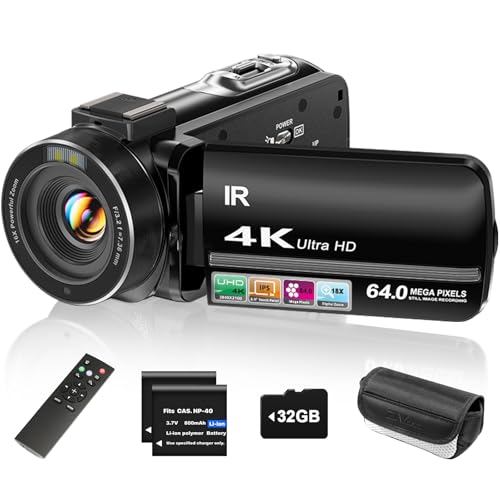
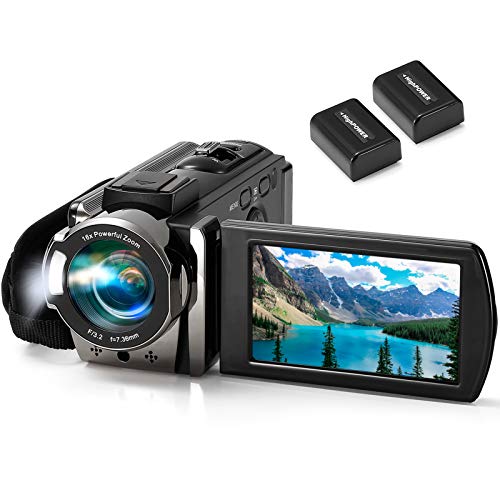


As an Amazon Associate we earn from qualifying purchases at no extra cost to you. Ratings are shown as listed on Amazon.
| Camcorder | Optical zoom | Recording highlights | Approx. body weight | Best fit |
|---|---|---|---|---|
| Panasonic HC-VX1 | 24× | 4K UHD; MP4 and AVCHD options | About 430 g (body only) | Family video, travel, daylight events |
| Canon VIXIA HF G70 | 20× | 4K UHD; MP4 recording | About 740 g (body only) | School performances, ceremonies, interviews |
| Sony PXW-Z200 | 20× | 4K recording; professional XAVC formats | About 2.4 kg (body only) | Broadcast, corporate, and event production |
| Sony PXW-FX9 | Depends on lens | 4K recording; XAVC-I and XAVC-L options | About 2.0 kg (body only) | Low-light work and controlled productions |
Weights exclude batteries, lenses, microphones, and accessories where applicable. Confirm exact configurations and recording options for your region before buying; manufacturers can revise specifications, and professional bundles may include different parts.
Which camcorder suits your kind of shooting?
Family memories, holidays, and everyday use: Panasonic HC-VX1
The HC-VX1 is a practical choice when a phone’s reach is limiting but a camera-and-lens kit would be a burden. Its 24× optical zoom can frame a child on a sports field or a performer from the back of a hall, while its 4K recording gives room to crop modestly when editing for a 1080p display.
Its built-in lens and stabilization make it easier to pick up and shoot than a large professional rig. Stabilization helps reduce handheld shake, but it cannot freeze a moving subject or remove the sway of a long, fully extended zoom. For that, brace against a support or use a tripod. The camera’s small sensor also means dim rooms can look noisy; a bright room or a small video light will help more than relying on digital zoom.
Choose this type if convenience, reach, and a manageable bag matter most. Check the exact model’s microphone connection and accessory requirements if you plan to record clear spoken audio; built-in microphones capture room noise as well as voices.
School plays, weddings, and community events: Canon VIXIA HF G70
The HF G70 is suited to people who need a more deliberate video workflow without moving to a shoulder-mounted production camera. Its 20× zoom covers wide views and distant stage details, and UHD 4K recording supports reframing in post. Manual exposure and focus controls are useful when stage lighting changes or autofocus is distracted by people crossing the frame.
For events, prioritize a stable tripod, headphones, and a reliable audio plan over extra resolution. A camera-mounted shotgun microphone can improve sound from the direction it points, while a compatible external feed from a sound desk can capture speech and music more directly. Check levels before guests arrive: a line-level mixer output may be much stronger than a microphone-level input, and clipping cannot be repaired cleanly afterward.
Stabilization is valuable for handheld moments, but a locked tripod shot is safer for long ceremonies. The built-in lens is convenient, yet its small-sensor low-light performance is not the same as a large-sensor cinema camera. If the venue is dark, ask whether you can add lighting or position the camera near the stage.
Broadcast and paid event work: Sony PXW-Z200
The PXW-Z200 is a more appropriate tool when recording formats, connections, controls, and dependable operation matter alongside image quality. Its integrated 20× zoom avoids lens changes during a live event, and its professional recording choices support workflows that need more robust files than casual family footage. It offers professional audio connections, including XLR inputs, making it easier to connect microphones or a properly matched mixer feed.
The trade-off is weight and cost: a body around 2.4 kg becomes substantially heavier once a battery, microphone, and support are added. For a full-day shoot, budget for spare batteries and cards, and test the complete rig at the actual recording settings. Higher-bitrate or higher-frame-rate modes use storage faster, so a card that seems adequate for ordinary 4K may not cover a whole event.
Dim venues, interviews, and cinematic work: Sony PXW-FX9
The FX9 takes a different approach: its full-frame sensor and interchangeable lenses give the operator more control over depth of field and lens choice than a fixed-lens camcorder. That flexibility can help in dim interiors, especially with a fast lens, but it does not make every low-light scene easy. A slow zoom, high frame rate, or underexposed image can still force compromises.
This is not the simplest choice for a beginner or a one-camera family setup. Lenses, batteries, media, rigging, and monitoring add cost, weight, and preparation time. Choose it when you need creative control and have the experience—or crew—to manage exposure, focus, and post-production.
Match the camera to your constraints
| Your situation | Best direction | What to prioritize |
|---|---|---|
| Occasional family clips; small bag; beginner | Panasonic HC-VX1 or similar compact 4K camcorder | Simple controls, optical zoom, stabilization, easy file transfer |
| Monthly school or community events; intermediate | Canon VIXIA HF G70 or similar prosumer model | Tripod handling, manual exposure, headphone monitoring, mic input |
| Frequent paid events; long recording days | Sony PXW-Z200 or comparable professional camcorder | XLR audio, media capacity, battery system, recording formats |
| Controlled shoots; low light; experienced operator | Sony PXW-FX9 or comparable large-sensor cinema camera | Lens selection, lighting, focus tools, post-production workflow |
Plan for runtime, sound, and ownership
Estimate recording time before an important shoot rather than trusting a headline battery figure. If a ceremony lasts two hours and your camera’s real-world battery use is around 90 minutes per charge, bring at least one spare—and ideally a second backup if there is no safe charging break. Test this estimate with your chosen resolution, screen use, and microphone attached. Keep batteries warm in cold weather, and label charged and depleted spares.
Storage needs also depend on format and bitrate. As a rough calculation, a 100 Mb/s recording uses about 45 GB per hour: 100 megabits × 3,600 seconds ÷ 8 ÷ 1,000 ≈ 45 gigabytes. Allow extra space for file overhead and safety, and verify the camera’s required card speed for the mode you plan to use.
Common ownership problems are often preventable: dust on the lens, loose cable connections, exhausted batteries, and accidental format changes. Clean the front lens element with a blower before using a cloth, secure audio cables so they cannot tug on the camera, and make a short test recording before each event. After copying footage, verify the files before formatting cards; keep a second copy of irreplaceable family or client video.
Bottom line
For most families, a compact 4K camcorder with a long optical zoom is the most useful balance of reach, stabilization, and easy handling. For stage events, step up to a model with manual controls and a workable external-audio setup. For paid production, choose professional connections and recording options; for low-light creative work, consider a large-sensor interchangeable-lens camera only if you can manage its added cost and complexity.