Key takeaways
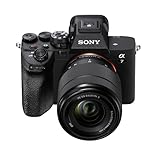
- Sony ZV-E10 II – Best overall for YouTube and hybrid creators: 26MP APS-C sensor, 4K/60 from 5.6K oversampling, excellent subject tracking, no crop in 4K/30. General market range typically $900 to $1,000 for the body.
- Canon EOS R50 – Best Canon camera under 1000 for beginners: 24.2MP APS-C, Dual Pixel CMOS AF II, 4K/30 with 6K oversampling, very simple color menus and vertical video mode. Usually $650 to $800 body-only.
- Fujifilm X-S10 – Best Fujifilm camera under 1000 for color and travel: 26.1MP X-Trans 4 APS-C, in-body stabilization, 4K/30 8-bit, famous Film Simulations like Eterna and Classic Neg. Now often $700 to $999 body-only as it is replaced by newer models.
- Panasonic Lumix G85 / G95 – Best stabilized budget option for handheld events: 16MP Micro Four Thirds, 5-axis stabilization with Dual I.S., unlimited 4K/30 recording, fully articulating screen. General range $600 to $800 with kit lens.
- Blackmagic Pocket Cinema Camera 4K – Best cinema camera under 1000 if you grade footage: Micro Four Thirds sensor, 4K/60 RAW and ProRes, 13 stops dynamic range, mini-XLR input. New units are often slightly over $1,000, but refurbished and used examples routinely fall under $1,000.
- DJI Osmo Pocket 3 – Best pocket travel camera if you hate interchangeable lenses: 1-inch sensor, 4K/120, 3-axis gimbal, 2-inch rotating screen. Typically $500 to $650 for the standard bundle.
The best video camera under 1000 for most creators in 2026 is the Sony ZV-E10 II, because it offers oversampled 4K/60, reliable eye-tracking autofocus, no 30-minute recording limit, and interchangeable E-mount lenses for YouTube, events, and travel without going over budget.
- Top Picks at a Glance
- Spec Comparison: Sharpness, Autofocus, Stabilization and Limits
- Which Is Sharpest and Best in Low Light?
- Autofocus Tracking and Stabilization in Real Use
- Decision Matrix: Pick by Situation, Not Specs
- Recording Limits, Heat, and Storage: Do the Math Before an Event
- Durability and Ownership Realities
- Final Verdict
- Frequently Asked Questions
That said, no single sub-$1000 camera wins on everything. Canon is easier for beginners, Fujifilm looks better straight out of camera, Panasonic has better stabilization, and Blackmagic is the only true cinema option in this price range. The right pick depends on whether you need sharpness, tracking, low light, or unlimited recording most.
As an Amazon Associate we earn from qualifying purchases at no extra cost to you.


Top Picks at a Glance
- Sony ZV-E10 II – Best overall for YouTube and hybrid creators: 26MP APS-C sensor, 4K/60 from 5.6K oversampling, excellent subject tracking, no crop in 4K/30. General market range typically $900 to $1,000 for the body.
- Canon EOS R50 – Best Canon camera under 1000 for beginners: 24.2MP APS-C, Dual Pixel CMOS AF II, 4K/30 with 6K oversampling, very simple color menus and vertical video mode. Usually $650 to $800 body-only.
- Fujifilm X-S10 – Best Fujifilm camera under 1000 for color and travel: 26.1MP X-Trans 4 APS-C, in-body stabilization, 4K/30 8-bit, famous Film Simulations like Eterna and Classic Neg. Now often $700 to $999 body-only as it is replaced by newer models.
- Panasonic Lumix G85 / G95 – Best stabilized budget option for handheld events: 16MP Micro Four Thirds, 5-axis stabilization with Dual I.S., unlimited 4K/30 recording, fully articulating screen. General range $600 to $800 with kit lens.
- Blackmagic Pocket Cinema Camera 4K – Best cinema camera under 1000 if you grade footage: Micro Four Thirds sensor, 4K/60 RAW and ProRes, 13 stops dynamic range, mini-XLR input. New units are often slightly over $1,000, but refurbished and used examples routinely fall under $1,000.
- DJI Osmo Pocket 3 – Best pocket travel camera if you hate interchangeable lenses: 1-inch sensor, 4K/120, 3-axis gimbal, 2-inch rotating screen. Typically $500 to $650 for the standard bundle.
Spec Comparison: Sharpness, Autofocus, Stabilization and Limits
Sharpness under $1,000 is mostly about oversampling, not just a 4K label. The Sony ZV-E10 II, Canon R50, and Fujifilm X-S10 all oversample from 6K to deliver detailed 4K/30. The Panasonic G85 and Blackmagic Pocket 4K use native or pixel-binned readout, which is softer but more resistant to overheating.
| Camera | Sensor / 4K Mode | Autofocus Tracking | Stabilization | Weight (body) | Battery Video Runtime | Recording Limit |
|---|---|---|---|---|---|---|
| Sony ZV-E10 II | APS-C 26MP, 4K/60 oversampled from 5.6K, 4K/120 with 1.1x crop | 759-pt phase detect, human/animal eye, Product Showcase mode | Electronic Active only, no IBIS | 377g | ~90 min 4K/30 per NP-FW50 | None, overheats after ~60-90 min |
| Canon EOS R50 | APS-C 24.2MP, 4K/30 oversampled from 6K, 4K/60 with 1.5x crop | Dual Pixel CMOS AF II, 651 zones, people/animals/vehicles | Electronic Movie IS only, no IBIS | 375g | ~75-95 min 4K/30 per LP-E17 | 60 min per clip in 4K/60, 2 hr in 4K/30 |
| Fujifilm X-S10 | APS-C 26.1MP, 4K/30 8-bit 200 Mbps, 1080/240 slow-mo | 425-pt hybrid, face/eye but loses lock in low light | 6-stop IBIS + digital DIS | 465g | ~80 min 4K/30 per NP-W126S | 30 min per clip in 4K |
| Panasonic G85 | Micro Four Thirds 16MP, 4K/30 100 Mbps, no 4K/60 | DFD contrast AF, good for static, hunts when walking | 5-axis IBIS + Dual I.S. with kit lens | 505g | ~100-120 min 4K/30 per DMW-BLC12 | None |
| Blackmagic Pocket 4K | Four Thirds 8.8MP, 4K DCI/60 RAW 3:1 and ProRes 422 | Contrast AF only, not usable for tracking | None | 722g | ~45-60 min per LP-E6N, runs on USB-C PD | None until card fills |
| DJI Osmo Pocket 3 | 1-inch 9.4MP, 4K/120 10-bit D-Log M | Face tracking via gimbal, not lens AF | 3-axis mechanical gimbal | 179g | ~116 min 4K/60 per internal battery | None |
Which Is Sharpest and Best in Low Light?
For YouTube talking-head video in good light, the Canon R50 looks sharpest at 4K/30 because its 6K oversampling has minimal moire and Canon’s 8-bit color needs almost no correction for skin tones. The Sony ZV-E10 II pulls ahead in detail at 4K/60 and in low light, with usable ISO 6400 to 12800 versus ISO 3200 to 6400 on the Canon and Fujifilm before chroma noise becomes distracting.
The best Fujifilm camera under 1000 for video color is still the X-S10 if you do not want to grade. Eterna and Eterna Bleach Bypass give a soft highlight rolloff that hides harsh office lighting, and F-Log holds about 11 stops in good light. It is 8-bit internally, however, so push exposure more than 1 stop and you will see banding in skies.
Low-light winners in this bracket are the Sony ZV-E10 II and DJI Pocket 3. The Sony’s larger APS-C pixels plus S-Log3 preserve shadows better than the 16MP Panasonic G85, which shows noise above ISO 1600. The Pocket 3 compensates for its smaller 1-inch sensor with a fast f/2.0 lens and excellent noise reduction to ISO 3200, making it surprisingly strong for travel vlogs at night.
The outlier is the Blackmagic Pocket 4K. As the best cinema camera under 1000, it does not win on autofocus or low-light ISO, but it records 12-bit Blackmagic RAW with 13 stops of dynamic range. If you light interviews and grade in DaVinci Resolve, its 4K DCI image holds highlights on windows and skin far better than any 8-bit mirrorless camera here.
Autofocus Tracking and Stabilization in Real Use
Sony and Canon are in a different league for tracking. The ZV-E10 II locks to eyes even with glasses and holds focus while you walk toward the camera, which is why it dominates for solo YouTube. The best Canon camera under 1000, the R50, is nearly as sticky and does a better job ignoring background objects during Product Showcase-style shots.
Fujifilm X-S10 and Panasonic G85 require more technique. Use single-face AF, not wide-area, and tap to lock before recording. The payoff for Panasonic is stabilization: Dual I.S. lets you shoot handheld 12mm to 25mm footage at events without a gimbal, while Sony and Canon footage without IBIS looks jittery unless you use a tripod or Active stabilization with its 1.1x to 1.4x crop.
For walk-and-talk travel, the DJI Osmo Pocket 3 beats them all for smoothness because the lens itself moves on a gimbal. You trade lens choice and depth of field, but you can film in museums, markets, and hikes where tripods and large cameras are not allowed.
Decision Matrix: Pick by Situation, Not Specs
| If You Are… | Choose | Why |
|---|---|---|
| Solo YouTuber filming in bedroom / office, 2-4 videos per week | Sony ZV-E10 II + 11mm f/1.8 or 15mm f/1.4 | Best eye AF, Product Showcase, no record limit, clean HDMI for streaming |
| Beginner who wants easy color and family / travel video | Canon EOS R50 with RF-S 18-45mm | Guided menus, best auto white balance, light 375g body |
| Travel creator who wants film-like color with no grading | Fujifilm X-S10 with 15-45mm or 18-55mm | IBIS + Film Simulations save editing time |
| Event shooter filming 1-2 hour ceremonies, speeches, handheld | Panasonic G85 with 12-60mm | Unlimited recording, best IBIS, cheap batteries, weather sealing |
| Aspiring filmmaker learning lighting and color | Blackmagic Pocket 4K + manual prime | RAW, false color, waveforms, mini-XLR – real cinema tools |
| One-bag traveler, hiking, POV, no lens bag | DJI Osmo Pocket 3 | 179g, gimbal smooth, 4K/120, fits in jacket pocket |
Recording Limits, Heat, and Storage: Do the Math Before an Event
Recording limits still decide whether a sub-$1000 camera survives weddings and podcasts. The Fujifilm X-S10 stops at 29:59 in 4K, the Canon R50 stops at 60 minutes in cropped 4K/60, while the Sony, Panasonic, and Blackmagic will run until the battery or card dies.
Use this simple storage calculation: file size = bitrate / 8 x seconds. Most cameras here record 4K/30 at 100 Mbps.
100 Mbps / 8 = 12.5 MB per second. Multiply by 3,600 seconds = 45,000 MB, or about 45 GB per hour. A 128 GB V30 SD card therefore holds about 2.5 hours of 4K/30, but only about 70 minutes if you switch to 200 Mbps All-I on the Fujifilm or 4K/60 on the Sony.
Battery runtime is tighter than storage. Expect 75 to 90 minutes of continuous 4K from one LP-E17 or NP-FW50, about 110 minutes from the Panasonic DMW-BLC12, and under an hour from the Blackmagic on a single LP-E6N. For any event over 60 minutes, budget for two spare batteries and a USB-C power bank with Power Delivery – the Sony ZV-E10 II, Blackmagic Pocket 4K, and Pocket 3 can all run indefinitely on PD while recording, which solves overheating shutdowns in most indoor rooms with a small fan.
Durability and Ownership Realities
Under $1,000, the kit lens and battery system wear out before the sensor. The Canon RF-S 18-45mm and Fujifilm XC 15-45mm use plastic extending barrels that suck in dust when vlogging outdoors; retract them before putting the camera in a bag and store with silica gel to avoid zoom stiffness. Sony E-mount third-party primes are cheap and metal, which is a long-term advantage.
Common mistakes to avoid: leaving IBIS on while on a tripod on the Fujifilm and Panasonic causes micro-jitter – turn it to Off or use Boost mode only for handheld. Filming 4K/60 in direct sun on the Sony and Canon without an ND filter forces shutter speeds above 1/2000 and creates choppy motion; a $30 to $60 variable ND for the lens diameter fixes it.
Clean maintenance matters more for video than photos because sensor dust shows as dark blobs at f/8 to f/11 during white-wall or sky pans. Lock the shutter closed for lens swaps on Sony and Canon, run auto sensor cleaning weekly, and use a blower, never compressed air. For Blackmagic owners, plan for media costs: RAW needs fast CFast 2.0 or USB-C SSDs, not basic SD cards, and a 500 GB SSD holds only about 60 minutes of 4K RAW 3:1.
Final Verdict
If you film YouTube and need one camera to do everything, get the Sony ZV-E10 II. If you want the simplest best Canon camera under 1000, get the EOS R50. If you want the best Fujifilm camera under 1000 for travel color, get the X-S10 while stock remains. If you shoot long events handheld, get the Panasonic G85. And if you want the best cinema camera under 1000 to learn filmmaking properly, accept manual focus and get the Blackmagic Pocket Cinema Camera 4K with a fast prime and SSD.
Frequently Asked Questions
Can you get a true cinema camera for under $1000?
Yes, but with compromises. The Blackmagic Pocket Cinema Camera 4K is the only new-design cinema camera that regularly sells under $1000 refurbished, with RAW, timecode, and professional audio tools. It has no usable continuous autofocus and no stabilization, so it needs a tripod, gimbal, and manual lenses.
What is the best Canon camera under $1000 for video?
The Canon EOS R50. It offers oversampled 4K/30, uncropped 1080/120, Dual Pixel AF with subject detection, and Canon’s reliable skin tones. Step up to the R50 V or R10 only if you need 4K/60 without a heavy crop or a second control dial.
What is the best Fujifilm camera under $1000 for video?
The Fujifilm X-S10, thanks to IBIS, 4K/30 with F-Log, 240p slow motion in 1080p, and Film Simulations that reduce grading. The newer X-T50 and X-S20 exceed $1000 with a lens, so the X-S10 remains the budget sweet spot.