Key takeaways
- Switch to an f/2.8 lens: ISO 6,400 (one stop cleaner).
- Switch to an f/1.8 prime: about ISO 2,500 (more than two stops cleaner).
- Switch to an f/1.4 prime: about ISO 1,600 (three stops cleaner).
The best cameras for low light in 2026 are full-frame mirrorless bodies with modern backside-illuminated sensors and strong stabilization: the Nikon Z6III and Canon EOS R6 Mark III are the best all-round choices, the Sony A7S III is still the specialist for night video, the Sony A7 V suits hybrid shooters who also want more resolution, and the Nikon Z5II is the budget pick. But sensor choice is only part of the story, and in dim light a fast lens often matters more than the body.
Our top picks

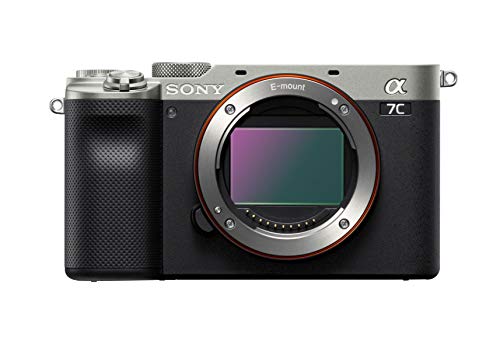

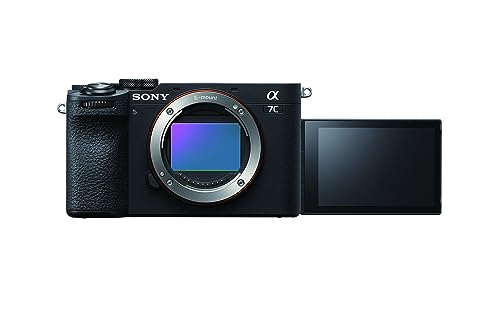
As an Amazon Associate we earn from qualifying purchases at no extra cost to you. Ratings are shown as listed on Amazon.
What “Good in Low Light” Actually Means
Three separate abilities get lumped together under this label, and different cameras win each one:
- Clean images at high ISO. Larger sensors and newer BSI designs produce less visible noise at ISO 6400-25600. Full frame typically holds about one stop advantage over APS-C at the same output size.
- Focusing in the dark. Autofocus sensitivity is rated in EV; a lower (more negative) number means the camera can lock focus in dimmer scenes.
- Slow shutter speeds without blur. In-body stabilization (IBIS) lets you hand-hold static scenes at 1/4 second or slower, which can save two to four stops of ISO.
Low-Light Camera Comparison
| Camera | Sensor | Native ISO range | Rated AF low limit | IBIS (center) | Body price range |
|---|---|---|---|---|---|
| Nikon Z6III | 24.5MP full frame, partially stacked | 100-64,000 | -10 EV (with f/1.2 lens) | Up to 8 stops | $2,000-$2,500 |
| Canon EOS R6 Mark III | 32.5MP full frame | 100-64,000 | Very low (Canon dual pixel AF II) | Up to 8.5 stops | $2,600-$2,800 |
| Sony A7S III | 12.1MP full frame, BSI | 80-102,400 | -6 EV | Up to 5.5 stops | $3,000-$3,500 |
| Sony A7 V | 33MP full frame, partially stacked | 100-51,200 | -4 EV | Up to 7.5 stops | $2,700-$2,900 |
| Nikon Z5II | 24.5MP full frame, BSI | 100-64,000 | -10 EV (with f/1.2 lens) | Up to 7.5 stops | $1,500-$1,700 |
AF ratings are measured with very fast lenses at base ISO, so real-world performance with an f/4 zoom is several stops less sensitive. Treat them as a ranking, not a promise.
Which Low-Light Camera Fits Your Shooting
| You shoot… | Choose | Why |
|---|---|---|
| Weddings and receptions | Canon EOS R6 Mark III | Reliable eye tracking in dim halls, 32.5MP for cropping, dual card slots |
| Concerts and stage | Nikon Z6III | Very sensitive AF, fast readout reduces distortion under flickering lights |
| Night video and documentary | Sony A7S III | Large photosites, dual native ISO for video, mature log workflow |
| Mixed photo and video, travel at night | Sony A7 V | 33MP, strong 4K, wide range of fast E-mount primes |
| Astrophotography on a budget | Nikon Z5II | Full-frame BSI sensor, Starlight View mode for composing in the dark |
Camera-by-Camera Notes
Nikon Z6III
Its partially stacked sensor gives a faster readout than a conventional sensor, which helps with silent shooting in quiet venues. Nikon’s -10 EV AF rating is among the best available, and Starlight View mode brightens the viewfinder feed when composing night scenes.
Canon EOS R6 Mark III
Launched in late 2025, it raises resolution to 32.5MP without giving up the low-light reputation of the R6 line. Stabilization rated up to 8.5 stops at the center makes slow hand-held shutter speeds realistic, and pre-capture helps catch unpredictable moments in dim event spaces.
Sony A7S III
With only 12.1 megapixels, each pixel is large, which favors video noise performance and clean 4K. For stills, 12MP limits cropping and print size, so photographers who shoot mostly photos are better served by the 24-33MP bodies here.
Sony A7 V
Sony’s late-2025 all-rounder uses a 33MP partially stacked sensor and an AI processing unit for subject recognition. Its AF rating is less aggressive on paper, but paired with an f/1.4 or f/1.8 prime it handles typical evening and indoor scenes well.
Nikon Z5II
The cheapest route into a modern full-frame BSI sensor. It uses the EXPEED 7 processor from Nikon’s flagship bodies. Images are commonly considered clean up to around ISO 6400 with usable results well beyond, which covers most night street and astro work.
The Lens Matters as Much as the Body
A worked example shows why. Suppose an indoor scene needs ISO 12,800 at f/4 and 1/125 second with a standard zoom.
- Switch to an f/2.8 lens: ISO 6,400 (one stop cleaner).
- Switch to an f/1.8 prime: about ISO 2,500 (more than two stops cleaner).
- Switch to an f/1.4 prime: about ISO 1,600 (three stops cleaner).
Three stops is a larger improvement than you get from upgrading between any two current full-frame bodies. For low light, a 35mm or 50mm f/1.8 prime on a mid-priced body often outperforms a flagship body with a slow zoom.
Settings That Help in the Dark
- Expose to the right, within reason. Underexposing and brightening later adds more noise than exposing correctly at a higher ISO.
- Use the slowest safe shutter speed. For still subjects with IBIS, 1/15 to 1/4 second is often achievable; for people, stay at 1/125 or faster to freeze movement.
- Enable flicker reduction under LED and fluorescent lighting to avoid banding and inconsistent exposures.
- Use AI or modern denoising in raw processing. Current raw converters can recover one to two stops of apparent noise performance.
- For stars, follow the 500 rule loosely, or better, the NPF rule. High-resolution sensors show trailing sooner, so shorter exposures than the 500 rule suggests are safer.
Frequently Asked Questions
Is full frame necessary for low light?
Not strictly, but it helps. An APS-C camera with an f/1.4 prime can match a full-frame camera with an f/2.8 zoom. Full frame simply offers more headroom at the same aperture.
Do more megapixels mean more noise?
At the pixel level, slightly; at the same print or screen size, the difference between 24MP and 33MP sensors of the same generation is small. Sensor generation and design matter more than pixel count.
Is the Sony A7S III still worth buying in 2026?
For video-centric night work, yes. For stills, the A7 V or Z6III offer more resolution with comparable usable high-ISO results.