Key takeaways
- The best lenses for Fujifilm GFX 100 II cover wide, standard, portrait and telephoto work. Compare five GF lenses built to feed the 102MP sensor.
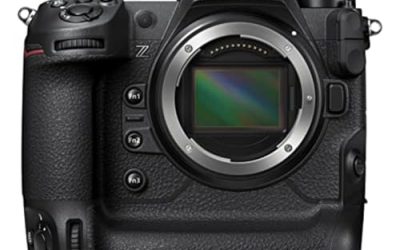
The Fujifilm GFX 100 II pairs a 102-megapixel medium format sensor with fast autofocus and 8K video, and that combination is demanding on glass. A lens that looked flawless on a 50-megapixel body can show soft corners and faint fringing once the 102MP sensor records every detail. Choosing the right lens, then, is less about collecting focal lengths and more about matching optics designed to resolve at this level.
As an Amazon Associate, we earn from qualifying purchases.
The five lenses below all belong to Fujifilm’s GF line, built for the G mount and the 43.8 x 32.9mm sensor inside the GFX 100 II. Together they cover ultra-wide landscapes, everyday walk-around shooting, low-light portraits, and long-reach event work. Each one is weather sealed and has been widely used on GFX bodies in professional work. If you already own a GFX 100 II, any one of these will feel at home on it.
1. FUJINON GF 20-35mm f/4 R WR

The GF 20-35mm is the widest zoom in the GF system, and it is the natural partner for landscape, architecture, and interior work on the GFX 100 II. Its 16-28mm full-frame equivalent field of view stretches a scene without the heavy distortion that cheaper ultra-wide designs produce, and straight lines near the frame edge stay remarkably true. On a 102MP sensor that matters, because crooked architecture and smeared corners are impossible to hide at full resolution.
Fujifilm built this lens around 14 elements in 10 groups, including aspherical and extra-low dispersion elements that keep chromatic fringing under control in high-contrast scenes. The constant f/4 aperture holds steady through the whole zoom range, so exposure stays consistent as you reframe. Autofocus is quick and quiet, and the lens focuses down to 0.35m, which lets you push a foreground rock or doorway close to the lens while the background falls away into a deep, layered frame.
Specs: 20-35mm focal length (16-28mm equivalent) | Constant f/4 maximum aperture | 14 elements in 10 groups | 82mm filter thread | 875g | Weather sealed
2. FUJINON GF 32-64mm f/4 R LM WR

If you buy only one lens for the GFX 100 II, this is the one most photographers reach for. The GF 32-64mm covers a 25-51mm full-frame equivalent range, which handles street scenes, environmental portraits, travel, and general documentary work without a lens change. Its constant f/4 aperture is modest on paper, yet on a medium format sensor the depth of field at f/4 is shallower than the same aperture on a smaller sensor, and subject separation stays pleasing.
The linear motor autofocus is fast and nearly silent, a useful trait when the GFX 100 II is recording video or when you are working close to people who notice camera noise. Optical construction uses 14 elements in 11 groups with aspherical and extra-low dispersion glass, and the lens holds sharpness well into the corners at f/4. Close focus at 0.55m is not macro territory, but it is close enough for detail shots of food, craft, and small products.
Specs: 32-64mm focal length (25-51mm equivalent) | Constant f/4 maximum aperture | 14 elements in 11 groups | 77mm filter thread | 875g | Linear motor autofocus
3. FUJINON GF 55mm f/1.7 R WR

The GF 55mm f/1.7 is the fastest normal prime in the GF lineup, and it gives the GFX 100 II something zooms cannot: a wide aperture on a large sensor. At 55mm it behaves like a 44mm lens on a full-frame camera, a natural, slightly wide perspective that suits portraits, documentary work, and low-light shooting. The f/1.7 opening gathers far more light than any f/4 zoom, and the depth of field at full aperture isolates a subject with a soft, gradual falloff that flatters faces and still-life subjects alike.
Optically, the lens uses 14 elements in 10 groups with two aspherical and two extra-low dispersion elements, and an 11-blade rounded diaphragm that keeps out-of-focus highlights round as you stop down. Autofocus relies on a DC motor with a GMR sensor, which is quick and accurate on the GFX 100 II, even in dim interiors where contrast drops. Minimum focus is 0.5m, close enough for tabletop detail and tight environmental portraits.
Specs: 55mm focal length (44mm equivalent) | f/1.7 maximum aperture | 14 elements in 10 groups | 11-blade rounded diaphragm | 77mm filter thread | 780g
4. FUJINON GF 110mm f/2 R LM WR

The GF 110mm f/2 is the portrait lens of the GF system, and it is the lens that most clearly shows what a large sensor can do. Its 110mm focal length equals roughly 87mm on a full-frame camera, the classic portrait length, while the f/2 aperture on a 43.8 x 32.9mm sensor produces background blur that smaller formats struggle to match. Faces stay sharp and dimensional, and busy backgrounds melt into smooth, even tones.
Four extra-low dispersion elements sit inside a 14-element, 9-group design that controls fringing around hair and bright edges, a flaw that shows up fast at 102 megapixels. The linear motor drives focus quickly and quietly, and the 9-blade rounded diaphragm keeps highlight circles clean. Minimum focus of 0.9m gives a 0.16x maximum magnification, enough for tight head-and-shoulders framing without crowding your subject.
Specs: 110mm focal length (87mm equivalent) | f/2 maximum aperture | 14 elements in 9 groups, 4 ED elements | 9-blade rounded diaphragm | 77mm filter thread | 1,010g
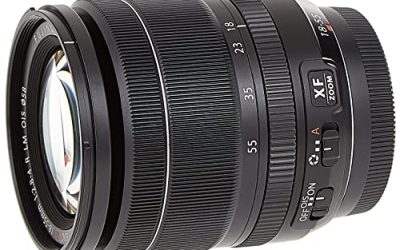
5. FUJINON GF 45-100mm f/4 R LM OIS WR

The GF 45-100mm closes this set with a stabilized telephoto zoom that covers the 36-79mm full-frame equivalent range, the classic event and portrait zoom band. It is the lens to mount when the day moves from a ceremony to a reception, or from a wide establishing shot to a tight detail, without time to swap glass. The constant f/4 aperture keeps exposure predictable across the range, and built-in optical stabilization helps when light fades and shutter speeds drop.
Inside, 16 elements in 12 groups include aspherical and extra-low dispersion glass, and the lens resolves cleanly across the frame on the 102MP sensor. Autofocus is driven by a linear motor, so tracking a moving subject stays smooth and quiet. Minimum focus of 0.55m lets you fill the frame with a bouquet, a ring, or a plate of food, and the 0.16x magnification is useful for detail work at events.
Specs: 45-100mm focal length (36-79mm equivalent) | Constant f/4 maximum aperture | Optical image stabilization | 16 elements in 12 groups | 82mm filter thread | 1,005g
How to Choose a Lens for the GFX 100 II
Begin with the sensor. The GFX 100 II records 102 megapixels across a 43.8 x 32.9mm area, which means each pixel is small and every optical flaw is visible at full magnification. Lenses built for this system carry the GF name and the G mount, and they project an image circle large enough to cover the whole sensor. That coverage is the first thing to confirm before buying anything.
Do not confuse GF lenses with XF lenses. XF lenses belong to Fujifilm’s X-mount APS-C cameras, and they will not mount on a GFX body. The mounts are physically different, the image circles are too small for the medium format sensor, and no simple adapter makes an XF lens cover the GFX frame. If you are moving from an X-T5 or X-H2, plan on a fresh lens set.
Aperture matters differently on medium format. Because the sensor is larger, depth of field at a given aperture is shallower than on a full-frame camera. An f/4 zoom on the GFX 100 II separates a subject from its background about as well as an f/2.8 zoom does on a smaller sensor. That means f/4 zooms are genuinely useful for portraits and events, and the f/1.7 and f/2 primes in this set produce an extremely shallow plane of focus. When you shoot wide open, focus on the nearest eye and let the rest fall away.
Weight and balance deserve honest attention. The GFX 100 II body is large, and GF lenses are bigger than their full-frame counterparts. A two-lens kit built from the 20-35mm and the 32-64mm weighs under 1.8kg in glass alone, before the body. That is manageable for landscape work from a tripod, but for a full day of handheld shooting the 55mm prime earns its place by cutting bulk.
Stabilization is another practical point. The GFX 100 II has in-body stabilization, and lenses with optical stabilization, like the 45-100mm, combine with it for steadier handheld shots at slow shutter speeds. Primes without stabilization, like the 55mm and the 110mm, rely on the body alone, which is still effective, but you will want to watch shutter speed when light drops.
Tips for Getting the Most from GF Lenses
Shoot raw when the scene has wide dynamic range. The GFX 100 II captures a broad tonal range, and raw files let you recover shadow detail and highlight texture that a JPEG would discard. This is especially useful with the 20-35mm in contrasty landscape light.
Stop down slightly for landscapes. The zooms in this set are strong wide open, but stopping to f/5.6 or f/8 tightens corner detail on the 20-35mm and the 32-64mm, which is where the 102MP sensor is most unforgiving. For architecture, f/8 is a reliable working aperture.
Keep the sensor clean. A 102MP sensor shows dust spots clearly, especially with the 20-35mm stopped down for deep depth of field. Carry a blower, check the sensor before an important shoot, and clean it with care.
Frequently Asked Questions
Do I need GF lenses, or can I use XF lenses on the GFX 100 II?
You need GF lenses. XF lenses use the X mount and will not fit the G mount on a GFX body, and their image circle is too small for the medium format sensor. All five lenses in this guide are native GF lenses that cover the full sensor.
Which single GF lens should I buy first for the GFX 100 II?
The GF 32-64mm f/4 is the safest single-lens choice. Its 25-51mm equivalent range handles travel, street, documentary, and environmental portraits, and it stays sharp across the frame on the 102MP sensor. Add the 55mm f/1.7 next if you want low-light ability and stronger subject separation.
Are third-party lenses available for the GFX 100 II?
Yes, a small number of manual-focus lenses from makers like Laowa and TTArtisan fit the G mount, and some full-frame lenses can be adapted with a mount adapter. Native autofocus GF lenses remain the reliable choice for professional work, because they communicate fully with the body for autofocus, stabilization, and exposure.
Do GF lenses hold up on the 102MP sensor?
The lenses in this guide were designed with high-resolution GFX sensors in mind, and they resolve detail cleanly at full magnification. Older or adapted lenses can show soft corners on 102 megapixels, so it is worth checking samples at full resolution before committing to glass that was not designed for this sensor.
Conclusion
The best lenses for the Fujifilm GFX 100 II are the ones that respect what the camera is: a 102-megapixel medium format body that rewards excellent glass and exposes weak glass without mercy. The GF 20-35mm opens up wide scenes, the GF 32-64mm handles everyday work, the GF 55mm f/1.7 brings low-light speed, the GF 110mm f/2 delivers the portrait look that defines medium format, and the GF 45-100mm covers events with stabilized reach. Build around the 32-64mm, add the prime that matches your subject, and let the sensor do the rest.
More from Amazon
Programs that pair well with the guide above. Offers and eligibility are set by Amazon and may change.
Free shipping on eligible items, Prime Video and more. Eligible new members can start with a free trial.
Start a Prime free trialAudiobooks and podcasts to listen to on the go. Eligible new members can start with a free trial.
Try Audible freeAd-free music streaming. Eligible new subscribers can start with a free trial.
Try Music Unlimited freeA free business account with business pricing and bulk-buying tools for work, shop or home office.
Create a business accountAs an Amazon Associate we earn from qualifying purchases.