Key takeaways
- Kitchen heavy-duty: Stock pots, sheet pans, Dutch ovens. You need width and bowl length more than extreme depth to lay pans flat.
- Utility / garage / laundry: Paint buckets, mop heads, garden tools, pet washing. You need vertical depth and high sidewalls to contain splashing.
- Commercial-adjacent: Canning, home brewing, dog grooming. You need capacity in gallons, chemical resistance, and a floor-standing or wall-anchored frame.
A large deep sink for heavy-duty washing needs at least 10 inches of depth, a basin width of 25 inches or more, and 16-gauge stainless steel or solid composite construction to handle bulky pots, tool cleaning, and pet washing without flexing or staining.
Our top picks


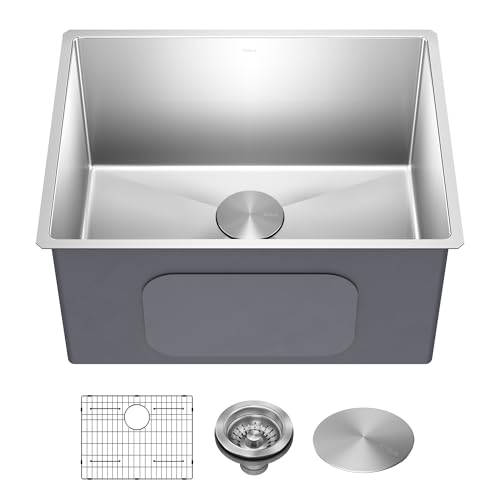

As an Amazon Associate we earn from qualifying purchases at no extra cost to you. Ratings are shown as listed on Amazon.
How to Match a Large Deep Sink to Your Workload
Not all deep sinks are built for the same abuse. A 33-inch kitchen sink that is 10 inches deep behaves very differently from a 28-inch freestanding utility sink that is 13 inches deep. Before you compare models, define your primary workload:
- Kitchen heavy-duty: Stock pots, sheet pans, Dutch ovens. You need width and bowl length more than extreme depth to lay pans flat.
- Utility / garage / laundry: Paint buckets, mop heads, garden tools, pet washing. You need vertical depth and high sidewalls to contain splashing.
- Commercial-adjacent: Canning, home brewing, dog grooming. You need capacity in gallons, chemical resistance, and a floor-standing or wall-anchored frame.
Key Decision Criteria for a Large Deep Sink
1. Usable Basin Dimensions vs. Outer Dimensions
Manufacturers list outer dimensions, but usable washing space is smaller by 1 to 2 inches on each side due to rim and radius. A sink listed as 33 x 22 inches often has a usable bowl of about 30.5 x 16.5 inches. Tight-radius (near-zero radius) corners give you up to 15% more flat bottom area than sinks with large coved corners, which matters for cookie sheets and grill grates. Check the spec sheet for “bowl size,” not just “overall size.”
2. Depth and Real Capacity
Depth is measured from the top rim to the drain. For heavy-duty use, 10 inches is the minimum for containing spray; 12 to 15 inches is ideal for utility work. To estimate true capacity before you overflow, use:
Capacity (gallons) = (Bowl Length x Bowl Width x Usable Depth) / 231 x 0.85
The 0.85 factor accounts for drain slope and the fact you never fill to the absolute rim. Example: A Mustee Utilatub 28F with a 23 x 18.5 x 13 inch interior holds (23*18.5*13)/231*0.85 = 15.65 gallons usable, compared to only 10.2 gallons for a standard 30 x 16 x 10 inch kitchen bowl. That extra 5+ gallons is the difference between submerging a 5-gallon bucket and constantly fighting overflow.
3. Material Durability
16-Gauge Stainless Steel (304 grade): The standard for heavy-duty kitchen sinks like Ruvati, Kraus, and Elkay Crosstown. Resists dents better than 18-gauge, dampens noise with proper undercoating, and tolerates abrasive scrubbing. Avoid 201 stainless – it can show surface rust in humid utility rooms.
Fireclay / Porcelain-Enameled Cast Iron (Kohler Whitehaven, Kohler Gilford): Extremely scratch and heat resistant, but heavy (130-200 lbs) and requires a reinforced cabinet. Enamel can chip if you drop cast iron, exposing iron to rust.
Quartz/Granite Composite (Blanco Performa, Elkay Quartz Classic): Very durable against impact and staining, naturally sound-deadening. Can be damaged by sustained heat above 500F – always use a grid.
Freestanding Thermoplastic / Polypropylene (Mustee BigTub Utilatub series): The workhorse for garages and laundry rooms. Will not rust, chip, or stain from chemicals and paint. Not heat-resistant and will flex if not wall-anchored.
4. Mounting Style and Space Fit
Apron-front (farmhouse) sinks give you deeper access because you stand directly against the bowl with no countertop rail. Undermount sinks maximize interior width inside a standard 36-inch base cabinet. Freestanding utility sinks need only floor space and a wall drain – they fit in a 30 x 30 inch footprint but require 18 inches of clearance in front for standing and lifting.
Comparison Table: Large Deep Sinks Built for Heavy-Duty Use
| Model / Type | Overall Size (L x W x D) | Bowl Size (L x W x D) | Usable Capacity (Gallons) | Material & Gauge/Thickness | Weight |
|---|---|---|---|---|---|
| Kraus Standart PRO 33″ Single Bowl | 33 x 22 x 10.5 in | 30.5 x 16.5 x 10.5 in | 11.5 gal | 304 Stainless, 16-gauge | 32 lbs |
| Ruvati RVM4250 Workstation 33″ | 33 x 22 x 12 in | 30.75 x 16.5 x 12 in | 13.1 gal | 304 Stainless, 16-gauge | 38 lbs |
| Elkay Crosstown ECTRU24179R 24″ | 28.5 x 18.5 x 9 in | 26.5 x 16.5 x 9 in | 8.5 gal | 304 Stainless, 18-gauge | 18 lbs |
| Kohler Whitehaven K-6489 36″ Farmhouse | 35.6 x 21.5 x 10 in | 33.5 x 18 x 9.6 in | 12.5 gal | Enameled Cast Iron, 5/16 in | 145 lbs |
| Mustee Utilatub 28F Freestanding | 34 x 20 x 24 in (with legs) | 23 x 18.5 x 13 in | 15.6 gal | Polypropylene, 3/16 in wall | 22 lbs |
| Blanco Performa 440197 33″ Single | 33 x 22 x 9.5 in | 30 x 17 x 9.5 in | 10.4 gal | Silgranit Granite Composite | 45 lbs |
The table shows a clear tradeoff: freestanding thermoplastic wins on depth and splash containment, while 16-gauge workstation sinks win on flat-bottom area for large pans and integrated accessories.
Pick by Situation: Which Sink Fits You Best
Best for Heavy-Duty Kitchen Washing in a Standard Cabinet: 33-Inch 16-Gauge Workstation
Choose a model like the Ruvati RVM4250 or Kraus Standart PRO with a 10.5 to 12-inch depth. The 16-gauge steel will not oil-can (flex) when you dump a 20-lb stockpot of water into it, and the tight-radius bottom lets you wash half-sheet pans flat. Add a stainless bottom grid – it protects the finish, improves drainage, and makes the sink feel 1-inch shallower for comfortable wrist angle during long dish sessions.
Best for Garage, Laundry Room, or Pet Washing: Freestanding 24-28 Inch Utility Sink
A Mustee Utilatub 28F or 24-inch BigTub is purpose-built for abuse. The 13 to 15-inch depth contains a shaking dog or a rolling mop bucket, and the one-piece molded tub will not crack from dropped tools or bleach. Mount the included faucet with a pull-out sprayer and anchor it to studs – unanchored legs will walk when you scrub heavy items. Expect to install with a P-trap adapter for 1-1/2 inch drain, not the kitchen-standard 3-1/2 inch.
Best for Traditional Kitchen with Maximum Durability: Enameled Cast Iron Apron-Front
If you want a sink that stays bright white after years of tomato sauce, turmeric, and scouring pads, the Kohler Whitehaven farmhouse line is the benchmark. Be realistic about installation: you need a custom 36-inch farmhouse cabinet, two people to lift it, and support framing rated for 300+ lbs when full of water. Use a protective rack to prevent impact chips.
Best for Quiet, Stain-Proof Daily Use: Granite Composite Single Bowl
A Blanco Silgranit sink excels if you hate water spots, noise, and maintenance. It absorbs sound without a pad and resists staining from coffee, wine, and dyes better than stainless or enamel. It is less ideal if you regularly pour boiling water directly or place scorching pans in the bottom – use the grid and let pans cool for 60 seconds first.
Durability and Ownership Realities
What wears first: On stainless, the bottom center where pots drag – it will show fine scratches within weeks. This is normal and does not affect corrosion resistance if the steel is 304 grade. On enamel, the drain opening edge chips first. On composite, the matte finish can develop a chalky haze from hard water.
Cleaning mistakes that damage sinks: Avoid steel wool and undiluted bleach on stainless – it traps iron particles and pits the surface. For composite and enamel, avoid highly abrasive powders like those containing calcium silicate. A non-scratch sponge, baking soda paste, and a 50/50 vinegar-water rinse weekly keeps all three materials bright.
Consumables to budget for: Bottom grids ($50-$120 range) extend sink life by 3-5 years, sound pads and undercoating degrade and cannot be replaced, and thermoplastic utility tubs may need new faucet washers yearly if exposed to solvents. For garages, install a hair/paint strainer ($10-$20) – the deep trap clogs faster because it catches heavy sediment.
Installation gotcha: Deep sinks over 10 inches often require a low-profile P-trap or a lowered drain stub in the wall. Measure from the center of the drain outlet to the floor. If your existing stub is at 19 inches, a 12-inch deep sink will leave only 4 inches for the trap arm – you will need a plumber to lower it, adding $150-$300 to the project cost.
Sizing Check Before You Buy
Do this 60-second fit test:
- Measure inside your base cabinet: you need 3 inches wider than the sink’s overall width for mounting clips.
- Check faucet height: a deep sink with a low-arc faucet forces you to bend. Pair a 12-inch+ sink with a faucet that has at least 15 inches of clearance from deck to spout.
- Test workload: place your largest item (sheet pan, bucket, pet carrier) on the floor and measure its footprint. Add 2 inches on each side – that is your minimum bowl size.
A large deep sink should make heavy washing easier, not force you to lift higher or hunch over further. When depth, bowl area, and material are matched to your actual workload, you get capacity without compromise.