The best full-frame mirrorless camera for most people in 2026 is the Canon EOS R6 Mark III for all-round photo and video, the Sony A7 V for image quality and system depth, and the Nikon Z5 II for value. Full-frame cameras use a 36 x 24 mm sensor, which gathers about twice as much light as APS-C and delivers shallower depth of field, but they also cost more and need larger lenses. If you shoot weddings, events, portraits, or low-light scenes, the step up is worth considering.
Our top picks
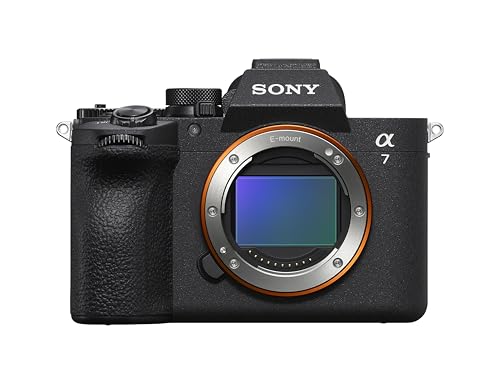 Sony Alpha a7 V Full-Frame Mirrorless Camera
- A partially stacked Exmor RS CMOS image sensor…
- The new BIONZ XR2 processing engine delivers dramatic…
- The new 33.0-megapixel*8 sensor and BIONZ XR2 processing…
 Canon EOS Rebel T7 DSLR Camera EF-S
- 24.1 Megapixel CMOS (APS-C) sensor with is 100–6400…
- Built-in Wi-Fi and NFC technology
- 9-Point AF system and AI Servo AF
| Product | Key specs | |
|---|---|---|
| Sony Alpha a7 V Full-Frame Mirrorless Camera | A partially stacked Exmor RS CMOS image sensor… The new BIONZ XR2 processing engine delivers dramatic… The new 33.0-megapixel*8 sensor and BIONZ XR2 processing… | Check price |
 Sony Alpha a7 IV Mirrorless Camera with | Check price | |
| Canon EOS Rebel T7 DSLR Camera EF-S | 24.1 Megapixel CMOS (APS-C) sensor with is 100–6400… Built-in Wi-Fi and NFC technology 9-Point AF system and AI Servo AF | Check price |
 Canon EOS R100 Mirrorless Camera RF-S18-45mm F4.5-6.3 | Check price |
As an Amazon Associate we earn from qualifying purchases at no extra cost to you.
Quick comparison
| Pick | Best for | Resolution | Stabilization | Card slots | Price range |
|---|---|---|---|---|---|
| Canon EOS R6 Mark III | All-round hybrid | About 32.5 MP | In-body | 2 | Premium |
| Sony A7 V | Image quality and lenses | About 33 MP | In-body | 2 | Premium |
| Nikon Z5 II | Value full frame | 24.5 MP | In-body | 2 SD | Upper-mid |
| Nikon Z6 III | Enthusiast hybrid | 24.5 MP | In-body | CFexpress plus SD | Premium |
| Sony a7C II | Compact full frame | 33 MP | In-body | 1 | Premium |
| Canon EOS R8 | Light and affordable | 24.2 MP | None | 1 | Upper-mid |
| Panasonic Lumix S5 II | Video | 24.2 MP | In-body | 2 SD | Upper-mid |
Specs are drawn from manufacturer sheets and published reviews; exact figures can change with firmware.
Best all-rounder: Canon EOS R6 Mark III
The R6 Mark III balances 32-ish megapixel resolution with fast bursts, strong subject-detection autofocus, and a video suite that includes high-resolution formats. It handles portraits, events, wildlife, and sports with equal confidence. The price is high for a non-flagship body, and Canon’s RF lenses are more expensive than third-party options on some other mounts.
Best for system depth: Sony A7 V
Sony’s E mount is the broadest, with decades of native and third-party lenses from Sigma, Tamron, Viltrox, and others. The A7 V brings improved autofocus, dependable stabilization, and strong video features. Some photographers find the menus dense, but the lens ecosystem and the used market are hard to beat.
Best value: Nikon Z5 II
The Z5 II offers weather sealing, a good viewfinder, in-body stabilization, and capable autofocus at a lower price than the other full-frame bodies. At 24.5 MP, files are manageable and low-light performance is excellent. It does not have the fastest bursts or the best video specs, but it is the cheapest route to a feature-complete full-frame body.
Best enthusiast hybrid: Nikon Z6 III
The Z6 III uses a partially stacked sensor for fast readout, supports high-frame-rate video, and has an excellent viewfinder. It costs more than the Z5 II but is faster and better suited to action and video.
Best compact: Sony a7C II
This body has a 33 MP sensor in a form factor close to APS-C cameras. It suits travel and street photography when paired with a small prime. The viewfinder is smaller and there is only one card slot.
Best light-and-affordable: Canon EOS R8
The R8 is one of the lightest full-frame cameras, using a 24.2 MP sensor and Canon’s modern autofocus. It lacks in-body stabilization and a second card slot, so choose stabilized lenses and back up frequently.
Best for video: Panasonic Lumix S5 II
RTINGS and other reviewers rate the S5 II highly for video, thanks to its stabilization, phase-detect autofocus, and open-gate recording options. It has a bigger body than the a7C II but offers a full articulating screen and long record times.
How to choose a full-frame camera
Think in total system cost
The body is only part of the cost. A typical kit of a standard zoom (24-70 mm f/2.8), a fast prime (50 mm f/1.8), and a telephoto zoom can match or exceed the price of the camera. Compare lens availability and used-market prices before locking in a brand.
Match megapixels to use
24 to 33 MP is ideal for general work: files stay manageable and low-light quality is excellent. 45 MP and above helps landscape and studio work, but needs more storage and computer power. A 60 MP raw file can reach 70 MB, so 1,000 frames fill about 70 GB.
Check the worked light math
Full frame has about 2.25 times the area of APS-C, which is about one stop of extra light at the same field of view and f-number. That means ISO 6400 on full frame looks like ISO 3200 on APS-C in noise terms, an important difference at weddings and in churches.
Value stabilization and card slots
For paid work, two card slots protect against card failure. For handheld video and slow shutter speeds, in-body stabilization makes a visible difference.
Ownership realities
Full-frame lenses are heavy; a 70-200 mm f/2.8 weighs well over a kilogram. Plan for a strong strap or harness. Battery life ranges from about 300 to 700 shots per charge by CIPA standards, so carry spares. Sensor cleaning matters more because larger sensors show dust at small apertures.
Which full-frame camera matches your situation
| Your situation | Best match | Reason |
|---|---|---|
| Weddings and events, paid work | Canon EOS R6 Mark III or Nikon Z6 III | Dual cards, fast autofocus, strong low-light files |
| Wide lens choice and third-party savings | Sony A7 V | E mount has the broadest selection |
| First full-frame on a budget | Nikon Z5 II or Canon EOS R8 | Lower price with modern autofocus |
| Travel and street | Sony a7C II | Compact body, 33 MP |
| Hybrid filmmaker | Panasonic Lumix S5 II | Stabilization and long recording |
Lens math that shapes your purchase
A common beginner mistake is buying a body and a single kit lens, then wondering why photos look no different from a phone. Full-frame benefits appear with fast lenses. A 50 mm f/1.8 lens at f/1.8 on full frame produces the same subject framing and background blur as a 33 mm f/1.2 on APS-C would have to, a lens that rarely exists. Meanwhile, a 24-70 mm f/2.8 zoom weighs about 800 to 900 g and often costs more than the camera body, so budget accordingly.
Storage is the second hidden cost. A 33 MP raw file is roughly 40 MB, so a wedding of 3,000 frames takes about 120 GB before backups. Plan for two copies on separate drives plus a cloud or offsite copy, and use SD UHS-II cards for bursts and 4K video where the camera supports them.
Third, consider an upgrade path. Buying into a mount whose lenses are available used saves money; Sony E and Canon RF have steady secondhand markets. Lenses hold value far better than bodies, so spend toward them first.
Frequently Asked Questions
Is full frame worth it over APS-C?
If you often shoot in low light, want shallow depth of field, or print large, yes. For travel, hobbies, and everyday use, APS-C often provides better portability for the money.
Which brand is best for full frame?
Sony has the most lenses, Canon has strong autofocus and color, and Nikon offers excellent ergonomics and value. Choose based on the lens lineup and how the camera feels.
Do I need a mirrorless camera, or are DSLRs still fine?
New development has moved to mirrorless. Used DSLRs can be a bargain, but new autofocus, video, and lens features appear mostly on mirrorless systems.
How many megapixels do I need?
For most work, 24 to 33 MP is enough. Higher resolution helps with heavy cropping and large prints.
What is the cheapest way into full frame?
Entry-level bodies such as the Canon EOS R8 or the Nikon Z5 II, paired with a compact prime, give the lowest cost of entry. Used older bodies are cheaper still.
More from Amazon
Programs that pair well with the guide above. Offers and eligibility are set by Amazon and may change.
Free shipping on eligible items, Prime Video and more. Eligible new members can start with a free trial.
Start a Prime free trialAudiobooks and podcasts to listen to on the go. Eligible new members can start with a free trial.
Try Audible freeAd-free music streaming. Eligible new subscribers can start with a free trial.
Try Music Unlimited freeA free business account with business pricing and bulk-buying tools for work, shop or home office.
Create a business accountAs an Amazon Associate we earn from qualifying purchases.