If you want the best image quality in DJI’s lightweight line, the Mini 5 Pro is the newest flagship; the Mini 4 Pro remains the better-known all-rounder with omnidirectional obstacle sensing; and the Mini 4K or Mini 3 suit beginners and budget buyers who mainly want stable 4K video. All of these sit in the roughly 249-gram class that DJI markets as its lightest category, which can simplify regulation in some countries. This guide compares the models by camera, flight features, controller options and the trade-offs between them, so you can match a drone to your skill level and budget tier.
Our top picks
 DJI Mini 4K Camera Drone Combo
- No Registration Needed - Under 249 g, this…
- 4K Ultra HD & 3-Axis Gimbal for Cinematic…
- 38kph (Level 5) Wind Resistant - This drone…
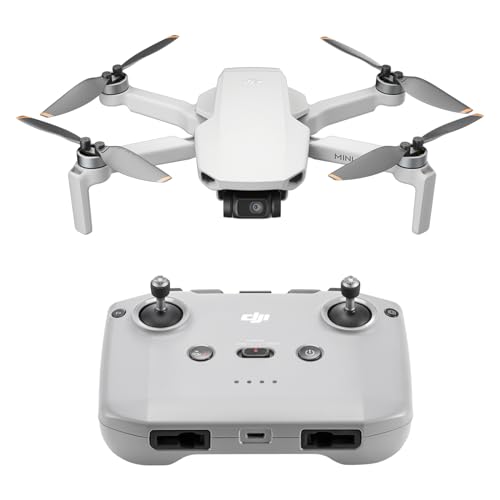 DJI Mini 4K
- No Registration Needed - Under 249 g, this…
- 4K Ultra HD & 3-Axis Gimbal for Cinematic…
- 38kph (Level 5) Wind Resistant - This drone…
 DJI Mini 4K Fly More Combo
- No Registration Needed - Under 249 g, this…
- 4K Ultra HD & 3-Axis Gimbal for Cinematic…
- 38kph (Level 5) Wind Resistant - This drone…
| Product | Key specs | |
|---|---|---|
| DJI Mini 4K Camera Drone Combo | No Registration Needed - Under 249 g, this… 4K Ultra HD & 3-Axis Gimbal for Cinematic… 38kph (Level 5) Wind Resistant - This drone… | Check price |
| DJI Mini 4K | No Registration Needed - Under 249 g, this… 4K Ultra HD & 3-Axis Gimbal for Cinematic… 38kph (Level 5) Wind Resistant - This drone… | Check price |
| DJI Mini 4K Fly More Combo | No Registration Needed - Under 249 g, this… 4K Ultra HD & 3-Axis Gimbal for Cinematic… 38kph (Level 5) Wind Resistant - This drone… | Check price |
 DJI Mini 5 Pro Fly More Combo | Ultra-Light, Palm-Sized Foldable Design - Compact and foldable,… 1-Inch CMOS With 4K/60fps HDR Video - 1-inch… True Vertical Filming & 225° Flexible Gimbal Rotation… | Check price |
As an Amazon Associate we earn from qualifying purchases at no extra cost to you.
At a glance
| Model | Best for | Key stated specs | Limits | Tier |
|---|---|---|---|---|
| DJI Mini 5 Pro | Best image quality in the series | Larger 1-inch-class sensor as listed by the maker, 249g-class weight, obstacle sensing including forward detection | Highest cost in the Mini line, newest model | Premium |
| DJI Mini 4 Pro | All-round enthusiasts, subject tracking | 4K up to 100fps slow motion, omnidirectional obstacle sensing, up to about 34 minutes flight on standard battery per maker | Smaller sensor than Mini 5 Pro | Mid-range to premium |
| DJI Mini 3 | Budget stabilised flight with longer battery | 4K video, vertical shooting, up to about 38 minutes with standard battery per maker | No obstacle avoidance, basic tracking | Mid-range |
| DJI Mini 4K | First-time pilots | 4K video, 3-axis gimbal, about 31 minutes per maker, GPS-assisted flight | No obstacle sensing, basic features | Budget |
| DJI Mini 2 SE | Entry-level learning drone | 2.7K video, about 31 minutes per maker | Lower video resolution, older design | Budget |
What the Mini line is
DJI’s Mini drones are built around a weight of about 249 grams, which keeps them small enough to fit into a jacket pocket or the top of a bag. In several countries, drones below a certain weight face lighter registration or operating rules than heavier models, but regulations differ and change. Check your national aviation authority before flying, since registration, Remote ID and no-fly-zone rules can apply regardless of weight.
All Mini models in this guide use GPS-assisted positioning, a three-axis gimbal and a return-to-home function that the maker describes as automatic when signal is lost or the battery is low. The main differences are the camera sensor, obstacle sensing, subject tracking and battery life.
Model by model
DJI Mini 5 Pro
The newest flagship of the Mini line, the Mini 5 Pro stays within the 249-gram class while moving to a larger one-inch-class camera sensor, according to the maker. Reviewers also highlight an upgraded gimbal that can rotate for vertical shooting and obstacle sensing that includes a forward-facing sensor aimed at improving avoidance in low light. If you want the best picture quality in a sub-250-gram aircraft and the budget allows it, this is the model to look at. The trade-off is cost: it sits at the premium tier and is overkill if you mainly share clips on social media.
DJI Mini 4 Pro
The Mini 4 Pro was the standard recommendation before the Mini 5 Pro arrived, and it remains a strong choice for those who prefer a lower tier. The maker lists 4K recording up to 100 frames per second for slow motion, a camera that can rotate for true vertical video, omnidirectional obstacle sensing and ActiveTrack for following subjects. Battery life is listed at about 34 minutes with the standard battery, though real-world times are shorter in wind. Reviewers praise its balance of features and portability. If obstacle sensing matters to you, because you fly near trees or buildings, it is the cheapest model in the line with sensing in all directions.
DJI Mini 3
The Mini 3 offers 4K video and vertical shooting but no obstacle avoidance. It is one of the longer-flying models, with a maker-listed flight time of about 38 minutes using the standard battery. For flying in open areas, such as fields and beaches, it provides most of the benefit of the Pro model at a lower tier. The absence of obstacle sensing means pilots must keep a clear view and fly carefully, particularly when returning home.
DJI Mini 4K
The Mini 4K is positioned as an entry-level 4K drone. It includes a three-axis gimbal, GPS positioning and return-to-home, and flight time listed at about 31 minutes. It lacks obstacle sensing and has fewer intelligent flight modes than the Pro. For a first drone, many reviewers feel it provides everything needed to learn flight and capture good video without a large outlay. Its small sensor limits dynamic range and low-light quality, so it suits daylight.
DJI Mini 2 SE
Still sold in some markets as the cheapest way into the family, the Mini 2 SE records 2.7K video and uses an older design. Unless the budget is strict, the Mini 4K usually offers better video resolution for a small step up.
Controllers, batteries and accessories
- Controller options: Most models are offered with a basic controller that uses your phone as a screen, or with a controller that has a built-in screen (the RC 2 on newer models). A built-in screen is easier to see in sunlight and removes phone clutter, but costs more.
- Fly More kits: These bundles typically add extra batteries, a charging hub and a carry bag. For a drone with about 30 minutes of flight time, a second battery is often the most useful extra.
- Extended batteries: Some models offer higher-capacity batteries that may push the aircraft above 249 grams, which can change the regulatory category in some countries. Read the maker’s details before choosing them.
- Propeller guards and ND filters: Guards help in tight spaces, and neutral density filters help to achieve smoother video in bright light.
Safety and legal notes
Always follow your national aviation rules and the maker’s manual. Keep the drone within visual line of sight, avoid airports, crowds and restricted airspace, and respect privacy. Battery care matters: use the supplied charger, store batteries at a partial charge and never charge a swollen or damaged battery. Wind is a limit for light aircraft, so the maker’s stated wind resistance is a ceiling, not a target. Software-based geofencing and altitude limits may vary by region and update. Availability and sales of specific DJI models also vary by country because of import and regulatory restrictions, so confirm what is sold where you live.
Pick X if…
| If you want… | Pick | Why |
|---|---|---|
| The best camera in the Mini line | DJI Mini 5 Pro | Larger sensor, newer sensing |
| Obstacle sensing and tracking at a lower tier than the newest | DJI Mini 4 Pro | Omnidirectional sensing, 4K/100fps |
| Long flight time for open-area shooting | DJI Mini 3 | About 38 minutes listed |
| A simple first drone | DJI Mini 4K | 4K, GPS, small and easy |
| The cheapest way in | DJI Mini 2 SE | Basic stabilised flight |
Alternatives
- DJI Neo and DJI Flip: Small, beginner-oriented DJI drones designed for easy selfie-style or vlogging shots, with propeller protection on the Flip. They suit casual users more than photographers wanting top image quality.
- DJI Air 3S: A step up in size, with a larger camera and dual-lens setup, for those who want better image quality and are not tied to the lightest weight class.
- Potensic Atom 2: A non-DJI sub-250-gram option with a three-axis gimbal, popular as a lower-tier alternative.
Frequently Asked Questions
Which DJI Mini is best for beginners?
The Mini 4K is the most common pick because it gives stabilised 4K video, GPS positioning and return-to-home at a budget tier. If you are likely to fly near trees or buildings, the Mini 4 Pro adds omnidirectional obstacle sensing that reduces the chance of a collision. Beginners should still practise in open areas.
Is the Mini 5 Pro worth the extra over the Mini 4 Pro?
It depends on how much you value image quality. The Mini 5 Pro moves to a larger sensor and adds newer sensing, which should help in low light and dynamic range. If you mostly share clips online, the Mini 4 Pro may offer enough quality at a lower tier.
Do I need to register a drone that weighs about 249 grams?
It depends on your country and how you use it. Some regions treat very light drones more leniently, while others still require operator registration or Remote ID. Check your national aviation authority and read the maker’s guidance before your first flight.
How long do DJI Mini batteries last?
The maker lists roughly 31 to 38 minutes for standard batteries across the Mini 4K, Mini 3 and Mini 4 Pro, but real flights are shorter because of wind, temperature and aggressive flying. Carrying a second battery is practical. Land with a reserve instead of flying until the warning.
Can the Mini drones fly in wind?
They can handle light to moderate wind, and the maker lists a maximum wind resistance for each model. Because the aircraft is light, gusts can push it off course or drain the battery faster. If conditions feel marginal, postpone the flight.
Should I buy the Fly More kit?
If you plan to fly regularly, yes, because additional batteries extend flying sessions and a charging hub allows batteries to be charged in sequence. If you only fly occasionally, the standard bundle may be enough. Consider the controller type as well, since a built-in-screen controller is often sold as a separate option.
More from Amazon
Programs that pair well with the guide above. Offers and eligibility are set by Amazon and may change.
Free shipping on eligible items, Prime Video and more. Eligible new members can start with a free trial.
Start a Prime free trialAudiobooks and podcasts to listen to on the go. Eligible new members can start with a free trial.
Try Audible freeAd-free music streaming. Eligible new subscribers can start with a free trial.
Try Music Unlimited freeA free business account with business pricing and bulk-buying tools for work, shop or home office.
Create a business accountAs an Amazon Associate we earn from qualifying purchases.