
Our Short List of 3
All 5 Picks at a Glance
| Product | Specs | Action |
|---|---|---|
 1. Manfrotto Befree Advanced | Check price on Amazon | |
 2. Benro Mach3 TMA48CXL | Check price on Amazon | |
 3. Peak Design Travel Tripod Carbon | Check price on Amazon | |
 4. Gitzo Traveler GT1545T | Check price on Amazon | |
 5. K&F Concept TM2324 | Check price on Amazon |
Key takeaways
- Learn how to choose a tripod for video with fluid heads, load capacity, height, and stability tips, plus five steady tripods for smooth pans.
A tripod built only for still images can let video down in ways that show up on screen at once. A pan that judders, a tilt that jumps, or legs that flex under a rig will pull attention away from your story. Video asks a tripod to hold still for long takes, move with smooth control when you pan, and stay level while you work. This guide focuses on the video side of the job. Our site already has a general guide to choosing a tripod, so this article stays on what matters when the camera keeps rolling.
As an Amazon Associate, we earn from qualifying purchases.
Why Video Needs a Different Tripod
A still image needs a tripod to stay still for a fraction of a second. Video needs that same stillness for seconds or minutes at a time, and it also needs controlled movement. When you pan across a landscape or follow a person walking through a frame, every small hitch in the head becomes visible. A head that feels fine when you lock it for a photo can feel rough the moment you try to move it slowly and evenly.
Video rigs also tend to weigh more than a bare camera body, because a cage, a microphone, a monitor, and a follow focus add mass that shifts the balance of the whole setup. A tripod that holds a light mirrorless camera with ease may sag or drift once you add accessories. Wind and uneven ground add more trouble, because a leg that sinks a little during a take will tilt the horizon while you film. The five tips below cover the head, the load, the height, the legs, and the weight.
Tip 1: Pick a Head That Moves With Damping
The head decides how your pans and tilts feel. For video, a fluid head is the standard choice. Inside a fluid head, a viscous fluid resists sudden movement and lets the head glide at a steady pace. That damping smooths out small shakes from your hands and helps you hold a constant speed through a pan. A ball head can work for locked-off shots, but it gives you little control once you begin to pan.
Look for a head with separate pan and tilt locks, plus a drag control that lets you set how much resistance you feel. A long pan handle gives you finer control than a short one, because a small hand movement at the end of a long handle turns into a slow, even move at the camera. When you test a head, pan slowly and watch for any catch near the middle of the move.
Tip 2: Match Load Capacity to Your Full Rig
Load capacity tells you how much weight a tripod can hold safely, and for video you must count the whole rig, not only the camera body. Add the lens, the cage, the microphone, the monitor, the light, and any other accessory you plan to mount, then add a margin on top. A useful rule is to keep your total rig weight at no more than two thirds of the stated load capacity. That margin keeps the head from drifting during a tilt and gives the legs room to stay rigid when the wind picks up.
A tripod near its limit will creep during a long take and flex when you lean on the pan handle, and each fault can spoil a full minute of footage. The weaker of the head and leg figures decides what you can mount.
Tip 3: Get the Height Right for Your Shots
Height matters more in video than many buyers expect, because the camera height sets the feel of the whole scene. Eye-level framing suits interviews and vlogs, a low angle adds weight to a subject, and a high angle opens up a landscape. A tripod that is too short forces you to raise the center column to its full extension, where it is at its least stable.
For interviews, the lens should sit near the eye line of a seated or standing subject, so a maximum height near 60 inches suits most seated work and a taller tripod suits standing work. For low-angle shots, check the minimum height too: a tripod that drops close to the ground opens up framing a tall-only tripod cannot reach. Avoid leaning on the center column for height: legs fully extended with the column down are steadier, so check that height as well as the headline maximum.
Tip 4: Look for Legs That Lock Firmly and Level Fast
Legs decide whether the tripod stays put once you have framed the shot. Flip locks are fast to use with cold hands or gloves, while twist locks pack down more neatly and resist snagging on a bag. Either type works well if the locks hold firmly and do not slip under load. Press down on the tripod with the legs partly extended: a leg that slides under pressure will tilt your horizon during a take.
Three leg-angle settings give you more options: a wide stance lowers the tripod and adds stability on uneven ground, while a narrow stance fits tight indoor spaces. Interchangeable feet are a useful extra: spiked feet grip soft ground outdoors, and rubber feet grip smooth floors indoors. A bubble level on the head lets you set a level horizon in seconds, which matters because a tilted horizon is hard to fix in the edit without cropping the frame.
Tip 5: Balance Weight, Pack Size, and Build
A video tripod is only useful if you carry it to the shoot. Carbon fiber legs weigh less than aluminum legs of the same size, and they damp small shakes well, but they cost more. Aluminum is heavier yet tough and easy to live with, and it suits shooters who drive to a location rather than hike to it. Think about how far you walk with the tripod and how much other gear you carry.
Folded length decides whether the tripod fits your bag. A travel tripod that folds to about 16 inches slips into a day pack, while a tall tripod near 27 inches folded needs its own case. More leg sections can mean a little less rigidity, so weigh pack size against stiffness. Build quality shows in small details: smooth leg locks, a head that does not rock, a plate that seats with a firm click, and a hook for hanging a bag as ballast. Choose the lightest tripod that still holds your rig with a margin.
Five Steady Tripods for Video Work
The five tripods below cover travel kits, tall carbon legs, and low-cost aluminum options. Some ship with a ball head for locked-off shots, and some ship as legs only for the fluid head of your choice.
1. Manfrotto Befree Advanced
The Manfrotto Befree Advanced is a compact aluminum travel tripod that suits video shooters who move light. Its lever locks open fast, and the included ball head holds a mirrorless camera with a mid-size lens for locked-off shots. For moving shots, fit a compact fluid head on the same legs. The 8.8 lb load capacity fits a mirrorless body, a standard zoom, and a small microphone with room to spare.
2. Benro Mach3 TMA48CXL
The Benro Mach3 TMA48CXL is a tall carbon fiber tripod for shooters who need height and load capacity. It reaches 82.87 inches for standing interviews and high-angle work, and it holds up to 44.1 lb, so a full rig with a long lens, a monitor, and a microphone stays well within its limits. The legs ship without a head, which makes this a strong base for a fluid head. Twist locks hold the four sections firmly, and interchangeable feet suit floors and soft ground alike.
3. Peak Design Travel Tripod Carbon
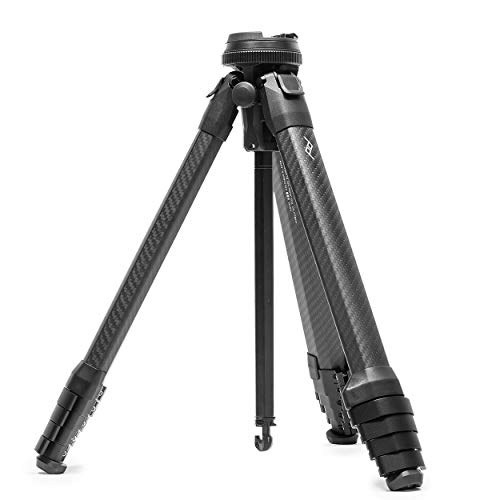
The Peak Design Travel Tripod Carbon packs down to the diameter of a water bottle, which makes it easy to carry on a shoot where space is tight. It weighs 2.81 lb yet holds up to 20 lb, so a full-frame mirrorless camera with a telephoto lens sits safely on it. The ball head suits locked-off video, and the single adjustment ring keeps setup fast. Its 60-inch maximum height suits seated interviews, and its 5.5-inch minimum height opens up low-angle framing.
4. Gitzo Traveler GT1545T
The Gitzo Traveler GT1545T is a Series 1 carbon fiber tripod built for shooters who want a light, rigid base for a fluid head. It weighs 2.33 lb, folds to 16.73 inches, and reaches 60.24 inches for most interview and travel work. The 22.05 lb load capacity holds a mirrorless rig with accessories, and the Carbon eXact tubes keep the legs stiff when you pan. The legs ship without a head, so pair them with a fluid head that matches your rig weight.
5. K&F Concept TM2324
The K&F Concept TM2324 is an aluminum tripod that gives video beginners a tall, low-cost way to begin. It reaches 72 inches, folds to 16.92 inches, and holds up to 22 lb, which covers a DSLR or mirrorless camera with a kit lens and a small microphone. The 28 mm ball head suits locked-off shots, and one leg detaches to form a monopod for moving work. A phone holder and a remote come in the box for solo shooters.
A Quick Setup Routine for Smooth Footage
A short routine before each take saves more footage than any single accessory. Extend the thickest leg sections first, set the leg angles, and lock each section with a firm press. Level the head, then mount the camera and slide the plate until the rig balances. Tighten the plate, set the pan and tilt drag, and run one slow practice pan before you record. If the pan feels uneven, loosen the drag and try again with a slower hand. Keep the center column down for the steadiest shots, and hang your bag from the center hook on windy days.
FAQ
How do I choose a tripod for video if I only shoot interviews?
Pick a fluid head with drag control, a load capacity at least one third above your full rig weight, and a height that puts the lens near your subject eye line. A tripod near 60 inches suits seated interviews, while standing work needs taller legs.
Is a ball head good enough for video work?
A ball head works well for locked-off shots where the camera does not move during the take. It is less suited to pans and tilts, because it gives you little damping once you begin to move. If you pan often, fit a fluid head to your legs.
How much load capacity do I need for a video rig?
Add the weight of the camera body, lens, cage, microphone, monitor, and any other accessory, then choose a load capacity at least one third higher than that total. The weaker of the head and leg figures decides what you can mount.
Should I buy carbon fiber or aluminum legs for video?
Carbon fiber weighs less and damps small shakes well, which suits travel and long days on foot. Aluminum costs less, feels tough, and suits shooters who drive to a location. Either material works if the legs lock firmly and the load capacity fits your rig with a margin.
Final Thoughts
Choosing a tripod for video comes down to the head, the load capacity, the height, the legs, and the weight you are willing to carry. A fluid head gives you smooth pans, a generous load margin keeps the rig steady, the right height frames your subject well, and firm legs hold the horizon level.
More from Amazon
Programs that pair well with the guide above. Offers and eligibility are set by Amazon and may change.
Free shipping on eligible items, Prime Video and more. Eligible new members can start with a free trial.
Start a Prime free trialAudiobooks and podcasts to listen to on the go. Eligible new members can start with a free trial.
Try Audible freeAd-free music streaming. Eligible new subscribers can start with a free trial.
Try Music Unlimited freeA free business account with business pricing and bulk-buying tools for work, shop or home office.
Create a business accountAs an Amazon Associate we earn from qualifying purchases.









