Our Short List of 3
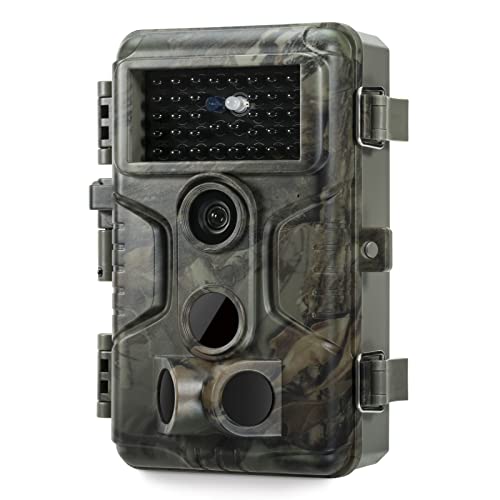
- Connectivity: Non-cellular, non-WiFi; SD-card recording only
- Photos: Up to 64MP
- Video: 1296p HD with sound
- Trigger speed: 0.1 second
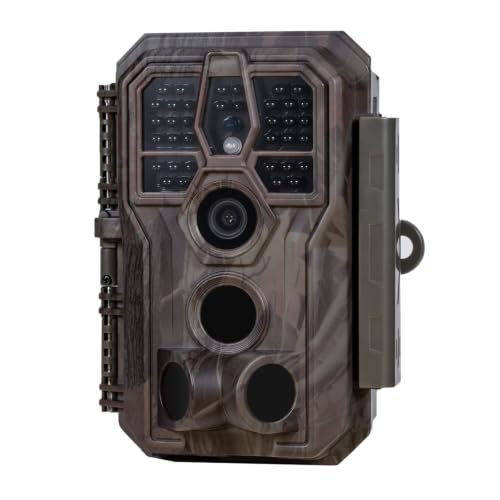
- Connectivity: Non-cellular, non-WiFi; SD-card recording only, no internet support
- Photos: Up to 64MP
- Video: 1296p HD, clips up to ten minutes
- Trigger speed: 0.1 second
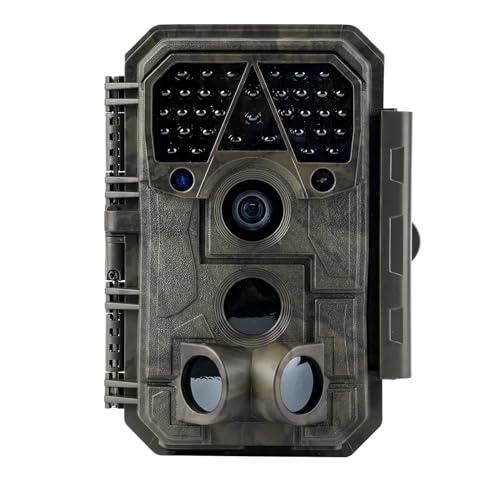
- Connectivity: Non-cellular, non-WiFi; wired USB transfer only
- Photos: Up to 64MP
- Video: 1296p
- Night vision: No-glow infrared
All 3 Picks at a Glance
| Product | Specs | Action |
|---|---|---|
| 1. GardePro A3S — best overall |
| Check price on Amazon |
| 2. GardePro E5S — best for simple, low-power scouting |
| Check price on Amazon |
| 3. Meidase P70 — best for phone-free field checks |
| Check price on Amazon |
Key takeaways
- Find the best trail camera without cellular service, with non-cellular, non-WiFi picks from GardePro and Meidase that record to an SD card with no plan, no app and no signal needed.
As an Amazon Associate we earn from qualifying purchases.
Disclosure: This article contains affiliate links. If you buy through a link on this page, we may earn a commission at no extra cost to you.
A trail camera without cellular service does one job in a deliberately simple way: it watches a trail, feeder, scrape, fence line or garden gate, records what passes, and stores everything on a memory card until you come back to collect it. There is no SIM card to activate, no data plan to renew, no app account to maintain and no dependence on mobile coverage in a valley, forest or far corner of a property where a signal may not reach at all. For many hunters, landowners and wildlife watchers, that simplicity is not a compromise. It is the point.
Cellular cameras earn their place when you need a photo sent to your phone the moment an animal appears, or when a camera sits too far away to visit easily. But remote delivery brings running costs, battery drain from transmitting, and setup that can fail for reasons unrelated to the camera itself. A non-cellular camera removes all of that. You format a card, fit fresh batteries, strap the camera to a tree, and walk away. When you return, you swap the card in seconds and read the full-resolution photos and video clips at home.
This guide covers three cameras that are built for exactly that workflow. Every pick below is sold in a version whose listing states plainly that it is non-cellular. Two of them go further and have no WiFi at all, so there is no radio of any kind to configure. The third follows the same card-only pattern. Where a maker also sells a cellular or WiFi sibling under a similar name, this guide points only to the non-cellular version, because buying the wrong variant is the most common mistake with this kind of camera.
Quick picks
- Best overall: GardePro A3S (B087G8W2PY) — A non-cellular, non-WiFi camera with 64MP photos, 1296p video with sound, a 0.1-second trigger and 100-foot no-glow night vision, built around straightforward SD-card retrieval.
- Best for simple, low-power scouting: GardePro E5S (B09ZLLH64Q) — Also non-cellular and non-WiFi, with 64MP photos, 1296p video, a 0.1-second trigger, 100-foot no-glow illumination and support for large standard-size SD cards up to 512GB.
- Best phone-free field checks: Meidase P70 (B0D5LCW4SM) — A non-cellular, non-WiFi model with 64MP photos, 1296p video and no-glow infrared night vision, designed for motion-activated recording to a card you supply.
All three cameras share the same basic ownership pattern: standard AA batteries, a standard SD card workflow, and no ongoing service of any kind. The differences that matter are in night performance, card capacity, video length and how each camera suits a particular kind of site.
1. GardePro A3S — best overall
- Connectivity: Non-cellular, non-WiFi; SD-card recording only
- Photos: Up to 64MP
- Video: 1296p HD with sound
- Trigger speed: 0.1 second
The GardePro A3S is the easiest camera here to recommend as a default choice, because its listing leaves no room for confusion about what it is. It is described as a trail camera that is non-cellular and non-WiFi, with enhanced low-light performance. That means there is no phone connection to set up, no network to join and no transmission setting to switch off. The camera simply records to its SD card, and you retrieve the files by visiting the camera.
On image quality, the A3S records photos at up to 64MP and video at 1296p HD with sound. Those headline photo figures describe the maximum output setting on the listing, so the practical value is in the combination rather than any single number: a fast 0.1-second trigger speed to catch an animal as it enters the frame, and 100-foot no-glow night vision so the infrared flash does not produce a visible red glow that could alert game or draw attention to the camera at night. For deer trails, crossings and scrapes where animals pass quickly and often after dark, that pairing of trigger speed and discreet night illumination is what decides whether you get a usable image or an empty frame and a tail.
Power and storage follow the classic pattern. The A3S runs on eight AA batteries and records to a regular SD card, with both the batteries and the card sold separately, so budget for them when you set up. Because there is no cellular radio drawing power to search for a signal or send images, battery life is governed mainly by how many photos and video clips the camera takes, the night flash use, and the temperature. A camera on a quiet trail will run far longer between visits than one pointed at a busy feeder, whatever the model.
The A3S suits hunters who check cameras on a regular round, landowners watching a gate or outbuilding they pass anyway, and wildlife watchers who prefer to read a full card of images on a computer screen. It is less suited to anyone who needs to know immediately when something appears, because by design nothing leaves this camera until you go and get it.
Specifications
Pros
Cons
See the GardePro A3S on Amazon
2. GardePro E5S — best for simple, low-power scouting
- Connectivity: Non-cellular, non-WiFi; SD-card recording only, no internet support
- Photos: Up to 64MP
- Video: 1296p HD, clips up to ten minutes
- Trigger speed: 0.1 second
The GardePro E5S takes the same card-only idea and leans into low running effort. Its listing also identifies it as non-cellular and non-WiFi, and the maker’s answers on the listing confirm that it does not support internet access, home WiFi routers or cellular networks. It is a standalone camera in the fullest sense: fit batteries and a card, mount it, and it works entirely on its own until your next visit.
The headline specifications closely match the A3S. The E5S records photos at up to 64MP and 1296p HD video, with a 0.1-second trigger and 100-foot no-glow night vision. It can record longer video clips than many basic cameras, with video length extending up to ten minutes per clip on the listing, which is useful if you want behaviour at a feeder, water source or nest site rather than a short glimpse. It also supports standard-size SD cards up to 512GB, so a busy site can accumulate a large archive before the card fills, and its card management can be set to suit how often you visit.
Because a non-cellular, non-WiFi design uses minimal power when it is not recording, the E5S is a sensible choice for a camera that will sit undisturbed for long stretches. The listing also notes compatibility with a GardePro solar panel accessory sold separately, which can reduce battery swaps on a sunny site, although a shaded forest placement will always limit what any small panel can contribute. As with the A3S, the camera ships with a mounting strap, USB cable and manual, while the working essentials of batteries and a card are separate purchases.
Choose the E5S if your priority is a camera you can forget about between checks: a remote corner of a property, a seasonal trail, or a garden where you want to learn what visits at night without running any kind of account or connection. If you visit very often and want the strongest low-light emphasis in this small group, the A3S above makes its case on that point instead.
Specifications
Pros
Cons
See the GardePro E5S on Amazon
3. Meidase P70 — best for phone-free field checks
- Connectivity: Non-cellular, non-WiFi; wired USB transfer only
- Photos: Up to 64MP
- Video: 1296p
- Night vision: No-glow infrared
The Meidase P70 completes the set with the same defining trait stated right in its listing title: non-cellular, non-WiFi. Its connectivity is listed as wired only, which in practice means a USB cable for transferring files and nothing wireless at all. If you want a camera that cannot send anything anywhere, and that you operate entirely through its own controls and a memory card, the P70 is built to that brief.
It records photos at up to 64MP and video at 1296p, with no-glow infrared night vision for motion-activated recording after dark. The no-glow flash matters for the same reason as on the GardePro models: animals are less likely to react to a flash they cannot see, and a camera watching a property line or equipment stays less noticeable. The housing is waterproof for outdoor use in rain, and the camera mounts with the included strap.
The P70 requires one SD memory card and eight AA batteries, neither of which is included, and the box contains the camera, a mounting strap, a USB cable and an instruction manual. That makes the setup checklist identical to the other two picks: card, batteries, a tree or post, and a few minutes to set the date, mode and sensitivity. Meidase also sells WiFi and other connected models under similar naming, so check that the listing you buy from carries the non-cellular, non-WiFi wording and matches the ASIN below before ordering.
The P70 suits buyers who want a second or third camera to widen coverage without widening complexity: another trail crossing, or a different angle on a food plot. Whoever checks it swaps the card and brings the pictures home.
Specifications
Pros
Cons
How to choose a trail camera without cellular
Start with the retrieval routine, because it shapes everything else. A non-cellular camera only makes sense if you, or someone you trust, can visit it on a sensible cycle. Weekly or fortnightly visits suit most hunting and wildlife use, and they let you swap cards and batteries before either runs out. If a camera will sit for a whole season with no visit at all, prioritise large card capacity, conservative video settings and fresh lithium AA batteries, which handle cold better than alkaline cells.
Next, look at trigger speed and detection. Animals rarely pose. A trigger around 0.1 to 0.3 seconds, paired with a detection zone that matches the trail angle, decides whether the subject is centred or half out of frame. Mount the camera so animals cross the field of view rather than walk straight toward it, which gives the sensor more time to fire and gives you a side view that is easier to identify.
Night vision type matters more than headline distance. No-glow infrared uses 940nm illumination that is effectively invisible, which is the right choice for wary game and for discreet property watching. Low-glow infrared reaches a little further in some designs but shows a faint red light when it fires. All three cameras in this guide use no-glow illumination, so the choice between them does not force that trade-off.
Treat photo resolution figures with care. A 64MP setting on a trail camera is an output size produced with processing, not a promise of medium-format detail. Judge a camera on the combination of lens, sensor behaviour at night, trigger reliability and video quality. Video at 1296p with sound, as the GardePro models offer, often tells you more about behaviour and numbers of animals than a still does.
Finally, confirm the variant before you buy. Makers sell cellular, WiFi and plain versions of closely related models, sometimes on the same page as selectable options. The correct non-cellular version will say non-cellular in its title or specifications, list its wireless technology as none, and make no mention of a SIM, app transmission or data plan. If an option mentions any of those, it is a different version, however similar the camera looks.
FAQs
Does a trail camera without cellular need a subscription of any kind?
No. A non-cellular camera records to its own memory card and has nothing to subscribe to. There is no data plan, no cloud storage account and no app membership involved. Your only running costs are batteries and, eventually, replacement memory cards.
How do I see the photos from a non-cellular trail camera?
You visit the camera and remove the SD card, or swap in a fresh card and take the full one home. The card then reads in a computer, a card reader or a compatible viewing device. The GardePro and Meidase cameras here also include a USB cable for wired transfer. Nothing is sent automatically, which is exactly why these cameras work in places with no signal.
Is WiFi the same as cellular on a trail camera?
No. A cellular camera sends images over a mobile network and needs a plan. A WiFi trail camera connects only over a short local range to a phone nearby, and does not use a mobile network. The cameras in this guide go one step further: their listings state non-cellular and non-WiFi, so they have no wireless transfer at all and work purely through the memory card.
Will a non-cellular camera work where there is no mobile signal?
Yes, and that is one of its main advantages. Recording, detection and night vision are all handled inside the camera, so coverage is irrelevant. Deep forest, hills, valleys and remote land with no service are all fine, as long as you can visit to collect the card.
What memory card and batteries should I buy?
Buy the card size and class the listing specifies, and do not exceed the maximum capacity the camera supports: the E5S, for example, supports standard-size SD cards up to 512GB. The P70 and A3S each need an SD card and eight AA batteries, sold separately. Lithium AA batteries are the safer choice for cold weather and long deployments, and formatting the card in the camera before first use avoids most file problems.
Can a non-cellular camera be used for property security?
It can record activity at a gate, drive, outbuilding or equipment store, and no-glow models do so discreetly. The limitation is timing: you will only see an incident when you next collect the card, so it is a recording tool rather than an alert system. For lawful use, place cameras on your own property and follow local rules on recording.
Conclusion
The best trail camera without cellular is the one that disappears into your routine: no plan to renew, no signal to chase, and a card full of full-resolution images waiting when you visit. The GardePro A3S is the strongest all-round pick here, pairing a fast trigger and no-glow night vision with a listing that states its non-cellular, non-WiFi design without ambiguity. The GardePro E5S suits longer, quieter deployments, with large card support and longer video clips. The Meidase P70 is the straightforward extra camera for widening coverage with the least possible setup. Whichever you choose, match the ASIN to the non-cellular version, add a suitable SD card and eight AA batteries to your order, and the camera is ready for the woods.
More from Amazon
Programs that pair well with the guide above. Offers and eligibility are set by Amazon and may change.
Free shipping on eligible items, Prime Video and more. Eligible new members can start with a free trial.
Start a Prime free trialAudiobooks and podcasts to listen to on the go. Eligible new members can start with a free trial.
Try Audible freeAd-free music streaming. Eligible new subscribers can start with a free trial.
Try Music Unlimited freeA free business account with business pricing and bulk-buying tools for work, shop or home office.
Create a business accountAs an Amazon Associate we earn from qualifying purchases.