For most buyers, the Sony a6700 is the strongest APS-C all-rounder, the a7C II and a7 IV are the usual full-frame hybrid choices, the ZV-E10 II and ZV-1 II suit vloggers, and the a7R V and a1 II serve those who need maximum resolution or speed. Sony’s Alpha range is large, so the real question is which sensor size, body style and video needs match how you shoot. This guide groups the lineup by buyer type and lists the specs the maker states, so you can narrow it quickly.
Our top picks

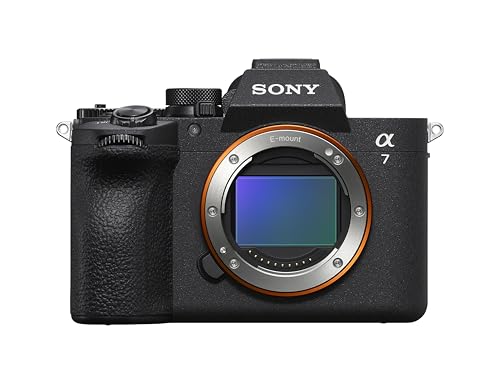 Sony Alpha a7 V Full-Frame Mirrorless Camera
- A partially stacked Exmor RS CMOS image sensor…
- The new BIONZ XR2 processing engine delivers dramatic…
- The new 33.0-megapixel*8 sensor and BIONZ XR2 processing…

As an Amazon Associate we earn from qualifying purchases at no extra cost to you.
Sony Cameras at a Glance
| Camera | Sensor | Best for | Key stated features | Limits |
|---|---|---|---|---|
| ZV-E10 II | APS-C, about 26MP | Vloggers and beginners with interchangeable lenses | Flip-out screen, vlogging-focused features, 4K video | No viewfinder |
| ZV-1 II | 1-inch type, about 20MP | Pocket vlogging | Wide fixed lens, compact body | Fixed lens; small sensor |
| a6700 | APS-C, about 26MP | Enthusiast hybrid shooters | In-body stabilization, AI-based subject recognition, 4K video | APS-C crop; smaller lens ecosystem than full-frame in some areas |
| a7C II | Full-frame, about 33MP | Travel and compact full-frame | Small body, AI autofocus, in-body stabilization | Single card slot on some compact bodies; smaller grip |
| a7 IV | Full-frame, about 33MP | Photo and video hybrid | Well-rounded features, dual card slots | Newer a7 generation may be available |
| a7R V | Full-frame, about 61MP | Landscape, studio, high-resolution work | High-resolution sensor and AI autofocus | Large files, higher storage needs |
| a7S III | Full-frame, about 12MP | Low-light video | Large pixels, strong video features | Low resolution for photos |
| a1 II | Full-frame, about 50MP | Professionals needing speed and resolution | Flagship speed and resolution | Premium tier size and cost |
Sony releases new bodies often, and some of these have successors or revised variants. Reviewers and the maker’s own lineup pages are the right place to confirm the latest generation in a family.
APS-C: a6700 and ZV-E10 II
The a6700 sits at the top of Sony’s APS-C line. The maker lists a roughly 26-megapixel sensor, in-body image stabilization and an AI processing unit for subject recognition. Reviewers frequently describe it as a compact camera that keeps up with much larger bodies for wildlife, sports and travel because of its autofocus system and lens range. It is a good choice if you want a small camera with a reasonably deep lens selection.
The ZV-E10 II targets vloggers and creators who want interchangeable lenses. Sony lists a flip-out screen, a directional microphone setup and video-focused features such as product showcase mode. It lacks a viewfinder and offers fewer controls than the a6700, so it suits those who rely on the rear screen.
Lens pairing for APS-C
Both bodies use E-mount, so you can use Sony E lenses designed for APS-C and many full-frame FE lenses. Sigma, Tamron and Viltrox also make E-mount lenses. A compact kit zoom plus a fast prime covers most needs.
Full-Frame Hybrids: a7C II and a7 IV
The a7C II keeps the 33-megapixel class sensor in a compact body, and reviewers highlight its travel-friendly size and AI-assisted autofocus. The trade-off is a smaller grip and fewer physical controls than larger bodies. The a7 IV is a bigger, more conventional body, generally described as a well-balanced camera for photography and video with a better grip and dual card slots.
If you carry the camera frequently, the a7C II is the lighter choice. If you shoot events or longer sessions, the a7 IV’s ergonomics and card redundancy may matter more. Sony may offer newer generations in the a7 family, so check the maker’s lineup before buying.
High-End Choices: a7R V, a7S III, a1 II
- a7R V: built for detail, with a roughly 61-megapixel full-frame sensor. It suits landscape, architecture and studio work, but files are large and demand fast storage and a capable computer.
- a7S III: a video-oriented body with a roughly 12-megapixel sensor. It is known for low-light performance, but photographers who need cropping room may find the resolution limiting.
- a1 II: Sony’s flagship, aimed at professionals needing both resolution and speed. It sits in the premium tier in size and cost.
Compact Vlogging: ZV-1 II
The ZV-1 II uses a 1-inch type sensor with a wide fixed zoom lens. Sony designed it for handheld vlogging, with a flip-out screen and microphone options. It cannot change lenses, so image quality and low-light performance are limited by the sensor and lens compared with larger cameras. It is excellent for travel clips and on-the-go use where size is more important.
Budget Tiers Without Prices
| Tier | Cameras | What to expect |
|---|---|---|
| Budget | ZV-E10 II, older APS-C bodies such as the a6400 as a previous generation | Capable images and video, simpler controls |
| Mid-range | a6700, ZV-1 II, a7C II | Strong autofocus and stabilization, compact size |
| Premium | a7 IV, a7R V, a7S III, a1 II | Full-frame sensors, pro features, larger files |
Pick X If…
| If you… | Pick | Reason |
|---|---|---|
| Want an affordable camera for vlogging with swappable lenses | ZV-E10 II | Vlog-focused features and flip-out screen |
| Want a pocketable video camera | ZV-1 II | Compact with a wide lens |
| Want a single APS-C camera for photo and video | a6700 | Stabilization and AI autofocus |
| Travel and want full-frame in a small body | a7C II | Compact build |
| Do mixed professional photo and video | a7 IV | Balanced features, dual slots |
| Need very high resolution | a7R V | About 61MP sensor |
| Shoot video in low light | a7S III | Large-pixel sensor |
Lens and Accessory Notes
- All E-mount bodies accept E-mount lenses. Full-frame lenses on APS-C bodies apply a 1.5x crop.
- Check the battery type. Newer Sony bodies use the NP-FZ100 battery, which gives longer runtime than the older NP-FW50 on small cameras.
- Memory cards: high-bitrate video needs fast V60 or V90 cards where the maker specifies them.
- Overheating limits for long video recording vary by model. Read the manual for stated recording times.
Alternatives
- Canon EOS R series: strong color science and autofocus, with a growing RF lens range.
- Nikon Z series: excellent handling and a good mix of lenses.
- Fujifilm X series: APS-C cameras with film simulations and a compact lens range.
- Panasonic Lumix S and G: well-regarded for video features.
Autofocus, Stabilization and Video Limits
Sony’s newer bodies use AI-based subject recognition to track people, animals, birds, vehicles and insects, according to the maker, and reviewers regularly rate this as one of the strengths of the system. In-body stabilization on the a6700, a7C II, a7 IV and others helps with handheld shooting at slower shutter speeds and with video. The maker describes the effect in stops, but real results vary with lens and shooting style.
Video shooters should read the recording limits. Some bodies can overheat during long 4K sessions, and cameras differ in frame rates, color profiles and log capture. If long interviews or events are your use, look for the maker’s stated recording times and reviewer reports on heat. Dedicated cinema bodies like the FX line are built for that purpose with active cooling.
How to Choose Between APS-C and Full-Frame
APS-C cameras are lighter and the lenses are smaller, which suits travel and everyday carry. Full-frame offers more headroom in low light and a thinner depth of field, but lenses cost more and weigh more. If you mostly shoot in good light, share images online and want a small kit, APS-C may be all you need. If you print large, crop heavily, or work in dim venues, full-frame has clear benefits.
It also helps to think about the lens system. Sony E-mount has one of the broadest ranges, including third-party options from Sigma, Tamron and Viltrox, which keeps the cost of expanding your kit manageable. Starting with a body and one good lens is usually wiser than buying a premium body with only a kit zoom.
Menus and ergonomics deserve a moment too. Sony has improved its menu system on recent bodies, and reviewers note that the newer layouts are friendlier than older ones. Hold the camera in a store if you can, because grip size, button placement and viewfinder quality are personal, and a body that feels right will get used more often.
Frequently Asked Questions
What is the best Sony camera for beginners?
The ZV-E10 II or a6700 are popular entry points into the E-mount system. The ZV-E10 II is easier for vlogging, while the a6700 offers a viewfinder and more controls.
Is full-frame worth it over APS-C?
Full-frame sensors generally offer better low-light performance and shallower depth of field, but bodies and lenses are larger. APS-C is lighter and often more affordable.
Which Sony camera is best for video?
The a7S III and FX series are aimed squarely at video, while the a7 IV and a6700 handle hybrid work well. The ZV-E10 II is a lighter option for creators.
Can I use Sony lenses across different bodies?
Yes, E-mount lenses work across Sony’s E-mount bodies. Full-frame lenses on APS-C bodies are cropped, and APS-C lenses on full-frame bodies use a crop mode.
Which Sony camera is best for travel?
The a7C II and a6700 are commonly mentioned by reviewers for travel because of their size and capability. The ZV-1 II is even smaller.
Should I wait for newer models?
Sony updates cameras on a rolling schedule. If a body meets your needs now, waiting rarely pays off, but you can read the maker’s announcements to see if a replacement is close.
More from Amazon
Programs that pair well with the guide above. Offers and eligibility are set by Amazon and may change.
Free shipping on eligible items, Prime Video and more. Eligible new members can start with a free trial.
Start a Prime free trialAudiobooks and podcasts to listen to on the go. Eligible new members can start with a free trial.
Try Audible freeAd-free music streaming. Eligible new subscribers can start with a free trial.
Try Music Unlimited freeA free business account with business pricing and bulk-buying tools for work, shop or home office.
Create a business accountAs an Amazon Associate we earn from qualifying purchases.