
Our Short List of 3

- 18-105mm (27-157.5mm equivalent), constant f/4, Optical SteadyShot, power zoom, 72mm filter thread, 427 g, minimum focus 0.45 m at wide end

- 10-20mm (15-30mm equivalent), constant f/4, power zoom, 62mm filter thread, 178 g, minimum focus 0.13 m, 7-blade aperture
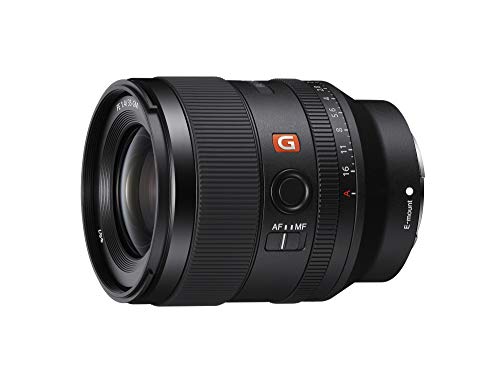
- 35mm (52.5mm equivalent on FX30), f/1.4, two XD Linear Motors, 2 XA elements, 67mm filter thread, 524 g, minimum focus 0.27 m, 11-blade aperture
All 3 Picks at a Glance
| Product | Specs | Action |
|---|---|---|
| 1. Sony E PZ 18-105mm f/4 G OSS |
| Check price on Amazon |
| 2. Sony E PZ 10-20mm f/4 G |
| Check price on Amazon |
| 5. Sony FE 35mm f/1.4 GM |
| Check price on Amazon |
Key takeaways
- Find the best lenses for Sony FX30, from smooth power zooms to fast primes, with crop-aware focal lengths and video-first handling for cinema work.
The Sony FX30 is a Super 35 cinema camera built around video first, and the glass in front of it decides how far that design goes. A 26.1MP APS-C sensor, 4K oversampled from 6K, dual base ISO, and S-Cinetone give the body a serious foundation, but the wrong lens can undo all of it with noisy autofocus, visible breathing, or a jerky zoom. The right lens, by contrast, disappears into the shot: focus moves land softly, zooms glide, and the frame stays steady while the camera moves.
This guide covers five E-mount lenses for the FX30: two power zooms, one compact constant-aperture standard zoom, and two fast primes for low light. Three are APS-C lenses made for the FX30 sensor size, and two are full-frame FE lenses that also mount and work on the FX30. Because the FX30 uses a 1.5x crop, every focal length here is listed with its full-frame equivalent so you know the field of view you will actually get.
As an Amazon Associate, we earn from qualifying purchases.
1. Sony E PZ 18-105mm f/4 G OSS
- 18-105mm (27-157.5mm equivalent), constant f/4, Optical SteadyShot, power zoom, 72mm filter thread, 427 g, minimum focus 0.45 m at wide end
The 18-105mm f/4 G is the natural first lens for an FX30 owner, and Sony sells it in a kit with the camera for good reason. On the FX30 it covers a 27-157.5mm equivalent range, which handles wide establishing shots, medium interviews, and tight close-ups without a lens change. The constant f/4 aperture means exposure stays put through the whole zoom range, so you can ride the zoom during a take without the image darkening.
What makes it a cinema lens is the power zoom. The zoom lever on the FX30 body drives it in smooth, variable-speed moves, and the lens also has its own zoom rocker for handheld work. Focus breathing is well controlled for a zoom in this class, Optical SteadyShot steadies handheld shots at the long end, and autofocus is quiet and quick, tracking faces and eyes without hunting in video.
The trade-offs are honest ones. F/4 is not a low-light aperture, so dim interiors push the FX30 toward its higher base ISO, and the lens is not at its sharpest wide open at the extreme corners. For run-and-gun work, documentaries, and event coverage, the range and the powered zoom outweigh those limits.
2. Sony E PZ 10-20mm f/4 G
- 10-20mm (15-30mm equivalent), constant f/4, power zoom, 62mm filter thread, 178 g, minimum focus 0.13 m, 7-blade aperture
The 10-20mm f/4 PZ G is the ultra-wide answer for FX30 shooters who film in tight rooms, on gimbals, or handheld at arm’s length. On the FX30 it gives a 15-30mm equivalent view, wide enough to hold a presenter in frame with room to spare even when Active SteadyShot crops in further. At 178 g it barely changes the balance of a gimbal rig.
Like the 18-105mm, this is a power zoom, so focal changes during a take stay smooth and silent. The constant f/4 aperture holds exposure steady across the range, and the close focus of 13 cm at the wide end lets you push in close on details for product shots and inserts. Distortion is well handled, and straight lines stay believable once in-camera correction is on.
The obvious limit is reach: 20mm is a wide normal at best, so this lens never works as a general-purpose zoom on its own. It pairs best with the 18-105mm or a fast prime as the second lens in a small kit, and it keeps the frame wide and the moves smooth for handheld and gimbal work.
3. Sigma 18-50mm f/2.8 DC DN Contemporary
The Sigma 18-50mm f/2.8 DC DN Contemporary is the compact standard zoom for FX30 owners who want a brighter aperture in a small package. At 290 g it is lighter than either Sony power zoom in this guide, and the constant f/2.8 aperture gathers twice as much light as f/4, which matters on night shoots and in dim interiors. On the FX30 it covers a 27-75mm equivalent range, the classic documentary span from wide to short telephoto.
Autofocus uses a stepping motor that is fast and quiet enough for video, and focus breathing is modest for a lens at this size and cost. The 55mm filter thread keeps filters and variable NDs affordable, and the minimum focus of 12.1 cm at the wide end allows close detail work without a macro lens. Image quality is strong across the frame, with good contrast and restrained flare when a bright window sits in the shot.
Two things to know before buying: there is no optical stabilization, so handheld work leans on the FX30 in-body stabilization, and there is no power zoom, so in-shot zooms need a steady hand on the ring. For tripod, gimbal, and shoulder work, neither limit matters much, and the f/2.8 aperture plus the small size make this the most versatile single zoom in the set.
Specs
- 18-50mm (27-75mm equivalent), constant f/2.8, stepping motor autofocus, 55mm filter thread, 290 g, minimum focus 0.121 m, 7-blade aperture
4. Sony E 11mm f/1.8
The Sony E 11mm f/1.8 is the ultra-wide prime for FX30 shooters who need width and speed together. On the FX30 it gives a 16.5mm equivalent view at f/1.8, wide enough for handheld work in small rooms and fast enough to keep the sensor near its lower base ISO in dim light. At 181 g it suits gimbal rigs and long handheld sessions where every gram counts.
Two linear motors make focus moves quick and silent, and the aperture ring clicks in third-stop detents for stills and can be de-clicked for smooth iris pulls in video. Minimum focus is 0.12 m, so you can fill the frame with a subject at close range and still hold a wide background behind it. That combination of width, speed, and close focus suits architecture, real estate walkthroughs, and stylized establishing shots.
The single focal length is the only real limit: you zoom with your feet, and there is no stabilization in the lens. On the FX30, in-body stabilization covers most handheld situations, and the f/1.8 aperture gives you shutter-speed headroom to keep motion clean.
Specs
- 11mm (16.5mm equivalent), f/1.8, two linear motors, de-clickable aperture ring, 55mm filter thread, 181 g, minimum focus 0.12 m, 7-blade aperture
5. Sony FE 35mm f/1.4 GM
- 35mm (52.5mm equivalent on FX30), f/1.4, two XD Linear Motors, 2 XA elements, 67mm filter thread, 524 g, minimum focus 0.27 m, 11-blade aperture
The FE 35mm f/1.4 GM is the full-frame prime in this guide, and it earns its place on the FX30 as the low-light and portrait lens. Mounted on the FX30, the 1.5x crop turns it into a 52.5mm equivalent, a classic view that flatters faces and isolates subjects with a shallow depth of field. The f/1.4 aperture is two stops faster than the f/2.8 zooms here, which lets the FX30 stay near its lower base ISO in dark venues and gives interview frames a soft, separated background.
Optically it is the strongest lens in this guide, with two XA elements and an ED element holding corner sharpness even wide open. Two XD Linear Motors drive autofocus with the speed and silence video demands, and focus breathing is minimal, so focus pulls do not visibly change the framing. The 67mm filter thread is shared with several other GM lenses, which simplifies a filter kit.
The trade-off is that it is a full-frame lens on an APS-C body, so you carry glass meant for a larger sensor, and the 35mm view becomes 52.5mm, which is too tight for cramped interiors. Used as the interview and low-light prime in a kit that already has a wide zoom, it lifts FX30 footage from capable to cinematic.
How to Choose a Lens for the Sony FX30
Begin with the crop factor. The FX30 sensor is APS-C, so multiply every focal length by 1.5 to get the field of view you will actually record: a 35mm lens behaves like a 52.5mm lens, and a 16mm lens behaves like a 24mm lens. APS-C lenses are designed for this sensor and are usually smaller and lighter, while full-frame FE lenses also mount and work, but you carry extra glass for coverage the sensor never uses.
Next, decide how you will zoom. If the focal length changes during a take, a power zoom such as the 10-20mm or the 18-105mm is the only way to get smooth, repeatable moves, and the FX30 zoom lever drives both directly. If you set the framing before each take and cut between shots, a manual zoom or a prime gives you a brighter aperture for the same money.
Aperture matters more on the FX30 than on a full-frame body because the smaller sensor gathers less light per frame. Constant f/2.8 zooms and f/1.8 or faster primes keep the camera near its lower base ISO, which keeps noise down in shadows. Variable-aperture kit zooms that darken as you zoom in are a poor match for video on this body.
Autofocus behavior deserves a check before you commit. Lenses with linear or stepping motors focus quietly and track smoothly in video, while older screw-drive designs can be audible on the built-in microphones. Focus breathing is worth testing too: a lens that changes its field of view while pulling focus will make focus pulls look like small zooms.
Finally, think about the whole kit rather than a single lens. A two-lens kit of the 10-20mm and 18-105mm power zooms covers 15mm to 157.5mm equivalent with powered zooms throughout. Adding the Sigma 18-50mm f/2.8 gives you a bright standard zoom for dim rooms, and the 11mm f/1.8 and 35mm f/1.4 GM cover ultra-wide and low-light prime work. Filters are part of the same decision: the three APS-C lenses here use 55mm, 62mm, and 72mm threads, so a variable ND in each size keeps shutter angles consistent outdoors.
Tips for Using These Lenses on the FX30
Set the FX30 to use the zoom lever with power zoom lenses, and practice the variable-speed control before a paid shoot so slow creeps and fast reframes feel natural.
Use a variable ND filter outdoors to hold a 180-degree shutter angle while keeping the aperture where you want it. The FX30 has no built-in ND, so the filter keeps bright daylight from forcing a fast shutter that makes motion look choppy.
When shooting with the FE 35mm f/1.4 GM, remember the crop: frame interviews a little looser than you would on a full-frame body, since the 52.5mm equivalent view tightens quickly in small rooms. With the 11mm f/1.8, watch the edges of the frame for stray gear and cables, because the ultra-wide view catches more of the set than you expect.
Keep lens firmware current through the camera body, and clean the rear element before a long shoot day, since dust there shows up sooner on the FX30 oversampled 4K image than on a lower-resolution stills frame.
Frequently Asked Questions
Can full-frame FE lenses work on the Sony FX30?
Yes. FE lenses mount directly on the FX30 and work fully, including autofocus and stabilization. The 1.5x crop applies, so a 35mm FE lens gives a 52.5mm equivalent view. The only cost is size and weight.
Do I need a power zoom lens for the FX30?
Only if you change focal length during a take. Power zooms such as the 10-20mm f/4 G and the 18-105mm f/4 G give smooth, silent zooms driven by the camera zoom lever. If you set framing before each take, a manual zoom or prime works just as well.
What is the best all-round lens for the FX30?
The Sony E PZ 18-105mm f/4 G is the strongest single-lens answer, with a 27-157.5mm equivalent range, a constant aperture, and a power zoom. If you need a brighter aperture for dim rooms, the Sigma 18-50mm f/2.8 is the better choice, at the cost of the power zoom and optical stabilization.
Does the FX30 have in-body stabilization for lenses without OSS?
Yes. The FX30 has 5-axis in-body stabilization that works with lenses that have no optical stabilization, such as the Sigma 18-50mm f/2.8 and the Sony E 11mm f/1.8. For the steadiest handheld footage, combine it with Active SteadyShot, and remember that Active SteadyShot crops the frame further, so a wide lens helps.
Conclusion
The FX30 rewards lenses built for video: quiet autofocus, minimal breathing, smooth zooms, and apertures that hold exposure steady through a take. The 18-105mm f/4 G covers the most ground as a single lens, the 10-20mm f/4 G opens up tight spaces and gimbal work, the Sigma 18-50mm f/2.8 brings a bright aperture in a small body, the 11mm f/1.8 adds ultra-wide speed, and the FE 35mm f/1.4 GM delivers the low-light quality that lifts a project. Match the lens to the shot you record, keep the 1.5x crop in mind, and the FX30 will return footage that looks like it came from a much larger cinema rig.
More from Amazon
Programs that pair well with the guide above. Offers and eligibility are set by Amazon and may change.
Free shipping on eligible items, Prime Video and more. Eligible new members can start with a free trial.
Start a Prime free trialAudiobooks and podcasts to listen to on the go. Eligible new members can start with a free trial.
Try Audible freeAd-free music streaming. Eligible new subscribers can start with a free trial.
Try Music Unlimited freeA free business account with business pricing and bulk-buying tools for work, shop or home office.
Create a business accountAs an Amazon Associate we earn from qualifying purchases.









