
Our Top Picks
 Tamron 70-300mm F/4.5-6.3 Di III RXD for SonySony FE Mount5.8 x 3 x 3 inches1.2 poundsCheck on Amazon

The Sony A6500 pairs a 24.2MP APS-C sensor with in-body stabilization and one of the most capable autofocus systems in the Alpha 6000 line, and that combination rewards good glass more than almost any other upgrade. The sensor resolves plenty of detail, the autofocus tracks eyes well, and the body is small enough to carry all day. The weak link for many owners is the kit zoom, which is handy in daylight but modest in dim rooms and limited when you want a soft background behind a portrait or real reach for a distant subject.

A better lens changes the A6500 more than a new body would. Native E-mount glass keeps the kit tiny, because every lens below was made for this mount and this sensor size. The five lenses in this guide cover the focal lengths most A6500 owners actually use: a single travel zoom, two tiny G primes, a fast 50mm for portraits and low light, and a light telephoto zoom for sports and wildlife.
As an Amazon Associate, we earn from qualifying purchases.
How the 1.5x Crop Factor Shapes Your Choice
Every lens on the A6500 behaves longer than the number printed on its barrel. The APS-C sensor crops the image circle, so you multiply the focal length by 1.5 to get the full-frame equivalent field of view. A 24mm lens frames like a 36mm lens on a full-frame camera, a 40mm lens frames like a 60mm lens, and a 50mm lens frames like a 75mm lens.
The A6500 has in-body stabilization, and that changes the trade-offs in a useful way. Lenses without their own stabilization still benefit from the body steadying the sensor, so a small prime stays usable handheld in dim light and a telephoto zoom stays steady at the long end. The zooms in this guide carry their own stabilization as well, which pairs with the body for handheld video and for stills at slower shutter speeds. A fast prime gives you low-light ability and soft backgrounds, while a stabilized zoom gives you framing flexibility and steady handheld footage.
Weight matters just as much on a camera this small. The A6500 body weighs about 453 grams with battery and card, so a heavy lens tips the balance forward and makes the grip feel cramped on a long walk. Four of the five lenses here weigh under 550 grams, and the lightest is just 162 grams. Before you buy, check that the lens is an E-mount model for APS-C or full frame. Full-frame FE lenses work on the A6500 with the crop factor applied, and the three FE primes below are good examples, because their compact size suits the small body far better than most full-frame glass.
1. Sony E 18-200mm f/3.5-6.3 OSS LE — Best Everyday Travel Zoom
The Sony E 18-200mm f/3.5-6.3 OSS LE is the one-lens answer for the A6500. On the A6500 it covers 27mm to 300mm in full-frame equivalent terms, from a genuinely wide view for streets and interiors to a long telephoto reach for distant subjects. One lens handles a whole trip, which means less dust on the sensor, fewer missed moments while you swap glass, and a bag that holds a camera, a spare battery, and little else.
Image quality is strongest in the middle of the range, between about 50mm and 100mm, where the lens is crisp across the frame. At the wide end it handles landscapes and interiors well, and at the long end it stays usable for wildlife and candid portraits, though fine detail softens a little at 200mm. Optical SteadyShot steadies handheld video and lets you shoot stills at slower shutter speeds in shade and indoors. The 0.3-meter minimum focus distance at the wide end lets you get close to food, flowers, and small details, and at 460 grams the lens keeps the A6500 balanced for walking all day. The trade-off is the variable aperture, which narrows to f/6.3 at the long end, so dim rooms call for higher ISO values or a faster prime from later in this guide.
Specs: Mount: Sony E, APS-C; Focal length: 18-200mm (27-300mm equivalent); Aperture: f/3.5-6.3; Autofocus: linear motor; Stabilization: OSS optical; Minimum focus: 0.3 m wide, 0.5 m tele; Magnification: 0.35x; Filter: 62mm; Weight: 460 g; Dimensions: 68 x 97.1 mm.
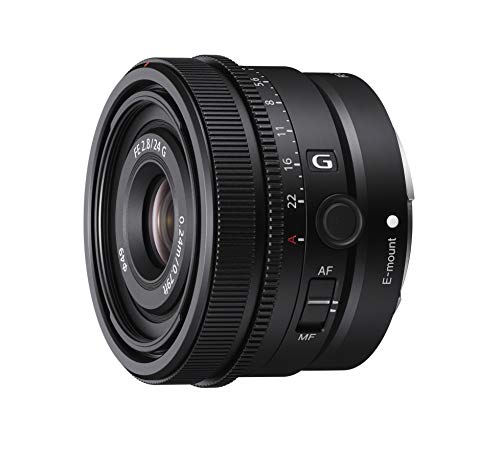
2. Sony FE 24mm f/2.8 G — Best Compact Wide Prime
The Sony FE 24mm f/2.8 G is the smallest serious wide prime you can put on the A6500. On the A6500 it frames like a 36mm lens, a classic wide-normal view that suits street scenes, landscapes, architecture, and environmental portraits where you want the surroundings in the frame. At 162 grams and 45mm long it adds almost nothing to the bag, and it turns the A6500 into a camera you can carry everywhere without thinking about it.
Image quality is strong for a lens this small. The 24mm is crisp in the center wide open, with good contrast and pleasing color, and it sharpens across the frame when stopped down a little. The f/2.8 aperture is brighter than the travel zoom at the same framing, so indoor shots stay clean and backgrounds fall away gently behind your subject. The 0.24-meter minimum focus distance in autofocus lets you get close to small subjects. There is no stabilization in the lens, but the A6500 in-body stabilization covers that.
Specs: Mount: Sony E, full frame; Focal length: 24mm (36mm equivalent on APS-C); Aperture: f/2.8 to f/22; Autofocus: linear motor; Stabilization: none, relies on A6500 IBIS; Minimum focus: 0.24 m autofocus, 0.18 m manual focus; Magnification: 0.19x; Filter: 49mm; Weight: 162 g; Dimensions: 68 x 45 mm.
3. Sony FE 40mm f/2.5 G — Best Compact Normal Prime
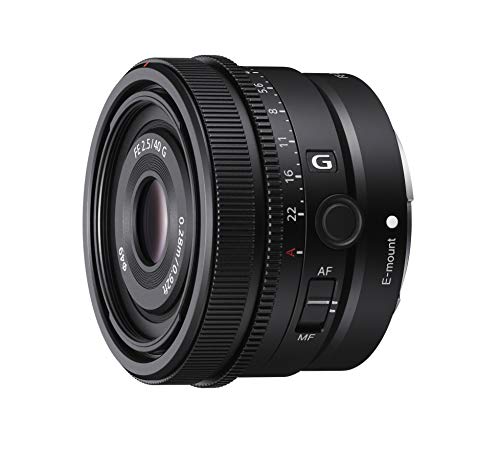
The Sony FE 40mm f/2.5 G is the classic normal lens for the A6500, and the most useful single prime for daily shooting. On the A6500 it frames like a 60mm lens, close to a short portrait view, so framing feels natural: step closer for a head-and-shoulders portrait, step back for a half-length shot with the surroundings included. The f/2.5 aperture gives soft, gentle backgrounds that the kit zoom cannot approach, and it keeps shutter speeds high in living rooms, restaurants, and evening light.
Optically this is a strong lens for its size. It is crisp in the center wide open, with good contrast and pleasing color, and it sharpens across the frame when stopped down to f/4. The linear motor focuses quickly and quietly on the A6500. At 173 grams it keeps the A6500 balanced, and the 49mm filter thread keeps filters small and light. The 0.28-meter minimum focus distance in autofocus lets you fill the frame with small subjects. If you buy only one prime for the A6500, this is the one to choose, because its 60mm equivalent view handles portraits, food, travel details, and daily life without ever feeling too tight or too wide.
Specs: Mount: Sony E, full frame; Focal length: 40mm (60mm equivalent on APS-C); Aperture: f/2.5 to f/22; Autofocus: linear motor; Stabilization: none, relies on A6500 IBIS; Minimum focus: 0.28 m autofocus, 0.25 m manual focus; Magnification: 0.2x autofocus; Filter: 49mm; Weight: 173 g; Dimensions: 68 x 45 mm.
4. Sony FE 50mm f/1.8 — Best Portrait Prime
The Sony FE 50mm f/1.8 is a full-frame lens that makes a superb portrait prime on the A6500. On the A6500 it frames like a 75mm lens, long enough for head-and-shoulders portraits with gentle compression and soft backgrounds, without crowding your subject. The f/1.8 aperture is the headline: it gathers far more light than any zoom in this guide and melts backgrounds into soft, creamy color behind a sharp subject.
Optically this is one of the finest value lenses Sony has made for the E system. It is crisp across the frame when stopped down a little, and it holds up well wide open in the center, where your subject usually sits. The 0.45-meter minimum focus distance lets you fill the frame with a face, and the 7-blade circular aperture helps highlights stay round and gentle. Autofocus is quick and quiet enough for portraits of people and pets, and the lens tracks eyes well with the A6500. At 186 grams it is barely heavier than the two G primes above, so it slips into the same small bag. Note that this is the current SEL50F18F/2 version of the lens, as an earlier version carries a different listing, so check the model number when you order.
Specs: Mount: Sony E, full frame; Focal length: 50mm (75mm equivalent on APS-C); Aperture: f/1.8 to f/22; Autofocus: DC motor; Stabilization: none, relies on A6500 IBIS; Minimum focus: 0.45 m; Magnification: 0.14x; Filter: 49mm; Weight: 186 g; Dimensions: 68.6 x 59.5 mm.
5. Tamron 70-300mm f/4.5-6.3 Di III RXD — Best Light Telephoto Zoom
The Tamron 70-300mm f/4.5-6.3 Di III RXD is the telephoto partner the travel zoom leaves out. On the A6500 it frames like a 105-450mm lens, which brings distant subjects close: kids on a sports field, birds in a garden, details on a far building, and candid portraits across a room. The lens is small for its reach, at 545 grams and 148mm long, so it fits in the same small bag as the A6500 and a compact prime.
The A6500 in-body stabilization is the key feature here. This Tamron has no stabilization of its own, so it leans on the body to steady the sensor, and on the A6500 that pairing works well for handheld shots at the long end. Sharpness is best in the center and in the middle of the zoom range, which suits wildlife and sports. The 0.8-meter minimum focus distance at the wide end is close enough for flowers and larger insects, and the RXD stepping motor focuses quickly and quietly for video work. The variable aperture narrows to f/6.3 at 300mm, so bright daylight is this lens at its best.
Specs: Mount: Sony E, full frame; Focal length: 70-300mm (105-450mm equivalent on APS-C); Aperture: f/4.5-6.3; Autofocus: RXD stepping motor; Stabilization: none, relies on A6500 IBIS; Minimum focus: 0.8 m at 70mm, 1.5 m at 300mm; Magnification: 0.25x; Filter: 67mm; Weight: 545 g; Dimensions: 77 x 148 mm.
Which Lens Should You Buy First
Match the lens to the shooting you do most, not to the lens with the longest spec sheet. For everyday carry and travel with one lens, the Sony 18-200mm OSS LE is the clear first buy: it covers wide streets and distant subjects in one zoom and weighs only 460 grams. For street photography, the Sony FE 24mm f/2.8 G is the better first buy, because at 162 grams it makes the A6500 pocketable and its 36mm equivalent view suits streets and landscapes.
For portraits and low-light daily shooting, the Sony FE 40mm f/2.5 G is the better first buy, because its 60mm equivalent view and f/2.5 aperture flatter people and keep indoor shots clean. Add the Sony FE 50mm f/1.8 when portraits matter most, and add the Tamron 70-300mm when sports, wildlife, and distant subjects fill your weekends.
Frequently Asked Questions
Is the Sony FE 50mm f/1.8 good for portraits on the A6500?
Yes, it is one of the best portrait lenses for the A6500. The 75mm equivalent view flatters faces, the f/1.8 aperture gives soft backgrounds, and the autofocus tracks eyes well.
Do I need the Sony 18-200mm or the Tamron 70-300mm for the A6500?
Choose the Sony 18-200mm for travel and everyday shooting, where one lens that covers 27mm to 300mm in equivalent terms matters most. Choose the Tamron 70-300mm when distant subjects fill your weekends, because its 105-450mm equivalent reach suits sports and wildlife far better.
Does the A6500 in-body stabilization help lenses without stabilization?
Yes, it helps a lot. The A6500 steadies the sensor itself, so primes and zooms without their own stabilization still benefit handheld in dim light and at long focal lengths.
What is the best single lens for travel with the Sony A6500?
The Sony E 18-200mm f/3.5-6.3 OSS LE is the best single travel lens for the A6500. It covers 27mm to 300mm in equivalent terms, has stabilization for handheld video, and weighs only 460 grams, so one lens handles streets, landscapes, and distant subjects on a trip.
Final Thoughts
The A6500 rewards small, bright glass, and the five lenses above keep that promise. The Sony 18-200mm covers a whole trip with one zoom, and the Sony FE 24mm f/2.8 G makes the camera disappear into your day. The Sony FE 40mm f/2.5 G and the Sony FE 50mm f/1.8 open up dim rooms and soft portraits that the kit zoom cannot reach. The Tamron 70-300mm adds reach for sports and wildlife without adding bulk. Pick the lens that matches the shooting you do most, then add a second lens when you know which focal length you reach for again and again.
More from Amazon
Programs that pair well with the guide above. Offers and eligibility are set by Amazon and may change.
Free shipping on eligible items, Prime Video and more. Eligible new members can start with a free trial.
Start a Prime free trialAudiobooks and podcasts to listen to on the go. Eligible new members can start with a free trial.
Try Audible freeAd-free music streaming. Eligible new subscribers can start with a free trial.
Try Music Unlimited freeA free business account with business pricing and bulk-buying tools for work, shop or home office.
Create a business accountAs an Amazon Associate we earn from qualifying purchases.









