Our Top Picks
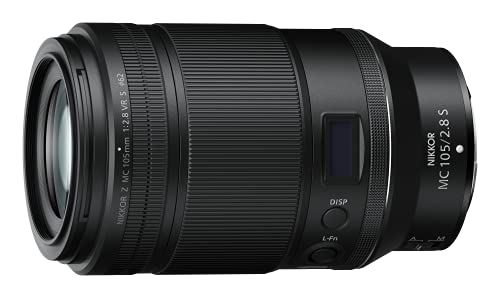 Nikon NIKKOR Z MC 105mm f/2.8 VR S10.5 centimeter (Pack of 1)5.6 x 3.4 x 5.6 inches1.39 poundsCheck on Amazon

Introduction
Macro photography is the art of making small subjects fill the frame: the veins on a leaf, the compound eye of a dragonfly, the texture of a watch dial, or the fine detail on a piece of jewelry. A dedicated macro lens is built for exactly this kind of work. Unlike a standard prime or a zoom with a close-focus mode, a true macro lens is designed to focus at very short distances and to reproduce a subject at life size, a 1:1 magnification ratio, on the sensor.
Choosing the best lens for macro photography comes down to a handful of practical questions. Which camera mount do you shoot with? How much working distance do you need between the front of the lens and a skittish insect? Do you shoot handheld or from a tripod? And do you want the lens to double as a portrait lens when you are not shooting close-ups?
This guide covers four dedicated macro lenses, one for each of the major full-frame mirrorless mounts: Canon RF, Sony E, Nikon Z, and L-mount. Every lens here is a true macro prime with a maximum magnification of 1:1 or greater and a fast f/2.8 maximum aperture. Read on to compare them side by side, then use the buying guide below to match one to your camera and your subjects.
At a Glance
| Lens | Mount | Maximum Magnification | Minimum Focus Distance | Stabilization | Best For |
|---|---|---|---|---|---|
| Canon RF 100mm f/2.8L Macro IS USM | Canon RF | 1.4x | 26 cm | Hybrid IS | Canon shooters who want the highest magnification |
| Sony FE 90mm f/2.8 Macro G OSS | Sony E | 1:1 | 28 cm | Optical SteadyShot | Sony shooters who want a proven all-rounder |
| Nikon NIKKOR Z MC 105mm f/2.8 VR S | Nikon Z | 1:1 | 29 cm | Vibration Reduction | Nikon Z shooters who want an S-Line macro |
| Sigma 105mm f/2.8 DG DN Macro Art (L-mount) | L-mount | 1:1 | 29.5 cm | None in lens | L-mount shooters who want Art-series optics |
Canon RF 100mm f/2.8L Macro IS USM

Canon RF 100mm f/2.8L Macro IS USM
The Canon RF 100mm f/2.8L Macro IS USM is the most ambitious lens in this guide, and the natural first choice for Canon EOS R photographers who shoot macro seriously. It is the first medium-telephoto macro lens to reach 1.4x magnification with autofocus, going beyond the usual life-size 1:1 ratio.
The lens is built around a fixed 100mm focal length and a bright f/2.8 maximum aperture. The f/2.8 aperture keeps the viewfinder bright in dim light, helps autofocus lock onto small subjects, and produces a soft background that separates a flower or insect from a busy scene.
Canon’s Hybrid IS is a meaningful advantage for handheld macro work. At close focusing distances, camera shake is not only angular but also lateral, shifting the whole frame sideways. Hybrid IS corrects for both kinds of movement, and Canon lists up to 5 stops of correction on its own, or up to 8 stops when combined with in-body stabilization on a compatible EOS R body. The SA Control ring lets you shape the character of the foreground and background blur, softening the look for a dreamy feel or tightening it for a crisper rendering, and it has a locking switch so it cannot be nudged by accident. Autofocus uses Dual Nano USM motors, which are fast, precise, and quiet enough for video. A focus distance limiter keeps the lens from hunting through its full range, and the lens is weather sealed against dust and moisture. It weighs 730 grams and takes 67mm filters.
Listing Features
- 1.4x maximum magnification, beyond life-size 1:1
- f/2.8 maximum aperture with a 9-blade circular diaphragm
- Hybrid IS with up to 5 stops of correction, up to 8 stops with in-body stabilization
- SA Control ring for shaping background blur character
- Dual Nano USM autofocus, fast and quiet
- Weather-sealed L-series construction
- 67mm filter thread
Considerations
- The SA Control ring adds a control that some photographers will never use; keep it locked at the neutral position if you prefer a standard rendering.
- At 1.4x magnification the working distance is shorter than at 1:1, so lighting a tiny subject at minimum focus takes care.
- It is a Canon RF-mount lens only, so it fits EOS R-series mirrorless bodies.
Sony FE 90mm f/2.8 Macro G OSS
Sony FE 90mm f/2.8 Macro G OSS
The Sony FE 90mm f/2.8 Macro G OSS has been a fixture in Sony E-mount bags for years, and it remains one of the most balanced macro lenses available. It pairs a 90mm focal length with a true 1:1 maximum magnification, built-in Optical SteadyShot stabilization, and the optical quality of Sony’s G series.
The 90mm focal length gives a comfortable working distance for field macro work. You can fill the frame with a butterfly or a blossom without casting a shadow over it or startling it. The minimum focus distance is 28 cm, measured from the sensor.
Image quality comes from a floating focus mechanism that suppresses aberration equally at all focusing distances, from infinity down to minimum focus. Nano AR Coating reduces flare and ghosting when you shoot toward the light, and Super ED glass helps keep color fringing under control. A 9-blade circular aperture produces smooth, rounded background blur. Stabilization is built into the lens, so it works on any Sony E-mount body, including older models without in-body stabilization. The focus system uses Direct Drive SSM, which is quiet and precise, and two floating focus groups are driven independently for accurate positioning at macro distances. A focus hold button on the barrel locks focus once you have it set, a focus range limiter keeps autofocus from hunting through the whole range, and the sliding focus ring lets you switch instantly between autofocus and manual focus by pulling it back.
Listing Features
- 1:1 maximum magnification for life-size reproduction
- Optical SteadyShot built into the lens
- Nano AR Coating and Super ED glass
- 9-blade circular aperture for smooth background blur
- Direct Drive SSM autofocus, quiet and precise
- Focus hold button and focus range limiter
- Sliding focus ring for instant manual focus
- 62mm filter thread
Considerations
- The lens has no weather-sealing claim as strong as some newer designs, so take care in rain or heavy dust.
- It is a Sony E-mount lens, so it fits Sony mirrorless bodies and not other mounts.
- The 90mm focal length gives slightly less working distance than a 100mm or 105mm lens, which matters most with easily startled insects.
Nikon NIKKOR Z MC 105mm f/2.8 VR S
Nikon NIKKOR Z MC 105mm f/2.8 VR S
The NIKKOR Z MC 105mm f/2.8 VR S is Nikon’s flagship macro lens for the Z system, and the first NIKKOR Z lens to reach a 1:1 reproduction ratio. It is an S-Line lens, Nikon’s premium tier, built to deliver edge-to-edge sharpness and high contrast from life-size macro all the way out to infinity focus.
The 105mm focal length is a classic for macro work. It gives a longer working distance than a 60mm or 90mm macro, which helps when photographing insects, and the perspective is flattering for portraits. The minimum focus distance is 0.29 m, and the lens reaches 1:1 magnification at that distance.
Nikon’s Vibration Reduction system provides up to 4.5 stops of correction, a real help for handheld macro shooting, where even tiny movements are magnified along with the subject. The optical design uses ARNEO and Nano Crystal coatings to control flare and ghosting, and the multi-focusing system moves multiple lens groups for fast, accurate autofocus across the whole focus range. A small OLED information panel on the barrel shows aperture, focus distance, and depth of field at a glance, which is genuinely useful when you are working at high magnification and cannot easily check the camera screen. A customizable control ring and an L-Fn button can be assigned to functions you use often, and a focus limiter switch keeps autofocus within the range you need. The lens is dust and drip resistant, weighs 630 grams, and takes 62mm filters.
Listing Features
- 1:1 maximum magnification, the first for a NIKKOR Z lens
- Vibration Reduction with up to 4.5 stops of correction
- ARNEO and Nano Crystal coatings for flare control
- OLED information panel showing aperture, focus distance, and depth of field
- Multi-focusing system for fast, accurate autofocus
- Customizable control ring and L-Fn button
- Dust and drip resistant construction
- 62mm filter thread
Considerations
- The OLED panel and control ring add features that take a little time to set up to your liking.
- It is a Nikon Z-mount lens, so it fits Nikon Z-series mirrorless bodies only.
- The 105mm focal length is longer than a 90mm macro, which is good for working distance but means a slightly larger lens in the bag.
Sigma 105mm f/2.8 DG DN Macro Art (L-mount)

Sigma 105mm f/2.8 DG DN Macro Art (L-mount)
The Sigma 105mm f/2.8 DG DN Macro Art is the macro lens for L-mount photographers, covering Panasonic and Leica full-frame mirrorless bodies as well as Sigma’s own cameras. It is part of Sigma’s Art line, which is built around optical performance first, and it delivers a true 1:1 macro ratio with the corner-to-corner sharpness the Art series is known for.
The lens uses a completely new optical formula designed for sharpness at every distance, from extreme close-up to infinity. That matters because a macro lens that is only sharp at close range is of limited use; this one is designed to serve as a short telephoto prime in its own right.
Handling is a highlight. A physical aperture ring with a click and de-click switch gives direct, tactile control over aperture, which is especially welcome for video work where silent aperture changes matter, and the aperture ring lock switch prevents accidental changes. A focus limiter switch offers macro, portrait, or full-range autofocus, and a customizable AFL button sits on the barrel. The Hyper-Sonic Motor autofocus is smooth and accurate, and the lens is designed to work with face and eye detection autofocus on compatible bodies. The minimum focus distance is 0.295 m, the filter thread is 62mm, and the lens weighs 715 grams. It is also compatible with Sigma’s TC-1411 and TC-2011 teleconverters for photographers who want even more magnification. The L-mount version is listed here; the same optical design is also made for Sony E-mount.
Listing Features
- 1:1 maximum magnification for life-size reproduction
- Art-series optical design, sharp from close-up to infinity
- Physical aperture ring with click and de-click switch and lock
- Focus limiter switch for macro, portrait, or full-range autofocus
- Hyper-Sonic Motor autofocus, optimized for face and eye detection
- Customizable AFL button on the barrel
- Compatible with Sigma TC-1411 and TC-2011 teleconverters
- 62mm filter thread
Considerations
- There is no stabilization built into the lens, so handheld shooting relies on your camera body’s in-body stabilization.
- It is an L-mount lens, so it fits L-mount bodies only; check your mount before ordering.
- At 715 grams it is one of the heavier lenses in this guide, which is worth noting if you carry it on long walks.
How to Choose the Best Lens for Macro Photography
Start with your camera mount. A macro lens is mount-specific, and there is no point comparing a Canon RF lens with a Nikon Z lens if you only own one system. Each lens in this guide is a strong native macro option for its mount.
Next, think about magnification. A true macro lens reaches at least 1:1, meaning a 20mm subject is projected at 20mm on the sensor. All four lenses here meet that standard, and the Canon goes further to 1.4x. If you photograph very small subjects such as tiny insects, watch parts, or circuit boards, extra magnification is genuinely useful.
Working distance is the gap between the front of the lens and your subject at maximum magnification. Longer focal lengths give more working distance: a 105mm lens lets you stand further back than a 60mm macro. More distance means less chance of startling a live subject and more room to place a light between the lens and the subject.
Stabilization matters more in macro than in almost any other kind of photography, because camera shake is magnified along with the subject. The Canon, Sony, and Nikon lenses here all have stabilization built in. The Sigma does not, so it leans on your camera body’s in-body stabilization.
Consider whether the lens will do double duty. A 90mm to 105mm f/2.8 prime is an excellent portrait lens, and all four lenses here work well for portraits, products, and general short-telephoto shooting.
Finally, think about manual focus. Autofocus is useful for framing and for subjects that move, but at high magnification most macro photographers focus by moving the camera or the subject slightly, or by using focus peaking with manual focus. All four lenses here have focus limiters, and the Sony’s sliding focus ring is the quickest way to switch between autofocus and manual focus.
Fit and Installation Considerations
Mounting a macro lens is the same as mounting any interchangeable lens: align the mounting index, twist until it clicks, and confirm it is locked before you lift the camera by the lens. Check that your camera body supports the lens mount natively. Canon RF lenses fit EOS R-series bodies. Sony E-mount lenses fit Sony Alpha mirrorless bodies, including full-frame and APS-C models, though on an APS-C body the field of view is narrower. Nikon Z lenses fit Nikon Z-series bodies. L-mount lenses fit Panasonic, Leica, and Sigma L-mount bodies. A lens hood is included with these lenses and is worth using outdoors, since it shields the front element from stray light and from accidental contact with branches or flowers.
Filters are straightforward: the Canon takes 67mm filters, while the Sony, Nikon, and Sigma take 62mm filters. The front element does not rotate during focusing on these lenses, so a polarizing filter stays put once you set it.
For handheld macro shooting, keep your shutter speed high and use a burst of frames while rocking gently back and forth through the focus plane; one frame in the burst will usually be sharp. For tripod work, a focusing rail lets you move the camera in tiny, controlled steps.
Frequently Asked Questions
What magnification do I need for true macro photography?
A true macro lens reaches at least 1:1 magnification, which means the subject is projected onto the sensor at life size. All four lenses in this guide reach 1:1, and the Canon RF 100mm reaches 1.4x. Lenses that only focus closely without reaching 1:1 are close-focusing lenses, not true macro lenses.
Is a 90mm or 105mm macro lens better for insects?
Both work well, and the difference is mainly working distance. A 105mm lens lets you stand a little further from the subject, which helps with easily startled insects and leaves more room for lighting. A 90mm lens is slightly smaller and lighter. Either focal length is a good choice for insect photography.
Can I use a macro lens for portraits?
Yes. A 90mm to 105mm f/2.8 prime is a classic portrait focal length, and all four lenses in this guide produce smooth background blur and sharp detail at portrait distances. The Canon’s SA Control ring is specifically designed to shape portrait bokeh, and the Nikon and Sigma lenses are also well suited to portrait work.
Do I need a tripod for macro photography?
Not always, but it helps. At high magnification, depth of field is very shallow and camera shake is magnified, so a tripod makes sharp results much easier, especially for still subjects such as flowers, products, and jewelry. For moving subjects such as insects, handheld shooting with stabilization and a fast shutter speed is often the only practical approach.
Conclusion
The best lens for macro photography is the one that fits your camera mount and matches the subjects you shoot most. Canon EOS R photographers get the most magnification from the RF 100mm f/2.8L Macro IS USM, with its 1.4x ratio, Hybrid IS, and creative SA Control ring. Sony shooters get a proven all-rounder in the FE 90mm f/2.8 Macro G OSS, with built-in stabilization and a fast, quiet focus system. Nikon Z photographers get a premium S-Line macro in the NIKKOR Z MC 105mm f/2.8 VR S, complete with an OLED panel and strong Vibration Reduction. L-mount photographers get Art-series optics and superb handling in the Sigma 105mm f/2.8 DG DN Macro Art.
Whichever lens you choose, the fundamentals are the same: a true 1:1 macro ratio, a fast f/2.8 aperture, and a focal length that gives you enough working distance for your subjects. Pick the lens for your mount, learn its minimum focus distance, and spend your time in the field.
As an Amazon Associate, we earn from qualifying purchases.
More from Amazon
Programs that pair well with the guide above. Offers and eligibility are set by Amazon and may change.
Free shipping on eligible items, Prime Video and more. Eligible new members can start with a free trial.
Start a Prime free trialAudiobooks and podcasts to listen to on the go. Eligible new members can start with a free trial.
Try Audible freeAd-free music streaming. Eligible new subscribers can start with a free trial.
Try Music Unlimited freeA free business account with business pricing and bulk-buying tools for work, shop or home office.
Create a business accountAs an Amazon Associate we earn from qualifying purchases.