Key takeaways
- Buying a cheap model with no blinking light; a static camera looks fake.
- Mounting low where anyone can touch it.
- Choosing a solar model for a spot with no sun.
- Believing a dummy replaces real security.
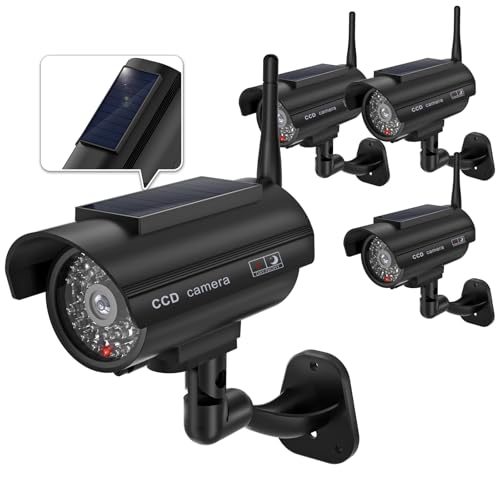
The best fake security camera is a convincing one: a solar-powered dummy with a flashing red LED, such as the WALI solar dome two-pack, covers most homes at low cost, while hybrid models like the Techage SL669 add real motion floodlights that make the deterrent more believable. Keep expectations realistic: a dummy camera deters casual opportunists but records nothing and does not alert you. For real protection, combine it with real cameras or use it as a supplement.
Our top picks


As an Amazon Associate we earn from qualifying purchases at no extra cost to you.
Quick Comparison of the Picks
| Model | Best for | Key specs | Price range |
|---|---|---|---|
| WALI solar dome fake camera (2-pack) | Best overall solar dummy | Built-in solar panel, flashing red LED, 2 AAA rechargeable backup, antenna detail | Budget |
| Techage SL669 solar | Premium hybrid with real light | Metal housing, 800 lumen motion floodlights, about 28 to 32 ft motion range, IP66 | Mid |
| BNT solar bullet cameras (2-pack) | Budget solar | Solar-powered LED, IP54 rating | Budget |
| BNT dummy bullet camera (non-solar) | Most realistic budget look | Battery-powered LED | Budget |
| WALI CCTV dome (non-solar, 2-pack) | Lowest cost indoor | Battery LED | Budget |
| OOSSXX solar motion-light camera | Real light plus dummy look | 800 lumen light, about 20 to 26 ft detection | Mid |
Specs are based on product listings as summarized by 2026 roundups; confirm the exact model before buying.
Do Fake Cameras Work?
A visible camera can make an opportunistic intruder pick an easier target, which is why dummy cameras remain popular. But they have limits. A determined thief may notice that the camera never moves, shows no cables or has no lens glow. A dummy cannot capture footage, so it gives you no evidence. Think of it as a low-cost layer of deterrence, not a security system.
Best Overall: WALI Solar Dome
WALI solar fake cameras appear in nearly every roundup. The dome two-pack has a solar panel, a flashing red LED and rechargeable AAA backup so the light keeps blinking at night. It looks like a typical dome camera with a detail antenna. Main trade-off: plastic build, and an obvious design if you look closely.
Best Premium Hybrid: Techage SL669
The Techage SL669 combines a metal housing with an 800 lumen motion floodlight and a solar-powered red LED, plus IP66 weather protection. Because the light switches on when someone approaches, it behaves like a real security device, which adds believability and has a practical benefit. Main trade-off: it costs more than a basic dummy and requires proper mounting.
Best Budget Solar: BNT Solar Bullet
The BNT solar bullet two-pack is a cheap way to cover several spots without changing batteries. Its IP54 rating means it handles splashes but not heavy exposure, so place it under an eave.
Best Realistic Look: BNT Non-Solar Bullet
The non-solar BNT bullet is often chosen for its realistic look and low price. Battery life depends on the LED; plan to change batteries a few times per year.
Best With Real Light: OOSSXX
The OOSSXX adds an 800 lumen motion-activated light with a detection range of about 20 to 26 ft. It is helpful for dark yards and side entrances.
Solar or Battery?
| Factor | Solar | Battery |
|---|---|---|
| Upkeep | Low, rechargeable backup | Replace batteries |
| Needs sun | Yes, several hours of light | No |
| Best location | Exposed outdoor wall | Shaded or indoor |
| Cost | Slightly higher | Lowest |
Weather Ratings
IP54 resists dust and splashes but not heavy rain. IP66 resists powerful water jets and heavy rain. For fully exposed spots, choose IP66; for sheltered areas, IP54 is fine.
Placement Tips
- Mount at about 9 to 10 feet, high enough to look real and hard to reach.
- Point at doors, driveways and gates, the places a real camera would cover.
- Angle solar panels toward the sun and keep them clear of shade.
- Do not put a dummy next to a real camera with a different style; mismatch looks odd.
- Add a sign or sticker saying the property is monitored, where local rules allow.
- Check the camera twice a year for water ingress, sun fade and battery condition.
When a Dummy Is Not Enough
If you need evidence or alerts, choose a real camera. Many are affordable and can notify your phone. A simple plan is to pair one real camera at the main entrance with one or two dummies on other sides. Check local laws regarding recording, especially for audio and for areas that capture neighbors’ property.
Common Mistakes
- Buying a cheap model with no blinking light; a static camera looks fake.
- Mounting low where anyone can touch it.
- Choosing a solar model for a spot with no sun.
- Believing a dummy replaces real security.
Ownership Realities
The weak points of a dummy camera are cheap plastics, small solar cells and rechargeable batteries. Sun fades plastic, so after a year or two a bright white housing can look chalky, which is a giveaway to someone watching closely. Wipe the solar panel every few months, since dust and pollen can reduce charging, and replace the rechargeable batteries when the LED stops blinking through the night.
Wind and weather can loosen mounts. Check screws, tighten the bracket, and use a small amount of sealant around the screw holes on exterior brick or siding. If your model has a real light sensor, test the light at dusk to confirm it triggers as expected and does not shine into a neighbor’s window.
Think about how the camera looks from the street. A real installation usually has a cable going into the wall or a visible junction, and a camera at an unrealistic height or angle looks wrong. Match the style and finish of any real cameras you own, and avoid mixing very different designs on the same wall. Remember that a dummy is only part of your plan: pair it with good outdoor lighting, locked doors, trimmed hedges and a tidy yard, which together do more than any single device.
Frequently Asked Questions
Can burglars tell fake cameras apart?
Some can, particularly if the camera has no cable, no movement and a cheap look. More realistic models and those with real lights are harder to spot.
Do solar fake cameras work at night?
Yes. A solar panel charges a small battery during the day, and the LED flashes at night.
Are fake cameras legal?
Generally yes, since they record nothing. Check your local rules and HOA or rental agreements.
Where should I put a fake camera?
Place it high near entry points, such as the front door, driveway or garage.
Should I mix real and fake cameras?
Many owners do. A real camera at the key entry point with dummies elsewhere extends perceived coverage at low cost.