Key takeaways
- Find the best chairs for photography studio work: adjustable posing stools, rolling seats and stable portrait seating for subjects and photographers.
A photography studio lives or dies on the small decisions that shape a portrait, and seating is one of the most overlooked of them. The right chair or stool gives a subject a natural, relaxed posture, keeps the photographer at a comfortable working height for hours, and stays out of the frame when it should. The wrong seat wobbles, squeaks, forces an awkward pose, or eats into floor space that a light stand needs. This guide covers the best chairs for photography studio work, chosen from seating that is actually made for studio use: adjustable posing stools for subjects, rolling drafting chairs for the photographer, and compact rolling stools for tight spaces and makeup stations.
Every pick below is a chair or stool sold on Amazon US, with its specifications taken from the Amazon listing or the maker’s published details. The focus is on the qualities that matter in front of a camera: height range, seat size, base stability, mobility, and how the seat looks in a portrait. No pick here is a generic office chair or a piece of living-room furniture pressed into service. Each one earns its place because it solves a real studio problem.
Disclosure: As an Amazon Associate, we earn from qualifying purchases. Product details and availability can change; check the Amazon listing before you buy.
Quick picks at a glance
| Product | ASIN | Best for |
|---|---|---|
| Flashpoint Posing Stool | B07VHFSMSS | Stable seated portraits |
| SUPERJARE Drafting Chair | B082F6Z98J | Photographer seating with back support |
| KKTONER PU Leather Round Rolling Stool | B086W6SDN2 | Small studios and mobile setups |
What matters most for photography studio seating
Height range comes first. A posing stool that adjusts from 20 to 30 inches covers seated portraits, three-quarter poses, and subjects of different heights without swapping furniture. A photographer working at a high desk or a standing-height retouching station needs a taller range, closer to 24 to 32 inches. Before buying, measure the heights you actually shoot at: the distance from the floor to the seat your subject uses most, and the height of the surface you work from between shots.
Base stability decides whether a pose holds. A wide pedestal base with five feet spreads weight evenly and resists tipping when a subject leans or shifts. Rolling bases trade some of that planted stability for movement, which suits the photographer moving between a desk and a shooting area but can feel less secure under a subject who is posing. Match the base to the job: fixed pedestal for subjects, casters for the person working the camera.
Seat size and padding shape the portrait. A 14-inch padded seat gives an adult subject room to sit naturally and shift position without perching on an edge. Smaller seats work for short sessions and tight spaces but can look cramped in a full-length portrait. Padding matters for comfort during long sessions, and a wipe-clean surface matters when makeup, hair products, or outdoor shoes are part of the shoot.
Finish and colour stay out of the frame. Studio seating should be visually quiet. Matte black upholstery and dark metal bases disappear against most backdrops and do not throw reflections into the lens. Light wood or pale finishes can work as deliberate props in lifestyle sets, but they draw the eye in a headshot, so choose them only when the look is intentional.
Mobility against floor space. A rolling stool lets one seat serve a makeup station, a retouching desk, and a posing area in the same session. A fixed stool stays exactly where it is put, which is what you want when the subject’s position is marked on the floor. In a small studio, one rolling seat often replaces two fixed ones, but it needs smooth casters that will not mark the floor.
Weight capacity and build quality. Check the listed maximum load against the people who will actually use the seat, and leave a margin. A steel lift mechanism and a reinforced base last longer under daily studio use than a light-duty cylinder. Assembly is normal for this category, so look for a design that comes apart and reassembles quickly if the seat travels to location shoots.
Flashpoint Posing Stool

Flashpoint Posing Stool — ASIN B07VHFSMSS
The Flashpoint Posing Stool is the dedicated studio seat in this guide, built specifically for portrait work. Its pneumatic cylinder moves the seat from 20 to 30 inches with a lever under the seat, so a photographer can adjust the subject’s height between frames without breaking the flow of a session. The 14-inch padded seat is wide enough for an adult to sit comfortably through a long portrait sitting, and the all-black finish keeps the stool visually quiet against backdrops.
| Specification | Detail |
|---|---|
| Seat height range | 20 to 30 inches |
| Seat diameter | 14 inches |
| Seat | Padded, black finish |
| Base | Five pedestal feet, 25-inch diameter |
| Height adjustment | Pneumatic lever |
| Maximum load | 330 pounds |
| Assembly | Required, assembles and disassembles quickly |
Why it fits a photography studio. This is the only pick here designed as a posing stool rather than adapted from office or drafting use. The 20- to 30-inch range covers the seated heights most portrait work needs, from a low, relaxed pose to a higher perch that keeps the subject’s eyeline near the camera. The five-foot pedestal base is wide and planted, so the stool stays put when a subject leans forward, turns, or shifts weight between poses. The padded seat is kind to subjects who sit for extended sessions, and the black finish does not compete with the subject or the backdrop.
Trade-offs. The stool has no casters, so moving it means picking it up, which is a small inconvenience on a busy set and a real one if the stool travels between a studio and location work. The 25-inch base needs more floor space than a compact rolling stool, so it is less suited to a very small shooting area. Assembly is required, although the design is made to come together and come apart quickly.
Best for: Portrait photographers who want one stable, adjustable seat for seated subjects in a dedicated studio space.
Skip if: You need a seat that rolls between stations, or your shooting area is too small for a 25-inch base.
SUPERJARE Drafting Chair
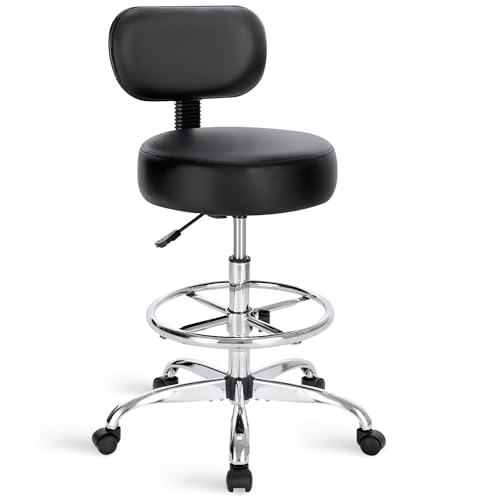
SUPERJARE Drafting Chair — ASIN B082F6Z98J
The SUPERJARE Drafting Chair is the photographer’s seat in this guide: a rolling chair with a backrest, built for long hours at a high desk, a retouching station, or a styling table. Its hydraulic lift adjusts the seat from 23.6 to 32.2 inches, which suits elevated work surfaces that a standard posing stool cannot reach. The backrest is removable, and the circular footrest adjusts to the sitter’s leg length.
| Specification | Detail |
|---|---|
| Seat height range | 23.6 to 32.2 inches |
| Seat | PVC cushion with sponge padding |
| Backrest | Removable |
| Footrest | Adjustable circular footrest |
| Base | Five dual-wheel casters, 360-degree swivel |
| Maximum load | 250 pounds as listed |
| Assembly | Required |
Why it fits a photography studio. A photographer spends as much time seated as the subject does: culling images, retouching, styling, and waiting between setups. A chair with a backrest and a footrest makes those hours sustainable, and the tall height range matches standing desks and high work tables that are common in studios. The five casters let the photographer roll from the desk to the shooting area without standing, and the swivel makes it easy to turn toward a subject or a monitor. The PVC cushion wipes clean after makeup or styling work.
Trade-offs. The listed maximum load of 250 pounds is lower than the Flashpoint stool’s figure, so check it against the person who will use the chair most. Some sources list a higher capacity figure for this model, so confirm the number on the current listing before buying. The backrest and rolling base make this a working chair rather than a posing prop: it looks like office furniture in frame, so keep it out of shots or use it strictly behind the camera. The tall minimum height of 23.6 inches means it does not sit low enough for low seated poses.
Best for: Photographers who need a comfortable, mobile seat for retouching, styling, and long days at a high studio desk.
Skip if: The seat is meant to appear in portraits, or you need a low posing height for subjects.
KKTONER PU Leather Round Rolling Stool

KKTONER PU Leather Round Rolling Stool — ASIN B086W6SDN2
The KKTONER round rolling stool is the compact, mobile pick in this guide. Its hydraulic lift adjusts the seat from 19.3 to 25.2 inches, it swivels a full 360 degrees, and it rolls on five casters, so one stool can serve a makeup station, a small posing area, and a desk in the same session. The PU leather seat wipes clean, and the integrated footrest supports the sitter’s feet during longer stretches.
| Specification | Detail |
|---|---|
| Seat height range | 19.3 to 25.2 inches |
| Seat diameter | 18.3 inches |
| Seat | PU leather, cushioned |
| Footrest | Integrated |
| Base | Five casters, 360-degree swivel |
| Maximum load | 250 pounds |
| Assembly | Required, quick assembly |
Why it fits a photography studio. Small studios need furniture that does more than one job, and this stool does three: a makeup chair, a low posing seat, and a desk stool. The compact footprint fits into corners and narrow gaps between light stands, and the rolling base means it can be pulled into position and pushed out of frame in seconds. The PU leather surface is water and oil resistant, which matters when makeup, hair products, and styling sprays are part of the workflow. The footrest is a genuine comfort feature for sessions that run long.
Trade-offs. The rolling base is less planted than a fixed pedestal, so this stool suits a photographer or a makeup artist moving around a set more than it suits a subject holding a precise pose. The 25.2-inch maximum height is lower than the other two picks, so it does not reach high work surfaces or tall posing positions. The seat is smaller than the Flashpoint’s 14-inch padded seat in usable sitting area, which can feel tight for larger subjects during long sessions.
Best for: Small studios, makeup stations, and photographers who need one compact seat that moves between jobs.
Skip if: You need maximum stability for posed subjects, or a seat tall enough for high desks.
How to choose between these picks
Begin with who sits on the seat. If the seat is for subjects in portraits, the Flashpoint Posing Stool is the natural choice: its height range, padded seat, and planted base are built for posing. If the seat is for the photographer, choose between the SUPERJARE and the KKTONER based on the work surface. A high desk or standing-height retouching station calls for the SUPERJARE’s 32.2-inch maximum height and backrest. A makeup station or a small studio where one seat must do everything calls for the KKTONER’s compact size and mobility.
Next, measure the space. A fixed pedestal base needs a clear circle of floor around it, while a rolling stool needs smooth floor and room to move. Mark the subject’s position on the floor with tape, then check that the chosen stool fits inside the marked area without crowding the light stands.
Then think about the look. If the seat will appear in frame, a matte black finish is the safest choice, and the Flashpoint’s plain, dark design disappears most easily. If the seat never appears in frame, comfort and mobility matter more than appearance, and the backrest on the SUPERJARE becomes a real advantage.
Most studios end up with two seats rather than one: a fixed posing stool for subjects and a rolling chair for the photographer. If the budget or the floor space allows only one, the KKTONER is the most flexible single purchase, while the Flashpoint is the best single purchase for portrait work specifically.
Setup and care for studio seating
Assemble each stool on a clean, flat surface and tighten every bolt before the first session, then recheck the fittings after the first week of use. Pneumatic and hydraulic lifts settle slightly with use, so test the full height range before a shoot rather than during one. Mark the subject’s preferred seat height with a small piece of tape on the lift column, so the setting can be found again quickly between sessions.
Keep the seat clean between shoots. PU leather and vinyl surfaces wipe down with a damp cloth, which keeps makeup and hair product from building up. For padded fabric seats, a lint roller between sessions keeps the surface camera-ready. Check casters regularly for hair, thread, and debris, which can make a rolling stool drag or mark the floor.
Store stools with the seat at its lowest setting when they are not in use, which keeps the lift mechanism unloaded and reduces the chance of a slow leak in the cylinder over time. If a stool travels to location work, disassemble the base from the seat where the design allows it, and carry the parts in a padded bag so the finish does not pick up scratches that will show on camera.
Floor protection is worth a thought in a studio with seamless paper or vinyl flooring. A fixed pedestal base can leave marks if it is dragged rather than lifted, and casters can pick up grit. A quick sweep of the shooting area before a session protects both the floor and the furniture.
Frequently asked questions
What height should a posing stool be for portraits?
A seat height between 20 and 30 inches covers most seated portrait work, because it lets the subject sit with feet flat or slightly raised while keeping the eyeline near the camera. Lower heights suit relaxed, informal poses, while higher settings suit three-quarter poses and subjects who need to sit tall. An adjustable stool matters more than any single fixed height, because subjects differ in height and the same subject may need two settings in one session.
Should a studio stool have wheels?
Wheels suit the photographer and the makeup artist, who move around a set constantly. A fixed base suits the subject, because it stays exactly where it is placed and does not shift during a pose. Many studios keep both: a fixed posing stool for subjects and a rolling chair for the person working the camera.
Is a drafting chair suitable for a photography studio?
A drafting chair works well for the photographer’s own seating at a high desk or retouching station, where its tall height range and backrest are genuine advantages. It is less suitable as a posing seat for subjects, because its office-chair look can distract in frame and its rolling base is less stable than a fixed pedestal under a posed subject.
How do I keep a studio stool from appearing in the frame?
Choose a matte black finish, which reads as a shadow against most backdrops, and position the stool so its base sits behind the subject’s legs from the camera’s angle. A stool with a narrow profile and no bright chrome parts is easier to hide. When the seat must appear in frame, treat it as a prop and choose its finish deliberately to match the set.
What should I check before buying a studio stool?
Confirm the seat height range against the heights you shoot at, the maximum load against the people who will use it, and the base diameter against your floor space. Check whether assembly is required and whether the stool comes apart for transport. Finally, read the current listing carefully, because specifications and included parts can change between production runs.
Conclusion
The best chairs for photography studio work are the ones that match the job they will actually do. For seated portraits, the Flashpoint Posing Stool is the strongest pick, with a purpose-built design, a planted base, and a height range that covers most portrait work. For the photographer, the SUPERJARE Drafting Chair adds the back support and tall range that long days at a high desk demand. For small studios and makeup stations, the KKTONER round rolling stool is the flexible, compact option that moves where the work is.
If you shoot portraits in a dedicated studio, choose the Flashpoint. If you spend your day retouching at a high desk, choose the SUPERJARE. If one seat must serve a small space and several jobs, choose the KKTONER. Whichever you choose, measure your heights, check the listed specifications on the Amazon listing before you buy, and keep the seat clean and well maintained so it stays invisible in the frame and comfortable in use.
More from Amazon
Programs that pair well with the guide above. Offers and eligibility are set by Amazon and may change.
Free shipping on eligible items, Prime Video and more. Eligible new members can start with a free trial.
Start a Prime free trialAudiobooks and podcasts to listen to on the go. Eligible new members can start with a free trial.
Try Audible freeAd-free music streaming. Eligible new subscribers can start with a free trial.
Try Music Unlimited freeA free business account with business pricing and bulk-buying tools for work, shop or home office.
Create a business accountAs an Amazon Associate we earn from qualifying purchases.