Our Short List of 3

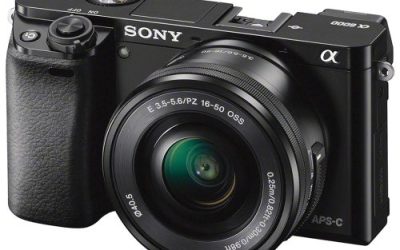
- 20.9MP APS-C CMOS sensor; EXPEED 7 processor; NIKKOR Z DX 16-50mm f/3.5-6.3 VR kit lens; vari-angle touch screen; electronic viewfinder; 4K60 video; single SD card slot.

- 24.2MP full-frame CMOS sensor; phase hybrid autofocus; 5-axis in-body image stabilisation; 6K open-gate video; fully articulating touch screen; L-mount; no viewfinder; no hot shoe; body only in this listing.

- 24.2MP full-frame CMOS sensor; phase hybrid autofocus; 5-axis in-body image stabilisation; 6K video recording; weather-sealed body; fully articulating touch screen; electronic viewfinder; L-mount; dual SD card slots.
All 4 Picks at a Glance
| Product | Specs | Action |
|---|---|---|
| 1. Nikon Z50 II with 16-50mm Kit Lens |
| Check price on Amazon |
| 2. Panasonic Lumix S9 |
| Check price on Amazon |
| 3. Panasonic Lumix S5 II |
| Check price on Amazon |
 4. Ricoh GR IIIx |
| Check price on Amazon |
Key takeaways
- Five cameras for wood-vetch photography on woodland edges, from a compact Nikon kit to a pocket Sony zoom, with honest trade-offs for close work.
Wood-vetch is a plant that rewards patience. It scrambles through hedgerows and along woodland edges, throwing out loose racemes of whitish flowers veined with violet, and it rarely grows where you can walk right up to it. The stems tangle with bramble, the light shifts from bright gaps to deep shade, and the flowers are small enough that a camera without a decent close focus distance will turn them into pale smudges. This guide covers five cameras that suit wood-vetch photography in different ways, each with a genuine weakness named plainly below.
As an Amazon Associate, we earn from qualifying purchases.
Why Wood-Vetch Is a Tricky Subject
Wood-vetch, Vicia sylvatica, belongs to the pea family Fabaceae and behaves like a scrambler. Its stems climb over neighbouring shrubs, reaching two metres or more, and its leaves end in tendrils that grip whatever they touch. The flowers hang in racemes of ten to eighteen blooms, whitish with a lilac or violet flush, opening through the summer on woodland edges and in hedgerows.
The first difficulty is access: wood-vetch grows behind a screen of bramble or nettle, and the stems you want are often just out of reach. Stay on the path, since trampling damages the plants, and a tilting screen lets you hold the camera low or at arm’s length over a tangle. The second difficulty is light, since a flower in sun can sit beside a stem in deep shade. The third is scale: a single flower is only about a centimetre and a half long, and a whole raceme spans perhaps fifteen centimetres, so a raceme needs a lens that focuses close and a single flower needs a close-up lens or a strong macro mode. None of the five cameras below is a dedicated macro camera.
Wood-Vetch or Meadow Vetchling
Wood-vetch is not meadow vetchling. Meadow vetchling, Lathyrus pratensis, belongs to the same family Fabaceae but sits in a different genus, Lathyrus, while wood-vetch sits in the genus Vicia. Wood-vetch is a tall scrambling woodland plant with whitish-violet flowers. Meadow vetchling is a lower, more sprawling plant of grassland and meadow edges with yellow pea flowers. Flower colour alone separates them: whitish-violet for wood-vetch, clear yellow for meadow vetchling. The leaves differ too: wood-vetch has several pairs of leaflets and a branched tendril, while meadow vetchling has a single pair of narrow leaflets. Meadow vetchling was covered in an earlier guide in a different batch.
Tufted-vetch, Vicia cracca, is a third species in the same genus, and it is worth a single line only to say that it is not the comparison used in this guide. It has denser spikes of violet-blue flowers and grows in grassland and on rough ground. There is no delivered generic guide to vetch as a group, so nothing here leans on a general vetch article.
What to Look for in a Camera for Wood-Vetch
The first feature that matters is close focus distance. A kit zoom that focuses to around thirty centimetres is workable for a whole raceme, while a dedicated close-up lens or a compact with a macro mode will get you nearer to a single flower. If you buy an interchangeable-lens body, budget for a close-focusing lens as well. The second is a tilting screen, since wood-vetch grows at awkward heights; a viewfinder still helps in bright light, when a screen washes out. The third is image stabilisation, for slow shutter speeds in shade with the camera held at arm’s length. The fourth is weight: a light kit you actually carry takes more photographs than a heavy kit that stays at home.
1. Nikon Z50 II with 16-50mm Kit Lens
- 20.9MP APS-C CMOS sensor; EXPEED 7 processor; NIKKOR Z DX 16-50mm f/3.5-6.3 VR kit lens; vari-angle touch screen; electronic viewfinder; 4K60 video; single SD card slot.
The Nikon Z50 II is the most straightforward camera in this group for a wood-vetch walk: a compact APS-C mirrorless body with a 20.9 megapixel sensor and Nikon’s EXPEED 7 processor. The 16-50mm kit zoom covers a useful range, from a wide hedgerow view to a telephoto that isolates a single raceme, and it focuses close enough for a full raceme to fill much of the frame. The vari-angle touch screen turns for low and high angles.
The trade-offs are real. The Z50 II has no in-body image stabilisation, so in shade you rely on the kit lens, which has vibration reduction, or on a faster shutter speed. The kit zoom is not a close-up lens, so a single flower will stay small in the frame unless you add a close-focusing lens, a separate purchase.
2. Panasonic Lumix S9
- 24.2MP full-frame CMOS sensor; phase hybrid autofocus; 5-axis in-body image stabilisation; 6K open-gate video; fully articulating touch screen; L-mount; no viewfinder; no hot shoe; body only in this listing.
The Panasonic Lumix S9 is the smallest full-frame camera in this guide. It packs a 24.2 megapixel full-frame sensor into a body under half a kilogram, with 5-axis in-body stabilisation for handheld shots in shade and phase hybrid autofocus that locks onto a flower without fuss. The full-frame sensor gathers more light than the APS-C bodies here, which helps under a canopy.
The S9 has no viewfinder and no hot shoe, and both omissions matter. Without a viewfinder, bright sunlight on the rear screen can make it hard to judge focus on a small flower. Without a hot shoe, you cannot add a flash or LED panel for fill light in deep shade, so you rely entirely on available light. It is sold as a body only, so you must add a lens that focuses close for wood-vetch.
3. Panasonic Lumix S5 II
- 24.2MP full-frame CMOS sensor; phase hybrid autofocus; 5-axis in-body image stabilisation; 6K video recording; weather-sealed body; fully articulating touch screen; electronic viewfinder; L-mount; dual SD card slots.
The Panasonic Lumix S5 II is the most capable all-round camera in this group. Its 24.2 megapixel full-frame sensor pairs with phase hybrid autofocus, and the 5-axis in-body stabilisation holds a handheld shot steady at slow shutter speeds in shade. The viewfinder is large and clear, the fully articulating screen turns for low angles, and the body is weather sealed, a real comfort when the canopy drips after rain.
For wood-vetch, the S5 II shines with a close-focusing L-mount lens: the sensor gives you room to crop into a single flower, and the autofocus is reliable once you place a single focus point on the flower you want. The trade-offs are weight and lens cost. The S5 II is the heaviest body here once you add a lens, and on a long walk that weight is noticeable. Like every interchangeable-lens body in this guide, it needs a close-focusing lens for tight work, and a good L-mount macro lens is a serious addition.
4. Ricoh GR IIIx
- 24.2MP APS-C CMOS sensor; fixed 40mm f/2.8 GR lens; macro mode focusing to 10 cm; snap focus; 3-inch touch screen; no viewfinder; 262 g; USB-C charging.
The Ricoh GR IIIx is the odd one out: a fixed-lens compact with a 24.2 megapixel APS-C sensor and a 40mm f/2.8 lens, a natural focal length for a single raceme. It weighs only 262 grams, slips into a trouser pocket, and turns on in an instant, so it is the camera you have with you when you stumble on wood-vetch by chance. The macro mode focuses to ten centimetres, closer than any kit zoom here, and lets you fill the frame with a single flower without any extra lens.
Its snap focus mode lets you set a focus distance in advance, which is useful when the camera keeps locking onto a leaf in front of the flower you want. The trade-offs are clear: there is no viewfinder, so you compose on the rear screen, which can be hard to see in bright sun, and there is no zoom, so if the raceme you want is out of reach you cannot pull it closer. Battery life is modest at around two hundred shots per charge, so a spare battery is wise for a long walk.
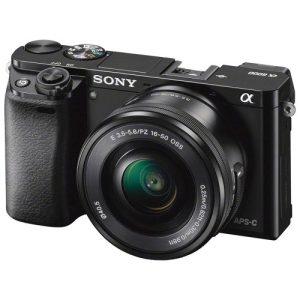
5. Sony RX100 VII
The Sony RX100 VII is the most flexible pocket camera in this guide. Its 20.1 megapixel 1-inch stacked sensor sits behind a 24-200mm zoom, a remarkable range for a camera that fits in a jacket pocket. At the wide end you can photograph a whole stretch of hedgerow, and at the long end you can isolate a single raceme from the path. The autofocus locks on in a fraction of a second, the real-time tracking holds focus as you recompose, and the pop-up electronic viewfinder is a genuine advantage in bright light.
For wood-vetch, the zoom is the main attraction: the flowers often grow just beyond easy reach, and framing a raceme at 200mm from the path is something no other compact here can match. The trade-offs are the small sensor and the slow lens at the long end. A 1-inch sensor gathers less light than the APS-C and full-frame sensors here, so in deep shade you will see more noise, and the files have less room for heavy cropping.
Specs
- 20.1MP 1-inch stacked CMOS sensor; 24-200mm f/2.8-4.5 zoom lens; 0.02-second autofocus; 20 fps continuous shooting; pop-up electronic viewfinder; tilting touch screen; 4K video; 302 g.
How the Five Compare
The five cameras split into two groups. The Nikon Z50 II, the Panasonic S9, and the Panasonic S5 II are interchangeable-lens bodies, which grow with you as you add lenses but demand a close-focusing lens before they do their best work on wood-vetch. The Ricoh GR IIIx and the Sony RX100 VII are fixed-lens compacts, ready for close work out of the box, with the GR IIIx focusing nearer and the RX100 VII reaching farther. Largest sensor in the smallest body: the S9. Most capable overall: the S5 II. Lightest simple kit: the Z50 II. Closest-focusing pocket camera: the GR IIIx. Widest zoom in a pocket: the RX100 VII.
Field Notes for a Woodland Edge Morning
A good wood-vetch morning begins early, when the light is low and the air is still damp. Arrive just after sunrise, while the sun is still low enough to rake across the hedgerow. The flowers catch the light first, glowing whitish-violet against the dark green. Walk slowly and look before you raise the camera, because wood-vetch often grows in patches.
Work from the path: the plants at the edge are the ones you can photograph without leaving the track, and they are often the best lit. Kneel to bring the camera to the height of the raceme, and use the tilting screen to compose without pressing your face into the hedge. Watch the wind: the stems sway in even a light breeze, so wait for a lull or use a burst of frames and keep the sharpest one. Leave the plants as you found them: do not pick wood-vetch, bend the stems, or clear away the bramble to tidy the background.
Frequently Asked Questions
Is wood-vetch the same plant as meadow vetchling?
No. Wood-vetch is Vicia sylvatica, a scrambling plant of woodland edges with whitish-violet flowers. Meadow vetchling is Lathyrus pratensis, a plant of grassland and meadow edges with yellow pea flowers. Both belong to the family Fabaceae, but they sit in different genera, Vicia and Lathyrus.
Do I need a macro lens to photograph wood-vetch?
Not necessarily, but you do need a lens that focuses close. A kit zoom that focuses to around thirty centimetres will frame a whole raceme well, and a compact with a macro mode will fill the frame with a single flower. For the tightest single-flower shots, a dedicated close-up lens is the right tool.
Which of these five cameras is best for a beginner?
The Nikon Z50 II is the easiest of the three interchangeable-lens bodies to learn, with a clear menu and a kit lens that covers most situations. The Sony RX100 VII is the easiest pocket camera to use well. The Panasonic S5 II is the most complex camera here and suits a photographer who enjoys learning a deep menu system.
Can I photograph wood-vetch without leaving the path?
Yes, and you should. Wood-vetch grows at woodland edges and in hedgerows, and the best stems are often reachable from the path with a camera that has a tilting screen or a zoom lens. The Sony RX100 VII reaches a single raceme from the path at its long end, and the tilting screens on the other cameras let you compose at arm’s length. Staying on the path protects the plants and the ground beneath them.
More from Amazon
Programs that pair well with the guide above. Offers and eligibility are set by Amazon and may change.
Free shipping on eligible items, Prime Video and more. Eligible new members can start with a free trial.
Start a Prime free trialAudiobooks and podcasts to listen to on the go. Eligible new members can start with a free trial.
Try Audible freeAd-free music streaming. Eligible new subscribers can start with a free trial.
Try Music Unlimited freeA free business account with business pricing and bulk-buying tools for work, shop or home office.
Create a business accountAs an Amazon Associate we earn from qualifying purchases.