
Our Top Picks
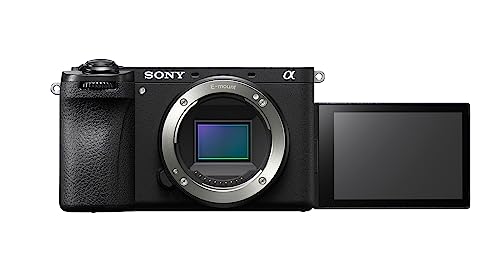
 Sony ZV-E10 APS-C Mirrorless Camera Body Black1.811.76 x 4.54 x 2.53 Inches0.76 poundsCheck on Amazon
 Canon EOS R100 Mirrorless Camera RF-S18-45mm F4.5-6.3 is2.7 x 4.6 x 3.4 inches0 PoundsCheck on Amazon

Food videography is its own craft. A sizzling pan, a slow pour of sauce, steam rising from a fresh plate: these moments last only seconds, and a camera has to catch them cleanly, in focus, and with colors that make the dish look as good as it tastes. A phone can get you close, but a dedicated camera gives you interchangeable lenses, real depth of field control, better low-light performance, and the manual control that turns a casual clip into a polished cooking video.
This guide focuses on video first. Our companion article on food photography covers stills; here, every pick is judged on motion, sound, focus, and color while you cook, plate, and serve. We chose five cameras for different kitchens and skill levels, from a pocketable vlogging body to a serious hybrid that can anchor a whole channel.
As an Amazon Associate, we earn from qualifying purchases.
What Makes a Camera Good for Food Videography
Food video is mostly shot close up, often in warm kitchen light, and usually with the camera on a tripod while your hands stay busy. That shapes what matters most.
Close focus and lens choice. Overhead shots of a cutting board and tight shots of garnish need a lens that focuses close. Interchangeable-lens cameras win here because you can pair the body with a macro or a fast prime. Kit zooms are a fine place to begin, and you can add a dedicated close-focus lens later.
Accurate color. Appetizing food video depends on believable color. Warm tones should look rich, not orange, and greens should stay fresh, not muddy. Good color science and flexible picture profiles keep your look consistent from shoot to shoot.
A screen you can see while filming. A flip-out or tilting screen lets you frame overhead shots and check focus without crouching behind the camera. If you film yourself talking to the camera while you cook, a fully articulating screen is even better, since it faces forward.
Reliable autofocus. Steam, moving hands, and shallow depth of field all challenge autofocus. Eye and face detection that stays locked on you while you work keeps your footage usable without constant refocusing.
Clean 4K and usable audio. 4K recording gives you room to crop and reframe in editing, and a microphone jack lets you record clear voiceover or kitchen sound instead of relying on the built-in mic. Good battery life and a body that does not overheat during a long cook matter just as much.
1. Sony ZV-E10 Body-Only
The Sony ZV-E10 is a vlogging-first camera that fits food videography almost by accident. It is small, light, and built around video, with a fully articulating touchscreen, a directional three-capsule microphone, and Sony’s well-regarded autofocus.
Its 24.2-megapixel APS-C sensor records oversampled 4K from a 6K readout, which keeps detail high in textures like seared crust, chopped herbs, and glossy sauces. Eye autofocus tracks your face while you talk through a recipe, and Product Showcase mode shifts focus quickly from your face to a dish held up to the lens, a handy trick for presenting a finished plate. The E-mount system opens the door to affordable close-focus primes, and the compact body leaves room in a crowded kitchen.
The trade-offs are honest ones. There is no in-body stabilization, so handheld walking shots need a stabilized lens or a small gimbal, and there is no viewfinder, which matters little for tripod work. Battery life is modest, so keep a spare charged for a long cooking session. For a first dedicated food video camera, though, the ZV-E10 is hard to beat: it is the lightest way into interchangeable-lens video, and it grows with you as your lens collection does.
Specs: 24.2MP APS-C Exmor CMOS sensor; 4K video oversampled from 6K; 3.0-inch fully articulating touchscreen; Real-time Eye AF and Product Showcase mode; Sony E-mount; weighs about 343 g body only.
2. Sony A6700 Body-Only
The Sony A6700 is the step up for creators who want the ZV-E10’s video strengths plus a more capable hybrid body. It shares the E-mount system but adds a newer 26-megapixel back-illuminated sensor, Sony’s BIONZ XR processor, and a dedicated AI processing unit that makes subject recognition noticeably more confident. When your hands move fast over a pan or you lean in and out of frame, the A6700 holds focus where the ZV-E10 might hunt.
Video specs are generous: 4K at up to 60 frames per second oversampled from 6K, 10-bit 4:2:2 internal recording, and S-Log3 and S-Cinetone profiles for color grading. That 10-bit depth is a real advantage for food, where smooth gradients in sauces, soups, and steam can band in 8-bit footage. Five-axis in-body stabilization steadies handheld shots around the kitchen, and the fully articulating touchscreen faces forward for to-camera segments.
If you plan to film several times a week and edit seriously, this is the camera in this guide most likely to stay on your tripod for years.
Specs: 26.0MP APS-C Exmor R back-illuminated CMOS sensor; 4K 60p oversampled from 6K with 10-bit 4:2:2; dedicated AI processor for subject recognition; 5-axis in-body stabilization; 3.0-inch fully articulating touchscreen; Sony E-mount.
3. Fujifilm X-T30 II Body-Only

Fujifilm’s color science has a loyal following among food shooters, and the X-T30 II shows why. Its film simulations, especially the warm, gentle tones of Classic Chrome and the soft contrast of Eterna, give food footage a finished look straight out of camera, which cuts editing time when you publish often. The 26.1-megapixel X-Trans sensor renders fine texture beautifully, from flaky pastry to fresh herbs.
For video, the X-T30 II records 4K at up to 30 frames per second and Full HD at up to 240 frames per second for smooth slow motion, ideal for a pour, a drizzle, or a sizzle caught in detail. The 425-point phase-detection autofocus is quick and sure, and the compact, classic-styled body looks at home in a kitchen or a cafe shoot.
This is a body-only listing, so pair it with a lens that suits your style. Fujifilm’s small primes are a natural match, and a short macro lens turns this into a dedicated close-up machine. Choose the X-T30 II if color and character matter to you as much as resolution, and you want footage that needs minimal grading.
Specs: 26.1MP APS-C X-Trans CMOS 4 sensor; 4K 30p and Full HD up to 240p slow motion; 425-point phase-detection autofocus; film simulations including Classic Chrome and Eterna; 3.0-inch tilting touchscreen; Fujifilm X-mount.
4. Nikon Z30 Kit with 16-50mm Lens
The Nikon Z30 is Nikon’s most compact creator camera, and it is the friendliest pick in this guide for someone filming their first food videos. It was designed for vloggers, with a fully articulating screen, a prominent record button, and a clean, uncluttered control layout that stays out of your way while you cook. The included 16-50mm kit zoom covers wide overhead shots and tighter framing, and it focuses close enough for most tabletop work.
Video quality is solid: 4K at up to 30 frames per second, Full HD at up to 120 frames per second for slow motion, and eye-detection autofocus that follows you around the kitchen. The Z30 handles warm indoor light well, and its colors render food naturally without heavy grading.
Because this is a kit, you can begin filming the day it arrives, with no extra lens purchase needed. Later, the Z mount offers compact primes that sharpen close-up work further. Pick the Z30 if you want the simplest path to good-looking food video and a camera that never feels like it is fighting you.
Specs: 20.9MP DX-format CMOS sensor; 4K 30p and Full HD 120p video; 3.0-inch fully articulating touchscreen; eye-detection autofocus; includes NIKKOR Z DX 16-50mm f/3.5-6.3 VR lens; Nikon Z mount.
5. Canon EOS R100 Kit with RF-S 18-45mm Lens
The Canon EOS R100 is the most straightforward entry point in this guide, and the smallest and lightest EOS R camera Canon makes. Its 24.1-megapixel APS-C sensor and Dual Pixel CMOS autofocus with eye detection keep the essentials covered: sharp focus on you while you present, and clean 4K video from the center of the sensor. Canon’s color science has long been praised for natural skin tones and appetizing warm hues, which suits food work well.
The included RF-S 18-45mm kit lens covers wide establishing shots of a kitchen and closer shots of a plate, and the whole kit is light enough to carry to a market, a restaurant kitchen, or a friend’s home for a location shoot.
Be aware of two limits. The rear screen is fixed rather than articulating, so overhead framing takes a little trial and error, and 4K carries a crop, which narrows your field of view at the wide end. Both are manageable on a tripod with the kit lens. Choose the R100 if you want the lowest-fuss route into interchangeable-lens food video and a kit that is ready to shoot out of the box.
Specs: 24.1MP APS-C CMOS sensor; 4K 24p video and Full HD 60p; Dual Pixel CMOS AF with eye detection; 3.0-inch fixed rear screen; includes RF-S 18-45mm f/4.5-6.3 IS STM lens; Canon RF mount.
How to Choose Between These Five
Match the camera to how you film. If you shoot mostly alone on a tripod and want the lightest setup, the ZV-E10 and Z30 are the natural pair to compare: the Sony offers Product Showcase mode and a deeper lens system, while the Nikon is simpler to learn and comes ready to shoot as a kit. If you edit seriously and want 10-bit color and the most confident autofocus, the A6700 justifies its higher tier. If color character and film-like tones are your priority, the X-T30 II stands apart. And if you want the simplest, most compact Canon kit to learn on, the R100 is the gentle on-ramp.
Think about lenses early. A fast prime in the 30 to 50mm range is the classic food video lens: it focuses close, blurs backgrounds softly, and works in dim kitchens. A short macro lens is the next step for extreme close-ups of texture.
Tips for Filming Food Well
Good food video is mostly good light and good timing. Film near a window when you can, and use a simple LED panel or a bounce card to fill shadows on the far side of a dish. Keep your light consistent between takes so a recipe filmed across an afternoon still cuts together cleanly.
Film the action, not just the result. A knife moving through a tomato, butter melting, or a garnish landing tells a story that a finished plate alone cannot.
Finally, keep the kitchen tidy between shots and wipe the lens often. Steam and cooking spray settle on glass faster than you expect, and a soft cloth between takes saves a reshoot.
Frequently Asked Questions
Do I need a full-frame camera for food videography?
No. Every camera in this guide uses an APS-C sensor, and all of them record clean 4K with good color. Invest in a good lens and good light first.
What lens should I pair with a body-only camera for food video?
A fast prime around 30 to 50mm on an APS-C body is the best first lens. It focuses close, handles dim kitchens well, and gives a pleasing shallow depth of field. A short macro lens is the ideal second purchase for extreme close-ups of texture, crumbs, and garnish.
Is a flip screen important for filming food?
Yes, it helps a lot. Overhead shots are the backbone of food video, and a flip-out or tilting screen lets you frame them without crouching or guessing. If you also film yourself talking to the camera, a fully articulating screen that faces forward is worth prioritizing.
Can I film food videos with the kit lens that comes in the box?
Yes. The kit lenses bundled with the Nikon Z30 and Canon EOS R100 cover the focal lengths most food videos need, and they focus close enough for tabletop work.
The Bottom Line
Food videography rewards cameras that focus reliably, render color honestly, and stay out of your way while you cook. The Sony ZV-E10 is the lightest way in, the Sony A6700 is the most capable all-rounder, the Fujifilm X-T30 II brings distinctive color, the Nikon Z30 is the friendliest kit, and the Canon EOS R100 is the simplest place to begin. Pick the one that matches how you film, pair it with a close-focusing lens and good light, and your recipes will look as inviting on screen as they taste at the table.
More from Amazon
Programs that pair well with the guide above. Offers and eligibility are set by Amazon and may change.
Free shipping on eligible items, Prime Video and more. Eligible new members can start with a free trial.
Start a Prime free trialAudiobooks and podcasts to listen to on the go. Eligible new members can start with a free trial.
Try Audible freeAd-free music streaming. Eligible new subscribers can start with a free trial.
Try Music Unlimited freeA free business account with business pricing and bulk-buying tools for work, shop or home office.
Create a business accountAs an Amazon Associate we earn from qualifying purchases.









