
Our Top Picks
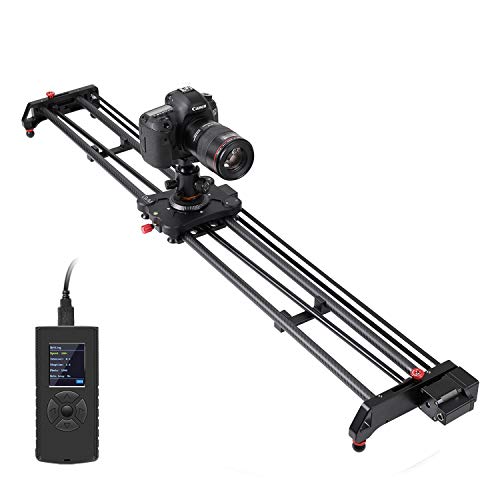 GVM Great Video Maker Camera Motorized Slider48"Carbon fiber Motorized slider48 x 5 x 4 inches11.75 poundsCheck on Amazon

A camera slider is one of the simplest ways to make video footage feel polished and deliberate. A slow, steady lateral move adds depth to a product shot, energy to a b-roll sequence, and intention to an interview setup. Handheld movement can look loose and unsteady, while a locked-off tripod shot can feel flat. A slider sits between the two, giving you controlled motion that repeats the same move take after take.

The challenge is choosing the right rail. Sliders range from short tabletop tracks to full-length carbon fiber rails, from fully manual push-and-pull designs to app-controlled motorized systems. This guide covers five camera sliders for video that span those choices, so you can match the tool to the way you shoot.
As an Amazon Associate, we earn from qualifying purchases.
How to Choose a Camera Slider for Video
Rail Length and Travel Distance
Rail length decides how long a move can last on screen. A compact 10-inch slider suits tight product shots and tabletop work, where a short move is all you need. A 31-inch rail covers interviews, b-roll, and most YouTube setups. A 47-inch or 48-inch rail gives you long, slow tracking moves that feel cinematic, but it also takes up more room and needs a bigger bag.
Load Capacity and Rig Weight
Every slider lists a maximum load, and that number drops when the rail tilts. A slider rated for 11 pounds horizontally may only hold half that at a 45-degree angle, and vertical moves cut capacity further still. Add up the full weight of your rig before you buy: camera body, lens, cage, monitor, microphone, and any follow focus or battery grip. A mirrorless body with a small prime is light, but a rigged cinema camera with a zoom lens can easily pass 10 pounds. Buy headroom, not the bare minimum, because a slider working near its limit will show vibration and uneven motion.
Motorized or Manual
Motorized sliders use a motor to drive the carriage at a constant speed, which is the easiest way to get glass-smooth motion and repeatable moves. Most motorized models also handle time-lapse, with the carriage moving a fraction of an inch between frames. App control adds programmable moves, adjustable speed, and slow ease-in and ease-out at each end of the track. Manual sliders are simpler and lighter: you push the carriage by hand, so there is no motor hum and no battery to charge. A good manual rail with quality bearings can feel wonderfully smooth, but it demands a steady hand and practice. If you shoot interviews or product work alone, motorized control is worth the extra weight.
Smoothness, Bearings, and Build
Smooth motion comes from the carriage and rail working together. Roller bearings, belt drives, and rigid rails all help. Carbon fiber rails are lighter than aluminum for the same length, which matters when you carry gear all day. Aluminum rails cost less and feel solid, though they add weight. Look for adjustable feet with a bubble level, because a rail that is not level will drift toward the low end.
Mounting and Portability
A slider is only useful if it fits your kit. Short sliders slide into a backpack laptop sleeve. Long rails need their own case or strap to a tripod bag. If you shoot on location, check the folded length and weight before you commit. If you mostly shoot in a studio, a longer, heavier rail is no burden at all. Also check whether the slider works with your existing tripod head, because a fluid head on the carriage makes it far easier to frame each shot.
1. GVM 31-Inch Motorized Camera Slider
The GVM 31-inch motorized slider is a strong all-rounder for creators who want automated motion without a full-length rail. Its 31-inch carbon fiber track is long enough for interviews, product reveals, and b-roll, yet short enough to carry in a standard gear bag. A remote controller drives the carriage, so you can set a move going and keep your hands off the rig while it runs.
This slider covers the modes that matter for video work: constant-speed video moves, time-lapse, tracking shots, and 120-degree panoramic moves. The carbon fiber rail keeps weight down, and the carriage glides on a belt drive that holds a steady pace from one end of the track to the other. With an 11-pound horizontal load capacity, it handles a mirrorless body with a mid-range zoom, a cage, and a small monitor without strain.
The remote control is the main appeal here. You do not need a phone app to run it, which keeps setup fast and avoids the distraction of a screen during a shoot. Set your end points, pick a speed, and let the motor do the work. For interviews, that means you can concentrate on the conversation instead of the camera.
Specs: 31-inch carbon fiber rail; motorized with remote controller; video, time-lapse, tracking, and 120-degree panorama modes; 11 lb horizontal load capacity; belt drive; 1/4-inch and 3/8-inch mounting threads.
2. GVM 48-Inch Motorized Camera Slider GP-120QD
When a move needs room to breathe, the GVM 48-inch GP-120QD delivers a full 120 cm of travel. Long rails suit slow, deliberate tracking shots, wide establishing moves, and scenes where the camera needs time to reveal a subject.
This model runs on app control, so you program moves from your phone: video mode with constant speed, time-lapse with adjustable intervals, follow focus moves, and 120-degree panoramic shooting. The 48-inch carbon fiber rail is built for DSLR and mirrorless rigs, and the belt-driven carriage holds a steady pace across the whole track.
The trade-off for all that length is size. A 48-inch rail does not fit in a small bag, and it weighs more than a compact slider. But if you shoot in a studio, on a set, or anywhere you can plan your kit around the rail, the length pays off in every shot.
Specs: 48-inch carbon fiber rail; motorized with app control; video, time-lapse, follow focus, and 120-degree panorama modes; belt drive; built for DSLR and mirrorless rigs; 1/4-inch and 3/8-inch mounting threads.
3. iFootage Shark Slider Nano II 660
The iFootage Shark Slider Nano II 660 takes a different approach: instead of a longer rail, it adds a second axis of motion. A 360-degree panning axis sits on the carriage, so the camera can slide and pan in a single coordinated move. That combination opens up parallax shots, where the subject stays framed while the background shifts, and it does it without a separate pan head.
At 26 inches long, this is a mid-size rail that travels well. The payload of 15.4 pounds is generous for its size and covers rigged mirrorless cameras and smaller cinema setups with room to spare. Control comes through a built-in IPS touchscreen or the iFootage app, with up to eight customizable motion points in a single path. Video, time-lapse, stop-motion, macro, and panorama modes are all on board.
The Nano II 660 suits creators who want more than a straight slide. Product videographers can circle a subject while closing in. Interview shooters can add a slow pan to a lateral move for a more dynamic frame. The touchscreen makes it easy to set a path on set without reaching for a phone.
Specs: 26-inch rail; 360-degree panning axis; 15.4 lb payload; up to 8 customizable motion points; IPS touchscreen and app control; video, time-lapse, stop-motion, macro, and panorama modes; USB-C power; compatible with DJI gimbals.
4. Neewer ER1 47.2-Inch Motorized Camera Slider

The Neewer ER1 is the lightest full-length rail in this guide, and that matters when the location is a walk from the car. Its 47.2-inch carbon fiber rail weighs just over 5 pounds including the motor, yet it still carries 11 pounds horizontally and 5.5 pounds when tilted to 45 degrees. A 4400mAh NP-F750 battery ships in the box, so the slider runs straight away without extra power accessories.
App control covers manual, video, and time-lapse modes, with end points set on screen rather than on a separate controller. Four roller bearings keep the carriage steady, and side knobs let you angle the guide bar for tracking shots or 120-degree panoramas. The rail also handles 45-degree tilt shooting, which adds angled moves to your options.
The ER1 is a good match for travel kits and outdoor shoots where every pound counts. The included battery, quiet stepper motor, and long rail mean you can set up a slow tracking shot in a field or on a trail without extra gear. One thing to note: the charger and the 2.4G remote are sold separately, so plan for USB-C charging if you want those.
Specs: 47.2-inch carbon fiber rail; motorized with app control; 4400mAh NP-F750 battery included; 11 lb horizontal and 5.5 lb at 45-degree load capacity; video, time-lapse, and manual modes; 120-degree panorama; silent stepper motor; 1/4-inch and 3/8-inch threads.
5. Edelkrone SliderONE v2

The Edelkrone SliderONE v2 is the smallest slider here, and it proves that a short move can be the most useful one. At 10.6 inches long with 7.9 inches of travel, it slides into a backpack laptop sleeve and disappears until you need it. Despite the tiny footprint, it carries up to 20 pounds horizontally, which covers most mirrorless and DSLR rigs with ease. It also manages vertical moves at 90 degrees with rigs up to 5 pounds.
Backlash-free gears and a belt drive give this slider its famously smooth motion, and the edelkrone app controls it from your phone with a simple interface. Time-lapse and stop-motion modes are built in, and the slider pairs wirelessly with HeadONE and HeadPLUS motorized heads for pan and tilt moves.
This is a specialist tool, not a general-purpose rail. It will not give you a long tracking shot across a room. What it gives you is precise, repeatable motion in tight spaces: close-ups, tabletop product work, interviews where the camera sits close, and any setup where a full rail would crowd the scene.
Specs: 10.6-inch total length; 7.9-inch camera travel; 20 lb horizontal and 5 lb vertical load capacity; backlash-free gears; app control; time-lapse and stop-motion modes; Canon LP-E6 battery power; CNC aluminum body; 2.4 lb weight.
Which Slider Fits Your Way of Shooting?
Match the slider to the moves you actually make. If you shoot interviews and product work alone, a motorized rail with app or remote control frees your hands and repeats moves cleanly. The GVM 31-inch slider and the Neewer ER1 both do that well, at different lengths. If you want the longest, slowest moves, the GVM 48-inch rail or the Neewer ER1 give you a full 120 cm to work with. If your shots need pan and slide together, the iFootage Nano II 660 is the only pick here with a built-in panning axis.
Load capacity is the other deciding factor. Add up your full rig, including cage, lens, monitor, and microphone, then choose a slider rated comfortably above that total. Remember that capacity drops when the rail tilts, so leave margin if you plan angled or vertical moves.
Finally, think about where you shoot. Studio work favors long rails and heavier builds. Location work favors carbon fiber, compact rails, and included batteries.
Frequently Asked Questions
What length camera slider is best for video?
A 31-inch rail suits most video work, including interviews, b-roll, and product shots. Shorter rails around 10 inches work for tabletop and close-up moves, while 47-inch and 48-inch rails suit long, slow tracking shots. Longer rails are heavier and harder to carry, so choose the shortest rail that gives you the move you need.
Are motorized sliders better than manual sliders for video?
Motorized sliders give you constant speed, repeatable moves, and time-lapse modes, which makes them easier to use for interviews and product work. Manual sliders are lighter, simpler, and give you direct control over the move.
How much weight can a camera slider hold?
It depends on the model and the angle of the rail. The sliders in this guide carry between 11 and 20 pounds horizontally, with lower limits when tilted or vertical. Add up the full weight of your rig, then choose a slider rated above that total with room to spare.
Can I mount a camera slider on a tripod?
Yes, most camera sliders have 1/4-inch and 3/8-inch threads on the base for tripod mounting. Longer rails work best with two tripods or light stands, one at each end, to prevent flex.
More from Amazon
Programs that pair well with the guide above. Offers and eligibility are set by Amazon and may change.
Free shipping on eligible items, Prime Video and more. Eligible new members can start with a free trial.
Start a Prime free trialAudiobooks and podcasts to listen to on the go. Eligible new members can start with a free trial.
Try Audible freeAd-free music streaming. Eligible new subscribers can start with a free trial.
Try Music Unlimited freeA free business account with business pricing and bulk-buying tools for work, shop or home office.
Create a business accountAs an Amazon Associate we earn from qualifying purchases.









