Key takeaways
- Section count is a trade-off. More sections usually pack shorter, but add joints and setup steps. Fully extended, the narrowest section is often the most flexible.
- Lock design affects maintenance. Flip locks are visible and quick to check; twist locks have a cleaner profile but can collect grit inside. Sand or salt can make either type bind or slip if neglected.
- Head attachment matters. Check the top screw size and included reversible stud. A ball head is compact for stills; a fluid video head is designed for controlled movement and typically adds weight and height.
- Carbon fiber is not automatically more stable. It can reduce carried weight and may damp vibration differently from aluminum, but tube diameter, construction, extension, and footing have a major effect.
- Vibration control is a system. A loose quick-release plate, extended camera strap in wind, or hard foot on a slick surface can undermine a sturdy pole. Tighten the plate, tuck away the strap, and press the foot down consistently.
Best camera monopods: quick picks by situation
The best camera monopods depend on what you carry: choose the Manfrotto XPRO+ 4-Section for a versatile travel and event option, the Sirui P-326 for a light carbon-fiber kit, the Gitzo GM4562 for demanding long-lens work, or a video monopod with a leveling base for moving footage. Before buying, check the monopod’s folded length, rated load, foot design, and compatibility with your head—not just its maximum height.
Monopods reduce arm fatigue and help steady a camera, but they do not stand freely like tripods. A tall rating or high load capacity does not guarantee stable images: the stiffness of the tube, how firmly the foot contacts the ground, the lens’s balance, and your technique all matter. Manufacturer specifications can vary slightly by version, so confirm the exact model before purchase.
Our top picks

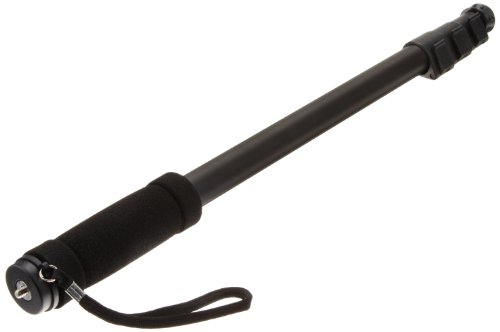


As an Amazon Associate we earn from qualifying purchases at no extra cost to you. Ratings are shown as listed on Amazon.
Compare the leading options
| Model | Material and sections | Folded length | Maximum height | Weight | Rated load | Best fit |
|---|---|---|---|---|---|---|
| Manfrotto XPRO+ 4-Section (MVMXPROA4) | Aluminum, 4 | About 56 cm | About 192 cm | About 0.75 kg | About 20 kg | General travel, events, and photographers who prefer flip locks |
| Sirui P-326 | Carbon fiber, 6 | About 38 cm | About 155 cm | About 0.4 kg | About 10 kg | Packable travel kits and lighter camera-and-lens combinations |
| Gitzo GM4562 | Carbon fiber, 6 | About 44 cm | About 154 cm | About 0.65 kg | About 30 kg | Frequent professional use and large telephoto setups |
| Manfrotto XPRO Video Monopod (MVMXPROA4) | Aluminum, 4 | About 68 cm | About 192 cm | About 1.2 kg | About 20 kg | Video work needing a fluid cartridge and stable foot assembly |
Figures are approximate published specifications for commonly listed versions; model names and configurations can differ by region. Load ratings are not interchangeable with practical stability. A long lens can flex a monopod even when the combined camera weight is well below its stated limit.
Choose by the way you shoot
Travel: prioritize packed length and weight
The Sirui P-326 is a strong choice when every centimetre in a backpack matters. Its short folded length and low weight make it easier to carry all day, but six sections mean more joints to extend and clean. Those narrow lower sections can also feel less rigid than a thicker four-section pole, especially with a heavy lens fully extended.
If you want fewer sections and a quicker setup, the aluminum Manfrotto XPRO+ 4-Section is a sensible alternative. It is heavier and longer when folded, but its flip locks are easy to inspect at a glance. For flights, compare the folded length with your bag’s internal dimensions; a monopod that fits diagonally may still be awkward to pack around other gear.
Wildlife: prioritize stiffness, foot grip, and head compatibility
For regular use with a large telephoto lens, the Gitzo GM4562 offers a high stated capacity in a comparatively light carbon-fiber build. It is the premium pick for photographers who carry the monopod often and want a substantial margin for a camera, lens, and head. That rating is not a promise of shake-free images: use the lens’s tripod collar when available, keep the center of gravity over the pole, and avoid extending thin lower sections more than necessary.
For uneven ground, a replaceable rubber foot that can expose a spike is more adaptable than a small fixed pad. A spike can bite into soil, while rubber is usually more suitable for indoor floors and hard surfaces. Check whether the foot swivels or articulates; a pivoting foot can maintain contact as you tilt, but a loose or poorly controlled joint may feel imprecise.
Sports and video: match the foot and head to movement
Sports photographers often need quick height changes and a foot that can track a subject without catching on the ground. Flip locks are easy to verify quickly, while twist locks can be compact and less exposed to snags. Either works if the locks are secure and easy for you to operate. For video, a dedicated video monopod such as the Manfrotto XPRO Video model adds a fluid cartridge and a three-foot base for smoother pans. The base improves control, but it does not turn the monopod into a hands-free tripod.
What the specifications don’t tell you
- Section count is a trade-off. More sections usually pack shorter, but add joints and setup steps. Fully extended, the narrowest section is often the most flexible.
- Lock design affects maintenance. Flip locks are visible and quick to check; twist locks have a cleaner profile but can collect grit inside. Sand or salt can make either type bind or slip if neglected.
- Head attachment matters. Check the top screw size and included reversible stud. A ball head is compact for stills; a fluid video head is designed for controlled movement and typically adds weight and height.
- Carbon fiber is not automatically more stable. It can reduce carried weight and may damp vibration differently from aluminum, but tube diameter, construction, extension, and footing have a major effect.
- Vibration control is a system. A loose quick-release plate, extended camera strap in wind, or hard foot on a slick surface can undermine a sturdy pole. Tighten the plate, tuck away the strap, and press the foot down consistently.
A practical way to judge fit
Estimate the working load by adding the camera, lens, and head—not by considering the camera alone. For example, a 0.8 kg camera, 2.4 kg telephoto lens, and 0.5 kg head make a 3.7 kg setup. A monopod rated around 10 kg has ample nominal capacity for that load, but the lens’s length and leverage still determine how steady the combination feels. If possible, try the setup at the height you actually use, with the lower sections extended, before relying on it for paid or critical work.
For handheld video, also check whether the head’s plate can balance your camera without sliding to the end of its range. A monopod that reaches eye level on paper may be too short once a tall video head is fitted—or unnecessarily tall for a low-angle sports position.
Ownership: what wears and how to prevent trouble
Feet and locks tend to need attention before the main tube. Rubber feet can wear smooth, spikes can loosen, and grit can make locks difficult to operate. After use on beaches or dusty trails, wipe the legs and foot clean; follow the manufacturer’s instructions before disassembling locks, since some mechanisms should not be greased. Check lock tension periodically, replace damaged feet, and avoid carrying the monopod by a camera attached to it. For long storage, leave the sections clean and dry rather than trapping moisture inside.
Bottom line
For a light travel kit, choose the Sirui P-326 if compact packing outweighs the feel of a thicker pole. For a flexible general-purpose option, pick the aluminum Manfrotto XPRO+ 4-Section. For frequent wildlife work with a long lens, the Gitzo GM4562 is the premium choice; for video movement, choose the video-specific XPRO model with its leveling base. In every case, buy for your real folded-space limit and working setup—not the largest load number on the spec sheet.