Key takeaways
- Sump systems: large capacity, often used with saltwater tanks, but more setup effort.
- Dual filtration: adding a sponge filter to a hang-on-back for redundancy.
- Live plants: help with nutrient uptake but do not replace a filter.
For most home tanks, a hang-on-back filter such as the Fluval AquaClear or Seachem Tidal suits small to mid-size tanks, a sponge filter such as those from Hikari or Aquarium Co-Op suits breeding tanks and shrimp, and a canister filter such as the Fluval 07 series or Eheim Classic suits larger tanks that need more media space. The right choice depends on tank volume, stock level and how much maintenance you are willing to do.
Our top picks



As an Amazon Associate we earn from qualifying purchases at no extra cost to you.
How aquarium filters work
A filter does three jobs. Mechanical filtration traps debris, biological filtration gives beneficial bacteria a surface to colonize so they can process waste, and chemical filtration, such as activated carbon, removes certain dissolved compounds. The biological part matters most for fish health, so avoid replacing all media at once. Rinse sponges and media in old tank water taken during a water change rather than tap water that may contain chlorine.
At a glance: filter types and example products
| Type / example | Best for | Strengths | Limits |
|---|---|---|---|
| Sponge filter (Hikari Bacto-Surge, Aquarium Co-Op sponge filters) | Fry, shrimp, quarantine, small tanks | Gentle intake, simple, runs on an air pump | Takes space inside the tank, limited chemical media |
| Hang-on-back (Fluval AquaClear, Seachem Tidal, Marineland Penguin) | Small to medium community tanks | Easy to service, flexible media, common replacement parts | Can be noisy if water level drops, overflows if clogged |
| Canister (Fluval 07 series, Fluval FX4/FX6, Eheim Classic, Eheim Professionel, Oase BioMaster) | Medium to large tanks | Large media capacity, tidy inside the tank | More complex servicing, more initial setup, bigger footprint |
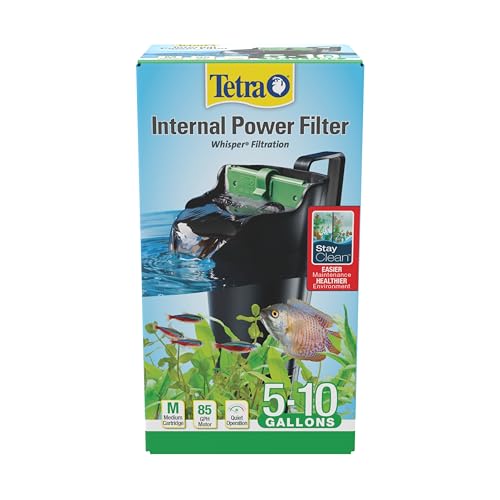
| Internal power filter (Fluval U series, Aqueon internal) | Small tanks and nano setups | Compact, inexpensive | Takes tank volume, limited capacity |
| Undergravel or box filters | Legacy or hospital setups | Cheap and simple | Largely superseded by other types |
Picks explained
Fluval AquaClear: the long-running hang-on-back
The AquaClear line has been popular for years and comes in several sizes rated by the maker for different tank volumes. Reviewers frequently praise the large media basket and the adjustable flow. It works well on freshwater community tanks and can be modified with extra sponge or ceramic media. The usual caution is to buy a size that matches or exceeds your tank volume, since maker ratings are often generous.
Seachem Tidal: accessible service and a built-in surface skimmer
The Tidal series includes adjustable flow, a built-in surface skimmer and a media basket designed to make changes straightforward. Reviewers appreciate the skimmer on tanks where a surface film forms. As with other power filters, it should be matched to the tank size.
Sponge filters: simple and fish-friendly
A sponge filter driven by an air pump is gentle on fry, betta fish and shrimp. It adds biological capacity without a strong current. Quality sponge filters from brands like Hikari and Aquarium Co-Op are commonly recommended in aquarium communities for quarantine tanks. They are not ideal for a heavily stocked large tank on their own.
Fluval 07 series and Eheim Classic: canisters for moderate tanks
The Fluval 07 series offers several sizes with maker-listed flow rates and tank ratings. Eheim’s Classic line has a reputation for reliability and ease of parts replacement, though it has fewer features than newer models. Both fit under a stand and keep equipment out of sight.
Fluval FX and Oase BioMaster: large-tank canisters
Fluval’s FX4 and FX6 are aimed at large aquariums and offer big media capacity and high flow. Oase BioMaster filters are often noted by reviewers for their modular design. These are better suited to experienced keepers because of their size and servicing steps.
Sizing and fit notes
Match flow to the tank
A common guideline from aquarium hobbyists is a filter flow rate of about four to eight times the tank volume per hour for most freshwater setups. Heavily stocked tanks and messy fish such as goldfish call for the upper end. Gentle swimmers like bettas and many shrimp need lower flow or a baffle.
Space and placement
Hang-on-back filters need clearance behind the tank and a lid that accommodates them. Canisters need cabinet space plus room to open the unit. Sponge filters take interior space, so allow for them when aquascaping.
Noise and power
Noise often comes from air in the system, a low water level or a worn impeller. Keep power cords low with a drip loop so water cannot run to the outlet. Plug aquarium equipment into a ground-fault protected outlet if possible, and follow the maker’s manual for any electrical question or call an electrician.
Maintenance routine
Most filters need monthly rinsing of sponges and checking of impellers. Replace carbon as the maker advises and avoid cleaning everything at once. Canister owners should turn off power before opening and close valves to limit spills.
Pick X if … decision table
| If you … | Pick | Reason |
|---|---|---|
| keep a small community tank | Fluval AquaClear or Seachem Tidal | Easy service and flexible media |
| breed fish or keep shrimp | Sponge filter | Gentle intake that will not pull in fry |
| run a larger tank with lots of media needs | Fluval 07 series or Eheim Classic | Large media capacity out of sight |
| run a very large or heavily stocked tank | Fluval FX or Oase BioMaster | High flow and capacity |
| need a nano tank solution | Internal filter or small sponge | Compact and inexpensive |
| want quiet operation | Sponge filter or well-maintained canister | Fewer splashing points |
Budget tiers
At the budget tier, internal filters and basic sponge setups work for small tanks. Mid-range hang-on-back and entry canister models offer the best balance for most hobbyists. Premium canisters offer larger capacity, stronger build and replaceable parts, which can pay off on large tanks. Weigh the long-term cost of replacement media and cartridges as well.
Alternatives
- Sump systems: large capacity, often used with saltwater tanks, but more setup effort.
- Dual filtration: adding a sponge filter to a hang-on-back for redundancy.
- Live plants: help with nutrient uptake but do not replace a filter.
Frequently Asked Questions
What size filter do I need for my tank?
Use the maker’s rating as a starting point and aim for flow roughly four to eight times tank volume per hour. Heavily stocked tanks or messy species need more. If the filter is too strong for delicate fish, a baffle or sponge pre-filter can soften the flow.
Is a canister filter better than a hang-on-back?
Not automatically. Canisters hold more media and keep equipment hidden, which suits bigger tanks. Hang-on-back filters are easier to service and suit small and medium tanks.
How often should I clean my filter?
Most keepers rinse mechanical media about monthly or when flow noticeably drops. Use old tank water so you do not harm beneficial bacteria. Follow the maker’s manual for the specific model.
Can I replace all the filter media at once?
It is better not to. The bacteria living on the media process waste, and replacing everything can disrupt the tank. Replace only part of the media at a time and keep the established portion.
Are sponge filters enough for a whole tank?
For small, lightly stocked tanks, yes. They are especially popular for fry and shrimp. For larger or heavily stocked tanks, many keepers pair them with another filter type.
Why is my new filter noisy?
Air trapped in the housing, a low water level or a misaligned impeller are common causes. Turn off the power, reseat the impeller and refill the housing as described in the manual. If noise continues, contact the manufacturer.
More from Amazon
Programs that pair well with the guide above. Offers and eligibility are set by Amazon and may change.
Free shipping on eligible items, Prime Video and more. Eligible new members can start with a free trial.
Start a Prime free trialAudiobooks and podcasts to listen to on the go. Eligible new members can start with a free trial.
Try Audible freeAd-free music streaming. Eligible new subscribers can start with a free trial.
Try Music Unlimited freeA free business account with business pricing and bulk-buying tools for work, shop or home office.
Create a business accountAs an Amazon Associate we earn from qualifying purchases.