Key takeaways
- Use one if you shoot in sand, spray, dust, crowds or around children, where front-element scratches are a real risk.
- Skip it for night photography with streetlights, astrophotography, or situations where you already use a lens hood and careful handling.
- Remove it when stacking other filters, as the extra element adds reflections and can cause vignetting on wide lenses.
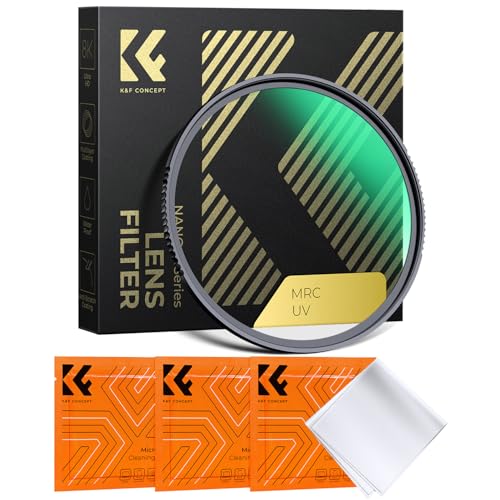
For a 77mm lens, a slim multi-coated UV or clear protection filter from B+W, Hoya, Marumi or Kenko is the practical choice for protecting the front element, with the premium tier worth it only if you shoot into bright lights, and the budget tier fine for casual daylight use. Whichever you pick, a UV filter is protection and a haze reducer on film cameras; on modern digital sensors it does not change colour in any meaningful way.
Our top picks


As an Amazon Associate we earn from qualifying purchases at no extra cost to you.
At a Glance: 77mm UV and Protection Filters
| Filter | Best for | Key stated features | Limits |
|---|---|---|---|
| B+W 010 UV-Haze MRC | Careful shooters who want a reference-grade filter | Brass or slim frame options, multi-resistant coating, German glass per the maker | Premium tier; brass rings can seize if not handled with care |
| Hoya HD3 UV (and Hoya Fusion One) | Hardened glass and easy cleaning | Maker states hardened glass and water- and oil-repellent coating on higher-end models | Mid to premium tier; premium-range products can be thick if the frame is not slim |
| Marumi DHG Super Lens Protect | Balanced mid-range protection | Multi-coating, slim frame, water- and oil-repellent coating | Fewer retail options in some regions |
| Kenko Zeta Quint / Zeta Protector | Low-reflection coatings for bright lights | Multi-layer coating, slim ring | Mid to premium tier; availability varies |
| Sigma WR Protector (WR UV) | Sigma lens owners | Water- and oil-repellent coating, slim frame | Fewer variants than the specialists |
| Breakthrough Photography X4 UV | Hardened, durable build | Maker lists a hardened stainless-steel frame and multi-coated glass | Premium tier |
| Tiffen and generic multi-coated UV | Budget and spare filters | Basic coatings and standard frames | More reflection, more flare risk, less rigid frames |
The filter market shifts, and some lines are renamed or revised. Check that the model number and 77mm size match what you intend to buy.
Do You Actually Need a UV Filter?
This is the most debated question in photography. A clear or UV filter adds a replaceable layer in front of an expensive lens. It guards against fingerprints, dust, salt spray and light impacts. Critics point out that every glass surface added to an optical system can slightly increase flare and reduce contrast, particularly at night with point light sources. Both views are fair.
- Use one if you shoot in sand, spray, dust, crowds or around children, where front-element scratches are a real risk.
- Skip it for night photography with streetlights, astrophotography, or situations where you already use a lens hood and careful handling.
- Remove it when stacking other filters, as the extra element adds reflections and can cause vignetting on wide lenses.
Most lens makers also supply a hood that protects against bumps and flare, and it costs nothing extra.
What Makes One 77mm Filter Better Than Another
Glass quality
Optical glass should be flat and free of distortion. Cheap filters may use lower-quality glass that softens fine detail, particularly on high-resolution sensors. Reviewers typically find that premium filters show less degradation at the edges of the frame.
Coatings
Multi-coatings reduce reflections, which lowers flare and ghosting. Water- and oil-repellent top coatings make smudges easier to wipe off. Makers describe these coatings in their product pages; ask for the specific product line because naming is not consistent.
Frame thickness
Wide lenses such as 16-35mm f/2.8 or 24-70mm f/2.8 zooms can show corner vignetting with a thick-framed filter. A slim frame avoids this but may not accept a front lens cap on some designs; check whether the filter has front threads if you plan to stack others or use a standard cap.
Frame material
Brass resists binding to lens threads, while aluminium is lighter. Some budget filters use cheap alloys that can seize in cold conditions. A thin smear of silicone-free lubricant is sometimes suggested by users, though the maker’s care instructions take priority.
Which Lenses Use 77mm?
This thread size is common among professional zooms. Many 70-200mm f/2.8 and f/4 zooms, 24-70mm f/2.8 lenses from some brands and a number of third-party wide-angle zooms use 77mm filters. Confirm the exact thread printed on the front of your lens or in the maker’s specification page before buying. Step-up and step-down rings let you share filters across lenses, but note that step-down rings can vignette on wide lenses.
Budget Tiers
Budget
Generic multi-coated UV filters and Tiffen basics suit casual use and spares. Expect weaker coatings, more flare in bright light and variable quality control, so inspect the glass on arrival.
Mid-Range
Marumi DHG, Hoya HD-range, Kenko and Sigma WR offer sensible coatings and slim frames. This tier suits most enthusiasts and many working photographers.
Premium
B+W MRC, Hoya Fusion One, Kenko Zeta and Breakthrough X4 target buyers who want the best coatings and hardest glass. These filters make the most sense on high-resolution bodies and expensive lenses.
Care and Fit Notes
- Thread the filter gently by hand; cross-threading damages both filter and lens.
- Do not overtighten. A snug fit is enough.
- Clean with a blower, then a lens cloth and fluid. Avoid paper tissues, which can scratch coatings.
- Store spare filters in padded cases, not loose in a pocket.
- If a filter is cracked, replace it immediately. Broken glass can scratch the front element.
- Check the lens hood still fits; thick filters can prevent a bayonet hood from seating fully.
Pick X If… Decision Table
| Pick this | If you… |
|---|---|
| B+W 010 MRC | want a proven premium protection filter for expensive lenses |
| Hoya HD3 or Fusion One | want hardened glass and easy-clean coatings |
| Marumi DHG | want strong value in the mid tier |
| Kenko Zeta | shoot city lights and want low reflections |
| Breakthrough X4 | want a rugged build |
| Generic multi-coated UV | need a spare or a low-cost beater filter for harsh conditions |
Alternatives to a UV Filter
- Lens hood only: Protects against bumps and flare with no optical cost.
- Circular polariser: Reduces glare and reflections and also protects the front element, though it darkens the image.
- Clear protector for specific trips: Fit one only for beach, desert or waterfall shoots, and remove it afterwards.
- Lens insurance: For expensive lenses, coverage against accidental damage may be a better safeguard than a filter.
Frequently Asked Questions
Does a UV filter affect image quality on a digital camera?
A good multi-coated filter has a very small effect, usually invisible in everyday shooting. Poor-quality filters can add flare, softness or colour casts, particularly in backlit scenes and at night.
Is a UV filter the same as a clear protection filter?
Functionally they are nearly identical on digital cameras. A UV filter blocks some ultraviolet light, which matters on film, while a clear protector does not. Digital sensors already have internal UV filtering, so the difference is minimal.
Can I stack a UV filter with an ND or polariser?
You can, but it is generally better to remove the UV filter first. Stacking adds extra glass surfaces that increase flare and can cause vignetting on wide lenses.
How do I know if my lens takes 77mm filters?
Look at the front of the lens barrel or inside the lens cap for a filter diameter symbol. The maker’s product page also lists the filter thread size.
Should I keep a UV filter on all the time?
Opinions differ. Many photographers leave one on in rough environments and remove it for night, astro and critical backlit work. If you decide to use one, choose a quality multi-coated model.
How often should I replace a UV filter?
Replace it whenever it is scratched, cracked or has damaged coatings. Otherwise a well-cared-for filter can last for years.
More from Amazon
Programs that pair well with the guide above. Offers and eligibility are set by Amazon and may change.
Free shipping on eligible items, Prime Video and more. Eligible new members can start with a free trial.
Start a Prime free trialAudiobooks and podcasts to listen to on the go. Eligible new members can start with a free trial.
Try Audible freeAd-free music streaming. Eligible new subscribers can start with a free trial.
Try Music Unlimited freeA free business account with business pricing and bulk-buying tools for work, shop or home office.
Create a business accountAs an Amazon Associate we earn from qualifying purchases.