Key takeaways
- Pro: Produces a smooth-edge lid that is safe to touch and stack.
- Pro: Knob mechanism requires minimal hand pressure per turn.
- Con: Plastic housing around the knob can flex under heavy downward force.
Opening a can without the right tool is one of those kitchen problems that looks trivial until you are standing over a pot with a bruised thumb and a lid that will not budge. The core issue is mechanical: a standard can rim demands a cutting edge that grips the metal seam cleanly, applies pressure evenly, and leaves an edge safe enough to handle without gloves. When the tool fails on any one of those points, the result is a mangled lid, jagged metal, or a opener that slips off the rim mid-turn.
Across the eight products compared here, the differences that matter come down to cutting mechanism, grip design, and whether the lid is removed cleanly or pushed inward. Smooth-edge cutters that leave the rim intact separate sharply from older butterfly-style openers that produce a knife-edge lip. Ergonomic handles and one-touch electric operation shift the effort profile entirely, which matters for buyers with arthritis or limited hand strength. Below, each pick is evaluated on published specifications and aggregated owner feedback from 2026.
Our top picks




As an Amazon Associate we earn from qualifying purchases at no extra cost to you.
Quick Picks
| Product | Best for | Price |
|---|---|---|
| GoodCook Safe-Cut | Everyday budget safe-cut | $10.69 |
| Bellemain Ergonomic | Seniors and restaurant volume | $23.49 |
| KitchenAid Classic | Multi-function durability | $14.99 |
| Safring Heavy Duty | Lowest price without sacrifice | $7.18 |
| OXO Good Grips | Smooth edge and comfort | $24.69 |
| PAKITNER Safe Cut | Compact safe-cut for small drawers | $8.98 |
| Cuisinart Electric | One-touch push-button operation | $19.95 |
| Rechargeable Electric | Seniors who dislike cord clutter | $15.99 |
How We Picked
Four criteria drove this shortlist. First, edge quality: whether the opener produces a smooth or sharp lid, since this directly determines safety during removal and storage. Second, effort and grip — handle shape, turning mechanism, and whether the design compensates for reduced hand strength. Third, build material, specifically stainless steel cutting wheels versus plated parts that corrode or dull quickly. Fourth, functional breadth: does the tool also handle bottle caps, pop-top lids, or different can sizes without a separate purchase?
The 8 Best How To Open Can Without Can Opener in 2026
GoodCook Safe-Cut Can Opener with Easy Turn Knob
A solid entry-level safe-cut opener for households that want a smooth lid edge without spending much. The easy-turn knob reduces wrist rotation compared to standard butterfly models, and the stainless steel cutting wheel keeps the edge from rusting between uses. Owner feedback highlights consistent performance across standard and taller cans.
- Pro: Produces a smooth-edge lid that is safe to touch and stack.
- Pro: Knob mechanism requires minimal hand pressure per turn.
- Con: Plastic housing around the knob can flex under heavy downward force.
Skip this if you open cans multiple times daily in a commercial setting; the build feels consumer-grade over sustained volume.
Bellemain Ergonomic Can Opener
Designed with seniors and restaurant staff in mind, the Bellemain combines a large padded grip with a safe-cut mechanism that removes the lid cleanly. The handle diameter accommodates limited pinch strength, and owners note it stays comfortable through dozens of cans in a shift.
- Pro: Wide ergonomic grip reduces strain on knuckles and carpal joints.
- Pro: Lid lifts off intact, leaving no sharp rim.
- Con: Bulkier profile makes it harder to store in shallow drawers.
Skip this if counter or drawer space is limited and you only open cans occasionally.
KitchenAid Classic Multifunction Can Opener and Bottle Opener
A razor-sharp stainless steel wheel paired with soft ergonomic handles makes this a durable all-in-one for mixed kitchen tasks. The integrated bottle opener adds utility without a second tool. Owners appreciate the weight and balance, which keeps the cutting wheel aligned on uneven rims.
- Pro: Handles bottle caps and can lids in one unit.
- Pro: Weighted body provides natural leverage and steady alignment.
- Con: Leaves a traditional sharp-edge lid, not a safe-cut finish.
Skip this if a smooth lid edge is a safety requirement for your household.
Safring Can Opener Manual
At the lowest price in this roundup, the Safring delivers a smooth-edge cut and a multifunctional bottle cap opener in a compact stainless steel body. The comfortable handle is padded and the cutting wheel is sharp enough to grip thin tin without slipping.
- Pro: Budget price with no compromise on smooth-edge output.
- Pro: Integrated bottle opener expands single-tool utility.
- Con: Handle padding compresses noticeably after extended use.
Skip this if you need an opener that survives heavy daily commercial rotation; materials feel thin for that workload.
OXO Good Grips Smooth Edge Manual Can Opener
The OXO sets the reference standard for comfort-driven manual openers. A soft, non-slip grip and a cutting mechanism that shears the lid below the rim produce a completely smooth edge on both can and lid. Owners consistently cite years of use without dulling.
- Pro: Smoothest edge result of any manual model here.
- Pro: Soft grip holds securely even with wet or oily hands.
- Con: Highest price in the manual category of this list.
Skip this if you cannot justify paying roughly double a budget safe-cut for incremental comfort gains.
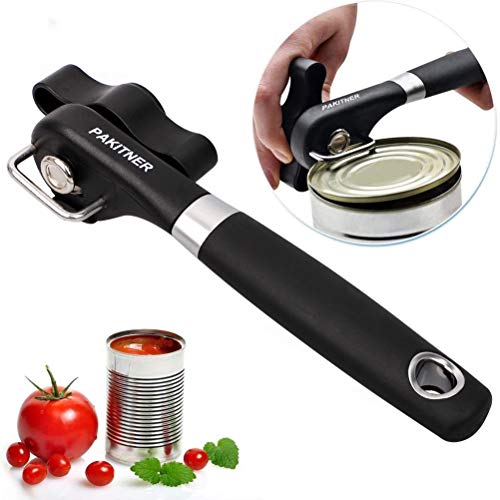
PAKITNER Safe Cut Can Opener
A compact safe-cut option for buyers who want smooth-edge results without a bulky housing. The easy-turn knob is intuitive and the food-grade stainless steel wheel resists corrosion. Owners with arthritis report it as one of the lightest safe-cut openers they can still turn.
- Pro: Small footprint fits narrow drawers and tight countertop zones.
- Pro: Light weight with adequate grip force for standard cans.
- Con: Struggles slightly on very tall or oversized commercial cans.
Skip this if you regularly open large 100-ounce or restaurant-scale cans.
Cuisinart Electric Can Opener
One-touch operation with a nonslip base eliminates all manual turning. Press a button, and the motorized wheel walks the rim cleanly. The base grips the counter firmly, which matters when opening heavier cans that would shift a lighter electric unit.
- Pro: True hands-free operation after initial placement.
- Pro: Nonslip base provides stable counter contact during the cut.
- Con: Requires outlet access and counter footprint.
Skip this if your kitchen lacks convenient counter space near an outlet or you prefer minimal-appliance setups.
Rechargeable Electric Can Opener for Seniors
A cordless electric model that addresses the main complaint about the Cuisinart: counter placement and cable management. Automatic operation detects can size and adjusts pressure without user intervention. Owners who prioritize independence from a plugged-in device gravitate toward this format.
- Pro: No cord or outlet dependency; charges via USB.
- Pro: Automatic sizing means no adjustment between can types.
- Con: Battery life requires periodic recharging that interrupts use.
Skip this if you open cans infrequently and will forget to keep it charged between uses.
Buying Guide
Smooth Edge vs. Traditional Cut
The single most consequential choice is whether the opener leaves a sharp or smooth rim. Traditional butterfly openers cut through the top seam, leaving a blade-like edge on both can and lid. Safe-cut models shear below the rim so the lid lifts off intact and the can top stays smooth. If the can goes into the refrigerator with its contents exposed, or if small children handle leftovers, smooth-edge is non-negotiable. The trade-off is a slightly longer cut cycle and a marginally higher price.
Manual Mechanism and Grip Ergonomics
For buyers with reduced grip strength or arthritis, handle diameter and turning mechanism matter more than cutting wheel quality. A large padded grip and an easy-turn knob reduce the force required to rotate through the rim. Soft rubberized surfaces maintain friction even with damp hands. If the opener will sit in a shared household drawer, a low-profile design with a simple two-finger turn is more practical than a heavy lever-action unit.
Manual vs. Electric: Effort and Environment
Electric openers remove rotational force entirely, which benefits users who cannot sustain repetitive wrist motion. The cost is counter space, an outlet (or a charging habit), and roughly double the price of a comparable manual unit. For anyone opening fewer than three cans per week, a well-designed manual safe-cut is more than adequate. For daily users or those managing a commercial kitchen rotation, the time saved per can accumulates quickly enough to justify the electric format.
Our Verdict
Top pick: the OXO Good Grips Smooth Edge is the best overall manual opener for anyone who values a perfectly smooth rim and a grip that stays comfortable through repeated use. Budget pick: the Safring at $7.18 offers smooth-edge output and a bottle opener at a price that makes it easy to keep one in every drawer. Condition where another wins: if you or someone in your household cannot turn a knob at all, the Rechargeable Electric Can Opener eliminates the manual step entirely without the outlet dependency of the Cuisinart.
FAQ
Can I open a can without any opener at all?
In an emergency, a sturdy spoon edge rubbed repeatedly along the can seam can score the metal thin enough to push through. This is slow, risks sharp shards, and is not a substitute for a purpose-built tool. For regular kitchen use, even the cheapest safe-cut opener is faster and safer than improvised methods.
Do electric openers produce a smooth edge?
Most electric models use a traditional top-cut method that leaves a sharp rim, because the mechanism presses a wheel through the top seam rather than shearing below it. A few newer designs incorporate safe-cut blades, but you must confirm the specific model’s cutting style before purchasing if a smooth edge is required.
How long does a manual can opener blade last?
A stainless steel cutting wheel on a quality manual opener typically stays sharp for several years of regular home use, often outlasting the plastic or plated components around it. Dullness usually shows as slipping on the rim rather than a failed cut. Owner feedback on the OXO and KitchenAid models reports multi-year intervals between any noticeable performance drop.
Are safe-cut openers harder to use than traditional ones?
Slightly. A safe-cut mechanism requires a full rotation around the rim before the lid releases, whereas a traditional opener can sometimes be lifted mid-cycle. In practice the difference is a few extra seconds per can, and the safety benefit of a smooth edge outweighs the marginal time cost for most households.