Key takeaways
- Enthusiasts upgrading from an entry-level Nikon DSLR (such as the D3000 or D5000 series).
- Sports and wildlife shooters who need fast, reliable autofocus and an 8 fps burst.
- F-mount lens owners who want to keep using their glass.
- Photographers who prefer an optical viewfinder with zero lag.
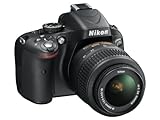
The Nikon D7500 is still a smart buy in 2026 for photographers who prefer an optical viewfinder, want a tough, weather-sealed DX body and plan to use Nikon F-mount lenses they already own or can buy used at good prices. Its 20.9MP APS-C sensor, 51-point autofocus, 8 fps burst and 4K video cover sports, wildlife, family and travel photography with ease. Kit packages usually sell somewhere around $1,200–$1,400.
If you are starting fresh with no lenses and want the newest autofocus features like eye detection in the viewfinder, a current mirrorless camera is the more future-proof route, since new lens development has largely moved to mirrorless mounts. But for DSLR fans and F-mount owners, the D7500 remains one of the best-balanced bodies Nikon has made.
Our top picks


As an Amazon Associate we earn from qualifying purchases at no extra cost to you. Ratings are shown as listed on Amazon.
Who it is for
- Enthusiasts upgrading from an entry-level Nikon DSLR (such as the D3000 or D5000 series).
- Sports and wildlife shooters who need fast, reliable autofocus and an 8 fps burst.
- F-mount lens owners who want to keep using their glass.
- Photographers who prefer an optical viewfinder with zero lag.
Who should skip it
- New buyers with no lenses who want the latest technology.
- Video-first creators who want advanced video features and continuous eye AF.
- Anyone who needs two memory card slots for professional backup.
Key specs
| Spec | Nikon D7500 | Why it matters |
|---|---|---|
| Sensor | 20.9MP DX (APS-C) CMOS | Clean high-ISO performance |
| Processor | EXPEED 5 | Same generation as the pro D500 |
| Autofocus | 51 points (15 cross-type) | Strong subject tracking |
| Burst speed | 8 fps | Sports and wildlife action |
| ISO range | 100–51,200 (native) | Low-light flexibility |
| Video | 4K UHD at 30p | High-resolution video |
| Screen | 3.2-inch tilting touchscreen | Low and high angle shooting |
| Card slot | 1 x SD | Single slot |
| Build | Weather sealed | Handles rain and dust better than entry DSLRs |
| Battery (CIPA) | About 950 shots | Long shooting days on one charge |
What stands out
Image quality that still holds up
The D7500 uses a 20.9MP DX sensor paired with EXPEED 5, closely related to the sensor in the flagship D500. It produces clean files at high ISO settings, which matters for indoor sports, events and dawn wildlife. 20.9MP is plenty for large prints and moderate cropping.
Fast, dependable autofocus
The 51-point system with 3D tracking follows moving subjects reliably through the optical viewfinder. Combined with an 8 fps burst and a deep buffer, it handles kids’ sports, birds in flight and pets at play.
Optical viewfinder and battery life
A DSLR viewfinder shows the scene with no lag or blackout delay, and because it does not power a screen to frame shots, battery life far exceeds most mirrorless cameras. Around 950 shots per charge (CIPA) means many shooters get through a full day without a spare.
Weather-sealed body with a solid grip
The deep grip and sealed body inspire confidence outdoors, and the top LCD panel shows settings at a glance.
Trade-offs
- Single SD slot. Wedding and event professionals usually want dual slots for backup.
- 4K crop. 4K video uses a cropped area of the sensor, making wide-angle video harder.
- DSLR platform. New F-mount lens releases are rare; the used market is where the value lies.
- Live view autofocus is slower than on modern mirrorless cameras.
Which kit to choose
| Kit | Lenses (35mm equivalent) | Extras | Best for |
|---|---|---|---|
| D7500 + AF-S DX 18-140mm f/3.5-5.6G ED VR | About 27–210 mm | Body and lens | One-lens travel and everyday use |
| D7500 + AF-P 18-55mm VR + AF-P 70-300mm bundle | About 27–82 mm and 105–450 mm | 64GB card, tripod, flash, filters, case and more | Beginners wanting reach for sports and wildlife |
The 18-140mm kit is the more convenient single-lens setup with a higher-quality, all-in-one zoom. The two-lens bundle gives far more telephoto reach for sports and wildlife and includes accessories, though bundled third-party extras like tripods and flashes are usually entry-level quality. Both kits typically sit in a similar price band, so decide based on whether you value convenience or reach.
Shooting tips
- Use AF-C mode with dynamic-area AF for moving subjects.
- Set Auto ISO with a minimum shutter speed suited to your focal length to keep shots sharp.
- Shoot RAW (NEF) for maximum editing flexibility.
- Use a fast UHS-I SD card to keep the buffer clearing quickly.
- Pick up a used fast prime, like a 35mm f/1.8 DX, for portraits and low light.
- Update firmware through Nikon’s support site.
FAQ
Is the D7500 good for beginners?
Yes, especially with the two-lens bundle. It has auto modes and grows with you as you learn.
Does it work with AF-P lenses?
Yes. The D7500 fully supports AF-P lenses, including vibration reduction.
Should I buy mirrorless instead?
If you own F-mount lenses or love optical viewfinders, the D7500 is a great choice. If starting from scratch, compare current mirrorless options too.
Lenses worth adding later
One of the D7500’s biggest strengths is access to a deep catalog of F-mount lenses, many available used at reasonable prices. A fast 35mm f/1.8 DX prime is an affordable upgrade for portraits and indoor shots. A 50mm f/1.8 works as a short telephoto portrait lens on DX. For wildlife and sports, a 70-300mm or longer zoom extends your reach, and the D7500’s 1.5x crop factor makes every telephoto lens frame tighter. Macro fans can add a dedicated macro lens for close-ups of flowers and insects.
Verdict
The Nikon D7500 combines excellent image quality, fast autofocus, 8 fps shooting and a weather-sealed body in one of the most balanced DX DSLRs available. Choose the 18-140mm kit for travel simplicity or the two-lens bundle for telephoto reach.