Key takeaways
- Photography students and beginners learning aperture, shutter speed and ISO on a dedicated camera.
- Parents and hobbyists who want better portraits and low-light photos than a phone delivers.
- Budget shooters who want access to Nikon’s huge used F-mount lens market.
- Second-camera buyers who need a backup body for events.
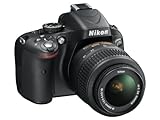
The Nikon D5100 is still a worthwhile buy in 2026 for beginners and hobbyists who want a real DSLR experience on a small budget. Its 16.2MP DX-format sensor produces clean, detailed images that hold up well against many newer entry-level cameras, and the 18-55mm VR kit lens covers everyday shooting with built-in vibration reduction. As a used or renewed kit, it typically sells around $200–$260.
Choose it if you want to learn manual exposure, shoot portraits with background blur, or move beyond a smartphone without spending much. Skip it if you need fast autofocus for sports and wildlife, strong video autofocus, built-in Wi-Fi, or a camera that will receive future support. In those cases a newer mirrorless camera is the better investment, even at a higher price.
As an Amazon Associate we earn from qualifying purchases at no extra cost to you.
Who the D5100 Is For
- Photography students and beginners learning aperture, shutter speed and ISO on a dedicated camera.
- Parents and hobbyists who want better portraits and low-light photos than a phone delivers.
- Budget shooters who want access to Nikon’s huge used F-mount lens market.
- Second-camera buyers who need a backup body for events.
Not the right fit for
- Sports and fast wildlife photographers, given the 11-point autofocus system.
- Video creators who need reliable continuous autofocus and 4K.
- Travelers who want automatic phone transfer without accessories.
Key Specs
| Spec | Nikon D5100 |
|---|---|
| Sensor | 16.2MP DX-format (APS-C) CMOS |
| Kit lens | AF-S DX 18-55mm VR |
| ISO range | 100–6400, expandable to 25600 |
| Autofocus | 11-point AF system |
| Continuous shooting | Up to 4 fps |
| Screen | 3-inch vari-angle LCD |
| Video | 1080p Full HD |
| Viewfinder | Optical pentamirror |
| Storage | SD / SDHC / SDXC |
| Released | 2011 |
| Typical price range (used/renewed kit) | $200–$260 |
What Still Stands Out
Image quality that holds up
The D5100’s 16.2MP APS-C sensor was widely praised at launch, and it still produces sharp, natural-looking files with good dynamic range. A sensor this size is many times larger than a typical smartphone main sensor, which means better depth-of-field control and cleaner shadows, especially when paired with a fast prime lens.
Vari-angle screen
The 3-inch flip-out screen swings to the side and rotates, making low-angle shots, overhead crowd photos and self-portraits easier. It was a rare feature at this level in 2011 and is still useful today.
A real optical viewfinder
Looking through an optical viewfinder shows the scene with zero lag and works well in bright sunlight where rear screens are hard to see. It also encourages a steadier shooting position.
Access to affordable lenses
Nikon’s F-mount has decades of lenses available used. A 35mm f/1.8 DX prime is a classic, affordable upgrade that transforms portraits and low-light shots.
Trade-offs and Limitations
- No in-body autofocus motor. The D5100 only autofocuses with lenses that have a built-in motor, such as Nikon AF-S lenses. Older AF and AF-D lenses work in manual focus only. Check compatibility before buying used lenses.
- Basic autofocus. Eleven AF points and 4 fps are fine for people and landscapes, but limited for action.
- Dated video. 1080p video is usable, but live-view autofocus is slow and noisy compared with modern mirrorless cameras.
- No built-in Wi-Fi. Transfer requires a card reader, cable or a Wi-Fi SD card.
- Age. Used bodies vary. Check shutter count, sensor condition and battery health, and prefer sellers who offer returns.
D5100 vs. a Modern Entry-Level Camera
| Factor | Nikon D5100 | Typical new entry mirrorless |
|---|---|---|
| Price (body + kit lens) | About $200–$260 used/renewed | Usually $600 and up new |
| Resolution | 16.2MP | Often 20–26MP |
| Autofocus | 11 points, phase detect via viewfinder | Hundreds of points with subject detection |
| Video | 1080p | 4K common |
| Wireless | None built in | Wi-Fi / Bluetooth |
| Viewfinder | Optical | Electronic or none |
Buying Tips for a Used or Renewed D5100
- Check what is included. Confirm the kit contains the battery (EN-EL14), charger and lens caps.
- Inspect the lens. Look for scratches, haze or fungus and check that VR works quietly.
- Test the screen hinge. The vari-angle hinge should move smoothly without loose spots.
- Buy a spare battery. Older batteries lose capacity; a second one is inexpensive.
- Use a fast SD card. A Class 10 or UHS-I card handles RAW bursts and 1080p video comfortably.
Settings to Start With
- Shoot in Aperture Priority (A) to control background blur.
- Set Auto ISO with a maximum around 3200 for clean low-light results.
- Use single-point AF-S for portraits and AF-C for moving subjects.
- Shoot RAW + JPEG while learning to edit.
Best Lenses to Pair With the D5100
Because the D5100 lacks a built-in focus motor, the smartest lens upgrades are AF-S lenses with their own motors. These classic options are widely available used:
| Lens | Effective focal length on DX | Best for |
|---|---|---|
| AF-S DX 35mm f/1.8G | About 52mm | Everyday shooting, low light, portraits |
| AF-S 50mm f/1.8G | About 75mm | Head-and-shoulders portraits |
| AF-S DX 55-200mm VR | About 82–300mm | Kids’ sports, zoo trips, distant subjects |
| AF-S DX 10-24mm | About 15–36mm | Landscapes, interiors, architecture |
A fast prime is the single biggest upgrade for this camera. Moving from the f/3.5–5.6 kit zoom to an f/1.8 prime lets in significantly more light, allows lower ISO indoors, and produces the soft background blur that beginners usually buy a DSLR for in the first place.
Alternatives
If you can stretch the budget, later Nikon DSLRs such as the D5300 or D5600 add higher resolution and Wi-Fi while using the same lenses. If video matters, look at entry mirrorless cameras with modern autofocus.
FAQ
Is the D5100 good for beginners in 2026?
Yes, for learning photography fundamentals on a budget. It is simple to use and its images still look good.
Can it shoot RAW?
Yes, it records Nikon NEF RAW files, which modern editors still support.
Does it work with new Nikon Z lenses?
No. Z lenses are for mirrorless bodies. The D5100 uses F-mount lenses.