Our Short List of 3

- Best for: Travelers who want one small camera that walks hyperlapses by day and sits through night lapses after dark.
- Video resolution: 5.3K60, 4K120 and 2.7K240 slow motion
- Photo resolution: 27MP
- Shooting modes: TimeWarp, Time Lapse, Night Lapse, Burst, Loop and Live Burst
- Time lapse resolution: up to 5.3K

- Best for: Slow subjects shot over hours, where long intervals and long runtime matter more than anything else.
- Sensor: 1/1.3-inch CMOS
- Video resolution: up to 4K/120fps
- Photo resolution: 40MP
- Shooting modes: Hyperlapse, Timelapse, SuperNight, Subject Tracking and Slow Motion
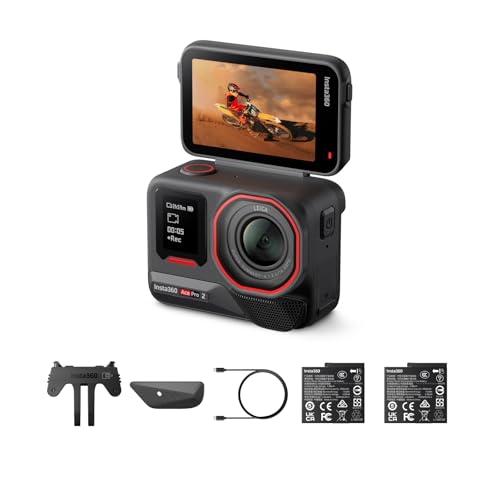
- Best for: Night-sky Starlapse sequences and low-light city hyperlapses where other action cameras turn noisy.
- Sensor: 1/1.3-inch CMOS
- Video resolution: 8K30fps and 4K120fps
- Lens: Leica SUMMARIT
- Shooting modes: Timelapse, TimeShift, Starlapse, Interval Photo, PureVideo and Loop Recording
All 5 Picks at a Glance
| Product | Specs | Action |
|---|---|---|
| GoPro HERO13 Black |
| Check price on Amazon |
| DJI Osmo Action 5 Pro Standard Combo |
| Check price on Amazon |
| Insta360 Ace Pro 2 Dual Battery Bundle |
| Check price on Amazon |
 DJI Osmo Pocket 3 Creator Combo |
| Check price on Amazon |
 Sony a6700 (Body Only) |
| Check price on Amazon |
Our Top Picks
The real decision is not how sharp the camera looks at noon; it is whether the camera will still be doing its job, unattended, at hour three of a sunset sequence, and whether a walking shot stays smooth enough to use. Timelapse and hyperlapse punish weak batteries, clumsy interval menus and shaky stabilization far more than ordinary video does, so a camera that looks great on a spec sheet can still be the wrong tool for compressed-time work.
This roundup is for three kinds of shooters: travelers who want walking hyperlapses without a gimbal rig, creators documenting slow change such as builds, gardens and weather, and hybrid shooters who want one body that handles stills as well. Every pick below earned its place from the modes and figures printed on its Amazon product page, with interval ranges, lapse resolutions and stabilization types checked against the listing before writing.
Quick Picks
As an Amazon Associate we earn from qualifying purchases
| Product | Best for | Key spec from title |
|---|---|---|
| GoPro HERO13 Black | Walking hyperlapses on rough trips | TimeWarp mode and time lapse up to 5.3K |
| DJI Osmo Action 5 Pro Standard Combo | Long locked-off timelapses | Timelapse intervals from 0.5 seconds to 60 minutes |
| Insta360 Ace Pro 2 Dual Battery Bundle | Night skies and low-light streets | TimeShift and Starlapse modes with 8K video |
| DJI Osmo Pocket 3 Creator Combo | Smooth city walks and guided pans | 3-axis gimbal with Motionlapse waypoints |
| Sony a6700 (Body Only) | High-resolution photo timelapses | In-camera time-lapse with 1 to 60 second intervals |
How to Choose
Decide whether the camera moves or stays put
Timelapse and hyperlapse sit next to each other in the menu, but they ask opposite things of the hardware. A timelapse camera stays locked on a tripod for minutes or hours, so interval range, duration limits and power draw matter most. A hyperlapse camera travels through the scene while it shoots, so stabilization does the heavy lifting: a mechanical gimbal gives the smoothest path, electronic stabilization runs a close second, and an unstabilized handheld sensor will wobble no matter how clever the mode is. Work out which of the two you will shoot more often before comparing anything else, because the strongest pick for one job is rarely the strongest pick for the other.
Read the interval range, not just the mode name
A lapse mode is only as flexible as the intervals it offers. Fast subjects such as crowds, traffic and scurrying clouds want intervals of half a second to two seconds, while slow subjects such as construction, plants and tides need intervals of a minute or far longer, plus a duration setting that lets the camera run for hours and stop on its own. Check the longest interval as carefully as the shortest: several cameras bury a one-minute ceiling in the fine print, which quietly rules out whole categories of slow subjects. A camera that also offers a separate interval-photo mode gives you a second path when video lapse settings run out of room.
Plan power before you plan the shot
Battery life quoted for normal video shrinks fast in lapse work, and a sequence that dies at the eighty-minute mark is worse than no sequence at all. Look at three things: the size of the standard battery, whether spare batteries are cheap and quick to swap, and whether the camera can record while powered over USB-C from a power bank. That last point decides whether overnight and all-day sequences are realistic. Bundles that include a second battery or a battery handle are worth more for this kind of shooting than bundles padded with mounts you will never open.
Know how the finished file comes out
Some cameras hand you a finished lapse video the moment you press stop, while others capture a folder of stills that you assemble on a computer. The first route is faster and fine for sharing; the second route preserves full stills resolution, raw files and far more editing control over exposure ramps and color. Resolution can also drop inside lapse modes, so confirm the lapse resolution rather than assuming the headline video figure applies. If you already edit stills sequences in other software, a camera with a strong interval-photo mode may serve you better than one with a polished in-camera movie mode.
The 5 Best Options
GoPro HERO13 Black
- Best for: Travelers who want one small camera that walks hyperlapses by day and sits through night lapses after dark.
- Video resolution: 5.3K60, 4K120 and 2.7K240 slow motion
- Photo resolution: 27MP
- Shooting modes: TimeWarp, Time Lapse, Night Lapse, Burst, Loop and Live Burst
- Time lapse resolution: up to 5.3K
Travelers who want one small camera that walks hyperlapses by day and sits through night lapses after dark.
The lens is fixed and very wide, so distant subjects stay small in the frame; there is no optical zoom to rescue a far-off skyline.
Choose the HERO13 Black if your hyperlapses happen on the move: on a bike, on a boat, on a trail where a separate gimbal would be one more fragile thing to break. TimeWarp is its moving-lapse mode, and HyperSmooth 6.0 keeps the frame steady while you walk or ride; the same body then switches to a locked-off Time Lapse or Night Lapse with no accessories at all. It is waterproof to 10 metres, so rain sequences and shoreline sunsets need no housing, and the Enduro battery is designed to keep working on cold mornings when standard packs fade early.
DJI Osmo Action 5 Pro Standard Combo
- Best for: Slow subjects shot over hours, where long intervals and long runtime matter more than anything else.
- Sensor: 1/1.3-inch CMOS
- Video resolution: up to 4K/120fps
- Photo resolution: 40MP
- Shooting modes: Hyperlapse, Timelapse, SuperNight, Subject Tracking and Slow Motion
Slow subjects shot over hours, where long intervals and long runtime matter more than anything else.
Electronic stabilization is switched off in Timelapse mode, so the mount has to be genuinely solid; any flex in a cheap tripod shows up in the finished video.
The Action 5 Pro is the patient option in this group. Its Timelapse mode stretches intervals out to 60 minutes and lets a sequence run for hours, which suits construction sites, tides and slow-moving weather that shorter interval steps handle less gracefully. The 47GB of built-in storage means a forgotten memory card does not end the shoot before it starts, and the Extreme Battery Plus is rated for up to four hours of recording. Hyperlapse is on board as well, with speed settings up to x30, and both OLED touchscreens stay readable when the sun is directly overhead.
Insta360 Ace Pro 2 Dual Battery Bundle
- Best for: Night-sky Starlapse sequences and low-light city hyperlapses where other action cameras turn noisy.
- Sensor: 1/1.3-inch CMOS
- Video resolution: 8K30fps and 4K120fps
- Lens: Leica SUMMARIT
- Shooting modes: Timelapse, TimeShift, Starlapse, Interval Photo, PureVideo and Loop Recording
Night-sky Starlapse sequences and low-light city hyperlapses where other action cameras turn noisy.
Several creative modes finish their processing in the Insta360 phone app, so your phone becomes part of the workflow whether you planned for it or not.
Pick the Ace Pro 2 when your lapses run after dark. Its 1/1.3-inch sensor and PureVideo processing give Starlapse and night Timelapse work a cleaner starting point than most action cameras manage, while TimeShift covers the moving side, using FlowState stabilization to smooth a walking hyperlapse through a night market or a lit city center. The flip touchscreen makes low tripod angles and self-framed sequences easier to compose without crouching behind the camera. This bundle includes a second battery, which doubles your unattended runtime before USB power enters the plan, and the camera still records 8K video when the lapse is done.
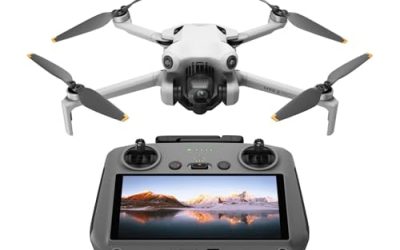
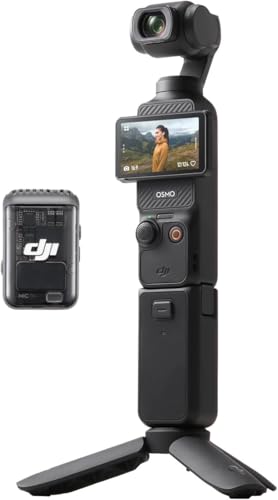
DJI Osmo Pocket 3 Creator Combo
- Best for: Walking hyperlapses and self-guided panning timelapses that need to look smooth without a tripod or slider.
- Sensor: 1-inch CMOS
- Video resolution: 4K/120fps
- Stabilization: 3-axis mechanical gimbal
- Shooting modes: Hyperlapse, Timelapse and Motionlapse
Walking hyperlapses and self-guided panning timelapses that need to look smooth without a tripod or slider.
It is not waterproof and the gimbal head is delicate compared with an action camera, so rain sequences and rough handling call for a case and some care.
The Pocket 3 exists for one reason: it is the smoothest way to walk a hyperlapse through a crowded street. Its 3-axis mechanical gimbal irons out footsteps and turns in a way electronic stabilization cannot quite match, and Motionlapse goes a step further by steering the camera between up to four waypoint positions you set in advance, so even a static timelapse can pan slowly across a skyline on its own. The 1-inch sensor holds up well at dusk, the screen rotates for vertical framing, and this Creator Combo adds a battery handle and a wireless microphone transmitter for anyone filming themselves between lapses.
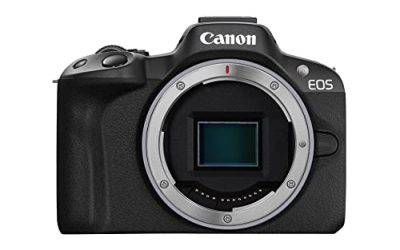
Sony a6700 (Body Only)
- Best for: Hybrid shooters who want serious stills timelapses with interchangeable lenses from the same body they use for everything else.
- Sensor: 26MP APS-C Exmor R CMOS
- Processor: BIONZ XR with a dedicated AI processing unit
- Video resolution: 4K60p, plus 4K120p in S&Q mode, 10-bit 4:2:2
- Time-lapse: in-camera time-lapse movie with intervals from 1 to 60 seconds
Hybrid shooters who want serious stills timelapses with interchangeable lenses from the same body they use for everything else.
Sony’s own guide caps continuous 4K time-lapse recording at roughly an hour and limits longer intervals in 4K, and the body-only box means a lens is a separate purchase.
The a6700 is the pick when the lapse is only part of the job. Its S&Q mode builds a time-lapse movie in camera using intervals from 1 to 60 seconds, while the Interval Shooting function captures full 26MP stills sequences that you assemble yourself for maximum resolution and editing control. Interchangeable E-mount lenses let the same body frame a wide construction site one week and a compressed telephoto sunset the next, and the NP-FZ100 battery is the strongest stills battery in this group. It asks more of the shooter than any action camera here, and it rewards that effort with the best image quality of the five.
Which One Fits Your Situation
You are walking a new city and want the whole day compressed
Take the DJI Osmo Pocket 3. The gimbal keeps a walking hyperlapse level through crowds, corners and staircases, and you can start a Motionlapse from a café table while you wait out the midday heat. If the same trip involves boats, bikes or rain, swap it for the GoPro HERO13 Black and accept slightly busier footage in exchange for a camera that shrugs off weather and knocks.
A project near you changes over days or weeks
Mount the DJI Osmo Action 5 Pro and leave it alone. Intervals up to 60 minutes match subjects that barely move hour to hour, the internal storage removes one failure point, and USB power keeps it running between visits. Choose the Sony a6700 instead when each frame also needs to stand up as a high-resolution still, and you are willing to assemble the sequence yourself.
The light you care about starts after dark
Reach for the Insta360 Ace Pro 2. Starlapse mode is built for star trails, its sensor handles night streets better than most action cameras, and the spare battery in this bundle covers the long, cold hours when sequences run longest. The GoPro HERO13 Black is the alternative when the night shoot also has to survive rain, spray or a knock off the tripod.
The camera will get wet, dusty or knocked around
This is action camera territory. The GoPro HERO13 Black and the DJI Osmo Action 5 Pro are both waterproof without a housing and built to be mounted on helmets, handlebars and hulls. Pick the GoPro for the stronger moving-lapse stabilization, or the DJI for longer static sequences and the front screen you can check while the camera faces you.
Common Mistakes
- Judging a camera by its normal video resolution when its lapse modes record at a lower one; always check the resolution listed for the lapse mode itself.
- Starting a multi-hour sequence on a battery alone, then losing the best light when it dies; test runtime at home or run the camera from a power bank.
- Mismatching the interval to the subject, so clouds crawl at one frame a minute or a building site flickers at one frame a second.
- Assuming stabilization is active in every mode; on some cameras it quietly switches off in Timelapse, which turns a slightly flexible tripod into visible jitter.
- Walking a hyperlapse at an uneven pace, speeding up and slowing down; the mode can smooth bumps, but it cannot fix a wandering walking speed.
Frequently Asked Questions
What is the difference between a timelapse and a hyperlapse?
A timelapse compresses time from a fixed position: the camera stays on a tripod while clouds, crowds or light change around it. A hyperlapse adds travel, with the camera moving through the scene between frames, so the viewpoint glides forward as time speeds up. That movement is why hyperlapse leans so heavily on stabilization, and why the same camera can be excellent at one and merely decent at the other.
Do these cameras give me a finished video, or do I need software?
Most modes on the action cameras and the Pocket 3 deliver a finished video file in camera, ready to share. The exception path is interval photo shooting, offered by the Insta360 and the Sony, which saves a sequence of stills instead. Those stills need assembling in editing software, but they keep full resolution and give you far more control over the final grade.
How do I power a timelapse that runs for several hours?
Start with the largest battery the camera accepts, then treat USB-C power as the real answer: every camera here can run or charge from a power bank, which stretches a sequence from hours into overnight territory. Reduce screen brightness, switch the display off between checks, and avoid the highest resolutions, since heat and power draw climb together on long static runs.
Which of these cameras suits a complete beginner?
The GoPro HERO13 Black is the gentlest starting point. TimeWarp and Time Lapse are single menu choices, the camera builds the finished video itself, and the waterproof body forgives the handling mistakes beginners make. Move to the Pocket 3 once walking smoothness becomes the priority, and to the Sony a6700 when you are ready to assemble stills sequences and choose lenses yourself.
More from Amazon
Programs that pair well with the guide above. Offers and eligibility are set by Amazon and may change.
Free shipping on eligible items, Prime Video and more. Eligible new members can start with a free trial.
Start a Prime free trialAudiobooks and podcasts to listen to on the go. Eligible new members can start with a free trial.
Try Audible freeAd-free music streaming. Eligible new subscribers can start with a free trial.
Try Music Unlimited freeA free business account with business pricing and bulk-buying tools for work, shop or home office.
Create a business accountAs an Amazon Associate we earn from qualifying purchases.