Key takeaways
- Our sony a6000 mirrorless camera review 2229.html covers 24.3MP, fast autofocus and 11 fps. See specs, image quality and whether this classic still makes sense.
The buyer looking at the Sony A6000 usually wants a mirrorless camera that is small, fast and capable without costing as much as a newer model, and the question is whether this older camera still makes sense. The A6000 is a 24.3MP mirrorless camera with 79-point phase-detection autofocus, 11 fps continuous shooting and a compact body, and it is sold as a kit with a 16-50mm lens for everyday shooting. This review looks at what the listing actually shows, so you can judge the camera on its stated specs rather than on its age.
This guide is for photographers who want a small mirrorless camera for travel, street and everyday shooting, for buyers moving from a phone or a compact camera, and for anyone comparing the A6000 with newer models before buying. The sections below cover the sensor, the autofocus, the shooting speed, the size and the fit, and they use only the specs and details shown on the camera’s Amazon page.
Quick Picks
As an Amazon Associate we earn from qualifying purchases
| Product | Best for | Key spec from title |
|---|---|---|
| Sony A6000 Mirrorless Camera | A compact mirrorless camera for travel | 24.3MP, 79-point AF, 11 fps |
The A6000 at a Glance
The A6000 is built around a 24.3MP APS-C sensor, which is larger than the sensor in a phone or a compact camera, and that size gives better image quality in low light and more room to crop. The sensor is the heart of the camera, and 24.3MP is enough for large prints and for cropping without losing detail, which suits a photographer who shoots travel, street and everyday scenes. The camera is sold as a kit with a 16-50mm lens, which covers wide-angle to short telephoto, so it suits a buyer who wants one lens for most situations. The kit lens is compact and folds flat, which keeps the whole camera small enough for a jacket pocket or a small bag. It is the lens most buyers start with, and it covers most situations.
The autofocus is the feature that sets the A6000 apart: 79 phase-detection points cover a wide area of the frame, and the system locks onto a subject fast and tracks it as it moves. That speed suits a photographer who shoots children, pets and street scenes, where the subject does not wait, and it is the reason the A6000 earned its reputation when it launched. The camera shoots at 11 fps, which means it captures eleven frames every second, so a fast-moving subject is caught in a burst rather than missed between frames. The 3-inch LCD on the back shows the image and the settings, and it tilts for shooting from low or high angles.
The A6000 is an older model, and newer cameras offer better video, a touchscreen and faster processors, but the sensor, the autofocus and the shooting speed still suit a photographer who wants a capable stills camera. The NP-FW50 battery powers the camera for a day of moderate shooting, and the compact body means the camera is carried more often than a larger one. For a buyer choosing a first mirrorless camera, or a second body for travel, the A6000 is a straightforward option that covers the basics without the cost of a newer model. The A6000 uses Sony’s E-mount, which means it takes any E-mount lens, from wide-angle to telephoto, and the lens range is one of the largest in mirrorless cameras. That mount is the reason the A6000 stays useful: buy a new lens and the camera grows with you, rather than needing a new body. The camera is also light enough to carry all day, which is why it suits travel and street photography, where a heavy camera stays at home.
How to Choose
Read the sensor size and what it means for image quality
The sensor is the part that captures the image, and the A6000’s APS-C sensor is larger than the sensor in a phone or a compact camera, which gives better image quality in low light and more room to crop. A larger sensor gathers more light, so the image stays cleaner at high ISO, and the 24.3MP resolution is enough for large prints and for cropping without losing detail. Compare the sensor size with other cameras before buying, and do not judge a camera by megapixels alone. A camera with a larger sensor suits a photographer who shoots in low light and wants clean images.
Check the autofocus points and the tracking
Autofocus decides whether the camera catches the shot or misses it, and the A6000’s 79 phase-detection points cover a wide area of the frame. Phase detection is faster than contrast detection, since it measures the distance to the subject directly, and the system locks on fast and tracks a moving subject as it crosses the frame. That speed suits a photographer who shoots children, pets and street scenes, where the subject does not wait for the camera. Check the coverage first. Check it first. Check the autofocus coverage on the listing before buying, and test the tracking on a moving subject if you can.
Look at the shooting speed and the burst rate
Shooting speed decides whether a fast-moving subject is caught or missed, and the A6000 shoots at 11 fps, which means eleven frames every second. That rate suits sports, wildlife and street photography, where the decisive moment lasts a fraction of a second, and a burst gives you several frames to choose from. The buffer limits how long the burst lasts, so check the buffer depth on the listing if you shoot long bursts, and use a fast memory card to clear the buffer quickly. A camera that shoots fast is only useful if the autofocus keeps up, so check both together. Check both together.
Weigh the size and the kit lens for travel
Size decides whether a camera gets carried or left at home, and the A6000 is compact enough for a jacket pocket or a small bag, especially with the 16-50mm kit lens folded flat. The kit lens covers wide-angle to short telephoto, which suits travel and everyday shooting, and it is the lens most buyers start with. The 3-inch LCD tilts for shooting from low or high angles, which suits a photographer who shoots from the hip or above a crowd. Check the weight and the size on the listing before buying, and hold the camera if you can, since a camera that feels right is the one you carry.
The 1 Best Options
Sony A6000 Mirrorless Camera

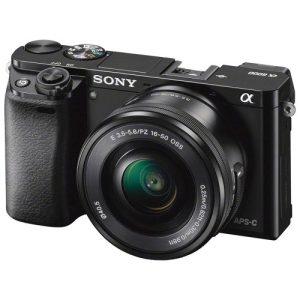
The Sony A6000 is the only camera in this review, and it earns the place with a 24.3MP APS-C sensor, 79-point phase-detection autofocus and 11 fps continuous shooting in a compact body. The kit includes the 16-50mm lens, which covers wide-angle to short telephoto, and the 3-inch LCD tilts for shooting from low or high angles. The NP-FW50 battery powers the camera for a day of moderate shooting, and the compact size means the camera is carried more often than a larger one. It suits a photographer who wants a capable mirrorless camera for travel and everyday shooting. It is the camera for travel. It travels well.
Specs
- 24.3MP APS-C sensor
- 79-point phase-detection autofocus
- 11 fps continuous shooting
- 3-inch LCD
- 16-50mm kit lens
- NP-FW50 battery
Best for: Travel and everyday shooting, where a compact mirrorless camera covers most situations on the move.
Watch out for: Check that the kit lens suits your shooting, since a wider or longer lens may suit you better for travel.
Which One Fits Your Situation
A first mirrorless camera
Choose the A6000 if this is your first mirrorless camera. The 24.3MP sensor gives good image quality, the autofocus is fast enough for children and pets, and the kit lens covers most situations. The compact size means the camera is carried often, and the price is lower than a newer model. It is the camera for a first mirrorless. It is the camera to start with.
A travel camera for holidays
Choose the A6000 if you want a camera for travel and holidays. The compact body fits in a jacket pocket or a small bag, the 16-50mm kit lens covers wide-angle to short telephoto, and the 11 fps shooting catches fast moments. The NP-FW50 battery lasts a day of moderate shooting, so carry a spare for long days. It is the camera for a holiday.
A second body for a photographer
Choose the A6000 if you already own a larger camera and want a second body for travel. The APS-C sensor gives good image quality, the autofocus tracks moving subjects, and the compact size means it is carried when the larger camera stays at home. It uses the same E-mount lenses, so your existing lenses fit. It is the camera for a second body.
A camera for street photography
Choose the A6000 if you shoot street photography. The compact body does not draw attention, the autofocus locks on fast, and the tilting LCD lets you shoot from the hip. The 11 fps burst catches the decisive moment, and the 24.3MP sensor gives room to crop. It is the camera for the street. It is the camera to carry every day.
Common Mistakes
- Buying a camera by megapixels alone, and ignoring the sensor size that matters more for image quality.
- Choosing a kit lens without checking the range, and finding it too short or too long for your shooting.
- Forgetting a spare battery, and running out of power halfway through a day of shooting on holiday.
- Using a slow memory card, and finding the buffer fills during a burst at the worst moment.
- Skipping the autofocus check, and missing shots of moving subjects on the day.
Frequently Asked Questions
Is the Sony A6000 still good in 2026?
Yes, for stills photography, since the 24.3MP APS-C sensor, the 79-point autofocus and the 11 fps shooting still suit travel, street and everyday work. Newer cameras add better video, a touchscreen and faster processors, but the A6000 covers the basics well. It suits a photographer who wants a capable camera without the cost of a newer model.
What lens comes with the Sony A6000 kit?
The kit in this review includes the 16-50mm lens, which covers wide-angle to short telephoto and folds flat for travel. It suits most situations, from landscapes to portraits, and it is the lens most buyers start with. A two-lens bundle is also listed, which adds a longer lens for wildlife and sports, so check the listing for the bundle that suits you.
How fast is the Sony A6000 autofocus?
The A6000 uses 79 phase-detection autofocus points, which lock onto a subject fast and track it as it moves across the frame. Phase detection is faster than contrast detection, since it measures the distance directly, and it suits children, pets and street scenes. Test the tracking on a moving subject if you can before buying, and check the coverage first.
How long does the Sony A6000 battery last?
The NP-FW50 battery powers the camera for a day of moderate shooting, though heavy use of the LCD and frequent bursts will drain it faster. Carry a spare battery for long days, and turn the camera off between shots to save power. A spare battery is the cheapest insurance against a missed shot, so keep one in the bag.
More from Amazon
Programs that pair well with the guide above. Offers and eligibility are set by Amazon and may change.
Free shipping on eligible items, Prime Video and more. Eligible new members can start with a free trial.
Start a Prime free trialAudiobooks and podcasts to listen to on the go. Eligible new members can start with a free trial.
Try Audible freeAd-free music streaming. Eligible new subscribers can start with a free trial.
Try Music Unlimited freeA free business account with business pricing and bulk-buying tools for work, shop or home office.
Create a business accountAs an Amazon Associate we earn from qualifying purchases.