Our Short List of 3

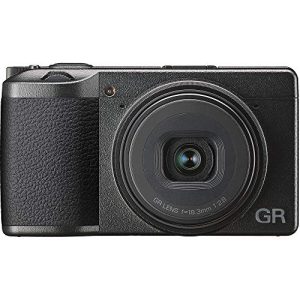
- Best for: Everyday street photography where a pocketable camera and a wide 28mm view matter more than zoom.
- 24.24MP APS-C CMOS sensor
- GR Lens 18.3mm f/2.8 (28mm equivalent), 6 elements in 4 groups
- 3.0-inch touch LCD monitor
- In-body Shake Reduction image stabilisation

- Best for: Street portraits and detail shots where a 40mm view isolates one subject from the scene.
- 24MP APS-C size CMOS sensor
- 40mm f/2.8 GR lens (35mm format equivalent)
- Premium digital compact camera

- Best for: Street and travel photography where an optical viewfinder, physical dials and a 35mm-equivalent lens matter.
- 26.1MP X-Trans CMOS 4 back-side illuminated sensor
- 23mm f/2 fixed lens (35mm equivalent)
- Advanced Hybrid Viewfinder (optical/electronic)
- X-Processor 4 quad-core imaging engine; autofocus down to -5EV
All 3 Picks at a Glance
| Product | Specs | Action |
|---|---|---|
| Ricoh GR III |
| Check price on Amazon |
| Ricoh GR IIIx |
| Check price on Amazon |
| Fujifilm X100V |
| Check price on Amazon |
Key takeaways
- Three budget rangefinder-style cameras compared: the pocketable Ricoh GR III and GR IIIx and the hybrid-viewfinder Fujifilm X100V, with specs and checks.
Shopping for a budget rangefinder camera is really a choice between three different cameras sharing one shape. A fixed-lens compact gives you a fast prime, a quiet body and nothing to decide before you shoot, but it locks you to a single focal length. An interchangeable-lens rangefinder-style body lets you swap lenses as your shooting changes, yet the body alone is only the start of the spend. A film classic costs little to buy and teaches you the fundamentals, but every frame after that carries the cost of film and developing. Pick the wrong type and its limits show up in exactly the shooting you do most.
This article is for street photographers who want a discreet camera, travellers who want one body for a whole trip, and shooters who like dials and a corner viewfinder instead of menus. The three picks below — the Ricoh GR III, the Ricoh GR IIIx and the Fujifilm X100V — were chosen from the names and specifications on their Amazon product pages.
Quick Picks
As an Amazon Associate we earn from qualifying purchases
| Product | Best for | Key spec from title |
|---|---|---|
| Ricoh GR III | Daily street shooting with a wide 28mm view | 24MP APS-C sensor, 28mm f/2.8 GR lens |
| Ricoh GR IIIx | Picking subjects out of a crowd at 40mm | 24MP APS-C sensor, 40mm f/2.8 GR lens |
| Fujifilm X100V | Street and travel with an optical viewfinder | 26.1MP sensor, 23mm f/2 fixed lens |
How to Choose
Fixed lens or interchangeable lenses
A fixed-lens camera is the simplest way into rangefinder shooting, and its single focal length is both the appeal and the limit. A 28mm-equivalent lens, like the one on the Ricoh GR III, pulls in whole street scenes, while a 40mm-equivalent lens, like the one on the Ricoh GR IIIx, sits closer to how your eye sees a scene and suits portraits and details. The 23mm f/2 on the Fujifilm X100 series gives a 35mm-equivalent view, the street focal length. Look at your own photos first: if nearly everything sits at one length, a fixed lens will feel freeing, but if your framing jumps between wide scenes and distant subjects, you need a body that takes other lenses.
What kind of viewfinder you are actually getting
The word rangefinder covers several very different ways of seeing, and the listing rarely spells out which one you are buying. A true optical rangefinder, as on a Leica M body, shows the scene through glass with frame lines around it, but those bodies sit far outside any budget. The Fujifilm X100 series uses a hybrid viewfinder that switches between an optical view and an electronic one, the closest budget-friendly equivalent. Most rangefinder-style bodies, including the Fujifilm X-E4, use an electronic viewfinder only, showing exposure and focus exactly as the sensor sees them. Some of the cheapest rangefinder-styled bodies have no viewfinder at all and rely on the rear screen, which is hard to see in bright sun.
Sensor size and the focal length you will live with
Almost every budget rangefinder-style digital camera uses an APS-C sensor, large enough for clean low-light files, and small enough to keep the body pocketable. The Fujifilm X100V pairs a 26MP APS-C sensor with its fixed 23mm f/2 lens, and the Ricoh GR III pairs a 24MP APS-C sensor with an 18.3mm f/2.8 lens, so both deliver strong files from a coat-pocket body. What matters more than megapixels is whether the focal length matches your eye: a 28mm-equivalent lens rewards photographers who step close, while a 40mm-equivalent lens rewards those who isolate subjects. If you shoot indoors or at night, favour the faster maximum aperture, since a lens that opens to f/2 gathers more light than one that opens to f/2.8.
What budget really buys, and what it leaves out
Budget in rangefinder cameras is a relative word, and the headline figure is rarely the whole spend. True digital rangefinders are not budget cameras at any level, so a realistic budget buys a rangefinder-style body or a fixed-lens compact, a used or previous-generation model, or a film classic. Check what the cheapest option leaves out: no stabilisation means shakier evening shots, no viewfinder means composing on a screen, and a body-only listing means buying a lens first. Film bodies add an ongoing cost that digital buyers never face, since every roll needs developing and scanning. Add up the body, a lens if one is not included, spare batteries and memory cards before comparing against the next camera up.
The 3 Best Options
Ricoh GR III
- Best for: Everyday street photography where a pocketable camera and a wide 28mm view matter more than zoom.
- 24.24MP APS-C CMOS sensor
- GR Lens 18.3mm f/2.8 (28mm equivalent), 6 elements in 4 groups
- 3.0-inch touch LCD monitor
- In-body Shake Reduction image stabilisation
Everyday street photography where a pocketable camera and a wide 28mm view matter more than zoom.
There is no viewfinder, so check that you are happy composing on the rear screen in bright sunlight, and confirm the listing is the standalone camera rather than a bundle with accessories.
The GR III suits street photographers who want a camera that disappears into a coat pocket and is ready before the moment passes. Its 28mm-equivalent lens takes in whole scenes, so it rewards photographers who step close rather than zoom from a distance. The APS-C sensor keeps files clean in dim light, and the in-body stabilisation helps when evenings get dark. Touch controls and snap focus keep shooting fast once the camera is set up the way you like it. It has no viewfinder, so every shot is composed on the rear screen, which takes some getting used to in bright sun.
Watch out for: There is no viewfinder, so check that you are happy composing on the rear screen in bright sunlight, and confirm the listing is the standalone camera rather than a bundle with accessories.
Ricoh GR IIIx
- Best for: Street portraits and detail shots where a 40mm view isolates one subject from the scene.
- 24MP APS-C size CMOS sensor
- 40mm f/2.8 GR lens (35mm format equivalent)
- Premium digital compact camera
Street portraits and detail shots where a 40mm view isolates one subject from the scene.
The 40mm view is tighter than the GR III’s 28mm, so check your own photos first — if most of your framing is wide, this lens will feel restrictive. Also confirm whether the listing is the standard GR IIIx or the HDF version with the built-in diffusion filter.
The GR IIIx is the same pocketable idea as the GR III, but its 40mm-equivalent lens sees the world closer to how your eye does. That makes it the better pick for portraits, details and single subjects pulled out of a busy street, where the wider GR III would include too much background. It shares the 24MP APS-C sensor, so image quality and low-light behaviour match its sibling, and the difference between the two comes down to focal length alone. If your favourite photos tend to isolate one subject, this is the GR to choose.
Watch out for: The 40mm view is tighter than the GR III’s 28mm, so check your own photos first — if most of your framing is wide, this lens will feel restrictive. Also confirm whether the listing is the standard GR IIIx or the HDF version with the built-in diffusion filter.
Fujifilm X100V
- Best for: Street and travel photography where an optical viewfinder, physical dials and a 35mm-equivalent lens matter.
- 26.1MP X-Trans CMOS 4 back-side illuminated sensor
- 23mm f/2 fixed lens (35mm equivalent)
- Advanced Hybrid Viewfinder (optical/electronic)
- X-Processor 4 quad-core imaging engine; autofocus down to -5EV
Street and travel photography where an optical viewfinder, physical dials and a 35mm-equivalent lens matter.
The X100V is discontinued, so many listings are used or renewed — check the seller and condition carefully, and confirm the listing is the new black model rather than a renewed unit before buying.
The X100V is the pick for photographers who want the classic rangefinder experience: a hybrid viewfinder that switches between an optical view and an electronic one, physical dials on the top plate, and a fast 23mm f/2 lens that sees at 35mm equivalent. Its 26.1MP sensor and film simulation colour modes give straight-out-of-camera files a finished look, and the f/2 aperture handles dim cafes and evening streets. It is larger and heavier than either Ricoh, and it is also the hardest of the three to find as a new camera, so availability shapes the decision as much as the spec sheet.
Watch out for: The X100V is discontinued, so many listings are used or renewed — check the seller and condition carefully, and confirm the listing is the new black model rather than a renewed unit before buying.
Which One Fits Your Situation
You shoot street photography almost every day
Pick the Ricoh GR III if your framing is wide, or the Ricoh GR IIIx if you pick subjects out of a crowd. The GR III’s 28mm-equivalent lens suits photographers who step close and want whole scenes in the frame, while the GR IIIx’s 40mm-equivalent lens suits those who isolate details and portraits. Both are pocketable, with no lens decisions before a shot. The trade is reach: when something happens across the street, you walk closer or miss it.
You want one camera for a whole trip
Pick the Fujifilm X100V, which pairs a versatile 35mm-equivalent lens with a hybrid viewfinder and physical dials. The optical view lets you see outside the frame lines the way classic rangefinder shooters do, while a flick of a switch gives you the electronic view with exposure and focus overlays. Film simulation colour modes and a fast f/2 prime handle dim cafes and evening streets. Before planning a trip around it, check availability, since new units are scarce.
You are learning photography and money is tight
Pick the Ricoh GR III, the simplest of the three to live with. It costs nothing per frame, so you can experiment freely, and its fixed 28mm lens removes lens decisions while you learn aperture, shutter speed and composition. Touch controls and snap focus keep shooting simple, and the pocketable body means the camera is with you when a lesson appears. Skip film for now: every roll needs developing and scanning, so a slow learner pays for the lessons twice.
You want the classic optical viewfinder experience
Pick the Fujifilm X100V, the only camera in this article with a hybrid viewfinder. The optical view shows the scene in real time with no lag and lets you see outside the frame lines, which helps street shooting, while the electronic view adds exposure and focus overlays when you want them. You also get film simulation colour modes and a fast f/2 prime. Check the listing carefully first: with new stock scarce, many offers are used or renewed units.
Common Mistakes
- Assuming every rangefinder-style body has an optical viewfinder; most use an electronic viewfinder, and only the hybrid models offer an optical view at all.
- Buying a fixed-lens camera without checking whether its focal length matches how you actually shoot, then discovering that 28mm is too wide or 40mm is too tight for your eye.
- Treating a body-only listing as a complete camera and forgetting to budget for a lens, batteries and memory cards before the first outing.
- Buying a film rangefinder for the low purchase cost while ignoring the ongoing cost of film, developing and scanning, which quickly overtakes the price of the body.
- Searching for a rangefinder and landing on laser rangefinders for golf or hunting, which share the name but are measuring devices, not cameras; always check that the listing is a camera with a sensor and a lens.
Frequently Asked Questions
What counts as a budget rangefinder camera?
A true digital rangefinder, such as a Leica M body, is never a budget camera. In practice, budget means a rangefinder-style digital camera: a fixed-lens compact such as the Ricoh GR III or the Fujifilm X100 series, an interchangeable-lens body such as the Fujifilm X-E4, or a film classic such as the Canonet QL17 GIII. All copy the rangefinder shape and dials for far less than a true digital rangefinder.
Is one fixed focal length enough for travel?
For many travellers it is, provided the focal length matches how they see. A 35mm-equivalent lens covers street scenes, food, architecture and environmental portraits, which is most of a trip, and one small camera is easy to carry everywhere. It falls short for wildlife, distant details and tight portraits, where you either crop heavily or miss the shot. If trips include those subjects, an interchangeable-lens body is the safer choice.
Do I need an optical viewfinder?
No, but you need to know what you are giving up. An optical or hybrid viewfinder shows the scene in real time with no lag and lets you see outside the frame lines, which helps street shooting. An electronic viewfinder shows exactly what the sensor sees, including exposure and focus, which helps beginners. A rear screen alone is weakest: it struggles in bright sunlight and drains the battery faster.
Should I buy a film rangefinder instead of a digital one?
Buy film if you want to slow down and learn the fundamentals, since a manual film camera makes you choose aperture, shutter speed and focus for every frame. Buy digital to practise without paying per frame, review mistakes immediately, and shoot in low light. Many photographers end up owning one of each: digital for everyday shooting, and film for weekends when the process matters as much as the result.
More from Amazon
Programs that pair well with the guide above. Offers and eligibility are set by Amazon and may change.
Free shipping on eligible items, Prime Video and more. Eligible new members can start with a free trial.
Start a Prime free trialAudiobooks and podcasts to listen to on the go. Eligible new members can start with a free trial.
Try Audible freeAd-free music streaming. Eligible new subscribers can start with a free trial.
Try Music Unlimited freeA free business account with business pricing and bulk-buying tools for work, shop or home office.
Create a business accountAs an Amazon Associate we earn from qualifying purchases.