Key takeaways
- Desert dust, heat, and long hikes punish a camera bag. These five backpacks shield your kit from sand and sun while staying light on the trail.
Desert photography asks more of a camera bag than almost any other kind of shooting. Fine sand gets into every zipper, heat builds up inside a dark pack, and the walk to a good dune can run for miles under a hard sun.

As an Amazon Associate, we earn from qualifying purchases.
Why Desert Photography Is Hard on a Camera Bag
Sand is the main enemy. Desert sand is fine enough to work its way through zipper teeth, into buckles, and under flap closures. Once inside, it grinds against lens coatings and seals every time you open the bag. A bag with a full rain cover has a real advantage here, because the cover blocks windblown grit even when the bag sits on the ground.
Heat is the second problem. A black backpack left in direct sun can get hot enough to warm the camera inside, and heat drains batteries faster while making LCD screens harder to read.
Distance is the third problem. Desert viewpoints are rarely close to the car. You may walk for hours over soft sand with a full kit, a tripod, and several liters of water. Padded straps, a waist belt, and a balanced load decide whether you still enjoy shooting when the light finally turns good.
Access matters too. Desert light changes fast, and the best moments last minutes. Side access and quick-draw openings let you pull the camera out, shoot, and put it away without opening the whole bag to the wind.
What to Look for in a Desert Camera Bag
Weather protection comes first. Look for a bag with a rain cover included, sealed zippers, or a flap that shields the main opening. In the desert, the rain cover doubles as a dust cover, so keep it on whenever the wind picks up. Even a simple plastic liner inside the camera compartment adds a useful layer of defense.
Capacity comes next. A desert bag needs room for a body, two or three lenses, spare batteries, lens cloths, and water. A pack in the 15 to 25 liter range suits most desert kits. Smaller packs force you to leave gear behind, while larger packs tempt you to carry too much weight over soft ground.
Comfort decides how far you can walk. Wide padded straps, a sternum strap, and a waist belt spread the load across your body. A ventilated back panel keeps air moving between the pack and your spine. Adjust every strap until the weight sits on your hips rather than your shoulders.
Access style shapes how you shoot. A side door lets you grab the camera while the bag stays on one shoulder, which keeps the main compartment closed against blowing sand. A rear opening is the most secure against theft and dust, but it means taking the bag off completely.
1. TARION Canvas Camera Backpack
The TARION Canvas Camera Backpack is a compact day pack with a vintage canvas look and a practical layout for desert shooting. It carries a mirrorless or DSLR body with several lenses, and its included rain cover pulls double duty as a dust shield when the wind picks up. The canvas exterior feels tough and resists scuffs from rocks and dry brush, which suits rough desert trails.
Inside, padded dividers can be moved around to fit your kit. The main compartment holds a body with a lens attached plus two or three extra lenses, and a mesh pocket takes small items like memory cards, batteries, and cloths. A laptop compartment fits a laptop up to 15 inches, which is handy if you want to back up cards at camp in the evening.
The canvas fabric is not fully waterproof on its own, so the rain cover is the real weather defense. Keep it in its pocket and pull it on whenever dust blows up.
Specs
- Capacity: compact day pack, holds one camera body with lens attached plus extra lenses
- Laptop compartment: up to 15 inches
- Material: canvas exterior with padded dividers
- Weather protection: waterproof rain cover included
- Tripod carry: side tripod compartment
- Weight: 2.65 pounds
- Dimensions: 11.02 x 5.91 x 14.96 inches
2. Amazon Basics DSLR Camera and Laptop Backpack
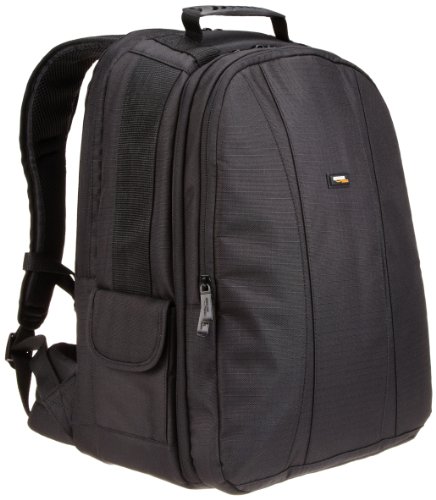
The Amazon Basics DSLR Camera and Laptop Backpack is a roomy, no-nonsense pack that holds a large kit. It fits two SLR camera bodies and three to four lenses, plus a laptop up to 17 inches, which makes it one of the most spacious bags in this guide.
The interior is fully customizable. Removable padded dividers let you shape the space around your exact kit, whether that means a body with a long telephoto attached or two smaller bodies side by side.
The polyester exterior resists water, but this bag ships without a rain cover, which is its main weakness for desert work. In a dust storm, you will want to add your own cover or slip the whole bag into a large plastic sack. This is the heaviest bag in the guide at 4.2 pounds before you load it, so pack with discipline and carry the lenses you will actually use.
Specs
- Capacity: 17 liters, holds two SLR bodies and three to four lenses
- Laptop compartment: up to 17 inches
- Material: polyester exterior with padded customizable interior
- Weather protection: water-resistant exterior, no rain cover included
- Tripod carry: exterior adjustable tripod straps
- Pockets: five, including side mesh water bottle pockets
- Weight: 4.2 pounds
3. Lowepro Fastpack PRO BP 250 AW III
The Lowepro Fastpack PRO BP 250 AW III is the most desert-ready bag in this guide. It is built around two ideas that matter out here: quick access and real weather protection. The QuickDoor side opening lets you pull the camera out while the bag hangs from one shoulder, so the main compartment stays closed against blowing sand. The included All Weather cover seals the whole pack when dust or rain blows in.
The camera compartment at the base holds a DSLR or mirrorless body with four or five lenses, including a 24-70mm f/2.8 attached. A 15-inch laptop rides in a padded sleeve, and the 300D ripstop fabric resists abrasion from rocks and thorn scrub.
At 25 liters, the Fastpack PRO is the largest bag here, and it carries that volume well.
Specs
- Capacity: 25 liters, holds one camera body with four to five lenses
- Laptop compartment: up to 15 inches
- Material: 300D ripstop fabric with molded dividers
- Weather protection: All Weather cover included, water-resistant fabric
- Access: QuickDoor side access plus top compartment
- Tripod carry: side tripod mount
- Model: LP37331-PWW
4. Manfrotto Advanced Befree III Backpack

The Manfrotto Advanced Befree III Backpack is a slim, well-organized pack built for photographers who move fast and travel light. Its rear opening is the standout feature for desert work: the camera compartment opens from the back, against your body, so the zippers face away from windblown sand while you walk. That small design choice keeps grit out of the gear compartment on dusty trails.
Inside, the M-Guard protection system uses padded dividers to shield your kit, and the 60/40 split gives most of the space to camera gear and the rest to personal items. The lower compartment holds a DSLR or mirrorless body with a 70-200mm f/2.8 lens attached, plus up to six extra lenses and accessories.
One honest note: our listing check found this bag through a Ubuy mirror of the US Amazon store rather than a direct Amazon product page, so confirm the live listing and stock before you buy.
Specs
- Capacity: 15 liters, holds one camera body with 70-200mm f/2.8 attached plus up to six extra lenses
- Laptop compartment: up to 15 inches, plus tablet up to 9.7 inches
- Material: polyester with M-Guard padded protection system
- Access: rear opening camera compartment, 60/40 gear and personal split
- Tripod carry: side tripod attachment
- Weight: 2.68 pounds
- Model: MB-MA3-BP-BF
5. Brevite The Jumper Photo Backpack 18L

The Brevite The Jumper Photo Backpack 18L is a compact, understated pack that looks like an everyday daypack and works like a camera bag. That low profile is useful in the desert, where a bag that screams expensive camera gear can draw unwanted attention at a trailhead. The Jumper blends in, and its light weight makes long walks easier.
At 18 liters and 1.8 pounds, the Jumper is the lightest bag in this guide, and it carries a full-frame DSLR with up to three lenses plus a laptop up to 15 inches. The camera insert uses movable dividers, so you can shape the space around a body with a wide zoom attached or a compact mirrorless kit with several small primes. The 600D polyester exterior is tough and water-resistant, and the bag wipes clean easily after a dusty day.
The Jumper is weather-resistant rather than fully weatherproof, so it needs help in a real dust storm: a light rain cover or a plastic liner inside the camera compartment closes that gap.
Specs
- Capacity: 18 liters, holds one full-frame DSLR with up to three lenses
- Laptop compartment: up to 15 inches
- Material: 600D polyester exterior, water-resistant
- Access: side access zipper plus J-zip front pocket
- Weight: 1.8 pounds
- Dimensions: 17 x 11 x 5.5 inches
- Model: JPR-PNK-001
How the Five Bags Compare
The Lowepro Fastpack PRO BP 250 AW III leads on weather protection. Its All Weather cover and QuickDoor access are built for exactly the conditions desert shooting creates: wind, dust, and fast-changing light.
The Manfrotto Advanced Befree III leads on security and organization. The rear opening keeps the gear compartment shielded while you walk, and the M-Guard dividers protect each lens. It is the best pick for a photographer who values a slim, fast pack and a one-body kit.
The Brevite Jumper leads on weight and discretion. At 1.8 pounds, it is the lightest pack in the guide, and its plain look draws no attention. It suits a short hike at dawn or dusk with a compact kit.
Desert Shooting Tips for Your Bag
Keep the zips closed. Most sand gets in during the moments when the bag hangs open while you change a lens. Open the bag, make the swap, and close it again. Do not leave the main compartment open while you wait for light.
Brush the zippers clean at the end of each day. A soft brush clears grit from zipper teeth before it wears them down.
Carry water outside the camera compartment. A leaking bottle can ruin a camera faster than any dust storm, so use the side pockets and keep bottles upright.
Use the rain cover as a dust cover. Pull it on before a dust storm arrives, not after. Windblown sand can arrive fast, and a covered bag shrugs it off.
Which Bag to Choose
For most desert photographers, the Lowepro Fastpack PRO BP 250 AW III is the best single pick: its All Weather cover, QuickDoor access, and 25-liter capacity cover the real problems of desert shooting. Long-distance hikers with a compact kit should choose the Brevite Jumper. Two-body shooters should choose the Amazon Basics pack and add a rain cover of their own. Fans of a slim pack with rear access should choose the Manfrotto Advanced Befree III, after confirming the live listing and stock. For a light day pack with a rain cover included, choose the TARION canvas backpack. No bag is fully dust-proof, so keep zips closed, brush them clean each evening, and cover the bag before the wind picks up.
Is a regular camera backpack good enough for the desert?
A regular camera backpack can work for a short desert visit, but it needs help. Without a rain cover or sealed zippers, fine sand gets into the main compartment on the first windy day. Add a cover, keep the zips closed, and brush the zippers clean each evening, and a normal pack will serve you well for a few days.
How do I keep sand out of my camera bag?
Keep the bag closed whenever you are not actively swapping gear, and use the rain cover as a dust cover in wind. Brush zipper teeth clean at the end of each day so grit does not wear them down.
How much water should I carry with my camera bag?
Carry at least one full bottle in a side pocket, and more if the hike runs longer than two hours. Desert heat drains your energy fast, and a camera bag full of gear leaves little room for extra bottles. A separate hydration pack is worth it on long hikes, because it keeps water away from your camera gear.
Can I use a camera bag without a rain cover in the desert?
You can, but you should add your own protection. A large plastic sack or a lightweight dry bag over the pack works well in a dust storm, and a plastic liner inside the camera compartment adds a second layer of defense.
More from Amazon
Programs that pair well with the guide above. Offers and eligibility are set by Amazon and may change.
Free shipping on eligible items, Prime Video and more. Eligible new members can start with a free trial.
Start a Prime free trialAudiobooks and podcasts to listen to on the go. Eligible new members can start with a free trial.
Try Audible freeAd-free music streaming. Eligible new subscribers can start with a free trial.
Try Music Unlimited freeA free business account with business pricing and bulk-buying tools for work, shop or home office.
Create a business accountAs an Amazon Associate we earn from qualifying purchases.