Our Short List of 3

- 40.2MP APS-C X-Trans CMOS 5 HR sensor; 7-stop in-body stabilisation; 3-way tilting LCD; 6.2K video; body only, lens sold separately.

- 40.2MP APS-C X-Trans CMOS 5 HR sensor; 7-stop in-body stabilisation; 5.76M-dot electronic viewfinder; 8K video; model 16757045; body only.

- 20.9MP DX-format APS-C CMOS sensor; vari-angle touchscreen; 4K video; no viewfinder; no in-body stabilisation; body only, lens sold separately.
All 4 Picks at a Glance
| Product | Specs | Action |
|---|---|---|
| 1. Fujifilm X-T5 |
| Check price on Amazon |
| 2. Fujifilm X-H2 |
| Check price on Amazon |
| 4. Nikon Z30 |
| Check price on Amazon |
 5. Sony ZV-1 |
| Check price on Amazon |
Key takeaways
- Five cameras for yellow saxifrage photography, from a 40MP APS-C body to a pocket compact, with field notes for wet mountain rocks and streams.
Yellow saxifrage is a small mountain plant that rewards a slow walk and a careful eye. It grows low beside mountain streams and on wet rocks, where its bright yellow flowers open in loose clusters above neat rosettes of fleshy leaves. The plant is Saxifraga aizoides, a member of the Saxifragaceae family, and it favours ground that stays damp through the growing season.
This guide picks five cameras that suit that kind of work. The subject is low, the ground is often wet, and the flowers are small enough that detail matters more than reach. A camera for yellow saxifrage needs good close focus, reliable autofocus on a small target, and controls that stay usable when your hands are cold and damp.
As an Amazon Associate, we earn from qualifying purchases.
Meeting Yellow Saxifrage in the Mountains
Yellow saxifrage asks for patience before it asks for anything else. Move slowly and keep to the path wherever a path exists. Wet rock can be treacherous underfoot, and a colony is easily damaged by a careless step, so look before you kneel. Do not pick the flowers. A photograph is the right way to take this plant home.
The flowers are small, usually no wider than a fingernail, with five yellow petals that open flat around a centre of yellow-green. The leaves are narrow and fleshy, often tinged with red at the tips, and they form low mats that hug the rock. You cannot stand above the plant and expect a strong image. You need to get down to its level, kneeling on damp ground or bracing the camera on a rock at flower height. A tilting screen helps here, because it lets you frame without pressing your face into wet moss.
Yellow Saxifrage Is Not Golden-Saxifrage
This distinction matters, because the two plants share a family name and a yellow flower, and they are easy to confuse. Yellow saxifrage is Saxifraga aizoides. Golden-saxifrage is a different genus, Chrysosplenium, within the same family, Saxifragaceae. Yellow saxifrage is a low mountain plant with bright yellow flowers, each with five clear petals, growing beside streams and on wet rocks. Golden-saxifrage is a low creeping plant of damp shade, with yellow-green flowers that are smaller and less openly petalled, set among rounded leaves.
Golden-saxifrage was covered in an earlier batch of this series, in a different batch from this one. Yellow saxifrage wants open mountain ground, bright light, and water moving over rock. Golden-saxifrage wants shade, still damp, and leaf litter under trees. Check the petals first. Five bright yellow petals, open and flat, point to yellow saxifrage. A tight cluster of yellow-green flowers with no obvious petals points to golden-saxifrage. Narrow fleshy leaves point to yellow saxifrage, while rounded leaves on a creeping stem point to golden-saxifrage.
Burnet-saxifrage is not part of this comparison at all. It shares only the name, and it belongs to a different family, Apiaceae, the carrot family. It is a taller plant of dry grassland with white flowers, and it has nothing to do with the wet mountain habitat of yellow saxifrage. Do not use burnet-saxifrage as a point of comparison, because the shared name will mislead you. There is also no delivered generic article for saxifrage as a whole in this series.
What to Look for in a Camera for Yellow Saxifrage
Close focus comes first. Every interchangeable-lens body in this guide needs a close-focusing lens for tight yellow saxifrage work, and that is true no matter how good the body is. A body alone cannot focus close. You need a macro lens, or a zoom with a short minimum focus distance, or close-up accessories that let a normal lens work nearer to its subject. Budget for that lens as part of the camera, and test the combination before you walk far with it.
1. Fujifilm X-T5
- 40.2MP APS-C X-Trans CMOS 5 HR sensor; 7-stop in-body stabilisation; 3-way tilting LCD; 6.2K video; body only, lens sold separately.
The Fujifilm X-T5 is the most capable camera here for a photographer who wants the finest detail from a yellow saxifrage colony. Its 40.2 megapixel APS-C sensor records fine petal texture, and its in-body stabilisation steadies the sensor by up to seven stops. Its three-way tilting screen moves into positions that suit low flowers without forcing you to lie flat on wet ground.
The honest trade-off is that the X-T5 is a body only in the listing used here, so you must add a close-focusing lens before it can photograph yellow saxifrage tightly. That lens is an added cost and an added weight. The autofocus can hunt on a small yellow target, so use a small single focus point on the edge of a petal. Battery life is fair, so carry a spare.
2. Fujifilm X-H2
- 40.2MP APS-C X-Trans CMOS 5 HR sensor; 7-stop in-body stabilisation; 5.76M-dot electronic viewfinder; 8K video; model 16757045; body only.
The Fujifilm X-H2 shares the 40.2 megapixel sensor of the X-T5, and it adds a deeper grip, a higher-resolution electronic viewfinder, and 8K video. For yellow saxifrage, the important parts are the sensor, the stabilisation, and the handling. The deeper grip gives a secure hold when your hands are cold or damp, and the viewfinder makes it easier to check fine focus on a small flower in bright mountain light. The dual card slots give you a backup for your files.
The honest trade-off is the same as with the X-T5. The X-H2 is a body only in the listing used here, so it needs a close-focusing lens for tight yellow saxifrage work. Add a macro lens to your plan, and allow for its weight. A further caution applies to this listing, model 16757045. At the time of checking, the Amazon listing was supplied by third-party sellers rather than by Amazon itself, so check the seller and the stock status carefully before you order.
3. Sony ZV-E10 II Kit
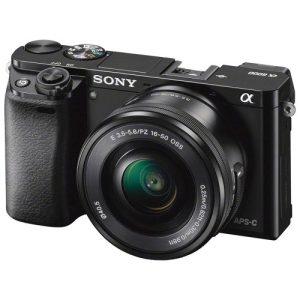
The Sony ZV-E10 II kit is the lightest interchangeable-lens camera in this guide, and its fully articulating screen makes it one of the easiest to use at ground level. You can flip the screen out and frame a low colony without kneeling in a stream, and the touch autofocus lets you tap a flower on the screen and let the camera hold focus there. The 26 megapixel APS-C sensor gives clean files with good colour, and the kit lens, an E PZ 16-50mm f/3.5-5.6 OSS II zoom, is small enough to carry all day.
The honest trade-offs need to be stated in full. This camera has no viewfinder, so in bright sun you must rely on the rear screen. It also has no in-body stabilisation, so you must rely on the lens stabilisation, a faster shutter speed, or a solid rest. The kit lens is not a macro lens, so for tight yellow saxifrage work you will want a close-focusing lens or close-up accessories as well.
Specs
- 26MP APS-C Exmor R CMOS sensor; E PZ 16-50mm f/3.5-5.6 OSS II kit lens; fully articulating touchscreen; no viewfinder; no in-body stabilisation; 4K video.
4. Nikon Z30
- 20.9MP DX-format APS-C CMOS sensor; vari-angle touchscreen; 4K video; no viewfinder; no in-body stabilisation; body only, lens sold separately.
The Nikon Z30 is a compact and friendly camera that suits a photographer who is new to mountain flowers or who wants a simple body that gets out of the way. Its 20.9 megapixel APS-C sensor gives clean, natural colour, and its vari-angle screen flips forward and up for low work beside a stream. The autofocus is quick on a clear target, and the camera is light enough to carry on a long walk. The Z mount gives access to Nikon lenses, including close-focusing zooms and macro lenses that suit yellow saxifrage.
The honest trade-offs mirror those of the Sony above. This camera has no viewfinder, so bright sun can make the rear screen hard to read, and it has no in-body stabilisation, so you must rely on lens stabilisation, a faster shutter speed, or a solid rest. The 20.9 megapixel sensor gives less room to crop than the 40 megapixel Fujifilm bodies. The body is sold without a lens, so you must add a close-focusing lens.
5. Sony ZV-1
- 20.1MP 1-inch Exmor RS CMOS sensor; fixed 24-70mm f/1.8-2.8 ZEISS lens; flip-out touchscreen; 4K video; 294 g; no viewfinder.
The Sony ZV-1 is the pocket camera in this guide, and it earns its place by being ready when the other cameras are still in your pack. Its 20.1 megapixel 1-inch sensor is larger than a phone sensor, and its fixed 24-70mm f/1.8-2.8 ZEISS lens focuses close enough for a flower portrait without changing lenses or carrying extra glass.
The honest trade-offs are real, and they follow from the small size. The fixed lens cannot be changed, so you cannot fit a true macro lens for the tightest detail, and the 1-inch sensor gives less room to crop than the APS-C bodies above. There is no viewfinder, and the small battery will not last a long day without a spare. Keep it in a dry pocket when the rain begins.
How the Five Compare
The two Fujifilm bodies lead on detail. Both use the same 40.2 megapixel sensor, both have in-body stabilisation, and both have viewfinders that help in bright light. Choose the X-T5 if you prefer classic dials and a tilting screen, and choose the X-H2 if you prefer a deeper grip and dual card slots. Both need a close-focusing lens.
Field Notes for a Mountain Stream Morning
Begin with the walk, not with the camera. Check the weather, tell someone where you are going, and carry water, a warm layer, and a dry bag for the camera. Wear boots with good grip, because wet rock beside a stream is slippery, and keep to the path where one exists.
Set the camera before you kneel. Choose aperture priority and a middle aperture, around f/5.6 to f/8 on an APS-C body. Keep the shutter speed fast enough to freeze wind movement, at least 1/250 second when the flowers are moving. Use a single focus point on the nearest petal, and take a short burst. Brace the camera on a rock, photograph the colony as a whole first, then a single flower, then a detail of the leaves. Keep your hands off the plant, and do not pick a flower.
Frequently Asked Questions
How do I tell yellow saxifrage from golden-saxifrage?
Look at the petals and the leaves first. Yellow saxifrage, Saxifraga aizoides, has small yellow five-petalled flowers that open flat, on a low mountain plant with narrow fleshy leaves, growing beside streams and on wet rocks. Golden-saxifrage, a Chrysosplenium species in the same family, has smaller yellow-green flowers with no obvious petals, on a low creeping plant with rounded leaves, growing in damp shade. Open ground with moving water points to yellow saxifrage, while shaded damp points to golden-saxifrage.
Which camera in this guide is best for tight close-ups of yellow saxifrage?
The Fujifilm X-T5 and the Fujifilm X-H2 give the tightest close-ups, because their 40.2 megapixel sensors let you crop deep into a flower cluster, and their in-body stabilisation helps at slow shutter speeds in shade. Both need a close-focusing lens, such as a macro lens. The Sony ZV-E10 II kit and the Nikon Z30 can also give good close-ups with a close-focusing lens, yet they have lower resolution and no in-body stabilisation.
Do I need a macro lens for yellow saxifrage photography?
Yes, for tight work with any interchangeable-lens body in this guide. Every interchangeable-lens body here needs a close-focusing lens for tight yellow saxifrage work, because a body alone cannot focus close enough to fill the frame with a flower only a few millimetres wide. A macro lens is the best choice, yet a zoom with a short minimum focus distance can also work. The Sony ZV-1 is the exception, because its fixed lens focuses close enough for a flower portrait.
Where should I look for yellow saxifrage, and how do I photograph it without harming it?
Look beside mountain streams, on wet rocks, and in flushes where water seeps across upland ground, in places where the soil stays damp. Stay on paths, move slowly on wet rock, and do not pick the flowers or clear moss. Kneel on a dry mat rather than on the colony, brace the camera on a rock, and use a tilting screen to frame at flower height. Photograph the colony as a whole, then a single flower, then a detail of the leaves.
More from Amazon
Programs that pair well with the guide above. Offers and eligibility are set by Amazon and may change.
Free shipping on eligible items, Prime Video and more. Eligible new members can start with a free trial.
Start a Prime free trialAudiobooks and podcasts to listen to on the go. Eligible new members can start with a free trial.
Try Audible freeAd-free music streaming. Eligible new subscribers can start with a free trial.
Try Music Unlimited freeA free business account with business pricing and bulk-buying tools for work, shop or home office.
Create a business accountAs an Amazon Associate we earn from qualifying purchases.