Key takeaways
- Office 365 bundled, eliminating a recurring subscription cost
- 128GB storage is above the entry-tier average for this price
- Storage ceiling forces cloud reliance or an external drive within a year
A college laptop is a four-year commitment disguised as a $250 purchase. The real question is not which machine has the flashiest spec sheet, but which one will still feel adequate during finals of senior year. Students need something that survives all-day battery anxiety, opens documents without grinding to a halt, and does not force a forced upgrade after a single semester of use. The budget tier is where most college purchases land, and it is also where the gap between a good choice and a frustrating one is widest.
What separates the winners from the losers at this price level is almost never raw processing power. It is included software, usable memory, storage you can grow into, and whether the machine handles the specific workload of a student rather than the workload of a marketing department’s spec table. Owner feedback on these budget machines is consistent: the ones that disappoint do so because of 4GB RAM ceilings, locked storage, or missing productivity tools that end up costing more to add later than the initial savings.
Our top picks




As an Amazon Associate we earn from qualifying purchases at no extra cost to you.
Quick Picks
| Product | Best for | Price |
|---|---|---|
| HP Essential Laptop 2026 | Document-first students on a tight budget | $319.98 |
| HP 14″ Ultra-Light Student Laptop | Students who prioritize battery life and portability | $224.99 |
| Windows 11 i3 15.6″ College Laptop | Students who want a bigger screen at a low price | $329.99 |
| HP 14″ N150 Creator Laptop | Students doing light creative work | $359.99 |
| HP OmniBook 3 17.3″ | Students needing a large display and generous storage | $459.99 |
| HP Stream 14″ AI Copilot | Research-heavy students who need maximum storage | $319 |
| HP Chromebook 14 | Students fully committed to Google Workspace | $224.95 |
| Lenovo Essential 15.6″ FHD | Students who value display quality at a mid-range price | $399.98 |
How We Picked
We narrowed this list by weighing three factors that owner reviews consistently surface as deal-breakers or deal-makers: whether included software like Office 365 eliminates a recurring cost, whether the RAM and storage combination is sufficient for a full degree program rather than just the first semester, and whether the form factor suits the physical demands of carrying a laptop to every class. Price-to-longevity ratio mattered more than price alone—a $225 machine that becomes unusable by year two is more expensive than a $360 machine that still handles your workload at graduation.
The 8 Best Laptops For College Students in 2026
HP Essential Laptop 2026
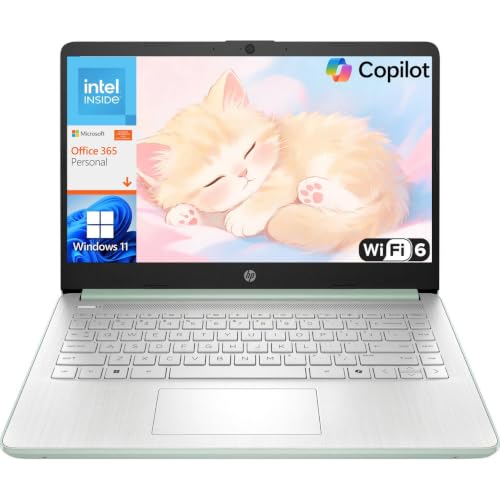
Built for students whose coursework lives almost entirely in a web browser and Microsoft Office. The inclusion of Office 365 at no extra cost removes a common hidden expense, and the 128GB of onboard storage handles typical document, slide, and photo loads without pushing you immediately toward the cloud. Intel processors in this tier are adequate for writing papers, attending video lectures, and running light multitasking without noticeable lag. The trade-off is that 128GB fills up faster than expected once you start saving reference PDFs, semester projects, and a few personal files.
- Office 365 bundled, eliminating a recurring subscription cost
- 128GB storage is above the entry-tier average for this price
- Storage ceiling forces cloud reliance or an external drive within a year
Skip this if your major demands software beyond the Microsoft suite—engineering, design, or programming students will hit its ceiling by sophomore year.
HP 14″ Ultra-Light Student Laptop
If all-day battery life is your non-negotiable, this machine delivers up to 12 hours of use on a single charge, backed by fast-charge technology that can get you through a long lecture day from a short top-up. The Celeron N4500 and 4GB RAM combination is genuinely limiting for anyone who keeps more than three or four tabs open, but for a student whose routine is writing, researching, and attending video calls, it holds up. Wi-Fi 6 connectivity and a built-in webcam round out the practical essentials. The 64GB eMMC storage, expanded by the included 64GB SD card, totals 128GB—adequate for the browser-centric student but cramped for anyone accumulating media files.
- 12-hour battery with fast charge is the best-in-class endurance here
- Wi-Fi 6 future-proofs connectivity for the lifespan of the device
- 4GB RAM on a Celeron processor restricts multitasking severely
Skip this if you need to run anything heavier than a browser and Word simultaneously or if your coursework requires specialized software.
Windows 11 i3 15.6″ College Laptop
This machine gives students a 15.6-inch display in the sub-$330 range, which is its primary appeal. A bigger screen makes reading research papers, splitting windows for note-taking, and editing spreadsheets noticeably more comfortable than on 14-inch alternatives. The i3 processor provides a real step up from Celeron-class chips in this bracket, handling multitasking more gracefully when you have multiple applications open at once. However, published specifications are sparse—exact RAM, storage type, and display resolution details are thin, making it difficult to predict long-term usability from spec sheets alone.
- 15.6-inch screen at this price reduces eye strain during long study sessions
- i3 processor outperforms Celeron alternatives for concurrent applications
- Undocumented RAM and storage details create purchase risk
Skip this if you need a compact, lightweight machine you can carry across campus all day or if you want certainty about internal specs before buying.
HP 14″ N150 Creator Laptop
Positioned for students who dabble in light photo editing, simple video projects, or design coursework alongside standard academic work. Eight gigabytes of RAM is the practical minimum for running creative applications alongside a browser, and the Intel N150 processor handles mixed workloads without constant throttling. One year of Office 365 and Copilot AI are included, adding real utility value that compounds over a degree. The 128GB UFS storage, while fast, is the obvious weakness: once you start accumulating project files, you will need external storage almost immediately.
- 8GB RAM and Copilot AI inclusion make it genuinely capable for mixed use
- N150 processor delivers competitive performance relative to i3 alternatives at lower cost
- 128GB UFS storage is the tightest bottleneck for a creator-focused machine
Skip this if your creative needs are serious—photography students editing large RAW files or video students cutting multi-track timelines will want a higher-tier machine.
HP OmniBook 3 17.3″
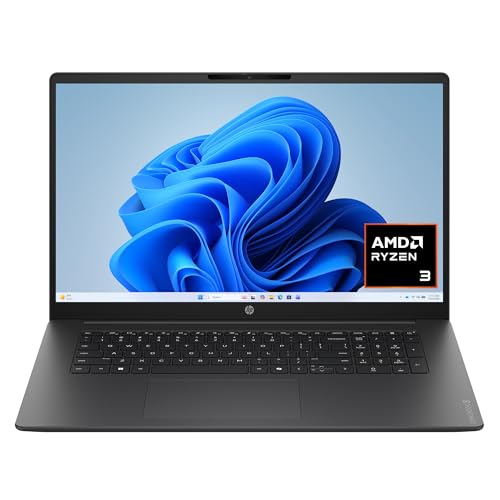
The most capable machine on this list for students who need real workspace on screen and enough storage to avoid file-management anxiety. A 512GB SSD paired with a full HD display and AMD Radeon 610M graphics makes it suitable for light video editing, multiple virtual desktops, and running heavier software like MATLAB or basic CAD. The Ryzen 3 processor handles multitasking comfortably with 8GB of RAM, and 512GB is the only storage figure here that lasts an entire degree without expansion.
- 512GB SSD with dedicated Radeon graphics is unmatched on this list for capability
- 17.3-inch FHD display provides the most screen area for split-screen workflows
- Physical size and weight make daily commuting between classes impractical
Skip this one if you carry your laptop to every lecture; it is better suited to a dorm desk where it lives permanently.
HP Stream 14″ AI Copilot
This stands out for one specific reason: total storage capacity of 1.12TB at roughly $319, achieved by bundling a 1TB docking station with the laptop’s 128GB UFS drive. For students in research-heavy programs who accumulate large libraries of PDFs, datasets, and reference materials, this is a genuinely unusual value. Copilot AI and one year of Office 365 are included, adding practical software utility. The 4GB RAM ceiling is the critical limitation—multitasking is restricted, and the 720p webcam falls below what most students now expect for video calls.
- 1.12TB combined storage is the most on this list by a wide margin
- Copilot AI and Office 365 bundled at the lowest price tier
- 4GB RAM restricts this to single-application workflows
Skip this if you need to run applications that demand more than light browser-based work, or if video call quality matters for your coursework.
HP Chromebook 14
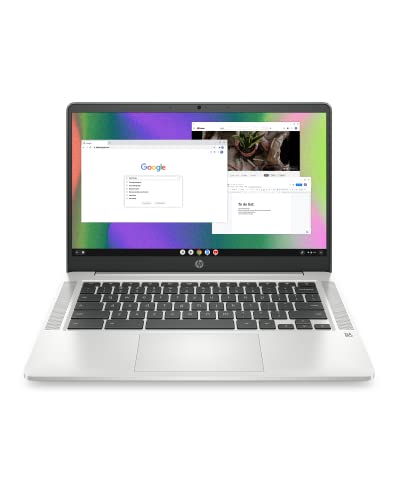
At $224.95, this remains the cheapest entry on the list, and for students whose entire academic life exists within Google Workspace—Docs, Drive, Sheets—it delivers exactly what you need with minimal friction. The long battery life and thin, lightweight design make it easy to carry to every class, and Chrome OS boots quickly with almost no maintenance. The Intel Celeron N4120 and 4GB RAM are sufficient for browser-based tasks but will struggle with anything native or resource-heavy. The 64GB eMMC storage is only adequate if you live entirely in the cloud.
- Lowest price combined with long battery life and minimal maintenance
- Thin, lightweight form factor is the easiest to carry all day
- Chrome OS blocks any Windows-native software your courses might require
Skip this if your courses require Windows applications, or if you need to run anything beyond what Chrome OS supports natively.
Lenovo Essential 15.6″ FHD
This Lenovo offers a full HD panel at a mid-range price, which matters for students who spend long hours reading, writing, and working with spreadsheets. Screen resolution improves daily comfort in ways that spec sheets rarely capture, and owner feedback consistently highlights the display as the standout feature on Lenovo’s budget machines. Intel processors in this class handle standard academic workloads reliably, and 128GB of storage matches the entry-tier expectation. The limitation is that published details beyond processor and storage are thin—exact RAM configuration and battery specs are not clearly stated.
- 15.6-inch FHD display is the clearest screen at this price tier
- Lenovo’s build reputation suggests better long-term durability than no-name alternatives
- Incomplete specification documentation makes value assessment difficult
Skip this if you need a lightweight, portable machine or if you want full certainty about component specifications before purchasing.
Buying Guide
RAM: The Real Multitasking Ceiling
Four gigabytes of RAM is no longer sufficient for a working student. Browser tabs alone consume 2-3GB with a dozen pages open, leaving almost nothing for Word, a video call, or a PDF reader running simultaneously. Eight gigabytes is the honest minimum for comfort across four years. If a machine lists 4GB, assume you will feel the constraint within weeks—not years. The HP N150 and OmniBook 3 get this right; the Stream, Chromebook, and Ultra-Light do not.
Storage: UFS vs. SSD vs. eMMC
Not all storage is equal. UFS drives, found in the HP N150 and Stream, read faster than eMMC but are non-expandable inside the chassis. Traditional SSDs like the 512GB in the OmniBook 3 offer both speed and headroom. eMMC at 64GB, as in the Ultra-Light and Chromebook, is the slowest tier and fills up fastest. For a college student, 128GB is the functional floor for a full degree; anything less guarantees an external drive or cloud subscription within the first year.
Battery Life and Charging: The Practical Campus Test
A college day can involve six or more hours away from an outlet. The HP Ultra-Light’s stated 12-hour life is the benchmark here, and the Chromebook’s long battery life matches that spirit. Fast-charge capability—featured on the Ultra-Light—means a 20-minute top-up in the library can carry you through another full class block. If a machine does not clearly state battery duration and charging behavior, assume it will not last a full day without carrying a charger.
Our Verdict
The HP OmniBook 3 17.3-inch is the overall best laptop for college students who need a capable, long-lasting machine and primarily use it at a desk. Its 512GB SSD, 8GB RAM, and FHD display make it the only entry on this list that does not compromise on any axis. For budget buyers, the HP 14″ Ultra-Light Student Laptop at $224.99 wins on battery life and portability, provided your workload stays light and browser-based. The HP Stream 14″ AI Copilot wins a specific scenario: if you are a research student who needs maximum local storage and can accept 4GB RAM as a constraint, its 1.12TB combined capacity at $319 is unmatched.
FAQ
Is 128GB of storage enough for college?
For four years of documents, slides, and reference PDFs, yes—just barely. Once you add personal photos, a few apps, or any media files, 128GB feels tight by junior year. Students in research or creative programs should target 256GB minimum or plan on cloud storage from day one.
Do I need a dedicated graphics card for college?
Only if your major involves 3D rendering, video editing, or CAD software. For writing, browsing, spreadsheets, and even light photo editing in applications like Canva or basic Photoshop, integrated graphics—like the Radeon 610M in the OmniBook—are sufficient.
Is Office 365 worth paying extra for if bundled?
Yes. A standalone Office 365 Personal subscription runs roughly $70 per year. Machines that bundle one year of it at no premium—like the HP Essential, N150, and Stream—save you that cost outright, which is often the real value that justifies choosing them over cheaper alternatives.
Can I use a Chromebook for every college major?
No. Engineering, computer science, graphic design, and any program using Windows-native software like SolidWorks, AutoCAD, or Adobe Creative Suite will not run properly on Chrome OS. Humanities, social sciences, and business students who rely on Google Docs and browser-based tools can function well on a Chromebook for their entire degree.