Our Top Picks
 Canon EOS R50 Mirrorless Camera RF-S18-45mm F4.5-6.3 is2.71 x 4.58 x 3.37 Inches1 poundsCheck on Amazon
Cocksfoot is one of those grasses you walk past a hundred times before you really see it. In a summer meadow it forms rough, grey-green tussocks, and its flower heads lean to one side like a hand held flat against the wind. Photographing it well takes more patience than gear, but the right camera helps: you want quick autofocus for a breeze that never sits still, enough resolution to hold the fine detail of the spikelets, and a light body for a long walk.
This guide picks five cameras that suit cocksfoot photography, from a light APS-C body you can carry all morning to a high-resolution full-frame body for large prints. Every camera here is an interchangeable-lens body, which means you will also need a close-focusing lens before any of them is ready for tight work on a single flower head. The kit lenses bundled with two of these picks focus close enough for whole tussocks, but a dedicated macro lens will do far better on single spikelets.
As an Amazon Associate, we earn from qualifying purchases.
Getting to Know Cocksfoot
Cocksfoot, Dactylis glomerata, belongs to the grass family Poaceae, and it is one of the most common grasses in meadows, hay fields, hedgerows and roadside verges. It grows as a coarse perennial tussock, with broad, rough leaves that fold along the midrib and feel harsh to the touch. In early summer it sends up stiff stems topped by flower heads in which the spikelets cluster on one side of each branch, giving the whole head a lopsided look that is easy to recognise once you have seen it.
That one-sided head is the plant’s signature, and it is also what makes it a rewarding subject. In low morning light the spikelets catch the sun and turn a pale green-gold, while the leaves fall into deep shadow behind them.
Cocksfoot is a plant to photograph from the path, not to pick. Stay on the mown edge or the field margin, keep your feet on firm ground, and leave the tussocks standing for the next walker.
Cocksfoot Is Not Timothy
Cocksfoot and timothy are easy to confuse at a glance, because both are coarse meadow grasses in the same family, Poaceae, and both flower in early summer. They belong to different genera, though, and once you know what to look for the two are simple to tell apart. Timothy, Phleum pratense, was covered in an earlier guide in this series, and it carries a dense, cylindrical flower head that looks like a slim green bottle brush. Cocksfoot never does that. Its flower head is open and branched, with the spikelets bunched on one side of each branch, so the whole head leans and looks untidy beside the neat, upright spike of timothy.
The leaves differ too. Timothy has smooth, flat leaves and a soft, even green colour. Cocksfoot has rough, grey-green leaves that fold sharply along the midrib, and the whole tussock looks coarser and more ragged. Timothy grows in loose, even swards, while cocksfoot forms distinct, bulky tussocks that stand out from the surrounding grass.
For photography the difference matters because the two grasses ask for different compositions. Timothy suits a straight, centred frame that shows off the tidy spike. Cocksfoot suits a looser frame, with the leaning head set against a soft background of other grasses and the light coming in from the side.
What to Look for in a Camera for Cocksfoot Photography
Autofocus speed comes first. A meadow is never still, and a flower head that sways in the wind will drift in and out of focus between frames. A camera with fast, reliable subject detection and a burst rate of at least ten frames per second will give you more keepers than a slow body with a bigger sensor.
Resolution comes second. Cocksfoot spikelets are small, and a high-resolution sensor lets you crop into a single head without the image falling apart. A 24-megapixel sensor is plenty for online use and for prints up to a modest size, and the lighter files will make your editing sessions far shorter.
Weight comes third, and it matters more than most buyers expect. A meadow morning means walking, kneeling and waiting, and a heavy body with a heavy lens will tire your arms before the light turns good. A body under 500 grams with a compact lens is a joy to carry along a field edge.
Weather sealing is worth having, because meadows are damp in the morning. Remember the lens: every body in this guide needs a close-focusing lens for tight cocksfoot work, and the lens you pair with the body will shape your images more than the body itself.
1. Canon EOS R10

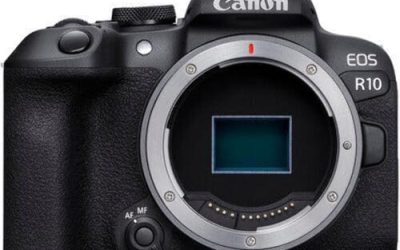
The Canon EOS R10 is the lightest body in this guide, and the easiest to carry along a field edge for a full morning. Its 24.2-megapixel APS-C sensor and DIGIC X processor deliver clean files with Canon’s warm, natural colour, and its Dual Pixel CMOS AF II system locks onto small subjects quickly, which is exactly what a swaying flower head demands. A burst rate of 15 frames per second with the mechanical shutter gives you plenty of chances to catch a spikelet at the still point of its swing.
The R10 is a body-only camera, so you will need to add a lens, and that is where the honest trade-offs begin. It has no in-body stabilisation, so a lens without stabilisation will leave you leaning on faster shutter speeds in dim light. Its LP-E17 battery is small, and a long morning in a meadow will drain it, so carry a spare. The single card slot means you cannot write a backup copy in the camera.
For cocksfoot, pair the R10 with a short telephoto or a macro lens that focuses close.
Specs
- 24.2MP APS-C CMOS sensor; DIGIC X processor; Dual Pixel CMOS AF II; 15 fps mechanical shutter; 4K 60p video; model 5331C002; body only; around 429 g with battery and card; no in-body stabilisation.
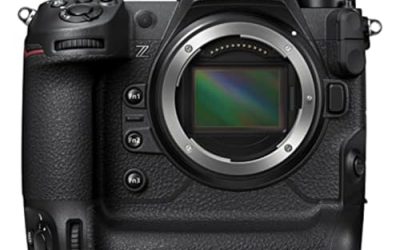
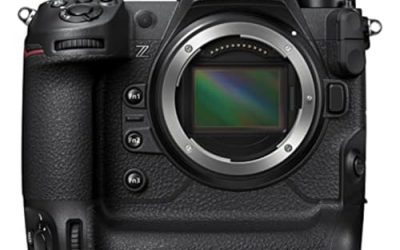
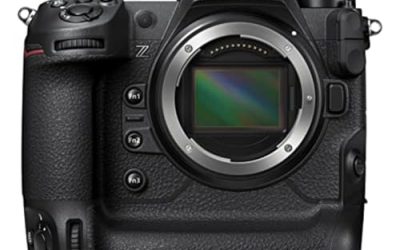
2. Nikon Z7 II

The Nikon Z7 II is the resolution pick of this guide, and the camera to choose if you want to print cocksfoot images large or crop hard into a single spikelet. Its 45.7-megapixel full-frame BSI sensor records fine detail with remarkable clarity, and its base sensitivity of ISO 64 gives you clean, rich files in good light. Dual EXPEED 6 processors keep the camera responsive, and the 5.5-stop in-body stabilisation helps when you are shooting handheld at the edge of a tussock in softer light.
The trade-offs are real. The Z7 II is a body-only camera, and its large files will fill cards and hard drives quickly. Its burst rate of 10 frames per second is the slowest here, and its autofocus, while accurate, is not as quick to lock onto a small, moving subject as the newer systems in this guide. The body is also the heaviest here.
For cocksfoot, the Z7 II rewards a slow, deliberate approach on a low tripod.
Specs
- 45.7MP full-frame BSI CMOS sensor; dual EXPEED 6 processors; 493-point phase-detect AF; 10 fps; 5.5-stop in-body stabilisation; dual card slots; model 1653; body only.
3. OM System OM-5 Kit

The OM System OM-5 kit is the most weather-ready camera in this guide, and the best choice for a damp meadow morning. This is the original OM-5, not the Mark II, bundled with the M.Zuiko 12-45mm f/4 PRO lens. Its IP53 sealing shrugs off drizzle and morning dew, its 5-axis stabilisation steadies handheld frames at slow shutter speeds, and its 30-frames-per-second burst gives you the best chance of catching a spikelet at rest. At around 414 grams it is light enough to carry all morning without noticing it.
The trade-off is the smaller Micro Four Thirds sensor. Its 20.4-megapixel files hold less detail than the full-frame Z7 II, and they show more noise in low light, so the OM-5 is not the pick for large prints or for deep crops. The kit lens is versatile, with a 24-90mm full-frame equivalent range, but its f/4 maximum aperture will not blur a background as strongly as a faster lens.
For cocksfoot, the OM-5 kit is a fine all-round tool, and you can add a macro lens later if you want tighter frames.
Specs
- 20.4MP Micro Four Thirds Live MOS sensor; TruePic IX processor; 5-axis stabilisation; IP53 dust, splash and freeze sealing; 30 fps; M.Zuiko 12-45mm f/4 PRO kit lens; model V210022BU000; original OM-5, not the Mark II; around 414 g.
4. Canon EOS R50 Kit
The Canon EOS R50 kit is the most beginner-friendly camera in this guide, and the easiest way to get shooting cocksfoot with a complete kit in one box. Its 24.2-megapixel APS-C sensor and DIGIC X processor match the R10 for image quality, and its Dual Pixel CMOS AF II system tracks small subjects well. The bundled RF-S 18-45mm lens covers whole tussocks and wider meadow scenes, and the vari-angle touchscreen makes low-angle work at the edge of a tussock simple. At around 375 grams it is the lightest body here.
Check the model code when you order: this kit is model 5811C012, not 5811C011. The listing for this kit shows model 5811C012, and that code is the one to match against the box when it arrives. The two codes cover different kit combinations, and only 5811C012 is the RF-S 18-45mm kit described here.
The trade-offs are modest but worth knowing. Like the R10, the R50 has no in-body stabilisation, so it leans on the lens for steady handheld frames. Its small battery will not last a full morning of heavy shooting, so carry a spare. The kit lens is slow, and it will not focus close enough for a tight frame on a single spikelet, so tight work needs a macro lens or a close-focusing telephoto.
Specs
- 24.2MP APS-C CMOS sensor; DIGIC X processor; Dual Pixel CMOS AF II; 15 fps electronic shutter; RF-S 18-45mm f/4.5-6.3 IS STM kit lens; model 5811C012, not 5811C011; around 375 g.
5. Sony A6700
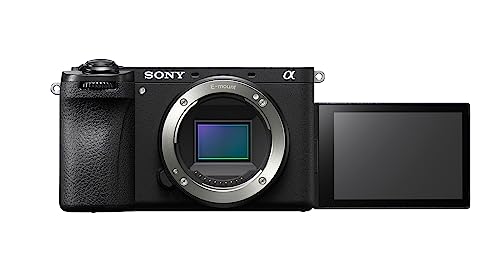
The Sony A6700 is the most capable all-rounder in this guide, and the camera to choose if you want strong autofocus, good stabilisation and a compact body in one package. Its 26-megapixel APS-C sensor pairs with the BIONZ XR processor and an AI subject recognition system that tracks small, low-contrast subjects with confidence, which is a real help when a flower head sways in the wind. Its 5-axis stabilisation steadies handheld frames, its NP-FZ100 battery lasts longer than the small batteries in the Canon bodies here, and its 11-frames-per-second burst is fast enough for meadow work.
The trade-offs are the cost and the complexity. The A6700 is sold as a body only, so you will need to add a lens, and its single card slot means you cannot write a backup copy in the camera. Its menu system is deep and takes time to learn, and its small grip can feel cramped during a long morning with a heavier lens attached. It is also the most expensive body here.
For cocksfoot, pair the A6700 with a macro lens or a short telephoto that focuses close.
Specs
- 26MP APS-C Exmor R BSI CMOS sensor; BIONZ XR processor; AI subject recognition; 759-point AF; 11 fps; 5-axis stabilisation; 4K 120p video; NP-FZ100 battery; model ILCE6700/B; body only.
Frequently Asked Questions
Can I photograph cocksfoot with the kit lens that comes with the camera?
Yes, for whole tussocks and wider meadow scenes the kit lenses bundled with the R50 and the OM-5 work well. For a tight frame on a single flower head, though, you will need a macro lens or a short telephoto with a short minimum focus distance, because the kit lenses cannot focus that close.
How do I tell cocksfoot from timothy in the field?
Look at the flower head. Timothy carries a dense, cylindrical spike that looks like a slim green bottle brush, while cocksfoot carries an open, branched head with the spikelets bunched on one side of each branch. Cocksfoot also has rough, grey-green leaves that fold along the midrib, while timothy has smooth, flat leaves.
Do I need a tripod for cocksfoot photography?
Not always, but it helps. A low tripod steadies the camera for a slow, deliberate frame on a calm morning, and it frees your hands to shield the lens from stray light. In a breeze, though, a tripod will not stop the flower head from moving, so a fast shutter speed matters more than a steady support.
Which of these five cameras is best for a full morning in a meadow?
The R50 kit is the lightest and the easiest to carry, and the OM-5 kit is the best sealed against dew and drizzle. If you want the strongest autofocus for a windy morning, choose the A6700, and if you want the largest files for prints, choose the Z7 II. Let weight, sealing and budget guide you.
More from Amazon
Programs that pair well with the guide above. Offers and eligibility are set by Amazon and may change.
Free shipping on eligible items, Prime Video and more. Eligible new members can start with a free trial.
Start a Prime free trialAudiobooks and podcasts to listen to on the go. Eligible new members can start with a free trial.
Try Audible freeAd-free music streaming. Eligible new subscribers can start with a free trial.
Try Music Unlimited freeA free business account with business pricing and bulk-buying tools for work, shop or home office.
Create a business accountAs an Amazon Associate we earn from qualifying purchases.