Key takeaways
- Five cameras for yellow-rattle photography, from a flagship Nikon to a light Fujifilm, with close-focus tips and a guide to telling it from eyebright.
Yellow-rattle is a small meadow plant that asks for patience. It grows in open grass, often in wide drifts, and its yellow flowers sit on slender stems that move in the lightest breeze. The seed pods give the plant its name: once they ripen, the loose seeds inside knock against the dry pod wall when the stem is shaken, and the sound is a faint rattle. A camera that can lock focus on a thin flower head while the grass sways around it, and that can hold fine detail in a bright yellow petal against green, is the right tool for this subject.
As an Amazon Associate, we earn from qualifying purchases.
Yellow-Rattle in the Meadow
Yellow-rattle, Rhinanthus minor, belongs to the family Orobanchaceae. It is a hemiparasite, which means it draws some water and nutrients from the roots of nearby grasses while still making its own food from sunlight. That habit is part of why it thrives in old meadows where the grass is not too tall and not too thick. It flowers from late spring into summer, and by late summer the pods dry out and the seeds rattle inside.
The plant is short, usually between a hand span and a knee high, and its flowers are yellow with a small dark tooth on the upper lip. The leaves are narrow, toothed, and set in pairs along the stem. Because the whole plant is small, a camera with a close-focusing lens matters far more than a long telephoto lens. A macro lens, or a standard zoom with a close minimum focus distance, lets you fill the frame with a single flower head while keeping the meadow as a soft green wash behind it. Stay on the paths and the field edges, do not pick yellow-rattle, and ask permission before entering a private meadow.
What a Yellow-Rattle Camera Needs
A good yellow-rattle camera has three qualities. First, it needs dependable autofocus that can hold a small, low-contrast subject. A yellow flower against green grass can fool a camera that hunts for contrast, so a body with subject detection and a focus point you can place by hand is worth more than raw speed. Second, it needs a sensor that keeps detail in yellow. Yellow is a bright, saturated colour, and a sensor with wide dynamic range keeps the petals from blowing out into a flat patch of light. Third, it needs a viewfinder or screen that stays clear in strong daylight, because meadows are open and the sun is overhead for much of the day.
Every interchangeable-lens body in this guide needs a close-focusing lens before it is ready for tight yellow-rattle work. None of the bodies below ships with a lens that can focus close enough for a single flower head on its own. Plan on a macro lens, or on a standard zoom with a short minimum focus distance.
Yellow-Rattle Is Not Eyebright
Yellow-rattle is often confused with eyebright, and the confusion is easy to understand. Both belong to the same family, Orobanchaceae, and both grow in the same kind of open grassland. Both are small plants with toothed leaves and flowers that sit close to the stem. But they are different genera, and once you know what to look for, they are easy to tell apart.
Yellow-rattle, Rhinanthus minor, has yellow flowers. The flowers are fairly large for a plant this size, with a hooded upper lip that carries a small dark tooth. After flowering, the plant forms round, flattened seed pods that dry out and rattle when shaken. The whole plant is usually between twenty and fifty centimetres tall, and it stands upright in the grass.
Eyebright, Euphrasia, has small white flowers edged with purple. The flowers are much smaller than those of yellow-rattle, often no wider than a fingernail, and they carry fine purple lines that guide insects toward the centre. Eyebright is also a shorter plant, often no more than ten or fifteen centimetres tall, and it grows in low tufts rather than as a single upright stem.
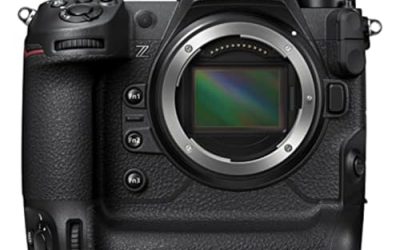
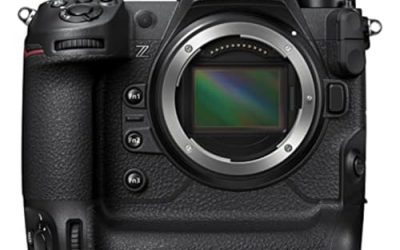
1. Nikon Z9

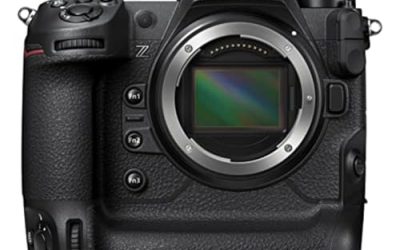
The Nikon Z9 is the most capable camera in this guide, and the most demanding to carry. Its 45.7-megapixel stacked sensor records fine detail in yellow petals, and its autofocus system can track a flower head even when the wind moves it. The electronic shutter is completely silent, which is a real advantage in a quiet meadow where a loud shutter can disturb insects and birds.
Specs
- 45.7MP full-frame stacked CMOS sensor; EXPEED 7 processor; silent electronic shutter only; 20 fps RAW burst; 8K/30p video; model 1669; body only; around 1,340 g with battery and card.
The Z9 suits a photographer who already owns Z-mount glass and wants the best autofocus and the highest resolution in the guide. Pair it with a Z-mount macro lens, and you can work a single yellow-rattle flower head from a comfortable distance without bending the stem. But if you walk long distances to reach your meadow, or if you want a body you can carry in a small bag, the Z9 is more camera than the job needs.
2. Sony A7R V

The Sony A7R V is the resolution pick in this guide. Its 61-megapixel full-frame sensor records more detail than any other body here, which matters when you want to crop into a single flower head and still keep a sharp file. The AI processing unit recognises subjects and holds focus on them, and the 8-stop stabilisation helps when you are shooting handheld at the edge of a meadow in a light breeze.
Specs
- 61MP full-frame back-illuminated Exmor R CMOS sensor; AI processing unit; Real-time Recognition autofocus; 5-axis stabilisation up to 8 stops; 10 fps burst; 8K 24p video; model ILCE7RM5/B; body only.
The A7R V suits a photographer who wants the largest possible file from a single yellow-rattle flower head, and who is happy to carry a heavier body and a macro lens to get it. The resolution lets you crop a wide meadow shot down to one flower and still have a file worth printing. But if you shoot hundreds of frames in a morning, or if you edit on a modest laptop, the file sizes will slow you down.
3. Canon EOS R7

The Canon EOS R7 is the reach pick in this guide. Its APS-C sensor gives a 1.6x crop, which turns a 100mm macro lens into a 160mm lens in full-frame terms, so you can fill the frame with a yellow-rattle flower head from farther away. The 32.5-megapixel sensor records plenty of detail, and the 15 fps mechanical burst lets you shoot through a gust of wind and pick the frame where the flower is still.
Specs
- 32.5MP APS-C CMOS sensor; DIGIC X processor; Dual Pixel CMOS AF II; 15 fps mechanical burst, 30 fps electronic; 4K/60p video; 5-axis stabilisation; model 5137C002; body only; around 612 g with battery and card.
The R7 suits a photographer who wants extra reach without a long lens, and who works in bright meadow light where the smaller sensor is no handicap. The crop factor is a genuine advantage for a small flower: you can stand on the path and still fill the frame. But if you shoot in dim light under trees, a full-frame body will serve you better.
4. Canon EOS R6 Mark II

The Canon EOS R6 Mark II is the balanced pick in this guide. Its 24.2-megapixel full-frame sensor is large enough for clean files and small enough to keep file sizes manageable. The autofocus system is fast and reliable, with subject detection that holds a flower head through a gust of wind, and the 8-stop stabilisation helps when you are shooting handheld at the meadow edge. The 12 fps mechanical burst is quick enough to catch a still moment between gusts. The trade-off is resolution: 24.2 megapixels is less than the Z9 or the A7R V, so heavy crops will lose detail sooner. But for a single flower head framed in camera, it is more than enough.
Specs
- 24.2MP full-frame CMOS sensor; DIGIC X processor; Dual Pixel CMOS AF II; 12 fps mechanical burst, 40 fps electronic; 6K oversampled 4K/60p video; 8-stop stabilisation; model 5666C002; body only.
The R6 Mark II suits a photographer who wants one body that does everything well, without a weak point that needs working around. It is light enough to carry all morning, fast enough to catch a still flower between gusts, and clean enough at high sensitivity for shaded meadow edges. Pair it with an RF-mount macro lens, and you have a kit that will handle yellow-rattle and almost anything else you find in the meadow.
5. Fujifilm X-S20

The Fujifilm X-S20 is the light pick in this guide. At 491 g with battery and card, it is the lightest body here by a wide margin, and its deep grip makes it comfortable to hold for a long morning on foot. The 26.1-megapixel APS-C sensor records clean, detailed files, and the 7-stop stabilisation helps when you are shooting handheld at low angles. The film simulations give straight-out-of-camera colour that suits yellow flowers well, with warm, saturated tones that need little editing. The trade-off is that the smaller sensor and the smaller body mean a smaller viewfinder, and the autofocus is less confident than the Canon or Sony systems when a flower moves in the wind.
Specs
- 26.1MP APS-C X-Trans CMOS 4 sensor; X-Processor 5; 20 fps electronic burst; 6.2K/30p video; 7-stop stabilisation; model 16781852; body only; 491 g with battery and card; around 750 frames per charge.
The X-S20 suits a photographer who walks a long way to reach a meadow and wants the lightest kit that still delivers a sharp file. It fits in a small bag with a macro lens and a spare battery, and it will not tire your arm by midday. But if you need the most confident autofocus for a flower moving in the wind, one of the full-frame bodies above will serve you better.
Which One to Choose
Choose the Z9 if you already own Z-mount glass and want the best autofocus and the highest resolution, and you do not mind carrying a heavy body. Choose the A7R V if you want the largest file in the guide and you are happy to manage large files and a heavier body. Choose the R7 if you want extra reach from the crop sensor and you work in bright light. Choose the R6 Mark II if you want one body that does everything well, with no weak point to work around. Choose the X-S20 if you walk a long way and want the lightest kit that still delivers a sharp file. Whichever body you choose, the lens matters more than the body for yellow-rattle. A macro lens, or a standard zoom with a close minimum focus distance, will do more for your photographs than any difference between these five bodies. Check the minimum focus distance on the lens listing before you order, and test it on a flower head in your garden before you take it to a meadow.
Frequently Asked Questions
Is yellow-rattle the same plant as eyebright?
No. Yellow-rattle, Rhinanthus minor, and eyebright, Euphrasia, belong to the same family, Orobanchaceae, but they are different genera. Yellow-rattle has yellow flowers and round seed pods that rattle when dry, while eyebright has small white flowers edged with purple and grows in low tufts.
Do I need a macro lens for yellow-rattle?
Yes, for tight shots of a single flower head. Yellow-rattle flowers are small, and a standard kit lens cannot focus close enough to fill the frame with one flower. A macro lens, or a standard zoom with a short minimum focus distance, is the single most useful addition to any of the five bodies in this guide.
When is the best time of year to photograph yellow-rattle?
Late spring into summer, when the plant is in flower. The seed pods dry out by late summer, and the rattling pods are a second subject worth photographing. Early morning gives the softest light and the calmest air, which matters for a small flower on a slender stem.
Can I pick yellow-rattle to photograph it at home?
No. Yellow-rattle is an annual, and each flower you pick is a plant that will not set seed. Photograph it where it grows, from the path or the field edge, and leave the plant standing. If you want a closer view, use a longer lens or a macro lens rather than pulling the plant toward you.
More from Amazon
Programs that pair well with the guide above. Offers and eligibility are set by Amazon and may change.
Free shipping on eligible items, Prime Video and more. Eligible new members can start with a free trial.
Start a Prime free trialAudiobooks and podcasts to listen to on the go. Eligible new members can start with a free trial.
Try Audible freeAd-free music streaming. Eligible new subscribers can start with a free trial.
Try Music Unlimited freeA free business account with business pricing and bulk-buying tools for work, shop or home office.
Create a business accountAs an Amazon Associate we earn from qualifying purchases.