The best camera for landscape photography in 2026 is the Sony A7R VI if you want maximum full-frame resolution, the Fujifilm GFX100S II if print size and tonal depth matter more than weight, and the Nikon Z8 or Canon EOS R5 Mark II if you also shoot wildlife or video on the same trips. For hikers on a tighter budget, the Sony A7CR and OM System OM-5 Mark II trade some pixels for much lighter packs.
Landscape work is unusual among genres: autofocus speed and burst rates barely matter, while dynamic range, resolution, weather sealing, battery life in the cold and total carried weight matter a lot. The picks below are ranked on those criteria.
Our top picks
 Sony Alpha 7 IV Full-frame Mirrorless Interchangeable
- 33MP full-frame Exmor R back-illuminated CMOS sensor.Operating temperature…
- 8x more powerful, next generation BIONZ XR image…
- Up to 4K 60p 10-bit 4:2:2 w/ full…
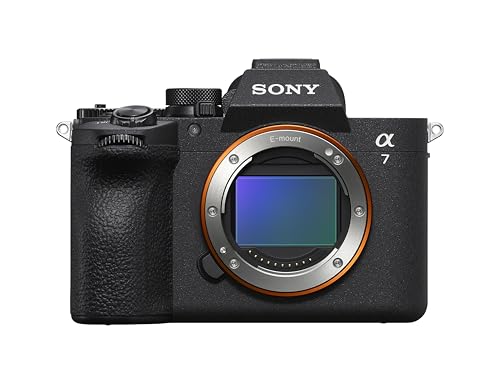 Sony Alpha a7 V Full-Frame Mirrorless Camera
- A partially stacked Exmor RS CMOS image sensor…
- The new BIONZ XR2 processing engine delivers dramatic…
- The new 33.0-megapixel*8 sensor and BIONZ XR2 processing…
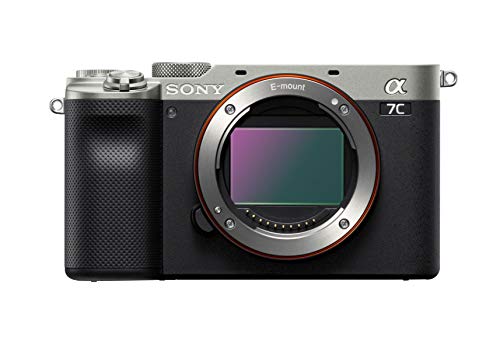 Sony Alpha 7C Full-Frame Mirrorless Camera
- World’s smallest and lightest1 full-frame camera
- Advanced 24.2MP2 Back-Illuminated 35mm Full-frame Image Sensor
- 4K Movie3 w/ full pixel readout, no pixel…
| Product | Key specs | |
|---|---|---|
| Sony Alpha 7 IV Full-frame Mirrorless Interchangeable | 33MP full-frame Exmor R back-illuminated CMOS sensor.Operating temperature… 8x more powerful, next generation BIONZ XR image… Up to 4K 60p 10-bit 4:2:2 w/ full… | Check price |
| Sony Alpha a7 V Full-Frame Mirrorless Camera | A partially stacked Exmor RS CMOS image sensor… The new BIONZ XR2 processing engine delivers dramatic… The new 33.0-megapixel*8 sensor and BIONZ XR2 processing… | Check price |
| Sony Alpha 7C Full-Frame Mirrorless Camera | World’s smallest and lightest1 full-frame camera Advanced 24.2MP2 Back-Illuminated 35mm Full-frame Image Sensor 4K Movie3 w/ full pixel readout, no pixel… | Check price |
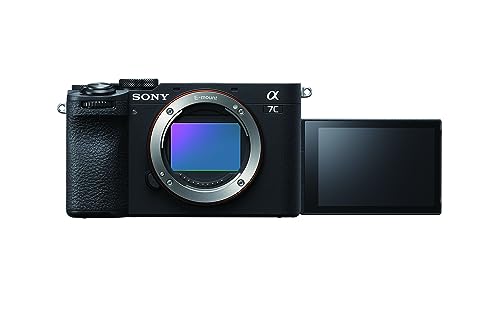 Sony Alpha 7C II Full-Frame Interchangeable Lens | Incredibly compact and lightweight, packed with full-frame performance 33.0MP full-frame Exmor R CMOS sensor BIONZ XR processing power for exceptional image quality | Check price |
As an Amazon Associate we earn from qualifying purchases at no extra cost to you.
The Contenders at a Glance
| Camera | Sensor | Resolution | Body weight (with battery) | IBIS | Typical body price |
|---|---|---|---|---|---|
| Sony A7R VI | Full frame, stacked | 66.8 MP | approx. 713 g | Up to 8.5 stops | $4,300-$4,500 |
| Fujifilm GFX100S II | Medium format (44x33mm) | 102 MP | approx. 883 g | Up to 8 stops | $4,500-$5,000 |
| Nikon Z8 | Full frame, stacked | 45.7 MP | approx. 910 g | Up to 6 stops | $3,500-$4,000 |
| Canon EOS R5 Mark II | Full frame, stacked BSI | 45 MP | approx. 746 g | Up to 8.5 stops | $3,900-$4,300 |
| Sony A7R V | Full frame, BSI | 61 MP | approx. 723 g | Up to 8 stops | $3,000-$3,500 |
| Sony A7CR | Full frame, BSI | 61 MP | approx. 515 g | Up to 7 stops | $2,600-$3,000 |
| OM System OM-5 Mark II | Micro Four Thirds | 20 MP (80 MP tripod High Res Shot) | approx. 418 g | Up to 7.5 stops | $1,100-$1,300 |
What Actually Matters for Landscapes
Resolution: more helps, but only if you crop or print big
A 24MP file prints cleanly at about 20×13 inches at 300 dpi. A 45MP file reaches roughly 27×18 inches, a 61-67MP file about 32×21 inches, and a 102MP medium-format file about 38×29 inches. If you share mostly online, the jump from 45MP to 67MP is invisible; if you sell large prints or crop panoramas from single frames, it is the main reason to upgrade.
Dynamic range: the real landscape spec
Sunrise scenes routinely exceed what any sensor captures in one frame. Modern full-frame and medium-format sensors hold roughly 14 or more stops at base ISO, enough to lift shadows on a backlit ridge without heavy noise. Smaller sensors such as Micro Four Thirds give up around one to two stops, which you recover by bracketing.
Weight over a full day
The camera body is only part of the load. A full-frame body plus a 16-35mm f/4, 24-105mm f/4 and 70-200mm f/4 commonly reaches 2.5-3 kg before the tripod. A GFX kit with comparable focal lengths can exceed 4 kg, while a Micro Four Thirds kit often stays under 1.5 kg.
Cold-weather battery life
Lithium-ion batteries can lose a large share of their capacity near freezing. Bodies with larger batteries (Sony’s newer NP-SA100 in the A7R VI, Nikon’s EN-EL15c in the Z8) give more margin, but carrying two spares in an inside pocket is standard practice for winter shoots regardless of the camera.
Pick by Situation
| If you mainly… | Best fit | Why |
|---|---|---|
| Sell large prints, shoot from a tripod | Fujifilm GFX100S II | 102MP and medium-format tonality; weight is less of an issue near the car |
| Want the most detail in a full-frame system | Sony A7R VI | Highest full-frame resolution, fast readout, widest third-party lens choice |
| Shoot landscapes and wildlife on the same trip | Nikon Z8 or Canon EOS R5 Mark II | 45MP plus pro-level subject tracking and fast bursts |
| Want high resolution for less money | Sony A7R V | 61MP and excellent dynamic range at a lower price since the A7R VI arrived |
| Hike long distances or backpack | Sony A7CR | 61MP in a compact body roughly 200 g lighter than the A7R bodies |
| Shoot in rain, spray and sleet often | OM System OM-5 Mark II | IP53-rated sealing, small lenses, tripod High Res Shot for static scenes |
Camera Notes
Sony A7R VI
Launched in mid-2026, it pairs a 66.8MP fully stacked sensor with the BIONZ XR2 processor. For landscapes, the stacked readout reduces rolling-shutter distortion in moving water and trees when using the electronic shutter, and the dual CFexpress Type A and SD slots allow instant backup. It is more camera than a pure landscape shooter strictly needs, which is why the outgoing A7R V remains a strong value pick.
Fujifilm GFX100S II
The sensor is about 1.7 times the area of full frame, and lenses such as the GF 20-35mm F4 R WR are designed for that resolution. The trade-offs are bulk, slower handling and a narrower lens range, particularly at long telephoto focal lengths.
Nikon Z8
Essentially the Z9 in a smaller body, it has no mechanical shutter at all, so there is no shutter shock and no shutter wear on long timelapse sequences. Its 45.7MP sensor is a proven performer in high-contrast light. At around 910 grams, it is the heaviest full-frame option here.
Canon EOS R5 Mark II
Canon’s 45MP flagship adds a stacked sensor and very effective stabilization, which helps for handheld shots in forests and at dusk. The RF lens lineup now includes the RF 14mm F1.4 L VCM for night landscapes.
Sony A7CR
It shares the 61MP sensor of the A7R V in a rangefinder-style body. The smaller grip and single card slot are compromises, but for multi-day treks it offers near-flagship image quality at a much lower pack weight.
OM System OM-5 Mark II
The smallest sensor here, but the tripod High Res Shot mode combines multiple exposures into an 80MP file for static scenes, and built-in Live ND simulates neutral-density filters for smoothing water without carrying glass filters.
Setup Habits That Improve Landscape Files More Than a New Body
- Shoot at base ISO from a tripod. Base ISO maximizes dynamic range; a tripod lets you use it even at dusk.
- Turn IBIS off on a tripod when the manual recommends it, since some systems can introduce tiny drift during long exposures.
- Use a 2-second delay or remote release to remove the vibration of pressing the shutter button.
- Bracket high-contrast scenes in 2-stop steps (for example -2, 0, +2) rather than relying on one exposure and heavy shadow recovery.
- Focus about one-third into the scene or focus stack at f/8-f/11 instead of stopping down to f/22, where diffraction softens high-resolution sensors.
Frequently Asked Questions
Is medium format worth it over a 61-67MP full-frame camera?
For most photographers, no. The resolution difference is modest, while lens choice and weight favor full frame. Medium format pays off mainly for large fine-art prints and controlled tripod work.
Do I need a stacked sensor for landscapes?
Not for static scenes. Stacked sensors help with silent electronic shutter use and moving elements, but an A7R V or A7CR captures the same kind of detail for a standing mountain.
More from Amazon
Programs that pair well with the guide above. Offers and eligibility are set by Amazon and may change.
Free shipping on eligible items, Prime Video and more. Eligible new members can start with a free trial.
Start a Prime free trialAudiobooks and podcasts to listen to on the go. Eligible new members can start with a free trial.
Try Audible freeAd-free music streaming. Eligible new subscribers can start with a free trial.
Try Music Unlimited freeA free business account with business pricing and bulk-buying tools for work, shop or home office.
Create a business accountAs an Amazon Associate we earn from qualifying purchases.