Key takeaways
- Travel and lifestyle vloggers who want stabilized footage without carrying a camera and separate gimbal.
- Creators upgrading from a phone who want a bigger sensor for low light.
- Parents filming kids and family trips who want smooth walking footage.
- Short-form creators who need 4K slow motion at 120fps.
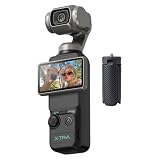
The Xtra Muse is worth considering if you want a pocket vlogging camera with a large 1-inch CMOS sensor, 4K video up to 120fps and a built-in 3-axis gimbal at a price that typically sits around $300–$350 with the included mini tripod. Those headline specs put it in the same class as far more established pocket gimbal cameras, and the 1-inch sensor is the key reason to buy one over a smartphone: it gathers more light, so indoor and evening footage looks cleaner with less noise.
The trade-off is ecosystem and track record. Xtra is a newer name compared with the market leaders, so accessories, app polish and long-term firmware support are less proven. If you want the safest choice and do not mind paying more, the DJI Osmo Pocket 3 remains the reference product in this category. If you want 1-inch, 4K/120fps pocket gimbal video at a lower price and are comfortable with a younger brand, the Xtra Muse is a reasonable bet.
As an Amazon Associate we earn from qualifying purchases at no extra cost to you.
Who it’s for
- Travel and lifestyle vloggers who want stabilized footage without carrying a camera and separate gimbal.
- Creators upgrading from a phone who want a bigger sensor for low light.
- Parents filming kids and family trips who want smooth walking footage.
- Short-form creators who need 4K slow motion at 120fps.
Who should look elsewhere
- Action and adventure shooters who need waterproofing and crash resistance; an action camera suits better.
- Professionals who need interchangeable lenses or advanced audio inputs.
- Buyers who want the most mature app and accessory ecosystem.
Key specs
| Spec | Xtra Muse (Mini Tripod Combo) |
|---|---|
| Sensor | 1-inch CMOS |
| Maximum video | 4K at up to 120fps |
| Stabilization | 3-axis mechanical gimbal |
| Form factor | Pocket camera |
| Focus | Fast autofocus (per listing) |
| Uses | Video and still photography |
| Included | Mini tripod |
| Typical price range | About $300–$350 |
What stands out
A 1-inch sensor in your pocket
Most smartphone main cameras use sensors much smaller than 1 inch. A 1-inch sensor captures more light, which means cleaner footage in restaurants, at night and indoors, plus a bit more natural background blur when subjects are close. For vloggers who film in mixed light, this is the biggest image-quality upgrade over a phone.
3-axis gimbal stabilization
A mechanical gimbal physically keeps the camera level as you walk, turn and move. It produces smoother footage than electronic stabilization alone and avoids the cropping and warping artifacts phones can show. Walking shots, pans and follow shots look far more professional.
4K at 120fps
4K/120fps lets you slow footage down to 25 percent speed in a 30fps timeline while keeping 4K detail. It is great for B-roll: waves, food prep, pets, crowds and sports moments.
Mini tripod in the box
The included mini tripod lets you set the camera on a table for talking-head shots, time-lapses or group videos. It doubles as a short handle for a steadier grip.
Trade-offs and limits
Younger brand, less proven ecosystem
Accessories such as wide-angle lenses, wireless mics, cases and spare batteries are widely available for the biggest pocket gimbal brand, while Xtra’s accessory range is smaller. Firmware updates and app polish also matter a lot in this category, and a newer brand has less history to judge by. Check what the warranty covers and how long it lasts before buying.
Gimbals are delicate
A mechanical gimbal is more fragile than a fixed phone camera. Store it in its cover, avoid drops, and keep it away from sand and water unless the manufacturer states it is protected.
Audio
Built-in microphones on pocket cameras pick up wind and handling noise. For serious vlogging, plan on a wireless microphone; confirm on the listing how the Xtra Muse connects external audio.
Heat and battery at high frame rates
4K/120fps is demanding. Like most compact cameras, expect shorter recording times and more heat at the highest settings. Carry a power bank for long shooting days.
Usage tips
- Use 4K/30fps or 4K/60fps for everyday recording to save battery and storage, and switch to 120fps only for slow-motion shots.
- Use a fast, high-capacity microSD card rated for 4K high-frame-rate recording if the camera uses removable storage.
- Learn the gimbal’s follow and lock modes; lock mode keeps the horizon fixed, while follow mode tracks your movement.
- Film facing the light source so the sensor works at its best.
- Add a small wind muff or wireless mic for outdoor talking shots.
- Update the firmware and companion app before your first trip.
Pocket gimbal camera vs phone vs action camera
| Factor | Xtra Muse | Typical smartphone | Typical action camera |
|---|---|---|---|
| Sensor size | 1-inch | Usually smaller than 1-inch | Usually 1/1.9-inch to 1/1.3-inch class |
| Stabilization | 3-axis mechanical gimbal | Optical plus electronic | Electronic |
| Top 4K frame rate | 120fps | Often 60fps | Often 60–120fps |
| Ruggedness | Handle with care | Moderate | Built for impacts and water |
The pattern is clear: the Xtra Muse is built for image quality and smooth motion in everyday settings, not for extreme sports. If most of your filming happens in cities, restaurants, homes and on travel days, its sensor and gimbal are the right tools.
How it compares
The DJI Osmo Pocket 3 shares the core recipe of 1-inch sensor, 4K/120fps and a 3-axis gimbal, and it benefits from a mature app, wide accessory support and strong subject tracking, but it usually costs more. Action cameras offer waterproofing and toughness but use smaller sensors that struggle more in low light. Your phone is the free option and is very good in daylight, but the Xtra Muse’s larger sensor and mechanical gimbal give it an edge in dim light and when walking.
FAQ
Is the Xtra Muse good for beginners?
Yes. A pocket gimbal camera is one of the simplest ways to get smooth, good-looking video without learning a full camera system.
Can it take photos?
Yes. It is listed as both a video camera and a digital camera for photography, though it is optimized for video.
Do I need a separate gimbal?
No. The 3-axis gimbal is built in.