
Key takeaways
- Five F-mount lenses for the Nikon D7200, from a bright 35mm prime and a versatile standard zoom to an ultra-wide zoom and a long all-in-one travel zoom.
The Nikon D7200 remains a capable APS-C DSLR, with a 24.2MP sensor, a 51-point autofocus system, and dual card slots. It accepts the full range of Nikon F-mount glass. DX lenses are made for its sensor, while FX lenses also mount and work, with their field of view narrowed by the 1.5x crop factor. A 35mm lens behaves like a 52.5mm lens on this body, and a 200mm lens frames like a 300mm lens. That crop factor favors telephoto work.


The D7200 rewards good glass. The five lenses below cover the most useful ground: a fast normal prime, a bright standard zoom, an ultra-wide zoom, an all-in-one travel zoom, and a light telephoto zoom.
As an Amazon Associate, we earn from qualifying purchases.
How to Pick a Lens for the Nikon D7200
The D7200 has an in-body autofocus motor, so it drives older screw-drive AF lenses as well as modern AF-S, AF-P, and third-party lenses with built-in motors, opening up a wider market than entry-level bodies enjoy.
Think in equivalent focal length: multiply any focal length by 1.5 to get its field of view on the D7200. A 17mm wide end becomes roughly 25mm, which is genuinely wide, while a 300mm long end becomes 450mm, which reaches far into wildlife territory. DX lenses are often lighter and smaller than FX lenses of similar range, and they make the most sense for everyday carry. FX lenses weigh more, but they can move with you if you ever step up to a full-frame body.
Aperture is the other big decision. A constant f/2.8 zoom or an f/1.8 prime gathers far more light than a variable-aperture kit zoom, which makes indoor shooting, evening portraits, and shallow depth of field far easier. Variable-aperture zooms are lighter and cover a huge range, which suits travel and daylight work. Image stabilization, which Nikon calls VR and other makers call OS or VC, helps at slow shutter speeds. Match the lens to your shooting: landscapes need width, portraits need a flattering focal length and a wide aperture, travel needs range without bulk, and wildlife needs reach.
1. Nikon AF-S DX NIKKOR 35mm f/1.8G — Best Everyday Prime
If you buy only one lens for the D7200, this is the one to consider first. On the DX sensor it gives a 52.5mm equivalent field of view, the classic normal perspective: wide enough for street scenes and interiors, tight enough for portraits without distortion, and natural enough that framing feels instinctive after a day of use. The f/1.8 maximum aperture gathers plenty of light for dim restaurants, evening walks, and indoor family gatherings, and it softens backgrounds into a gentle blur that makes subjects stand out.
The lens is small and light, so the D7200 stays balanced and easy to carry all day. Autofocus is quick and quiet thanks to the Silent Wave Motor, and the lens focuses as close as 0.3 m, which is handy for food, flowers, and small details. Its seven-blade rounded diaphragm keeps out-of-focus highlights smooth, and the optical design holds up well on the 24.2MP sensor, with strong center sharpness wide open and crisp results across the frame when stopped down a little. With no zoom to lean on, you move your feet and think about framing.
One note on the listing: the Amazon listing used here is a bundle that adds a filter kit, a lens cap keeper, and a cleaning kit alongside the same 35mm f/1.8G DX lens. The lens itself is the same optic described above.
Specs: Focal length 35mm (52.5mm equivalent on the D7200); maximum aperture f/1.8; minimum aperture f/22; 8 elements in 6 groups; 7 rounded diaphragm blades; 52mm filter thread; minimum focus distance 0.3 m; weight 200 g; Nikon F mount, DX format.
2. Sigma 17-70mm f/2.8-4 DC Macro OS HSM Contemporary — Best Standard Zoom
The Sigma 17-70mm Contemporary is the versatile standard zoom this camera deserves. It covers 25.5-105mm in equivalent terms, spanning true wide angle for landscapes and architecture through to short telephoto for portraits. The f/2.8 aperture at the wide end is a full stop brighter than a typical kit zoom, so indoor and evening shooting feels far less constrained, and the f/4 long end still gives reasonable subject separation for portraits.
Optical stabilization, which Sigma calls OS, steadies handheld shots at slow shutter speeds, and the Hyper Sonic Motor focuses quickly and quietly. The macro capability is a genuine bonus: a 0.22 m minimum focus distance and 1:2.8 maximum magnification let you fill the frame with flowers, insects, food, and small products without carrying a dedicated macro lens. That makes this lens a strong single-lens answer for travel, events, and close-up work.
It feels solid without being heavy at 465 g, and the common 72mm filter thread makes polarizers easy to find. On the D7200, the range is honest: 17mm is wide enough for most interiors, 70mm is long enough for head-and-shoulders portraits, and the whole range stays sharp enough for large prints and careful cropping.
Specs: Focal length 17-70mm (25.5-105mm equivalent on the D7200); maximum aperture f/2.8-4; minimum aperture f/16; 16 elements in 13 groups; 7 diaphragm blades; 72mm filter thread; minimum focus distance 0.22 m; maximum magnification 1:2.8; weight 465 g; Nikon F mount, DX format; Optical Stabilizer.
3. Tokina AT-X 11-20mm f/2.8 PRO DX — Best Ultra-Wide Zoom
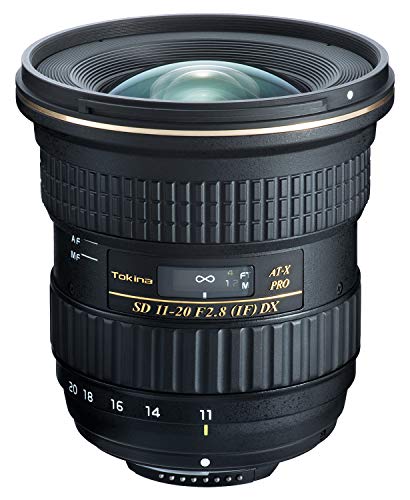
Wide-angle shooting on a crop-sensor camera needs a lens that goes truly wide, and the Tokina 11-20mm f/2.8 delivers. Its 16.5-30mm equivalent range covers dramatic ultra-wide landscapes, tight interiors, architecture, and astrophotography, all with a constant f/2.8 aperture that stays bright across the zoom range. That constant aperture is rare in ultra-wide zooms for DX cameras, and it matters for night skies, dim churches, and evening city scenes where a variable-aperture lens would force slower shutter speeds or higher sensitivity.
The lens is built to a professional standard, with a solid feel and a smooth zoom ring. Close focus of 0.28 m lets you push a foreground subject right up to the front element for dramatic near-far compositions.
On the D7200, this lens turns the camera into a landscape and travel specialist. The 1.5x crop factor means 11mm is needed to reach a true ultra-wide view, and this lens provides it with room to spare. It also suits real-estate interiors, where a wide field of view shows a whole room in one frame, and group photos in tight spaces, where stepping back is not an option. Note the 82mm filter thread, larger than the other lenses here.
Specs: Focal length 11-20mm (16.5-30mm equivalent on the D7200); maximum aperture f/2.8 constant; minimum aperture f/16; 14 elements in 12 groups; 9 diaphragm blades; 82mm filter thread; minimum focus distance 0.28 m; weight 550 g; Nikon F mount, DX format.
4. Tamron 16-300mm f/3.5-6.3 Di II VC PZD — Best All-in-One Travel Zoom
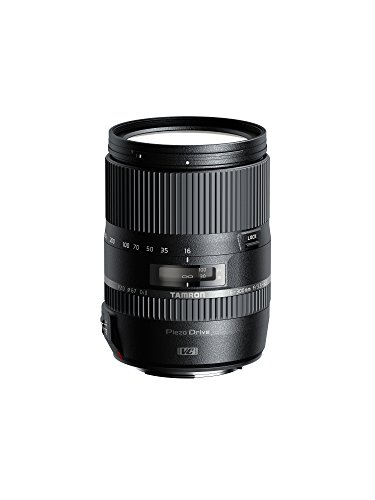
For a traveler who wants one lens on the camera from morning to night, the Tamron 16-300mm is hard to beat. Its 24-450mm equivalent range covers wide landscapes, street scenes, portraits, and distant wildlife without a lens change, which matters when dust, rain, or a fast-moving moment makes swapping glass impractical. It remains one of the widest single-lens ranges available for the D7200.
Vibration Compensation steadies the long end, where camera shake is most visible, and the Piezo Drive autofocus motor is quiet and quick enough for everyday subjects. A 0.39 m minimum focus distance gives a useful close-up ability, with a 1:3.9 maximum magnification that handles flowers and details respectably for a superzoom. At 540 g, it balances well on the D7200.
No superzoom matches a prime for low-light work or for the softest backgrounds, and this lens is honest about that trade. Its strength is coverage and convenience: one lens, one camera, all day, from a cathedral interior at 16mm to a distant tower at 300mm. For holidays, hikes, and family trips, that freedom is worth more than a slightly wider aperture.
Specs: Focal length 16-300mm (24-450mm equivalent on the D7200); maximum aperture f/3.5-6.3; minimum aperture f/22-40; 16 elements in 12 groups; 7 diaphragm blades; 67mm filter thread; minimum focus distance 0.39 m; maximum magnification 1:3.9; weight 540 g; Nikon F mount, DX format; Vibration Compensation.
5. Nikon AF-S DX 55-200mm f/4-5.6G ED VR — Best Light Telephoto Zoom

The final pick is the lightest way to add real telephoto reach to the D7200. The 55-200mm gives an 82.5-300mm equivalent range, covering portraits with flattering compression, youth sports from the sideline, zoo animals, and garden birds, all in a lens that weighs about 335 g. It is the telephoto lens you actually carry, rather than the one you leave at home because it is too heavy.
Vibration Reduction steadies handheld shots at 200mm, where the equivalent 300mm field of view magnifies every tremor. The Silent Wave Motor focuses quickly and quietly, and the ED glass element helps keep color fringing under control at the long end. Image quality is strong for a lens of this size, with good sharpness through the middle of the range and pleasing results for portraits at 100-150mm, where the compression flatters faces and the background falls away gently.
For a D7200 owner who shoots wildlife, sports, or distant landscapes, it is the most affordable way to reach 300mm equivalent without a large, heavy professional telephoto. Note: this Amazon listing is the white-box bulk-packaged version of the same VR lens, offered without the usual retail box.
Specs: Focal length 55-200mm (82.5-300mm equivalent on the D7200); maximum aperture f/4-5.6; minimum aperture f/22-32; 15 elements in 11 groups; 7 diaphragm blades; 52mm filter thread; minimum focus distance 1.1 m; weight 335 g; Nikon F mount, DX format; Vibration Reduction.
Which Lens Should You Buy First?
The right first lens depends on what you shoot most. If you want one lens that improves every day of shooting, take the Nikon 35mm f/1.8G prime. Its bright aperture and normal field of view suit portraits, street photography, food, and low-light work, and its small size means it stays on the camera. If you want a single zoom that replaces a kit lens with something clearly better, take the Sigma 17-70mm, whose range, brightness, stabilization, and close focus cover travel, events, and family work in one package.
Landscape and architecture shooters should take the Tokina 11-20mm f/2.8 first, because no other lens here reaches that wide, and its constant aperture suits dawn, dusk, and night skies. Travelers who dislike changing lenses should take the Tamron 16-300mm, which covers nearly every focal length a trip demands. Wildlife and sports shooters should take the Nikon 55-200mm, which adds the reach the other lenses lack at a weight that never feels like a burden.
Caring for Your Lenses on the D7200
Use the supplied hood to cut flare and guard the front element. Change lenses with the camera mount facing down and the body switched off, so the sensor attracts less dust. Store lenses upright in a dry bag with silica gel if you live in a humid climate, and wipe the front element with a blower first, then a microfiber cloth, rather than rubbing grit across the glass.
Frequently Asked Questions
Do FX lenses work on the Nikon D7200?
Yes. The D7200 uses the Nikon F mount, so FX lenses mount and meter normally. The 1.5x crop factor narrows their field of view, so a 50mm FX lens frames like a 75mm lens on this body. DX lenses are usually lighter, while FX lenses can move with you if you later switch to a full-frame body.
What is the best all-around lens for the Nikon D7200?
For most owners, the Sigma 17-70mm f/2.8-4 Contemporary is the best single zoom, because it covers wide angle to short telephoto with a bright aperture, stabilization, and close focus. If you prefer a prime, the Nikon 35mm f/1.8G DX gives a natural 52.5mm equivalent view and excels in low light and portraits.
Can the Nikon D7200 use AF-P lenses?
Yes, with a caveat. The D7200 supports AF-P lenses for autofocus, though some early firmware versions need an update for full compatibility, and the camera menu cannot disable vibration reduction on AF-P lenses that lack a switch. AF-S lenses and third-party lenses with built-in motors work without any such concern.
Which lens is best for wildlife on the Nikon D7200?
Reach matters most for wildlife, and the 1.5x crop factor helps every telephoto. The Nikon 55-200mm f/4-5.6G ED VR in this list reaches 300mm equivalent and is light enough to carry all day.
Final Thoughts
The Nikon D7200 rewards thoughtful lens choices. Its 24.2MP sensor, strong autofocus, and rugged body deserve glass that matches them, and the five lenses here do exactly that across the full range of photography. A bright prime for everyday shooting, a versatile standard zoom, an ultra-wide for landscapes, an all-in-one for travel, and a light telephoto for distant subjects together cover nearly everything this camera can do. Pick the lens that matches the shooting you do most.
More from Amazon
Programs that pair well with the guide above. Offers and eligibility are set by Amazon and may change.
Free shipping on eligible items, Prime Video and more. Eligible new members can start with a free trial.
Start a Prime free trialAudiobooks and podcasts to listen to on the go. Eligible new members can start with a free trial.
Try Audible freeAd-free music streaming. Eligible new subscribers can start with a free trial.
Try Music Unlimited freeA free business account with business pricing and bulk-buying tools for work, shop or home office.
Create a business accountAs an Amazon Associate we earn from qualifying purchases.









