Key takeaways
- DJI Mini 4 Pro vs DJI Air 3 compared on camera, flight time, weight, obstacle sensing and wind resistance, with three shared accessories for both drones.
Two DJI drones, two different answers to the same question: how much drone do you actually need? The Mini 4 Pro is a sub-250 g flyer with a 48MP camera, omnidirectional obstacle sensing, and a body light enough to slip into a jacket pocket. The Air 3 is a larger, more capable machine with two 48MP cameras, including a 3x medium telephoto, longer flight time, and stronger wind resistance. Both shoot 4K60 HDR video, both use the O4 transmission system, and both are excellent, but they serve different pilots.
As an Amazon Associate, we earn from qualifying purchases.
This comparison looks at the two drones head to head on camera, flight time, weight class, obstacle sensing, and wind resistance, then adds three accessories that work with either drone. One transparency note: the standard Air 3 kit with the RC-N2 controller has no verifiable Amazon listing ASIN, so this guide uses the Air 3 Fly More Combo with the RC-N2 controller, the same drone and controller, plus extra batteries and a charging hub.
The Two Drones at a Glance
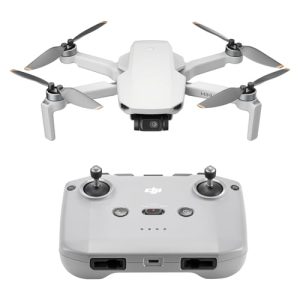
The Mini 4 Pro is DJI’s most capable sub-250 g drone. Its 1/1.3-inch CMOS sensor records 48MP stills and 4K60 HDR video, with 4K100 slow motion for action. Omnidirectional obstacle sensing, ActiveTrack 360, and a 34-minute maximum flight time make it a serious tool in a tiny body. The DJI RC 2 controller has a built-in screen, so no phone is needed to fly.
The Air 3 is DJI’s dual-camera mid-range drone. Its wide-angle camera uses a 1/1.3-inch sensor, and its medium telephoto camera uses the same size sensor with a 3x optical zoom, which is the feature that sets it apart. Flight time reaches 46 minutes, the O4 system transmits video up to 20 km, and the aircraft weighs 720 g. The RC-N2 controller uses a phone for its display, which keeps the kit lighter and the controller simpler.
1. DJI Mini 4 Pro with DJI RC 2

The Mini 4 Pro is the drone to buy when portability and regulation matter most. At 249 g it sits under the 250 g threshold that many countries use for drone registration, which simplifies the rules for recreational flying. The camera is genuinely good: a 1/1.3-inch sensor, 48MP stills, 4K60 HDR video, and 10-bit D-Log M and HLG profiles for grading.
Obstacle sensing is omnidirectional, so the drone sees in all directions, and ActiveTrack 360 follows a subject smoothly while avoiding obstacles. The 34-minute flight time is enough for most sessions, and the RC 2 controller’s built-in screen is bright and clear in sunlight. The Mini 4 Pro’s limits are its single camera, which has no optical zoom beyond a digital crop, and its lighter body, which handles wind less confidently than the Air 3.
Specs: Sensor: 1/1.3-inch CMOS, 48MP; Video: 4K60 HDR, 4K100 slow motion, 10-bit D-Log M; Flight time: Up to 34 minutes; Weight: 249 g; Obstacle sensing: Omnidirectional; Transmission: O4, up to 20 km; Controller: DJI RC 2 with built-in screen.
2. DJI Air 3 Fly More Combo with DJI RC-N2

The Air 3 is the drone to buy when image quality and versatility matter most, and this Fly More Combo is the version used in this guide because the standard RC-N2 kit has no verifiable Amazon listing ASIN. The aircraft is identical to the standard version: the same dual-camera system, the same 46-minute flight time, and the same RC-N2 controller. The Fly More Combo adds two extra batteries, a charging hub, extra propellers, and a shoulder bag, which extends a flying session considerably.
The dual cameras are the story. The wide-angle camera covers 24mm with a 1/1.3-inch sensor, and the medium telephoto camera covers 70mm with the same size sensor, giving a 3x optical zoom that the Mini 4 Pro cannot match. That telephoto changes how you shoot: you can compress a landscape, isolate a subject, and film from farther away without disturbing wildlife. Both cameras record 48MP stills and 4K60 HDR video with 10-bit D-Log M and HLG.
The Air 3 is heavier at 720 g, so it falls under stricter registration rules in many countries, and it is larger to carry. But it flies longer, handles wind better, and gives you two focal lengths instead of one.
Specs: Sensors: Dual 1/1.3-inch CMOS, 48MP each; Video: 4K60 HDR, 10-bit D-Log M, HLG; Flight time: Up to 46 minutes; Weight: 720 g; Obstacle sensing: Omnidirectional; Transmission: O4, up to 20 km; Controller: DJI RC-N2; Combo includes: 3 batteries, charging hub, extra propellers, shoulder bag.
Head to Head: Camera
The Air 3 wins on camera versatility. Two 48MP cameras with a 24mm wide angle and a 70mm medium telephoto give you two perspectives in one flight, and the 3x optical zoom is a real creative tool for landscapes, wildlife, and architecture. The Mini 4 Pro has one excellent camera with a 24mm field of view, and its digital zoom is no substitute for the Air 3’s optical telephoto.
Image quality from the wide-angle cameras is close, because both use a 1/1.3-inch sensor with similar video specs. The difference is not sharpness but range: the Air 3 lets you shoot a scene twice, once wide and once tight, without moving the drone. For a photographer who values composition, that second camera is worth more than any single spec.
Head to Head: Flight Time
The Air 3 wins on flight time, and the gap is large. Its 46-minute maximum is twelve minutes longer than the Mini 4 Pro’s 34 minutes, which is roughly a third more time in the air per battery. In practice that means fewer battery swaps, longer sessions at a location, and more time to wait for the right light.
The Fly More Combo in this guide widens the gap further, because it includes three batteries instead of one. A Mini 4 Pro pilot can buy extra batteries too, of course, but the Air 3 holds a stronger position, and the combo makes it stronger still. For travel and for shoots where you cannot recharge easily, flight time is a deciding factor.
Head to Head: Weight Class
The Mini 4 Pro wins on weight, and the margin matters for regulation. At 249 g it sits under the 250 g threshold used by many aviation authorities, including the FAA in the United States, where recreational drones under 250 g generally do not need registration. The Air 3 weighs 720 g, which puts it firmly in the category that requires registration in most countries.
Weight also affects portability. The Mini 4 Pro folds small enough for a jacket pocket and a day bag, while the Air 3 needs a dedicated case or a larger bag. For a traveler who flies occasionally and values simplicity, the Mini 4 Pro’s weight is a genuine advantage. For a pilot who flies regularly and registers their drone anyway, the weight is a smaller concern.
Head to Head: Obstacle Sensing and Wind Resistance
Both drones have omnidirectional obstacle sensing, so neither has a clear edge in safety systems. Both see forward, backward, sideways, up, and down, and both use that sensing for ActiveTrack and for automated return-to-home. The Air 3’s larger body and more powerful motors give it an edge in wind resistance: it is rated to handle winds up to 12 m/s, while the Mini 4 Pro is rated to 10.7 m/s. In coastal or mountain conditions that difference is noticeable.
The Mini 4 Pro’s smaller size makes it more agile in tight spaces, and its lighter weight means less momentum if something goes wrong. The Air 3’s mass makes it steadier in gusts. For most flying in calm conditions the two feel similar; for wind, the Air 3 is the steadier platform.
3. Lexar Professional Gold microSDXC 256GB

Both drones record 4K video to microSD cards, and this Lexar Gold card is a fast, reliable choice for either aircraft. Its UHS-II speeds and V60 class handle 4K60 HDR without dropped frames, and 256GB holds long sessions and many flights. The card is built to resist water, shock, and temperature extremes, which matters when a drone card lives in a bag that gets tossed around.
Specs: Capacity: 256GB; Format: microSDXC UHS-II; Speed class: V60; Read speed: Up to 280 MB/s; Write speed: Up to 180 MB/s; Durability: Water, shock, temperature resistant.
4. FPVtosky Nighttime Reflective Drone Landing Pad, 39 in
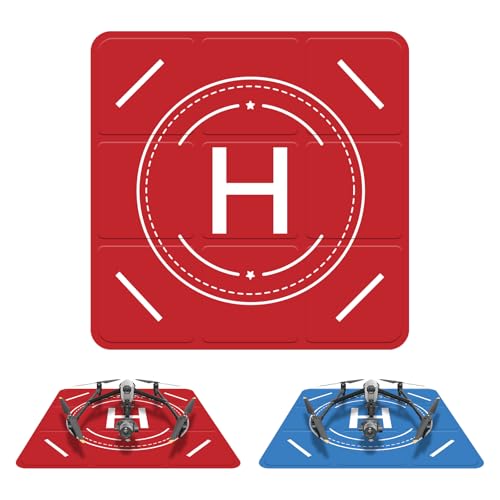
A landing pad gives both drones a clean, visible surface to take off from and land on, which protects the gimbal and camera from dust, grass, and debris. This FPVtosky pad is 39 inches across, which is roomy for either drone, and its reflective strips make it visible at dusk and at night. The double-sided waterproof surface folds down small for packing, and the weighted design keeps it from blowing away in prop wash.
Specs: Size: 39 in diameter; Material: Double-sided waterproof PU leather; Features: Reflective night strips, weighted edges; Folding: Fast-fold, packs flat; Compatibility: Universal, suits Mini and Air series drones.
5. LKTOP Replacement DJI 100W USB-C Power Adapter

One charger that serves both drones is the practical choice, and this LKTOP 100W USB-C adapter charges Mini 4 Pro and Air 3 batteries through their charging hubs, as well as the RC 2 and RC-N2 controllers and other USB-C devices. It delivers up to 100W from a single port, with multiple ports for charging a battery and a controller at the same time, and it uses GaN technology to stay compact.
This is a third-party replacement for DJI’s own 100W adapter, not a DJI-branded unit, and the listing showed no featured offers at the time of research, so availability should be checked before ordering. For a pilot who flies both drones, or who wants one charger for the whole kit, it is a useful accessory.
Specs: Output: Up to 100W USB-C; Ports: 3 USB-C + 1 USB-A; Protocols: PD, QC, PPS; Compatibility: DJI Mini 4 Pro, Air 3, Air 3S, Mavic 3 series, Avata series, RC/RC 2/N2 controllers; Input: 100-240V; Weight: 8.32 oz.
A Note on Drone Registration
Drone rules vary by country, and they change, so check your local aviation authority before you fly. In the United States, recreational drones over 250 g must be registered with the FAA, which covers the Air 3 but not the Mini 4 Pro, though the Mini 4 Pro still needs registration if used commercially. Always check the rules for the place you are flying, keep the drone in sight, and respect no-fly zones around airports and crowds.
Frequently Asked Questions
Which drone is better for a beginner?
The Mini 4 Pro. Its sub-250 g weight simplifies registration in many countries, its obstacle sensing is comprehensive, and its smaller size makes it less intimidating to fly. The Air 3 is also easy to fly, but its larger size, higher weight, and registration requirements add friction for a first-time pilot. Learn on the Mini 4 Pro, then step up to the Air 3 when you want the telephoto camera and longer flight time.
Is the Air 3 telephoto camera worth the upgrade?
Yes, if you shoot landscapes, wildlife, or architecture. The 70mm medium telephoto compresses a scene, isolates subjects, and lets you film from farther away, which changes your compositions in a way no software zoom can match. If you mostly shoot wide establishing shots and selfies, the Mini 4 Pro’s single camera is enough, and the telephoto will sit unused.
Can the Mini 4 Pro and Air 3 use the same accessories?
Many of them, yes. Both use microSD cards, both charge over USB-C, and both can use the same landing pad and charger in this guide. Batteries, propellers, and controllers are model-specific, so those do not cross over. The shared accessories here, a fast card, a landing pad, and a 100W charger, work with either drone and are the practical way to build a kit that serves both.
How long can I actually fly on one battery?
Real flight time is shorter than the maximum figures, because wind, temperature, and aggressive flying all reduce it. Expect around 25 to 28 minutes of practical flying from the Mini 4 Pro and around 35 to 38 minutes from the Air 3 in normal conditions. Land with reserve power, because the return-to-home function needs battery to bring the drone back safely.
Conclusion
The Mini 4 Pro and the Air 3 are both excellent drones, and the choice comes down to what you value. Portability, simple rules, and a pocket-sized kit point to the Mini 4 Pro. Two cameras, longer flight time, and stronger wind resistance point to the Air 3. The shared accessories in this guide, a fast card, a landing pad, and a 100W charger, work with either drone and make both better to fly. Pick the aircraft that matches where you fly and how you shoot, check your local registration rules, and either drone will reward you with footage that is hard to get any other way.
More from Amazon
Programs that pair well with the guide above. Offers and eligibility are set by Amazon and may change.
Free shipping on eligible items, Prime Video and more. Eligible new members can start with a free trial.
Start a Prime free trialAudiobooks and podcasts to listen to on the go. Eligible new members can start with a free trial.
Try Audible freeAd-free music streaming. Eligible new subscribers can start with a free trial.
Try Music Unlimited freeA free business account with business pricing and bulk-buying tools for work, shop or home office.
Create a business accountAs an Amazon Associate we earn from qualifying purchases.