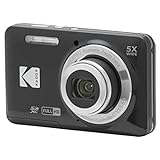
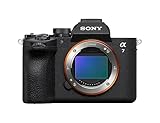
The best high-zoom digital camera for most buyers in 2026 is the Nikon Coolpix P950 if you want long reach at a sensible price, the Nikon Coolpix P1100 if you want the longest zoom ever put on a consumer camera, and the Sony RX10 IV if image quality matters more than raw reach. High-zoom cameras use small sensors to make long lenses practical, so they excel in bright light and struggle in dim conditions. They suit birdwatching, moon photography, sports from the stands, and travel when you do not want to carry multiple lenses.
Our top picks


As an Amazon Associate we earn from qualifying purchases at no extra cost to you.
Quick comparison
| Pick | Best for | Zoom range (35 mm equivalent) | Sensor | Viewfinder | Price range |
|---|---|---|---|---|---|
| Nikon Coolpix P1100 | Maximum reach | 24-3000 mm (125x) | 1/2.3-inch, 16 MP | Electronic | Upper-mid |
| Nikon Coolpix P950 | Value reach | 24-2000 mm (83x) | 1/2.3-inch, 16 MP | Electronic | Mid |
| Sony RX10 IV | Image quality | 24-600 mm (25x) | 1-inch, 20.1 MP | Electronic | Premium |
| Canon PowerShot SX70 HS | Lighter high zoom | 21-1365 mm (65x) | 1/2.3-inch, 20.3 MP | Electronic | Mid |
| Panasonic Lumix FZ1000 II | Larger sensor, modest reach | 25-400 mm (16x) | 1-inch, 20.1 MP | Electronic | Mid to upper-mid |
| Panasonic Lumix FZ80D | Budget | 20-1200 mm (60x) | 1/2.3-inch, 18.1 MP | Electronic | Budget |
| Panasonic Lumix ZS99 | Pocket zoom | 24-720 mm (30x) | 1/2.3-inch, 20.3 MP | Electronic | Budget to mid |
Figures are from manufacturer specifications; sensor resolution and exact equivalents vary slightly by source.
Best for maximum reach: Nikon Coolpix P1100
The P1100 has a 24-3000 mm equivalent lens, which can fill the frame with the moon, distant birds, or aircraft. It includes a hot shoe, a manual zoom ring, and raw recording. It is large and heavy, around 1.4 kg, and a tripod is almost mandatory at the top of the range. Autofocus can hunt in low light, and the small sensor loses detail beyond ISO 800.
Best value: Nikon Coolpix P950
The P950 shares the same sensor class as the P1100 with a 24-2000 mm lens. It is lighter, cheaper, and easier to carry, making it the practical choice for hikers and travelers. It also adds raw recording and a good viewfinder. The trade-off is less reach than the P1100 and slower autofocus tracking than mirrorless cameras.
Best image quality: Sony RX10 IV
The RX10 IV puts a 1-inch stacked sensor behind a 24-600 mm f/2.4-4 lens, with fast phase-detect autofocus and 4K video. It is the best option here for action, birds in flight, and video. It is also the most expensive, and 600 mm is still shorter than the Nikon superzooms.
Best lighter superzoom: Canon PowerShot SX70 HS
The SX70 HS has a 65x lens that begins at 21 mm, which is wider than most rivals. It weighs under 600 g and shoots 4K video. Autofocus is acceptable in good light, and it has a fully articulating screen, but image quality falls off at maximum zoom.
Best bigger sensor: Panasonic Lumix FZ1000 II
If you care more about cleaner files than extreme zoom, the FZ1000 II offers a 1-inch sensor, 16x zoom, and 4K video. It is a better all-purpose camera for family trips and indoor events than the 60x superzooms.
Best budget: Panasonic Lumix FZ80D
This camera offers 60x zoom, 4K video, and a viewfinder at a low price. Image quality is average, and it is best treated as a bright-daylight tool.
Best pocket zoom: Panasonic Lumix ZS99
If you want zoom without bulk, the ZS99’s 30x lens fits in a jacket pocket. It does not reach as far as bridge cameras, but it is the easiest to carry.
How to choose a high-zoom camera
Understand the stabilization limit
A common rule says the safe handheld shutter speed is at least 1 divided by the equivalent focal length. At 600 mm, that is 1/600 s. At 2000 mm, it is 1/2000 s, which needs bright sunlight at base ISO and still benefits from a tripod. Optical stabilization helps by 3 to 5 stops according to manufacturers, but it cannot make a 3000 mm lens as easy to use as a 300 mm one.
Check the aperture at full zoom
Superzooms often shrink to f/6.5 or f/8 at the long end. At f/6.5, the lens gathers four times less light than at f/3.2, so ISO rises quickly. The RX10 IV, with f/4 at 600 mm, is the exception.
Think about weight and carry
A bridge camera that weighs over a kilogram is a bag camera, not a pocket camera. Compare weight to what you will actually carry on a long walk.
Decide whether you need raw files
Raw recording allows better noise reduction and recovery. Only some bridge cameras support it, including the Nikon P-series and Sony RX10 IV.
Compare with an interchangeable-lens kit
A mirrorless camera with a 100-400 mm lens gives 150-600 mm on APS-C with better quality, but costs more and weighs more. Superzoom bridge cameras win on price and reach.
Ownership notes
Long zooms magnify motion, so use a monopod or tripod for anything beyond 1000 mm. Heat haze over warm ground limits sharpness at long range regardless of the camera. Keep the lens clean, since a small smudge shows more at long focal lengths, and use the lens hood outdoors.
Which high-zoom camera fits your subject
| Subject | Recommended | Why |
|---|---|---|
| The moon and distant planets | Nikon Coolpix P1100 | 3000 mm equivalent fills the frame |
| Backyard and trail birds | Nikon Coolpix P950 | 2000 mm reach, raw files, manageable size |
| Birds in flight, sports, video | Sony RX10 IV | Fast autofocus and a bright f/2.4-4 lens |
| Family trips with indoor shots | Panasonic Lumix FZ1000 II | 1-inch sensor handles dim rooms better |
| Tight budget, daytime use | Panasonic Lumix FZ80D | 60x zoom at a low price |
A worked example: how big is the subject in the frame
A small songbird about 15 cm long photographed from 30 m away fills only a sliver of a wide frame. With a 35 mm equivalent focal length of 600 mm, the field of view is roughly 4 degrees wide, which at 30 m covers a scene about 2.1 m across, so the bird takes up under a tenth of the frame width. At 2000 mm the field of view shrinks to about 1.2 degrees, covering roughly 63 cm, and the bird fills about a quarter of the frame. That difference explains why bird photographers pay for the longest reach, and why a steady tripod matters: at 2000 mm even a small tremor moves the image by several feet at the subject.
Frequently Asked Questions
Can a superzoom photograph the moon?
Yes. Cameras with 1000 mm or longer reach can fill a good portion of the frame with the moon. Use a tripod, low ISO, and manual exposure for the best detail.
Is optical zoom better than digital zoom?
Yes. Optical zoom changes the actual lens focal length and keeps detail. Digital zoom crops and enlarges the image, which reduces quality.
Are bridge cameras good for birdwatching?
They are popular for birdwatching because of their reach and price. For birds in flight, an RX10 IV or a mirrorless camera with a telephoto lens offers better autofocus.
Do bridge cameras work well in low light?
Not as well as larger-sensor cameras. The 1-inch models such as the RX10 IV and FZ1000 II perform noticeably better than 1/2.3-inch superzooms.
Which is better, P950 or P1100?
The P1100 has a longer lens and more weight. The P950 is lighter and cheaper with most of the same features, making it the better choice for most users.
More from Amazon
Programs that pair well with the guide above. Offers and eligibility are set by Amazon and may change.
Free shipping on eligible items, Prime Video and more. Eligible new members can start with a free trial.
Start a Prime free trialAudiobooks and podcasts to listen to on the go. Eligible new members can start with a free trial.
Try Audible freeAd-free music streaming. Eligible new subscribers can start with a free trial.
Try Music Unlimited freeA free business account with business pricing and bulk-buying tools for work, shop or home office.
Create a business accountAs an Amazon Associate we earn from qualifying purchases.